David Organizes the Sanctuary – (1 Chronicles 24-25)

In these two chapters, David is organizing the priests and the musicians. It might not sound like such a big deal to us, but it was a monumental task. There were many thousands of Levites at this time, and casting lots as he had them to do was the best way to determine the order in which they would serve. The lines came from the sons of Aaron, which would only include Eleazar and Ithamar. Nadab and Abihu had died without any children (Leviticus 10:1-3). It was from the line of Abijah (24:10) that Zechariah, John the baptist’s father, came (Luke 1:5).


English: Nadab and Abihu consumed by fire from...

English: Nadab and Abihu consumed by fire from the Lord; illustration from “Figures de la Bible”, illustrated by Gerard Hoet (1648-1733), and others, and published by P. de Hondt in The Hague in 1728; image courtesy Bizzell Bible Collection, University of Oklahoma Libraries. (Photo credit: Wikipedia)


Since the Book of Chronicles is written for the benefit of the returning exiles, it was again important to document the lines carefully in these two chapters. In chapter 25, David and the Levite leaders organized the musicians for the temple under the lines of Asaph, Heman, and Jeduthun. Asaph is credited (at least in the superscripts) with having written Psalm 50 and Psalms 73-83. Heman is probably the same Heman the Ezrahite that is credited in the superscript of Psalm 88. Jeduthun is mentioned in Psalms 39, 62, and 77.


(This year’s reading plan for Luke, Acts, and 1 and 2 Chronicles averages just 15 verses per day – 5 days per week!)
Schedule for this week
Read or listen to audio of today’s selection from Luke here
Read or listen to audio of today’s selection from 1 Chronicles here


/Bob’s boy


___________________


some images © V. Gilbert & Arlisle F. Beers


Please note: I did not design the reading plan that I am following in my blog.  All of my comments in this blog, however, are solely my responsibility.  When reading ANY commentary, you should ALWAYS refer first to the scripture, which is God’s unchanging and unfailing word. Reading schedules, as well as a link to the site where you can get the reading plan that I’m currently following for yourself can be found on the “Bible Reading Schedules” page of my website at http://graceofourlord.com.  


Enhanced by Zemanta

A New Age – (1 Chronicles 23)

Jewish high priest wearing a hoshen, and Levit...

Jewish high priest wearing a hoshen, and Levites in ancient Judah. (Photo credit: Wikipedia)


In this chapter, David is reaching the end of his life, and he makes Solomon the king. He then brought all of the leaders of Israel together, including the Levites. Levites more than thirty years old were counted, and the total was 38,000. He designated an astounding 24,000 of these to “have charge of the work in the house of the Lord.” He assigned other duties for the rest, including 4,000 of them to offer praise to God with instruments. Verse 6 says that he “organized them in divisions corresponding to the sons of Levi: Gershon, Kohath, and Merari.”


David made the observation that with the temple being built, there would no longer be any need for the Levites to carry and assemble the tabernacle or any of the things needed for its service. “The Lord, the God if Israel” David said, had given rest to His people. As 1 Kings 4:25 tells us it did, Israel and Judah under Solomon was about to enter an long era of unprecedented peace, the likes of which would never occur again. David proclaimed that the Levites were to attend to, and assist, the sons of Aaron for the service of the house of the Lord.


(This year’s reading plan for Luke, Acts, and 1 and 2 Chronicles averages just 15 verses per day – 5 days per week!)
Schedule for this week
Read or listen to audio of today’s selection from Luke here
Read or listen to audio of today’s selection from 1 Chronicles here


/Bob’s boy


___________________


some images © V. Gilbert & Arlisle F. Beers


Please note: I did not design the reading plan that I am following in my blog.  All of my comments in this blog, however, are solely my responsibility.  When reading ANY commentary, you should ALWAYS refer first to the scripture, which is God’s unchanging and unfailing word. Reading schedules, as well as a link to the site where you can get the reading plan that I’m currently following for yourself can be found on the “Bible Reading Schedules” page of my website at http://graceofourlord.com.  


Enhanced by Zemanta

A Noble Task – (1 Timothy)

As is the case with most of his epistles, Paul’s first letter to Timothy is the subject of much speculation and some disagreement. Some scholars believe that Paul wrote this letter toward the end of the Rome imprisonment that occurred in the final chapters of the Book of Acts. Others are convinced that Paul was released after two years there, and that this first letter to Timothy was written after that release and before a second, final imprisonment in Rome.

English: Ananias restoring the sight of Saint Paul

English: Ananias restoring the sight of Saint Paul (Photo credit: Wikipedia)

There is some secular evidence to support a fourth missionary journey, including writings by Clement of Rome, who some say was a friend to the apostle. None of this comes from inspired scripture, of course. But in 1 Timothy 1:3, Paul tells his young friend “as I urged you when I was going to Macedonia, remain at Ephesus so that you may charge certain persons not to teach any different doctrine…” Of course, Paul could be talking about a previous trip to Macedonia, but it seems more likely that he is speaking of a fairly recent occurrence. Either way, the date of the letter is generally accepted as from 62-64 A.D. (almost certainly no later than 65 A.D.).

Paul covers several points with Timothy in this letter. Foremost of course is the saving grace of our Lord Jesus Christ. He also addresses the problem of false doctrine, and the urgency of teaching others the right way to both worship and to serve God. Paul recognized the importance of the local body of the church at each location being unified and caring for one another. But in chapter two, he wants Timothy to instill in them a different attitude toward the rest of the world, urging “that supplications, prayers, intercessions, and thanksgivings be made for all people, for kings and all who are in high positions, that we may lead a peaceful and quiet life, godly and dignified.”

English: Head-piece to the second epistle of P...

English: Head-piece to the second epistle of Paul the apostle to Timothy, vignette with an altar and incense burner (2 Timothy 3:5); letterpress in two columns below and on verso. 1800. Inscriptions: Lettered below image with production detail: “P J de Loutherbourg del”, “J Heath direx.” and publication line: “Pubd. by T Macklin, Fleet Street London”. Print made by James Heath. Dimensions: height: 490 millimetres (sheet); width: 390 millimetres (sheet). (Photo credit: Wikipedia)

Paul also recognizes the fact that Timothy’s youthfulness may sometimes be an impediment to being taken as seriously as he needs to be. But he advises him to overcome that with godly living, abstaining from youthful passions and irreverent speech, and just generally being a prime example of a child of God. He also outlines how the church should care for its widows, as well as limits for such responsibility.

One of the most important matters that Paul instructs Timothy about is the qualifications for, and expectations of, overseers (or elders), as well as those of deacons (1 Timothy 3). All over the world today, this chapter is used as a blueprint for choosing men among the local church that will “shepherd the flock” among them. As he says, “if anyone aspires to the office of overseer, he desires a noble task.”

Young men of every congregation today need to be constantly reminded (yes, and taught and trained) on the importance of these areas of their lives. There is nothing so vital to the future of the Lord’s church as the nurturing and grooming of godly men to assume those roles when they are ready. It is an awesome responsibility that such a man takes on and, more often than not, it is a thankless job. But we know how important it is to God because of Jesus’ words to Peter in John 21:17 before he ascended – “Feed my sheep.”

(This year’s reading plan for Luke, Acts, and 1 and 2 Chronicles averages just 15 verses per day – 5 days per week!)
Schedule for this week

/Bob’s boy
___________________
some images © V. Gilbert & Arlisle F. Beers

Please note: I did not design the reading plan that I am following in my blog.  All of my comments in this blog, however, are solely my responsibility.  When reading ANY commentary, you should ALWAYS refer first to the scripture, which is God’s unchanging and unfailing word. Reading schedules, as well as a link to the site where you can get the reading plan that I’m currently following for yourself can be found on the “Bible Reading Schedules” page of my website at http://graceofourlord.com.

Enhanced by Zemanta

An International Incident – 1 Chronicles 19-20

Landscape with David and Bathsheba

Landscape with David and Bathsheba (Photo credit: Wikipedia)

Most of the events of these two chapters are contained in chapters 10-11 of 2 Samuel, but there are some differences. Most conspicuously absent here is any reference to David’s sin with Bathsheba. This affair and betrayal of Uriah the Hittite took place at the time that “Joab led out the army and ravaged the country of the Ammonites and came and besieged Rabbah” (1 Chronicles 20:1).

Most scholars agree that the account is not left out simply to avoid showing David in a bad light. There are several things that demonstrate David’s goodness which the chronicler did not write about either. But the purpose of the chronicles was to preserve the knowledge (for the returning exiles and their descendants) of God’s covenant with David and reassure them that it was still a promise from God.

As chapter 19 opens, David sends messengers to give his condolences to  Hanun the son of Nahash the Ammonite because Nashash had “dealt kindly” with him. It is unknown what kindness that was. But Hanun, suspecting David’s motives and thinking his servants were spies, he shaved them and cut there clothes off at the hip, sending them on their way. After realizing the seriousness of the international incident he had created, Hanun hired chariots and horsemen from Mesopotamia and surrounding areas and kingdoms in a futile attempt to defeat David’s army.

English: The young Hebrew David hoists the hea...

English: The young Hebrew David hoists the head of the Philistine Goliath (Photo credit: Wikipedia)

After Joab “struck down Rabbah,” David accumulated much gold and other precious plunder – including a crown of gold that was taken from the king’s head. Verse 3 of chapter 20 says that they did the same to all of cities of the Ammonites. Then in verses 4-8, came the defeat of many Philistines, some of which were giants on the order of the Goliath that David killed when Saul was king. The Goliath here is not the same one, obviously.

The one mentioned in verse 6 with the extra digits had a condition called polydactyly, a condition that a small percentage of people are born with to this day – including yours truly (mine was an extra thumb). The man that holds the world record for the most digits is Akshat Saxena in India. He was born in 2010 with 7 digits on each hand and 10 digits on each foot, for a total of 34 digits!

(This year’s reading plan for Luke, Acts, and 1 and 2 Chronicles averages just 15 verses per day – 5 days per week!)
Schedule for this week
Read or listen to audio of today’s selection from Luke here
Read or listen to audio of today’s selection from 1 Chronicles here

/Bob’s boy
___________________
some images © V. Gilbert & Arlisle F. Beers

Please note: I did not design the reading plan that I am following in my blog.  All of my comments in this blog, however, are solely my responsibility.  When reading ANY commentary, you should ALWAYS refer first to the scripture, which is God’s unchanging and unfailing word. Reading schedules, as well as a link to the site where you can get the reading plan that I’m currently following for yourself can be found on the “Bible Reading Schedules” page of my website at http://graceofourlord.com.  

Enhanced by Zemanta

King David’s Favor With God (1 Chronicles 17-18)

English: Nathan advises King David

English: Nathan advises King David (Photo credit: Wikipedia)

It was important for the chronicler to communicate well the events of I Chronicles 17 to the post-exilic Jews because it contains the covenant of God with David. Covered first in 2 Samuel 7, it begins with David wanting to build God a house. But God tells Nathan the prophet to let David know that it would not be him that builds such a house. Instead, God promises that He would build David’s “house” – that David’s offspring (Jesus) would reign forever.

In answer to God’s covenant, David makes a prayer to God (verses 16-27). It is one of the longest prayers in the bible, and incredibly humble and heartfelt. It begins with “Who am I, O Lord God, and what is my house, that you have brought me thus far?” They are words that each of us should ask God in prayer as well. The blessings that He has given us and the promises He has made to us are no less magnificent and undeserved that those made to David.

Hama

Hama (Photo credit: Wikipedia)

Chapter 18 contains some stunning military victories, some of which were reported in 2 Samuel 8. Here, David defeats the Philistines, and also takes Gath. The Moabites are defeated and become servants to David. He also “defeated Hadadezer king of Zobah-Hamath, as he went to set up his monument at the river Euphrates.” The plunder he took from the cities of Hadadezer included 1,000 chariots, 7,000 horsemen, and 20,000 foot soldiers, and shields made of gold.

In addition, verse 9 tells us that Tou king of Hamath was so pleased when he heard of the defeat of Hadadezer that he sent his son with gifts of gold, silver and bronze that Solomon would later use in building the pillars and the sea, and the bronze vessels for the temple.  Hamath is associated with modern Hama, which is located on the Orontes River in western Syria. There is an article with a picture there of a noria (a machine for lifting water into an aqueduct) at this link to Ferrell’s Travel Blog. We also recommend this article at BiblePlaces.com and this one at BiblicalArcheology.org for information on discoveries related to Tou (also called Toi and possibly Taita).

The victories continue against the Syrians and 18,000 Edomites in the Valley of Salt. And the text says that God gave victory to him wherever he went. Verses 14-17 detail how just and fair David was as a ruler, and how stable and well-organized his administration was. Joab was established as military commander, and “Jehoshaphat the son of Ahilud was recorder; and Zadok the son of Ahitub and Ahimelech the son of Abiathar were priests; and Shavsha was secretary; and Benaiah the son of Jehoiada was over the Cherethites and the Pelethites; and David’s sons were the chief officials in the service of the king.”

(This year’s reading plan for Luke, Acts, and 1 and 2 Chronicles averages just 15 verses per day – 5 days per week!)
Schedule for this week
Read or listen to audio of today’s selection from Luke here
Read or listen to audio of today’s selection from 1 Chronicles here

/Bob’s boy
___________________
some images © V. Gilbert & Arlisle F. Beers

Please note: I did not design the reading plan that I am following in my blog.  All of my comments in this blog, however, are solely my responsibility.  When reading ANY commentary, you should ALWAYS refer first to the scripture, which is God’s unchanging and unfailing word. Reading schedules, as well as a link to the site where you can get the reading plan that I’m currently following for yourself can be found on the “Bible Reading Schedules” page of my website at http://graceofourlord.com.  

Enhanced by Zemanta

A Truly United Kingdom – (1 Chronicles 16)

The Sacrifice of the Old Covenant

The Sacrifice of the Old Covenant (Photo credit: Wikipedia)

Now that the Levites had successfully transported the Ark to Jerusalem, David begins celebrating in the most proper manner – with tribute to God. God’s people were in the middle of the greatest times that the united kingdom would know. And for the most part, it would last through Solomon’s reign. Second only to the dedication of the Temple by Solomon, this would be the greatest celebration of that time.

David had the ark of the covenant brought in to the tent that he had erected for it. They then had burnt offerings and peace offerings. The peace offering is sometimes called a fellowship, or more properly, a thanksgiving offering, and is introduced in Leviticus 3:1-17 and Leviticus 7:11-34. Afterwards, the celebration continued with every man and woman of the vast number of Israelites present being given “loaf of bread, a portion of meat, and a cake of raisins.”

English: Statue of King David by Nicolas Cordi...

English: Statue of King David by Nicolas Cordier in the Borghese Chapel of the Basilica di Santa Maria Maggiore. Français : Statue du roi David par Nicolas Cordier, dans la chapelle Borghèse de la basilique Sainte-Marie Majeure. Italiano: Statua del re Davide di Nicolas Cordier, nella Capella Borghese della Basilica di Santa Maria Maggiore in Roma. (Photo credit: Wikipedia)

David then appointed certain Levites to “minister before the ark” invoking thanks, praising the Lord, and playing harps, lyres, cymbals, and blowing trumpets. Chief among this group of Levites was Asaph who authored Psalms 50 and 73-83. Also among them was Benaiah, one of the most powerful of David’s “mighty men,” whose exploits (some of which are described in 2 Samuel 23:20-22) included the single-handed defeat of Moab’s two mightiest warriors. Verse 7 tells us that it was the first time that David appointed Asaph and his brothers to sing thanksgiving to the Lord.

Verses 8-36 contain David’s song of thanksgiving. It is a long and wonderful song of praise to the Lord; and parts of it are contained in Psalm 105:1–15, Psalm 96:1–13, and Psalm 106:1, 47–48. Verses 37-42 describe how David made ministering to the ark a long-term responsibility for Asaph and his brothers. He also left Obed-edom (and his 68 brothers!), along with Zadok the priest and his brothers to offer burnt offerings and perform other duties.

Finally, the ark was to get the care that it had once had when Moses was around; and the Levites would do what they were intended to do before the Lord in such a grand scale as Israel had not seen since long before Israel had its first king.

(This year’s reading plan for Luke, Acts, and 1 and 2 Chronicles averages just 15 verses per day – 5 days per week!)
Schedule for this week
Read or listen to audio of today’s selection from Luke here
Read or listen to audio of today’s selection from 1 Chronicles here

/Bob’s boy
___________________
some images © V. Gilbert & Arlisle F. Beers

Please note: I did not design the reading plan that I am following in my blog.  All of my comments in this blog, however, are solely my responsibility.  When reading ANY commentary, you should ALWAYS refer first to the scripture, which is God’s unchanging and unfailing word. Reading schedules, as well as a link to the site where you can get the reading plan that I’m currently following for yourself can be found on the “Bible Reading Schedules” page of my website at http://graceofourlord.com.  

Enhanced by Zemanta

Ark Movement 101 – 1 Chronicles 15

After the fiasco in chapter 13 of 1 Chronicles when the transportation of the ark was so badly mishandled that Uzzah was killed, it remained at the home of Obed-edom while David figured out what to do. And figure it out, he did. The material of chapter 15 focuses much less on David himself than was the case when this event was described in 2 Samuel 6:12-23. It is clear that David sought guidance from the Levites, and the instructions contained in Mosaic Law concerning proper handling of the ark were followed in exacting detail.

English: Jerusalem Model, The city of David, t...

English: Jerusalem Model, The city of David, the Pool of Siloam and the southern wall of Mount Moriah Deutsch: Jerusalem Modell, Davidstadt, im Vordergrund der Teich von Siloah und die Südmauer des Tempelberges Français : Maquette de Jérusalem, la Ville de David. Au premier plan, la piscine de Siloé et la muraille sud du Mont du Temple (Photo credit: Wikipedia)

David summoned “all of Israel” to participate in this event, which we can suppose to mean that he brought many from each tribe. And the Levites were at center stage because this could only be executed by them. Descendants of each of Levi’s sons (Kohath, Gershon, and Merari – verses 4-10) brought many with them, led by their chiefs; and the priests, Zadok and Abiathar were charged with consecrating themselves and their brethren for the task. This time, the Levites carried the ark with the poles, as set forth in Mosaic Law (Numbers 4:6-9; Numbers 4:15).

Singers and those who would play musical instruments (including Asaph, author of several Psalms – verse 19) were appointed and given detailed tasks. David wore an ephod over fine linen for the occasion, and he, his commanders and the Levites set out with the ark in grand procession and jubilant song, as they brought the ark to Jerusalem and the temporary tent that would hold it there.

But David’s wife, Michal (referred to in verse 29 simply as the daughter of Saul) watched through the window as David danced and celebrated the event and “despised him in her heart.” Her contempt for him here would define their estrangement from that point forward.

(This year’s reading plan for Luke, Acts, and 1 and 2 Chronicles averages just 15 verses per day – 5 days per week!)
Schedule for this week
Read or listen to audio of today’s selection from Luke here
Read or listen to audio of today’s selection from 1 Chronicles here

/Bob’s boy
___________________
some images © V. Gilbert & Arlisle F. Beers

Please note: I did not design the reading plan that I am following in my blog.  All of my comments in this blog, however, are solely my responsibility.  When reading ANY commentary, you should ALWAYS refer first to the scripture, which is God’s unchanging and unfailing word. Reading schedules, as well as a link to the site where you can get the reading plan that I’m currently following for yourself can be found on the “Bible Reading Schedules” page of my website at http://graceofourlord.com.  

Enhanced by Zemanta

David Becomes King

In 1 Chronicles 11, all of the elders of Israel come to Hebron to meet with David following the death of Saul, and David is anointed king “according to the word of the Lord by Samuel” (1 Samuel 16:6-13). Then in verse 4, it immediately picks up with David and his troops going to “Jebus,” which is Jeusalem – which is occupied by the Jebusites. We are first told that the land of the Jebusites is Jerusalem back in Joshua 15:8, where the boundaries for the tribe of Judah are laid out in detail, as the Promised Land gets divided among the tribes. It is during this successful campaign upon what will become “the City of David,” that “Joab the son of Zeruiah” becomes commander of David’s army. This is because he took David up on his offer to make chief of the one who strikes first at the Jebusites.

Valley_of_Rephaim_0114Beginning in verse 10, the chronicler introduces David’s “mighty men,” which we will read more about in chapter 12. There is some debate about the number (some count 37 as being named here). But generally, it seems that the main group of his mighty men were referred to as “the thirty,” and at same point, this number becomes a name for them despite the actual number (just as the apostles were referred to as “the twelve”). However, although there were those in the thirty that were regarded as “chiefs,” and greater than the others, there were three that were very special. Of the three, the foremost was Jashobeam, who is listed again in 1 Chronicles 27 as leader of a military division. It is supposed that as members of “the thirty” died, they were replaced with others, which made this an evolving list.

In verses 15-19, as the Philistines were camped in the Valley of Rephaim, their garrison was at Bethlehem. David remarked that he would love to have water from the well at Bethlehem. When three of the mighty men broke through the camp of the Philistines and brought back the water to David, he poured it out as an offering to the Lord – refusing to drink something obtained by such bravery by his men.

(This year’s reading plan for Luke, Acts, and 1 and 2 Chronicles averages just 15 verses per day – 5 days per week!)
Schedule for this week
Read or listen to audio of today’s selection from Luke here
Read or listen to audio of today’s selection from 1 Chronicles here

/Bob’s boy
___________________
some images © V. Gilbert & Arlisle F. Beers

Please note: I did not design the reading plan that I am following in my blog.  All of my comments in this blog, however, are solely my responsibility.  When reading ANY commentary, you should ALWAYS refer first to the scripture, which is God’s unchanging and unfailing word. Reading schedules, as well as a link to the site where you can get the reading plan that I’m currently following for yourself can be found on the “Bible Reading Schedules” page of my website at http://graceofourlord.com.  

Enhanced by Zemanta

The End of Saul’s Royal Line – 1 Chronicles 10

The 10th chapter of 1 Chronicles covers the reign of Saul as king of Israel. Well, at least it “chronicles” the end of his reign. The chapter is only 13 verses long, and begins with Saul’s final battle with the Philistines at Mount Gilboa. It was there that Saul and his sons Jonathan, Abinadab, and Malchi-shua died. The story is first told in 1 Samuel 31, but we are given a few additional details here as well.

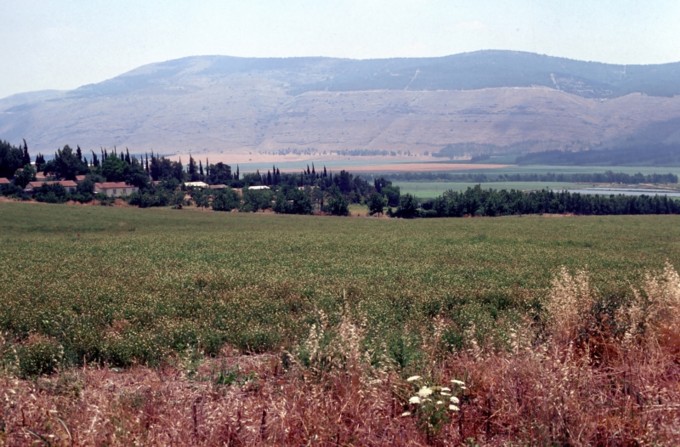
Mount Gilboa, site of Saul's last battle

Mount Gilboa, site of Saul’s last battle

After Saul fell on his sword, the Philistines took his head and “fastened” it in the temple of Dagon.  No explanation of that is given, and perhaps none is needed. Dagon was the Philistines’ fish-god, the idol of which God made some rather humorous sport in 1 Samuel 5, when the Philistines had captured the Ark of the Covenant and placed it in the house of Dagon. The men of Jabesh-gilead (which Saul had rescued at the beginning of his reign in 1 Samuel 11) learned of Saul’s fate, and rescued and buried the bodies of Saul and his sons.

In verses 13-14, the chronicler says that Saul died for “his breach of faith,” and tells of his disobedience and of consulting a medium for guidance instead of seeking guidance from the Lord. So, the last words written of Saul were “therefore the Lord put him to death and turned the kingdom over to David the son of Jesse.”

And so, the rest of the Books of Chronicles begins in chapter 11 with the reign of David and his descendants.

(This year’s reading plan for Luke, Acts, and 1 and 2 Chronicles averages just 15 verses per day – 5 days per week!)
Schedule for this week
Read or listen to audio of today’s selection from Luke here
Read or listen to audio of today’s selection from 1 Chronicles here

/Bob’s boy
___________________
some images © V. Gilbert & Arlisle F. Beers

Please note: I did not design the reading plan that I am following in my blog.  All of my comments in this blog, however, are solely my responsibility.  When reading ANY commentary, you should ALWAYS refer first to the scripture, which is God’s unchanging and unfailing word. Reading schedules, as well as a link to the site where you can get the reading plan that I’m currently following for yourself can be found on the “Bible Reading Schedules” page of my website at http://graceofourlord.com.  

Enhanced by Zemanta

The Province of Yehud

As we come to the end of the genealogies of the first few chapters of 1 Chronicles, it should be apparent that beyond the main purpose that we discussed for preserving genealogies, there are other considerations. Although the exiles were free now, Judah (Yehud) was now just a small province of the Persian Empire. The meticulous detail that the chronicler documented also served to preserve a sense of heritage for the people that they desperately needed as a collective.

English: English translation of hebrew version...

English: English translation of hebrew version. Map of the twelve tribes of Israel, before the move of Dan to the North (Photo credit: Wikipedia)

Chapter 7 takes up just 40 verses to present some detail on the remaining tribes, and then chapter 8 begins with the genealogy of Saul from the tribe of Benjamin. Although Benjamin was already covered to some degree in chapter 7, this extra attention is warranted, not just because Saul came from that tribe. Together with the Levites, the tribes of Judah and Benjamin (along with some from Ephraim and Manasseh) make up the “lion’s share” of the post-exile core of Jerusalem (see Ezra 1:5, Nehemiah 11:4-9, 1 Chronicles 9:3).

Chapter 9 closes these genealogies with a reprisal of some of Saul’s roots, which account is preceded by some details of those who had various duties – particularly priests and Levites, with attention to gatekeepers, Levitical singers and musicians, and those with other temple duties.

With this section of the chronicles completed, we will begin next in chapter 10 with a very short chapter consisting of nothing more of Saul’s reign than its end. Then, the anointing of David as king will kick off the “meat and potatoes,” which is the rest of the Chronicles.

(This year’s reading plan for Luke, Acts, and 1 and 2 Chronicles averages just 15 verses per day – 5 days per week!)
Schedule for this week
Read or listen to audio of today’s selection from Luke here
Read or listen to audio of today’s selection from 1 Chronicles here

/Bob’s boy
___________________
some images © V. Gilbert & Arlisle F. Beers

All of my comments in this blog, however, are solely my responsibility.  When reading ANY commentary, you should ALWAYS refer first to the scripture, which is God’s unchanging and unfailing word. Reading schedules can be found on the “Bible Reading Schedules” page of my website at http://graceofourlord.com.

Enhanced by Zemanta