A Big Undertaking – 1 Chronicles 22

David had been forbidden to build a “house” for the Lord (verse 8, 1 Kings 5:3) because he had “shed much blood and waged great wars.”  The point of this was not that God held David to have done wrong in waging these wars. After all, much of it was accomplished with God’s help. It makes the most sense, though, that the perception of David was that of a warrior; and by those outside the kingdom, perhaps (incorrectly) a ruthless warrior at that. A temple built by David for the Lord would remind outsiders of any other temple for a false god.


Michelangelo david solomon

Michelangelo david solomon (Photo credit: Wikipedia)


Much of the rest of this chapter in not found in the Books of Samuel. While Solomon was still too young (and before David became too old), David desired to get things prepared, so that Solomon could be ready to build it whenever he came of age. He gathered the foreigners that lived in Israel for labor. He then brought in innumerable cedar timbers, had iron made into nails and gates, and provided great quantities of bronze.


Then he called for Solomon, and gave him his charge concerning the temple. David emphasized to Solomon how important it was to keep to the law of Moses. Then David said “Be strong and courageous. Fear not; do not be dismayed.” This reminds of the words Moses spoke to Joshua as he “passed the torch” to him in Deuteronomy 31:6. With God’s help, David had subdued all of the nation’s enemies and secured the land. Now Solomon could rule in peace and build the temple.


David told him that he provided 100, 000 talents of gold, and a million talents of silver, along with all of the bronze and iron. The measure of a talent has historically been somewhat inconsistent. But here, it is generally thought to be about 75 lbs per talent. Peace, prosperity, and preparation were David’s gifts to his son for this monumental task. But he would not be alone. David commanded all of the leaders to help his son. And of course, there was God.


(This year’s reading plan for Luke, Acts, and 1 and 2 Chronicles averages just 15 verses per day – 5 days per week!)
Schedule for this week
Read or listen to audio of today’s selection from Luke here
Read or listen to audio of today’s selection from 1 Chronicles here


/Bob’s boy


___________________


some images © V. Gilbert & Arlisle F. Beers


Please note: I did not design the reading plan that I am following in my blog.  All of my comments in this blog, however, are solely my responsibility.  When reading ANY commentary, you should ALWAYS refer first to the scripture, which is God’s unchanging and unfailing word. Reading schedules, as well as a link to the site where you can get the reading plan that I’m currently following for yourself can be found on the “Bible Reading Schedules” page of my website at http://graceofourlord.com.  


Enhanced by Zemanta

2 Chronicles – The Events of the Days

The Book of 2 Chronicles starts out in verse 1 saying “Solomon the son of David established himself in his kingdom, and the Lord his God was with him and made him exceedingly great.” It ends in chapter 36 with the proclamation of Cyrus, inviting the exiles to return to Judea and rebuild. This spans a time period of about 430 years. The capstone chapter is chapter 34, which begins the reign of King Josiah and his dramatic reforms and restoration.

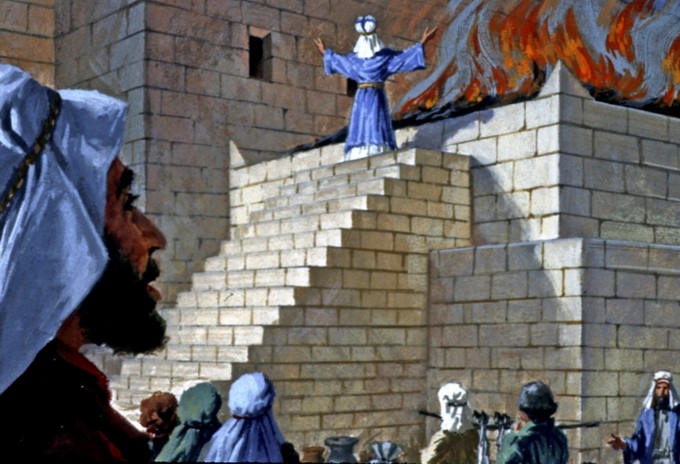
During the eighteenth year of King Josiah's reign, he held a great Passover festival to celebrate the restored Temple 2 Chronicles 35:1-27)

During the eighteenth year of King Josiah’s reign, he held a great Passover festival to celebrate the restored Temple 2 Chronicles 35:1-27)

As the temple was being repaired, the priest Hilkiah found the book of the law in the house of the Lord. Then Shaphan the scribe read it to Josiah. When the great king realized the extent of the utter failure of his people in serving the Lord, he became extremely upset (2 Chronicles 34:19-24). At his bidding, Hilkiah went to Huldah the prophetess, who issued the news of the dire fate that awaited the people. Thus began a period of great change that put off the wrath of the Lord until Josiah’s death in 2 Chronicles 35. But the evil returned under the reign of his son, Jehoiakim (2 Chronicles 36:1-5).

Key events of 2 Chronicles

Solomon’s wisdom and prosperity  (2 Chronicles  1)
The building of the Temple (2 Chronicles 3–5:1)
Ark transported to the Temple (2 Chronicles 5:2–12)
God’s glory fills the temple (2 Chronicles 5:13–14)
Solomon blesses the people and consecrates the temple (2 Chronicles 6)
Fire from the Lord consumes the sacrifices (2 Chronicles 7:1–7)
Feast of Tabernacles and covenant confirmation (2 Chronicles 7:8–22)
Queen of Sheba visits (2 Chronicles 9:1–12)
Death of Solomon (2 Chronicles 9:29–31)

Division of the kingdom (2 Chronicles 10:1–11:23)
Reign of Rehoboam (Judah) (2 Chronicles 12:13–16)
War between Judah and Israel (2 Chronicles 13:1–22)
Asa’s reforms (2 Chronicles 15:8–19)
Asa defeats Syria (2 Chronicles 16:1–10)
Expansion of Judah (2 Chronicles 17:10–19)
Jehoshaphat’s alliance with Ahab and the death of Ahab (2 Chronicles 18:1–34)
Jehoshaphat’s reforms and his reign (2 Chronicles 19:1–20:37)

/Bob’s boy
___________________
image © V. Gilbert & Arlisle F. Beers

Please note: I did not design the reading plan that I am following in my blog.  All of my comments in this blog, however, are solely my responsibility.  When reading ANY commentary, you should ALWAYS refer first to the scripture, which is God’s unchanging and unfailing word. Reading schedules, as well as a link to the site where you can get the reading plan that I’m currently following for yourself can be found on the “Bible Reading Schedules” page of my website at http://graceofourlord.com.  
1 Chronicles – The Annals of the Times

David bringing the Ark to Jerusalem

David bringing the Ark to Jerusalem

Like the Book of Samuel, 1 & 2 Chronicles were originally one book. The Hebrew title is “Dibre Hayyamim” (meaning “Events of the Times” or “Annals”), which can be assumed to have been abbreviated from “Sepher Dibre Hayyamim,” for “The Book of the Events of the Times.”  In the Septuagint, it is known as “Paraleipomena,” or “The Things Omitted,” suggesting information supplemental to The Books of Samuel and Kings. In fact, so much of the Scripture in the Books of Chronicles can be found in Kings that many people wonder why God would have wanted two such similar records.

There are a couple of very good answers to that question. As always, it is good to remember that any time we see something repeated in Scripture, it is a pretty good indication that it is important. Secondly, unlike Kings, the Books of Chronicles have little at all to say about the northern kingdom, but instead they are centered almost totally around Judah, or the southern kingdom. It is also argued that the perspective in the Chronicles is less from a historical viewpoint than it is for edification.

As an act of pride, King David forced Joab to take a census of men of military age. The Lord was displeased with David for this and sent a great plague.

As an act of pride, King David forced Joab to take a census of men of military age. The Lord was displeased with David for this and sent a great plague.

Jewish tradition holds that Ezra was the author, although there is nothing in the books to verify this. It was once believed that the Chronicles along with Ezra and Nehemiah were once one book, but most scholars now recognize them as separate works of approximately the same period. A post-exilic date of 450-400 BC for the Book seems to be validated by the mention of several descendants of David from the period in places such as 1 Chronicles 3:17-24.

The first nine chapters of 1 Chronicles are a lengthy list of genealogies that begin with Adam and conclude with that of the returning exiles. Such a long and tedious (to us) list provokes questions about the reason for them to be there at all.  In fact, they are important for more than one reason. First, it would be important to identify the Levites after returning from captivity in order to properly preserve the priesthood. Secondly, the proper heirs for the land could be identified for distribution to those returning to Jerusalem from captivity. Finally, it preserves the record of the lineage of David – important to validate the lineage of the Messiah.

Outline of 1 Chronicles

 /Bob’s boy

___________________
image © V. Gilbert & Arlisle F. Beers

Please note: I did not design the reading plan that I am following in my blog.  All of my comments in this blog, however, are solely my responsibility.  When reading ANY commentary, you should ALWAYS refer first to the scripture, which is God’s unchanging and unfailing word. Reading schedules, as well as a link to the site where you can get the reading plan that I’m currently following for yourself can be found on the “Bible Reading Schedules” page of my website at http://graceofourlord.com.  

Song of Solomon 8 – Final Advice For the Young

The opening verses of this closing chapter of the Song of Songs begin with a seemingly strange statement by the bride that she wishes that she

Vineyard near Hebron.Grapes are one of the most important products of Palestine. The first mention of them is in the life of Noah. It is afterwards frequently mentioned both in the Old and New Testaments. Dried grapes and wine were the most frequent products of vineyards.

Vineyard near Hebron.
Grapes are one of the most important products of Palestine. The first mention of them is in the life of Noah. It is afterwards frequently mentioned both in the Old and New Testaments. Dried grapes and wine were the most frequent products of vineyards.

and the  king had been brother and sister. She simply means by this that she wishes she had been given the privilege of knowing him all of her life, growing together, and even receiving the benefit of instruction from him through the years. In that context, she longs for his embrace, but once again speaks of not stirring up or awakening love until it pleases.

The Shulammite girl is in love with her husband, but she does not regret having kept herself chaste. She thinks once again, more fondly this time, of the protection of her brothers as she grew up. They, who still regard her as a little girl with no breasts, around whom they would build a wall to keep her chaste. – should she instead of being a wall herself  become a door.

The Shulammite states that though she grew into a woman with very large breasts, she also had become a wall – keeping chastity as her companion until love awakened at the proper time – in marriage to her beloved. She now invites the king (who had kept his own vineyard) into the vineyard that is that is theirs to share as man and wife.

Make haste, my beloved,
and be like a gazelle
or a young stag
on the mountains of spices.

Read or listen to audio of ESV version of this selection from this link.

/Bob’s boy
___________________
some images © V. Gilbert & Arlisle F. Beers

Please note: I did not design the reading plan that I am following in my blog.  All of my comments in this blog, however, are solely my responsibility.  When reading ANY commentary, you should ALWAYS refer first to the scripture, which is God’s unchanging and unfailing word. Reading schedules, as well as a link to the site where you can get the reading plan that I’m currently following for yourself can be found on the “Bible Reading Schedules” page of my website at http://graceofourlord.com.  

Song of Solomon 7 – The Bride Gives Her Love

Mount Carmel is not a single mountain peak, but a long range that extends about thirteen miles eastward from the Mediterranean Sea, just south of the modern city of Haifa. Here Elijah confronted 850 pagan prophets with a test of fire (1 Kings 18). Mount Carmel from a distance.

Mount Carmel is not a single mountain peak, but a long range that extends about thirteen miles eastward from the Mediterranean Sea, just south of the modern city of Haifa. Here Elijah confronted 850 pagan prophets with a test of fire (1 Kings 18). Mount Carmel from a distance.

The language of the verses of chapter 7 are pure erotic poetry. There are references to historic Mount Carmel (which lies near the Mediterranean, west of the Sea of Galilee), the richness of the prized purple dye, ivory towers, and the Pools of Heshbon. The king delights in his bride’s loveliness and the loveliness of her nature:

How beautiful and pleasant you are,
O loved one, with all your delights!
Your stature is like a palm tree,
and your breasts are like its clusters.
I say I will climb the palm tree
and lay hold of its fruit.
Oh may your breasts be like clusters of the vine,
and the scent of your breath like apples,
and your mouth like the best wine…

King Sihon refused passage to the Israelites through his land, and he attacked Israel at Jahaz. Israel defeated him, occupying the land between the Arnon and Jabbok Rivers, including the capital city, Heshbon. As they moved north, they defeated King Og of Bashan at Edrei (Deuteronomy 2:30).

King Sihon refused passage to the Israelites through his land, and he attacked Israel at Jahaz. Israel defeated him, occupying the land between the Arnon and Jabbok Rivers, including the capital city, Heshbon. As they moved north, they defeated King Og of Bashan at Edrei (Deuteronomy 2:30).

The unbridled sexual desire has also been stirred in his beloved wife as well, as she invites him to:

Come, my beloved,
let us go out into the fields
and lodge in the villages;
let us go out early to the vineyards
and see whether the vines have budded,
whether the grape blossoms have opened
and the pomegranates are in bloom.
There I will give you my love.

Read or listen to audio of ESV version of this selection from this link.

/Bob’s boy
___________________
some images © V. Gilbert & Arlisle F. Beers

Please note: I did not design the reading plan that I am following in my blog.  All of my comments in this blog, however, are solely my responsibility.  When reading ANY commentary, you should ALWAYS refer first to the scripture, which is God’s unchanging and unfailing word. Reading schedules, as well as a link to the site where you can get the reading plan that I’m currently following for yourself can be found on the “Bible Reading Schedules” page of my website at http://graceofourlord.com.  

Song of Solomon 6 – In the Garden of Love

The ancient city of Shunem, where Elisha had a room, was near this site on the edge of the plain of Esdraelon.

The ancient city of Shunem, where Elisha had a room, was near this site on the edge of the plain of Esdraelon.

Now that the Shulammite bride has become the favored one of Solomon, the daughters of Jerusalem cannot be accommodating enough to her. The term Shulammite is of unknown origin, but it is supposed that it may refer to people from Shunem, in the tribe of Issachar (Joshua 19:17-20). Here, she repeats that I am my beloved’s and my beloved is mine; he grazes among the lilies,” – a reminder that Solomon does indeed belong to her?  Solomon returns to speaking of her beauty, saying:

You are beautiful as Tirzah, my love,
lovely as Jerusalem,
awesome as an army with banners

Then, asking the others why they are so preoccupied with her, Solomon asks, pointedly acknowledging their solidarity:

Why should you look upon the Shulammite,
as upon a dance before two armies?

The sins and transgression of Solomon with his many queens, wives, and concubines (for which he may well have repented) were well-known. But the Shulammite’s love for him, and his for her was pure – and she was undefiled and exemplary as a wife.

According to Delitzsch’s comments a hundred years ago, the “Song of Songs” was a drama that consisted of six acts having two scenes each. In this drama, Solomon took her to his harem in Jerusalem, where he was purified in his affection from a sensual lust to pure love. Perhaps.

Tirzah Area, near Tel El Para.

Tirzah Area, near Tel El Para.

J Paul Tanner summed it up better (Tanner, J. Paul, “The History of Interpretation of the Song of Songs”, Bibliotheca Sacra 154: 613 (1997): 23-46):

“She is a pattern of simple devotedness, naive simplicity, unaffected modesty, moral purity, and frank prudence – a lily of the field, more beautifully adorned than he could claim to be in all his glory. We cannot understand the Song of Songs unless we perceive that it presents before us not only Shulamith’s external attractions, but also all the virtues which make her the ideal of all that is gentlest and noblest in woman. Her words and her silence, her doing and suffering, her enjoyment and self-denial, her conduct as betrothed, as a bride, and as a wife, her behavior towards her mother, her younger sister, and her brothers – all this gives the impression of a beautiful soul in a body formed as it were from the dust of flowers.”

Read or listen to audio of ESV version of this selection from this link.

/Bob’s boy
___________________
some images © V. Gilbert & Arlisle F. Beers

Please note: I did not design the reading plan that I am following in my blog.  All of my comments in this blog, however, are solely my responsibility.  When reading ANY commentary, you should ALWAYS refer first to the scripture, which is God’s unchanging and unfailing word. Reading schedules, as well as a link to the site where you can get the reading plan that I’m currently following for yourself can be found on the “Bible Reading Schedules” page of my website at http://graceofourlord.com.  

Song of Solomon 5 – My Beloved and My Friend

Aside from the allegoric theories, there are different meanings that commentators take away from the passages in chapter 5; and it is admittedly difficult to be sure one draws the right conclusions from it in some places. Clearly, the marriage has been consummated, as the groom states in verse 1. We are not told how long it has been since the wedding, but Solomon has gone to encourage the celebration of his guests. The bride has retired for the night, but the excitement and anticipation of her new marriage has kept her half-awake.

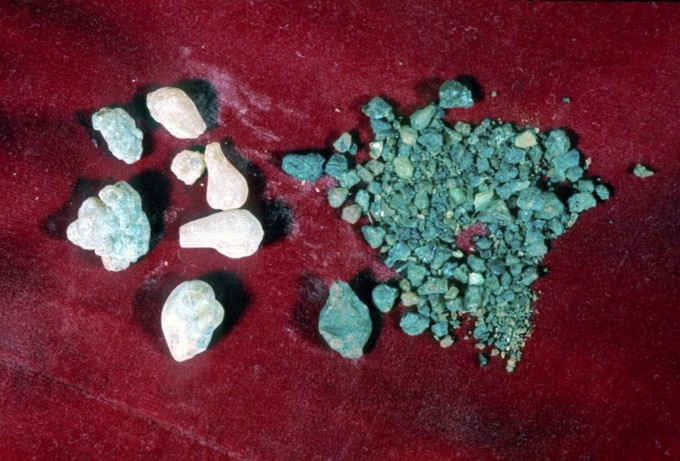
Both frankincense and myrrh are hardened tree sap, used for embalming, beauty treatments, and pain relief.

Both frankincense and myrrh are hardened tree sap, used for embalming, beauty treatments, and pain relief.

Perhaps when he returns to find the door latched, she is indeed half-asleep, but perhaps she is in the middle of another dream. When he calls out terms of endearment to her to open the door, she at first hesitates, not wishing to soil her feet after washing in order to get up. But her heart is thrilled at the sound of her beloved placing his hand on the latch. So she arises and opens the door to find him gone. The passage says that her fingers were dripping with myrrh from the bolt of the latch – likely left by her beloved as a reminder of his presence.

Then in a scene much like the dream of chapter 3, she finds herself off to look for him again. This time, however, the watchmen beat her when they find her. If this is not a dream, it is unknown why they would do that, unless they had mistaken her for a prostitute or a thief. But this time, she “adjures” the daughters of Jerusalem to tell her beloved that she is “sick with love.” Having consummated their marriage, she no longer has need, as his wife, to withhold her love from him; and this is apparently the point she is making after the earlier incident.

The other women ask her why her beloved is more important to her than some other man. She replies with a laundry list of things that she loves about him. Though (just as with all marriages) everything is not always perfect between them, the way that he speaks to her and the way she speaks of him to others both demonstrate their love for each other. Both of these things matter in a marriage. The two have become one flesh, and a part of each other. She closes with the declaration that “this is my beloved and this is my friend, O daughters of Jerusalem.”

Read or listen to audio of ESV version of this selection from this link.

/Bob’s boy
___________________
some images © V. Gilbert & Arlisle F. Beers

Please note: I did not design the reading plan that I am following in my blog.  All of my comments in this blog, however, are solely my responsibility.  When reading ANY commentary, you should ALWAYS refer first to the scripture, which is God’s unchanging and unfailing word. Reading schedules, as well as a link to the site where you can get the reading plan that I’m currently following for yourself can be found on the “Bible Reading Schedules” page of my website at http://graceofourlord.com.  

Song of Solomon 4 – A Garden Fountain

Wedding at Cana

Wedding at Cana

It would be a mistake to pass over the text of these verses without carefully considering the significance of the seven different descriptions of beauty that Solomon uses for his bride. Although once again some of these descriptions seem unflattering to us in many respects, they were indeed very sincere forms of flattery expressions of the physical attraction and desire that the king felt for his beloved bride. The fragrance of the sachet of myrrh between her breasts, referred to in Song of Solomon 1:13 has obviously captured his attention, as he expresses his passion for her in poetic descriptions he has of his beloved:

Your two breasts are like two fawns,
twins of a gazelle,
that graze among the lilies.
Until the day breathes
and the shadows flee,
I will go away to the mountain of myrrh
and the hill of frankincense.
You are altogether beautiful, my love;
there is no flaw in you.

The two lovers then consummate their marriage in delicious wedded bliss with neither guilt nor shame because it is a celebration that has been sanctioned by God for one man and one woman since the beginning of time (Genesis 2:23-25).

…a garden fountain, a well of living water,
and flowing streams from Lebanon.
Awake, O north wind,
and come, O south wind!
Blow upon my garden,
let its spices flow.

And the bride at last invites him into her garden

Let my beloved come to his garden,
and eat its choicest fruits.

Read or listen to audio of ESV version of this selection from this link.

/Bob’s boy
___________________
some images © V. Gilbert & Arlisle F. Beers

Please note: I did not design the reading plan that I am following in my blog.  All of my comments in this blog, however, are solely my responsibility.  When reading ANY commentary, you should ALWAYS refer first to the scripture, which is God’s unchanging and unfailing word. Reading schedules, as well as a link to the site where you can get the reading plan that I’m currently following for yourself can be found on the “Bible Reading Schedules” page of my website at http://graceofourlord.com.  

Song of Solomon 3 – The Bride’s Dream

The third chapter finds the bride in her bed at night with what we must suppose is a dream, filled with erotic thoughts and desires, and anxious inquisitiveness concerning the whereabouts of her beloved. The theory of a separate shepherd boy being the object of her true desires is clearly shown to be wrong, as her beloved has sent watchmen for her in this dream – and she herself has inquired of them as to his whereabouts. What would such watchmen have to do with a shepherd boy? The girl mentions Solomon by name no less that three times here, and what purpose would God have for using the Scripture to celebrate any adulterous desires on her part anyway?

Dream of Solomon

Dream of Solomon (Photo credit: Wikipedia)

She refers to Solomon as the one “whom my soul loves,” and finding him in that dream, she holds him close, bringing him into her mother’s house. But again in verse 5, she wishes not to “stir up or awaken love until it pleases.” Then, in a very public display of pomp, circumstance, and romantic affection, Solomon has her escorted by sixty of the kingdom’s mighty men onward to their nuptials. It is here that we are reminded of his words about enjoying “life with the wife whom you love” (Ecclesiastes 9:9)

Read or listen to audio of ESV version of this selection from this link.

/Bob’s boy
___________________
some images © V. Gilbert & Arlisle F. Beers

Please note: I did not design the reading plan that I am following in my blog.  All of my comments in this blog, however, are solely my responsibility.  When reading ANY commentary, you should ALWAYS refer first to the scripture, which is God’s unchanging and unfailing word. Reading schedules, as well as a link to the site where you can get the reading plan that I’m currently following for yourself can be found on the “Bible Reading Schedules” page of my website at http://graceofourlord.com.  

Song of Solomon 2 – My Beloved is Mine

Chapter 2 begins with very familiar words. Most everyone has heard the hymn titled “Jesus, Rose of Sharon.” The name Sharon means “a level plain,” and this one was laid out about 15 miles west of the Mediterranean Sea, bordered by Joppa, Lydda, and Caesarea. Today, the area is filled with citrus farms and small settlements. But as beautiful as the song is, the first two verses of this chapter have nothing to do with Jesus.

The Plains of Sharon.

The Plains of Sharon.

Instead the term, along with the lily of the valley, are used by the bride of this love poem to describe herself. Those who insist on making the “Song of Songs” an allegory about Jesus have, with the best of intentions, contributed to the misunderstanding of these Scriptures. Still, the song is appropriate when applied to Jesus, as is the “The Lily of the Valley,” which contains other more scriptural references to the King, such as from Revelation 22:16.

Solomon then counters her own description of herself by more flatteringly comparing his betrothed to a lily among the brambles. The lesson for us among these and the previous verses of the last chapter are the public display and declaration of affection, in an appropriate manner, with which Solomon comforts and elevates his bride (verse 6). Speaking now more pointedly of lilies in verse 16, she declares their love for each other – “My beloved is mine, and I am his; he grazes among the lilies,” while likening her beloved to “a gazelle or a young stag on cleft mountains.” Still, she desires to not to give herself over completely until the time is appropriate (“that you not stir up or awaken love until it pleases”).

Read or listen to audio of ESV version of this selection from this link.

/Bob’s boy
___________________
some images © V. Gilbert & Arlisle F. Beers

Please note: I did not design the reading plan that I am following in my blog.  All of my comments in this blog, however, are solely my responsibility.  When reading ANY commentary, you should ALWAYS refer first to the scripture, which is God’s unchanging and unfailing word. Reading schedules, as well as a link to the site where you can get the reading plan that I’m currently following for yourself can be found on the “Bible Reading Schedules” page of my website at http://graceofourlord.com.