Acts 7 – Stephen’s Speech and Stoning

Before the Sanhedrin, the Jewish council, Stephen gave a stirring sermon about Jesus. For this, he was stoned to death, becoming a martyr for Jesus (Acts 7:1-34).

Chapter 7 opens with Stephen at the Sanhedrin being asked by the high priest “Are these things so?”  The charges against Stephen from lies and twisted quotations of Jesus were that he “never ceases to speak words against this holy place and the law,” and that they had heard him say “that this Jesus of Nazareth will destroy this place and will change the customs that Moses delivered to us” (Acts 6:13-14).

Did Stephen, full of the Holy Spirit, already know the fate that awaited him?  Perhaps.  The possibility must have been obvious.  He does not actually address the charges against him, which hints that he must have known that such would be pointless. Instead, the speech that follows is a long account of the history of Israel, their continued blessings given by God, and their rejection of the Lord time and time again.

The Spirit brought him to full remembrance of the Scriptures in this account; and he concludes in verses 51-53 with a direct accusation on his own accusers.  He first quotes God’s own description of their forefathers as stiff-necked people (Exodus 33:3), uncircumcised in heart and ears (Ezekiel 44:7).  He goes further though, first referring to their father’s having killed the prophets, as Jesus had spoken in Matthew 23:29-31,37.  Then he turns the tables on them completely – charging them in verses 52-53 with the murder of “the Righteous One, whom you have now betrayed and murdered, you who received the law as delivered by angels and did not keep it.”

Saul watches approvingly while men stone Stephen to death (Acts 7:35-60). Later, when Saul became Paul the Apostle, this scene must have given him great sorrow and remorse, deeply regretting his part in Stephen’s martyrdom.

This indictment by Stephen of these men was received with so much rage that mob rule prevailed.  Stephen was taken from the city and stoned to death.  The Jews who had no legal right to execution under Roman law nevertheless had it carried out with haste as their anger burned.  In verse 58, the so-called “witnesses” cast the first stones, according to the law (Deuteronomy 13:9).  These laid there garments at the feet of young Saul of Tarsus (stoning was hard work, and the outer garments would be in the way), who stood by and watched, as Stephen was killed.  The vision Stephen had in verse 56 of Jesus at the right hand of God was undoubtedly for his own encouragement.

Read or listen to audio of ESV version of this selection from this link.

/Bob’s boy
___________________
some images © V. Gilbert & Arlisle F. Beers

Please note: I did not design the reading plan that I am following in my blog.  All of my comments in this blog, however, are solely my responsibility.  When reading ANY commentary, you should ALWAYS refer first to the scripture, which is God’s unchanging and unfailing word. Reading schedules, as well as a link to the site where you can get the reading plan that I’m currently following for yourself can be found on the “Bible Reading Schedules” page of my website at http://graceofourlord.com.  For questions and help, please see the “FAQ” and “Summaries” pages there.

Stephen, the Sanhedrin, and Saul \ Week 38 summary posted

Paul escaping Damascus in a basket

We are continuing in Acts this week with the selection of seven “table servants” – one of which is Stephen.  Then we will read of his arrest, his appearance before the Sanhedrin, and his historic, eloquent, and aptly accusatory speech to them – a moving and unforgettable account of the bravery of this man.  Then, we will move to chapter 8 to find Saul of Tarsus ravaging the church, as he persecutes and even brings about the death of more Christians – deeds that he would very soon come to great sorrow for, as he encounters the Lord.  His life is forever changed, and we are all the better for it.  But this week will also give us Phillip and the Ethiopian Eunuch; and Peter will have an important revelation.  What a week in God’s word!

Summing Up

Each weekend, I am now posting a small PDF of one week of chapter summaries (on the website’s “Summaries” page), current to the beginning of the previous week.  I have posted the summary for Week 38 (September Week 3) of the schedule I am following.  This short PDF document contains condensed comments about Matthew 27, 28, John 20, 21, and Luke 24, with hyperlinks to the ESV version of each chapter for listening or reading, and joins the summaries for other weeks already posted there.

/Bob’s boy
___________________
image © V. Gilbert & Arlisle F. Beers

Please note: I did not design the reading plan that I am following in my blog.  All of my comments in this blog, however, are solely my responsibility.  When reading ANY commentary, you should ALWAYS refer first to the scripture, which is God’s unchanging and unfailing word. Reading schedules, as well as a link to the site where you can get the reading plan that I’m currently following for yourself can be found on the “Bible Reading Schedules” page of my website at http://graceofourlord.com.  For questions and help, please see the “FAQ” and “Summaries” pages there.

Acts 5 – Ananias and Sapphira

The Death of Ananias, by Raphael

The Death of Ananias, by Raphael (Photo credit: Wikipedia)

As is often the case with Scripture, context is everything in this chapter.  As chapter 4 closes, the young church was growing with the Apostles leading them; and the unity among the believers was amazing.  People were selling their own possessions, and bringing the proceeds to the Apostles to help provide for others who were in need.  It was in that spirit that we were introduced to Barnabas of Cyprus in Acts 4:36 (we will read more about Barnabas in later chapters).  As Peter makes clear, the property that had belonged to Ananias and Sapphira was theirs to do as they wished.  Their sin was in trying to fraudulently claim that they had sold land and were giving the entire proceeds to the apostles to help those in need.  The lie would certainly be found out. The credibility of the Apostles would be harmed – how can they be said to be guided by the Holy Spirit and not know these people were perpetrating such fraud?  The unity of the believers would certainly suffer.  God would not allow this to happen.

Verse 12 lets us know that the Apostles had worked many signs and wonders.  Note that the verse does not refer to 120 people having done so, again affirming that it was the twelve who received the baptism of the Holy Spirit in chapter 2.  And despite Peter and John’s earlier arrest, they were all together in Solomon’s Portico again. Verse 13 simply means that even the non-believers that did not join them held them in high esteem.  But verse 14 declares that the church was growing faster than ever, with both men and women.  People were also bringing their loved ones from all around to be healed.

The high priest and the rest of the Sadducees were jealous of the attention and the esteem everyone had for the apostles, and had them arrested.  But in verse 19, an angel of the Lord let them out and told them to go teach – this time in the Temple.  They did exactly that at daybreak.  The words the angel used were “…speak to the people all the words of this Life”  – the eternal life that Jesus spoke of in John 17:1.  There are some who believe that early Christianity may have been referred to as both “the Life” and “the Way.”  The former is unsure, but we do know that the latter is true.  It is first mentioned in Acts 9:1-2.

Apostles Peter and John by Pieter Aertsen (157...

Apostles Peter and John by Pieter Aertsen (1575). Oil on wood, 55.5 76 cm. The Hermitage, St. Petersburg (Photo credit: Wikipedia)

When the council sent men to bring the Apostles to them from prison, they returned to let them know that they not only were not in the prison – but they were teaching in the Temple.  When they brought them from the Temple, they did it quietly.  The popularity of the Apostles made the officers afraid of the people.  At the Sanhedrin, the high priest reminded them that they had been warned not to teach in the name of Jesus, saying “you intend to bring this man’s blood upon us.”   But Peter and the Apostles again boldly declare that they will obey God – that He raised Jesus, whom they had killed, and that they are witnesses, as is the Holy Spirit.  The council was furious, wanting to kill them all.  But Gamaliel, a Pharisee, reminded them that two others had gathered a following, but had died and the movement fizzled.  His argument was that they should let this one fizzle out as well – either it would do so, or it was indeed from God.

Gamaliel’s advice was taken, but the Apostles were beaten (verse 40) before they were released.  This would have been a brutal beating – probably less severe that the scourging Jesus had received, but likely would have been the traditional 39 stripes for each of them.  Upon release, the attitude of the Twelve was to rejoice.  Verse 42 confirms “…every day, in the temple and from house to house, they did not cease teaching and preaching that the Christ is Jesus.”

Read or listen to audio of ESV version of this selection from this link.

/Bob’s boy
___________________
some images © V. Gilbert & Arlisle F. Beers

Please note: I did not design the reading plan that I am following in my blog.  All of my comments in this blog, however, are solely my responsibility.  When reading ANY commentary, you should ALWAYS refer first to the scripture, which is God’s unchanging and unfailing word. Reading schedules, as well as a link to the site where you can get the reading plan that I’m currently following for yourself can be found on the “Bible Reading Schedules” page of my website at http://graceofourlord.com.  For questions and help, please see the “FAQ” and “Summaries” pages there.

Acts 3 – Peter Speaks in Solomon’s Portico


As chapter 3 begins, we know that the Apostles had already been working miracles (Acts 2:43).  Now as Peter and John were going to the Temple, a man who had been lame from birth was carried to the gate of the Temple that was called the “Beautiful Gate,” where he was placed with enough regularity (daily) that he was familiar to the other people who came to the Temple (verse 10).  Looking to Peter and John, the man was asking for alms (gifts of charity), but instead Peter lifts him up and heals him in Jesus’ name.  The sight of the man “clinging” to Peter and John, leaping and praising God, quickly drew another multitude of people from all over.  And verse 10 says “they were filled with wonder and amazement,” as they recognized the man who had always been lame.

This model shows how Solomon's Porch, the eastern part of the Temple wall, may have looked in the time of Jesus.

This model shows how Solomon’s Porch, the eastern part of the Temple wall, may have looked in the time of Jesus.

Solomon’s Portico, according to the historian Josephus (Antiquities 20:9, section 7), was a portion of the Temple that still remained from Solomon’s time when Herod built the current Temple.  It was in this colonnade where Jesus had nearly been arrested during the Feast of Dedication (John 10:22-23), as He told the Jews that He was indeed the Son of God.  Here, Peter addresses this host of people, asking first why they are staring as if he and John had made the man walk by their own power.  He then repeats that they had “killed the Author of life, whom God raised from the dead” (verse 15), and that God had foretold it by all of His prophets.

The message is again to repent (verse 19).  In verse 13, Peter ties Jesus to the promises made to Abraham; and in verses 22 and following, he refers to the prophecies of Moses (Deuteronomy 18:15), Samuel, and all the prophets who came after them.  In verse 26, Peter saying “God, having raised up his servant, sent him to you first…,” as he alludes to the Great Commission.

Read or listen to audio of ESV version of this selection from this link.

/Bob’s boy
___________________
some images © V. Gilbert & Arlisle F. Beers

Please note: I did not design the reading plan that I am following in my blog.  All of my comments in this blog, however, are solely my responsibility.  When reading ANY commentary, you should ALWAYS refer first to the scripture, which is God’s unchanging and unfailing word. Reading schedules, as well as a link to the site where you can get the reading plan that I’m currently following for yourself can be found on the “Bible Reading Schedules” page of my website at http://graceofourlord.com.  For questions and help, please see the “FAQ” and “Summaries” pages there.


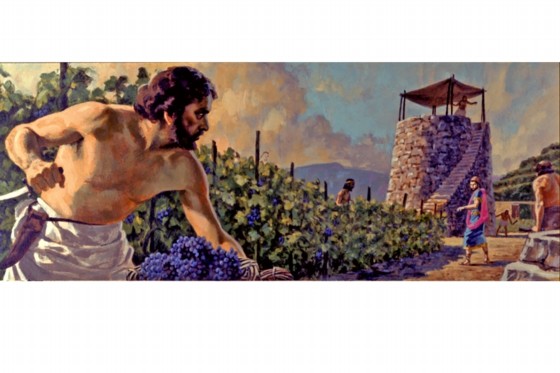
Luke 20 – The Wicked Tenants

In Jesus’ parable; wicked vineyard tenants murdered servants the owner had sent, and eventually murdered the owner’s son. This was an illustration of the wicked leaders who would murder God’s own Son, Jesus (Matthew 21:33-46).

In the parable of the wicked tenants in verses 9-16 , the word for owner in the “owner of the vineyard” is the same as “lord.”  The three servants he sent to the tenants represent the prophets.  The fruit of the vineyards they are seeking represents Israel’s obedience to God.  Then, sending his “beloved son” reminds us of what God said (“This is my beloved Son…”) at Jesus’ baptism in Matthew 3:17.  The tenants killing the owner’s son alludes to His coming death.  When Jesus says that the vineyard owner would come and destroy those tenants, it seems likely to be referring first to the destruction of Jerusalem that will come in A.D. 70. But in a larger sense, it speaks to the final judgment.  Those hearing the parable say “Surely not!” as they perceive that the parable applies to the people of Israel.  Would God take away the land and give it to other people?  But He looks directly at them and says ““What then is this that is written:
“The stone that the builders rejected
has become the cornerstone?”
This is from Psalm 118:22, referred to as well in Isaiah 28:16, and is quoted by Peter in Acts 4:11 and 1 Peter 2:7.

A denarius minted circa 18 BC. Obverse: CAESAR...

A denarius minted circa 18 BC. Obverse: CAESAR AVGVSTVS; reverse: DIVVSIVLIV(S) (Photo credit: Wikipedia)

In verse 19, the scribes and chief priests were predictably angry, as they knew the parable was directed at them.  So they sent people to try to trap him with sedition against the Roman government.  Jesus’ answer in verse 25 was “render to Caesar the things that are Caesar’s, and to God the things that are God’s.” This can be read in different ways, given that He had asked whose image was on the denarius.  One interpretation is that we are made in God’s image, and thus we must render ourselves to God’s service.

The Sadducees do not believe in the resurrection, so they try to test him in verses 27-33 with a scenario revolving around the teaching of Moses.  But in verse 37 (and in Matthew 22:31-32) Jesus quotes Moses’ encounter with God at the burning bush in Exodus 3:6, explaining that God is the God of the living.

Read or listen to audio of ESV version of this selection from this link.

/Bob’s boy
___________________
some images © V. Gilbert & Arlisle F. Beers

Please note: I did not design the reading plan that I am following in my blog.  All of my comments in this blog, however, are solely my responsibility.  When reading ANY commentary, you should ALWAYS refer first to the scripture, which is God’s unchanging and unfailing word. Reading schedules, as well as a link to the site where you can get the reading plan that I’m currently following for yourself can be found on the “Bible Reading Schedules” page of my website at http://graceofourlord.com.  For questions and help, please see the “FAQ” and “Summaries” pages there.
John 11 – Jesus Raises Lazarus

When Jesus receives word that Lazarus is ill, he obviously knows that he is going to die.  So some Bible versions are confusing in verse 4.  The New American Standard has the best translation – “This sickness is not to end in death, but for the glory of God, so that the Son of God may be glorified by it.”  Verse 6 may mean that Jesus wanted to give the sisters time to mourn after the death of their brother before He arrived to raise him – all the more effective when the Lord’s power over death is demonstrated.  Verses 9-10 are difficult to understand.  The most likely meaning is that since He is the light of the world, those who seek to kill Him will not be able to do so until his “day” – His time among them – is over.  His disciples do not understand in verse 11 when He says “Lazarus has fallen asleep,” so He tells them plainly in verse 14 that he has died, and that He is glad for their sakes, so that they will believe. Their witness of Him raising Lazarus will be a powerful memory for them.

The site that is almost certainly Bethany of John 11 – about two miles east of Jerusalem, on the east slope of the Mount of Olives. Jesus often visited his friends, Mary, Martha and Lazarus here. Jesus raised Lazarus after four days, one of the greatest of his miracles. The modern village, called Azariyeh, el-Azariyeh, Lazariyeh, or el-Lazariyeh to honor Lazarus, has about 1,000 people and is near the ancient village. The tower of the New Church of St. Lazarus rises next to the ruins of Christian churches from the Crusader period, about 1100-1300 A.D.

After He raised Lazarus, the Jews that did not want to believe that He was the Christ went to the Pharisees to tell them what had happened.  Their concern about people believing in Jesus as the Messiah was based on the same misguided expectation that the coming of the Messiah would mean he would be a powerful political and military leader.  A Messiah that would lead believers in a revolt against Roman rule would result in the coming of the Romans to crush it and remove the leaders (and thus, the Sanhedrin itself) from any position of power.  Caiaphas, the high priest of that time (about 18 – 36 AD), proposed that killing Jesus would be best for them all (verse 50).  His prophecy in the following verses was unknowingly very foretelling of His resurrection and its effect on God’s people.

Jesus did not walk freely among the Jews after that (verse 54); and in verse 56, many were wondering if He would come to the Passover feast at all.  Of course He would – He always followed God’s commandments.

Read or listen to audio of ESV version of this selection from this link.

/Bob’s boy
___________________
some images © V. Gilbert & Arlisle F. Beers

Please note: I did not design the reading plan that I am following in my blog.  All of my comments in this blog, however, are solely my responsibility.  When reading ANY commentary, you should ALWAYS refer first to the scripture, which is God’s unchanging and unfailing word. Reading schedules, as well as a link to the site where you can get the reading plan that I’m currently following for yourself can be found on the “Bible Reading Schedules” page of my website at http://graceofourlord.com.  For questions and help, please see the “FAQ” and “Summaries” pages there.

Luke 15 – The Parable of the Prodigal Son

As Jesus was teaching, the tax collectors and sinners had gathered around him.  We are not told what the latter were guilty of, but they obviously had a dubious reputation because of it.  The Pharisee and scribes, of course, were looking for anything to use against Jesus; and they began grumbling about the company He was keeping.  Of the three parables Jesus then tells in this chapter, the parable of the prodigal son is the most famous.  But all three make the point about those who are lost, best stated in verse 7 by Jesus – “there will be more joy in heaven over one sinner who repents than over ninety-nine righteous persons who need no repentance.”

Frans Francken (II) - The Parable of the Prodi...

Frans Francken (II) – The Parable of the Prodigal Son – WGA8205 (Photo credit: Wikipedia)

The image in verse 20 of the father running to his son to embrace him when he returned should be comforting to anyone who has fallen away from the Lord and wants to return.  No matter what we have done, God wants us to come back to Him, and will receive us gladly.  The elder son is upset that his father is celebrating the return of his prodigal brother who, in verse 30,  he does not even want to acknowledge as such (“this son”) because of his anger.  After all, he had remained behind and did not “devour” his father’s “property with prostitutes” (verse 30).   Why should his brother deserve to be received that way?  God will forgive in the same way; and we must realize that it is not because any of us deserve that forgiveness.

Read or listen to audio of ESV version of this selection from this link.

/Bob’s boy
___________________
some images © V. Gilbert & Arlisle F. Beers

Please note: I did not design the reading plan that I am following in my blog.  All of my comments in this blog, however, are solely my responsibility.  When reading ANY commentary, you should ALWAYS refer first to the scripture, which is God’s unchanging and unfailing word. Reading schedules, as well as a link to the site where you can get the reading plan that I’m currently following for yourself can be found on the “Bible Reading Schedules” page of my website at http://graceofourlord.com.  For questions and help, please see the “FAQ” and “Summaries” pages there.
Luke 10 – Jesus Sends Out the Seventy-Two

Most translations have the number as seventy-two in verse one and in verse 17, but some have it as seventy.  There are many old and reliable manuscripts that have it each way, and there is no effect on doctrine either way.  The laborers are those who proclaim the gospel, and their harvest is in gaining more laborers to further God’s kingdom.  “Peace” in verses 5-6 has a deeper meaning than we associate it with, and carries with it a blessing – in this case, the blessing of salvation (see also Luke 7:50, 8:48), but only if it is received (accepted). “Greet no one on the road” in verse 4 is most likely an expression of the urgency of the mission, as in 2 Kings 4:29 when Elisha sent his servant to the Shunammite’s son.  Likewise in verse 7, they are not to waste any time going from one household to another, but accept the hospitably provided because the laborer deserves his wages.  Paul refers to this in 1 Corinthians 9:14, and quotes it as scripture in 1 Timothy 5:18.  In verses 10-16, those who do not receive them are rejecting Jesus, and so are rejecting the one who sent Him – God.

When they returned, they were filled with joy at the success of their mission, noting that “even the demons are subject to us in your name!”  Jesus may be speaking in verse 18 of a heavenly vision He saw while they were about their business, or of something more specific.  The message is that their use of the authority He had given to them had diminished the authority that Satan had.  In verse 21 of His prayer, he is thanking God that those who were children in His kingdom had been given these gifts of understanding, favoring them over those who are wise in their own eyes (Job 37:24). Verses 23-24 are a reminder of how long the prophets have been looking ahead to these times when the Messiah would come and work these wonders, yet these disciples have been blessed to see it with their own eyes!

Verse 25’s beginning with “lawyer stood up to put him to the test” suggests another occasion or location in which others were sitting while Jesus taught. He asks what he should do to inherit eternal life.  Note that Jesus does not tell him that being saved is a result of his own actions.  Rather he asks the counter-questions “What is written in the law?” and “how do you read it?”  The lawyer then quotes Deuteronomy 6:5 and Leviticus 19:18, which Jesus approves.  In verse 29, though, the lawyer is trying to define the meaning of “neighbor” in a narrow way, so that he can be justified in not treating most people with that sort of love and compassion.

The Parable of the Good Samaritan that Jesus answers with in verses 30-35 is one of the most famous.  But it is much more than a simple story of a good-hearted man helping a stranded stranger on the side of the road – which is what most people associate with it.  It is the story of a man who was undoubtedly Jewish (traveling from Jerusalem to Jericho), who was beaten and left for dead by robbers (who could also have been Jewish).  He was passed by, and his dire situation ignored by first a Jewish priest, and then a Levite.  By definition, all would certainly be his kinsmen and his neighbors.  But the one who does help him is a Samaritan, a group of people that Jews had anything but love for, and the feeling was mutual (John 4:9).  Yet, the Samaritan not only had compassion and came to stop the bleeding and clean the wounds.  He then carried the man back to town to an inn, and stayed with him overnight, caring for him.  The next day, he gave the innkeeper his own money to look after him for a couple of days while he is gone, promising to stand good for any other expenses.

Being a compassionate neighbor in this case meant this Samaritan giving no small amount of time, effort and money to help someone in need, when that person most likely would have considered him an enemy.  So if we are to love our neighbor as ourselves, we must truly love even our enemies (Matthew 5:44).

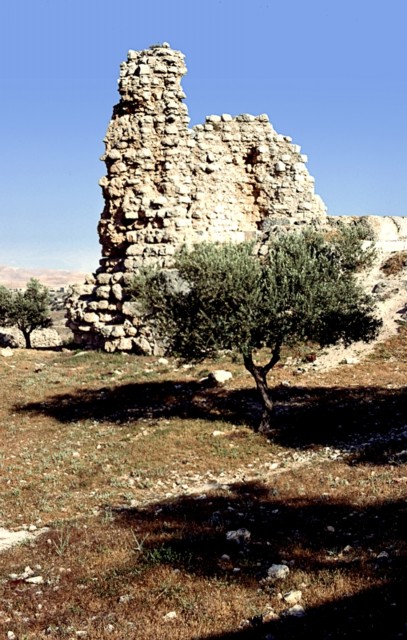
Side note: Though the Bible does not tell us where the inn was, a site has been identified and associated with the parable, and has become a museum.  You can read about it in this article at BibleArchaeology.org.

Read or listen to audio of ESV version of this selection from this link.

/Bob’s boy
___________________
some images © V. Gilbert & Arlisle F. Beers

Please note: I did not design the reading plan that I am following in my blog.  All of my comments in this blog, however, are solely my responsibility.  When reading ANY commentary, you should ALWAYS refer first to the scripture, which is God’s unchanging and unfailing word. Reading schedules, as well as a link to the site where you can get the reading plan that I’m currently following for yourself can be found on the “Bible Reading Schedules” page of my website at http://graceofourlord.com.  For questions and help, please see the “FAQ” and “Summaries” pages there.

Luke 9 – The Transfiguration

Mount Hermon is one possible location for the Transfiguration. Caesarea Philippi is near the base of it.

The first 27 verses of this chapter consist of details told in Mark 6 (sending out the Apostles, and the feeding of the five thousand) and Matthew 16 (Peter’s confession, and Jesus’ foretelling of His death and resurrection.   Jesus took Peter, John, and James with Him in verse 28 to pray on the mountain where they witnessed an unforgettable sight, as His appearance and even His clothing are transformed; and Moses and Elijah (representing the Law and the Prophets) appeared and spoke of Jesus departure “he was about to accomplish at Jerusalem.”  This of course , refers to what follows His coming crucifixion and resurrection.  Just as Peter speaks hastily again (verse 33), they hear the voice of God declaring what Peter had said – that Jesus is the son of God.   Peter assumed that Moses and Elijah would stay with them, but they were gone after God spoke, saying “Listen to Him.”  The presence and removal of those two seems significant, as well understand the scriptures today.

As Jesus foretells His death and resurrection in verse 44, verse 45 is one of a few verses that tell us how understanding and recognition was concealed from the disciples at various times until after Jesus departed following His resurrection (see also Luke 18:34 and Luke 24:16).  It is no small wonder then, that they began debating their own importance over each other.  Jesus settles the dispute with another statement in verse 48 that they would not yet understand  – “he who is least among you all is the one who is great.”  He would have more to say about this in Luke 22:26.

The lessons of verses 57-62 are in light of the urgency of the moment at which Jesus encounters them.  Two say that they want to follow Him, and He tells another to follow Him.  He tells one that he will have to make sacrifices in order to do so (verse 58).  The other two speak of matters important to them at the time that they want to take care of first (59, 61).  This was no time for other priorities; and though these instances refer to a more physical following, the application for us is the same – that following Jesus must take first priority in our lives.

Read or listen to audio of ESV version of this selection from this link.

/Bob’s boy
___________________
some images © V. Gilbert & Arlisle F. Beers

Please note: I did not design the reading plan that I am following in my blog.  All of my comments in this blog, however, are solely my responsibility.  When reading ANY commentary, you should ALWAYS refer first to the scripture, which is God’s unchanging and unfailing word. Reading schedules, as well as a link to the site where you can get the reading plan that I’m currently following for yourself can be found on the “Bible Reading Schedules” page of my website at http://graceofourlord.com.  For questions and help, please see the “FAQ” and “Summaries” pages there.

Matthew 16 – Jesus Foretells His Death and Resurrection

The Pharisees and the Saduccees Come to Tempt ...

The Pharisees and the Sadducees Come to Tempt Jesus (Photo credit: Wikipedia)

Normally, the Pharisees and Sadducees were at odds, and had little to do with each other.  But Jesus was perceived by both groups as a threat to their power.  That is why they came together in verse one asking him for a sign – in order to try to get something to use against him as the Pharisees and scribes had done earlier.  Jesus points out their ability to understand meteorological signs (verse 2), but they are unable to understand the signs that He has done (because they choose not to).  In verse 4, he says that no sign will be given except the sign of Jonah  (a repeat of His earlier statement in the encounter in Matthew 12:38-40).  He had told them of His coming death and resurrection already, but they had not understood that either.

In verse 5, the disciples caught up with Him (Jesus had gone over on the boat without them after feeding the four thousand in chapter 15) and realized they had forgotten to bring any bread.  So when He tells them to “beware of the leaven of the Pharisees and Sadducees,”  they still have their minds on bread; and they do not properly understand the statement.  Jesus is using the word “leaven” in the sense of something that influences another – in this case, the corrupt doctrine and hypocrisy of the Pharisees and Sadducees.  It is their (the disciples) faith (verse 8) that is preventing them from understanding the way He wants them to understand Him.  Jesus focuses their minds by reminding them of the miracles of feeding the two groups of thousands and the abundant left-overs, and repeating the warning.  That has the desired effect, and they finally “get it.”

After they arrive in the district of Caesarea Philippi, Peter answers Jesus’ question of verse 15 with the knowledge that He is the son of God. Jesus declares that he was blessed to have such knowledge revealed to him by God Himself (verse 17).  Unfortunately, verses 18-19 are the subject of much confusion and controversy.  Many people get lost in scrutinizing the Greek and Aramaic words for rock, but the simple fact is that Jesus uses a play on words, as scripture very often does, with Peter’s name.  And despite his flaws (and maybe even because of them), most of us really just like Peter.  But the gospel is not about the glory of Peter.  It is about Jesus, and our hope of salvation through Him.

The two verses are not so difficult to understand when you put them in context with verse 20, with the preceding verses, and with Jesus’ previous words about building a house on the rock (Matthew 7:24)  The rock that Jesus is building on is the foundation of the son of God and His teachings; and his church or kingdom (Greek “ekklesia” – congregation or assembly) is the collection, or body, of people who have been saved by their obedience and faithfulness (Ephesians 2:19-22, 1 Corinthians 12:13).  When Jesus says that He will give him the keys to the kingdom (in contrast to the scribes and Pharisees who cause people to be shut out – see Matthew 23:13), He is speaking of the divine revelation of His word, that will be given to the apostles by the Holy Spirit (John 16:12-15) to impart to us to be saved.  That is when they will truly “get it.”  The next part of verse 19 is best translated in the New American Standard Version, which in the correct tense says  “and whatever you bind on earth shall have been bound in heaven, and whatever you loose on earth shall have been loosed in heaven.”  Binding and loosing refer to forbidding and permitting, and the authority for their knowledge of it will be given to them.   This is repeated to all of them in Matthew 18:18.

Jesus then tells them to tell no one that He is the Christ.  Like Peter in verse 22, nobody would understand that the Christ has not come to rule as their earthly king anyway.  Only after He offers Himself in death will that understanding come.  Verse 21 (“From that time…”) is the first of four times from then until His arrival in Jerusalem, that He will tell them in Matthew of His imminent death and resurrection.  We tend to forget that as Jesus was also a man, Peter’s sentiment for keeping Jesus alive would be a temptation, knowing what He has to suffer.  It is in that light that we better understand His strong words to Peter in verse 23.

Verses 24-27 are the essence of what it means to be a Christian.  The knowledge of what the salvation of our souls means to us eternally should be enough to cause us to deny ourselves the worldly pleasures everyone finds so important – those things that would stand in the way of salvation.  If we do not, and we “gain the world,” we still will have lost everything.  The meaning of verse 28 is said by some to be that some of those present will see the Him come into His kingdom at His death and resurrection, which makes sense.  Others believe that it is the Transfiguration that comes in chapter 17, and is a preview of His divine glory to come.  Both answers have merit; and both may well be correct.  The point is that the time is coming soon.

Read or listen to audio of ESV version of this selection from this link.

/Bob’s boy
___________________
some images © V. Gilbert & Arlisle F. Beers

Please note: I did not design the reading plan that I am following in my blog.  All of my comments in this blog, however, are solely my responsibility.  When reading ANY commentary, you should ALWAYS refer first to the scripture, which is God’s unchanging and unfailing word. Reading schedules, as well as a link to the site where you can get the reading plan that I’m currently following for yourself can be found on the “Bible Reading Schedules” page of my website at http://graceofourlord.com.  For questions and help, please see the “FAQ” and “Summaries” pages there.