Song of Solomon 4 – A Garden Fountain

Wedding at Cana

Wedding at Cana

It would be a mistake to pass over the text of these verses without carefully considering the significance of the seven different descriptions of beauty that Solomon uses for his bride. Although once again some of these descriptions seem unflattering to us in many respects, they were indeed very sincere forms of flattery expressions of the physical attraction and desire that the king felt for his beloved bride. The fragrance of the sachet of myrrh between her breasts, referred to in Song of Solomon 1:13 has obviously captured his attention, as he expresses his passion for her in poetic descriptions he has of his beloved:

Your two breasts are like two fawns,
twins of a gazelle,
that graze among the lilies.
Until the day breathes
and the shadows flee,
I will go away to the mountain of myrrh
and the hill of frankincense.
You are altogether beautiful, my love;
there is no flaw in you.

The two lovers then consummate their marriage in delicious wedded bliss with neither guilt nor shame because it is a celebration that has been sanctioned by God for one man and one woman since the beginning of time (Genesis 2:23-25).

…a garden fountain, a well of living water,
and flowing streams from Lebanon.
Awake, O north wind,
and come, O south wind!
Blow upon my garden,
let its spices flow.

And the bride at last invites him into her garden

Let my beloved come to his garden,
and eat its choicest fruits.

Read or listen to audio of ESV version of this selection from this link.

/Bob’s boy
___________________
some images © V. Gilbert & Arlisle F. Beers

Please note: I did not design the reading plan that I am following in my blog.  All of my comments in this blog, however, are solely my responsibility.  When reading ANY commentary, you should ALWAYS refer first to the scripture, which is God’s unchanging and unfailing word. Reading schedules, as well as a link to the site where you can get the reading plan that I’m currently following for yourself can be found on the “Bible Reading Schedules” page of my website at http://graceofourlord.com.  
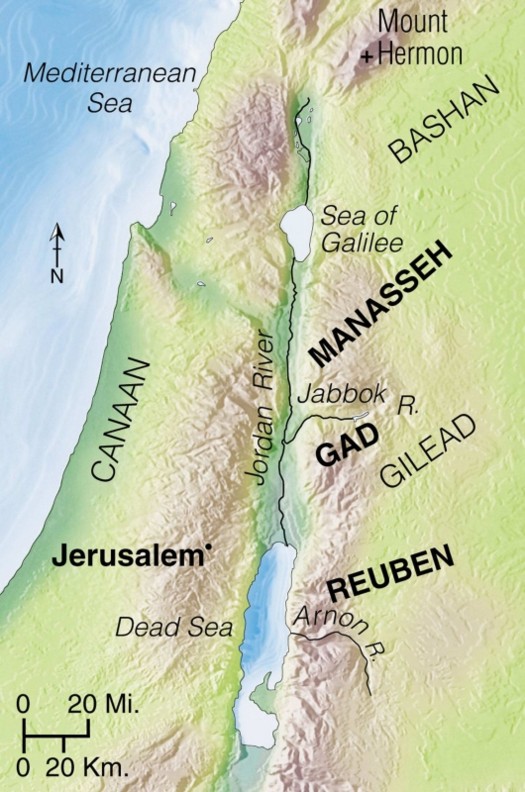
Book of Joshua Part 3 – Dividing the Land

Joshua assigned territory to the tribes of Reuben, Gad, and to the half-tribe of Manasseh on the east side of the Jordan, where they had chosen to remain because of the wonderful livestock country.

Joshua assigned territory to the tribes of Reuben, Gad, and to the half-tribe of Manasseh on the east side of the Jordan, where they had chosen to remain because of the wonderful livestock country.

This installment concludes our summary of the Book of Joshua in this series. Best estimates date the events of the book at about 1450-1425 BC. The book is important in several respects. Perhaps most importantly, it details the fulfillment of God’s promise to give Israel the land, and verification of that is given in Joshua 21:43-45. Verse 43 says “Thus the Lord gave to Israel all the land that he swore to give to their fathers. And they took possession of it, and they settled there.”  Then verse 45 affirms: “Not one word of all the good promises that the Lord had made to the house of Israel had failed; all came to pass.”

Secondly, it shows God’s expectation for man to perfectly obey his commandments (see Joshua 1:7-8, 23:1-6). Doing otherwise violates God’s sovereignty and authorization, and separates man from Him  (Joshua 6:17-19, 7:10-13). Practices that were forbidden were to be viewed by God’s people as detestable (Deuteronomy 7:26).  All of this applies today as well. Finally, the Book of Joshua teaches us not to be afraid of the things of this world. God commanded Israel to have no fear of man (Joshua 1:9; 10:8, 25). And Jesus said, “And be not afraid of them that kill the body , but are not able to kill the soul: but rather fear him who is able to destroy both soul and body in hell ” (Matthew 10:28).


The events of this final section are as follows:


    • Before Joshua died, he spoke to the Israelites, urging them to be faithful to the Lord (Joshua 23).

      Before Joshua died, he spoke to the Israelites, urging them to be faithful to the Lord (Joshua 23).

      The Northern Conquest of Canaan (Joshua 11:1–12:24)

      • Jabin king of Hazor, Jobab king of Madon, the king of Shimron , the king of Achshaph, and the kings that were “on the north, in the hill country.”  They captured all their kings and struck them and put them to death  (Joshua 11:17).
    • Dividing the Land (Joshua 13:1–21:45)
      • No land inheritance for the tribe of Levi (“to the tribe of Levi alone Moses gave no inheritance. The offerings by fire to the Lord God of Israel are their inheritance, as he said to him” Joshua 13:14)
      • The Inheritance East of the Jordan – the other half of the tribe of Manasseh the Reubenites and the Gadites received their inheritance, which Moses gave them, beyond the Jordan eastward (Joshua 13:8-32)
      • The Inheritance West of the Jordan (Joshua 14:1-5)
      • Caleb’s portion (Joshua 14:6-15)
      • Judah’s inheritance (Joshua 15)
      • Allotment for Ephraim and Manasseh (Joshua 16)
      • Allotment of the Remaining Land
      • Joshua’s charge to Israel’s leaders (Joshua 23:1–16)
      • Covenant renewal at Shechem (Joshua 24:1–33)
      • Death of Joshua and Eleazor, and the burial of Joseph’s bones (Joshua 24:29-33)
/Bob’s boy
___________________
image © V. Gilbert & Arlisle F. Beers

Please note: I did not design the reading plan that I am following in my blog.  All of my comments in this blog, however, are solely my responsibility.  When reading ANY commentary, you should ALWAYS refer first to the scripture, which is God’s unchanging and unfailing word. Reading schedules, as well as a link to the site where you can get the reading plan that I’m currently following for yourself can be found on the “Bible Reading Schedules” page of my website at http://graceofourlord.com.  

Song of Solomon 3 – The Bride’s Dream

The third chapter finds the bride in her bed at night with what we must suppose is a dream, filled with erotic thoughts and desires, and anxious inquisitiveness concerning the whereabouts of her beloved. The theory of a separate shepherd boy being the object of her true desires is clearly shown to be wrong, as her beloved has sent watchmen for her in this dream – and she herself has inquired of them as to his whereabouts. What would such watchmen have to do with a shepherd boy? The girl mentions Solomon by name no less that three times here, and what purpose would God have for using the Scripture to celebrate any adulterous desires on her part anyway?

Dream of Solomon

Dream of Solomon (Photo credit: Wikipedia)

She refers to Solomon as the one “whom my soul loves,” and finding him in that dream, she holds him close, bringing him into her mother’s house. But again in verse 5, she wishes not to “stir up or awaken love until it pleases.” Then, in a very public display of pomp, circumstance, and romantic affection, Solomon has her escorted by sixty of the kingdom’s mighty men onward to their nuptials. It is here that we are reminded of his words about enjoying “life with the wife whom you love” (Ecclesiastes 9:9)

Read or listen to audio of ESV version of this selection from this link.

/Bob’s boy
___________________
some images © V. Gilbert & Arlisle F. Beers

Please note: I did not design the reading plan that I am following in my blog.  All of my comments in this blog, however, are solely my responsibility.  When reading ANY commentary, you should ALWAYS refer first to the scripture, which is God’s unchanging and unfailing word. Reading schedules, as well as a link to the site where you can get the reading plan that I’m currently following for yourself can be found on the “Bible Reading Schedules” page of my website at http://graceofourlord.com.  

Song of Solomon 2 – My Beloved is Mine

Chapter 2 begins with very familiar words. Most everyone has heard the hymn titled “Jesus, Rose of Sharon.” The name Sharon means “a level plain,” and this one was laid out about 15 miles west of the Mediterranean Sea, bordered by Joppa, Lydda, and Caesarea. Today, the area is filled with citrus farms and small settlements. But as beautiful as the song is, the first two verses of this chapter have nothing to do with Jesus.

The Plains of Sharon.

The Plains of Sharon.

Instead the term, along with the lily of the valley, are used by the bride of this love poem to describe herself. Those who insist on making the “Song of Songs” an allegory about Jesus have, with the best of intentions, contributed to the misunderstanding of these Scriptures. Still, the song is appropriate when applied to Jesus, as is the “The Lily of the Valley,” which contains other more scriptural references to the King, such as from Revelation 22:16.

Solomon then counters her own description of herself by more flatteringly comparing his betrothed to a lily among the brambles. The lesson for us among these and the previous verses of the last chapter are the public display and declaration of affection, in an appropriate manner, with which Solomon comforts and elevates his bride (verse 6). Speaking now more pointedly of lilies in verse 16, she declares their love for each other – “My beloved is mine, and I am his; he grazes among the lilies,” while likening her beloved to “a gazelle or a young stag on cleft mountains.” Still, she desires to not to give herself over completely until the time is appropriate (“that you not stir up or awaken love until it pleases”).

Read or listen to audio of ESV version of this selection from this link.

/Bob’s boy
___________________
some images © V. Gilbert & Arlisle F. Beers

Please note: I did not design the reading plan that I am following in my blog.  All of my comments in this blog, however, are solely my responsibility.  When reading ANY commentary, you should ALWAYS refer first to the scripture, which is God’s unchanging and unfailing word. Reading schedules, as well as a link to the site where you can get the reading plan that I’m currently following for yourself can be found on the “Bible Reading Schedules” page of my website at http://graceofourlord.com.  

Song of Solomon 1 – Solomon and His Bride

The poem, the “Song of Songs, which is Solomon’s” (verse 1) opens with the bride professing her love for him, saying that his kisses are sweeter than wine. She speaks fondly of the fragrance of his anointing oils, and the charm with which he commands the other women. The “others” in verse four are the women of the kingdom who would rather be in her place. They counter that they value his love even more than wine, and press forth more flattery hoping to gain favor.

English: The Song of Songs (1853) by Gustave M...

English: The Song of Songs (1853) by Gustave Moreau, Oil on canvas, 319 x 300 cm, Musee des Beaux-Arts de Dijon (Photo credit: Wikipedia)

The bride says that she is dark of skin from her days in the sun working the vineyard and tending the flocks. She knows that she has beauty, but she is concerned that it will go unnoticed because of her weathered appearance – perhaps that she will even be taken as a foreigner. She is a common girl of meager means, but does not apologize for being unsheltered (“why should I be like the one who veils herself”).

We are not given the details of their courtship as the girl comes before the king. It is enough that he recognizes her beauty and speaks openly about it. The compliment he pays her – “I compare you, my love, to a mare among Pharaoh’s chariots” may not seem very flattering to us, but would be a true recognition of beauty in such a time and place. He also pictures her with strings of jewels. The “nard” of verse 12 is a herb that gives forth a pleasing fragrance. This is the fragrant oil with which the woman in John 12:3 anointed Jesus’ feet.

She refers to him as her beloved. The myrrh between her breasts to which she refers is a fragrant sachet used by women of the time. Her description of him as an ornament of beauty (“a cluster of henna-flowers in the vineyards of Engedi”) perhaps has more of the sound of flattery to us.

Though a powerful king, she has stood out in his sight, and now she pictures their life together in the future (verse 16).

Read or listen to audio of ESV version of this selection from this link.

/Bob’s boy
___________________
some images © V. Gilbert & Arlisle F. Beers

Please note: I did not design the reading plan that I am following in my blog.  All of my comments in this blog, however, are solely my responsibility.  When reading ANY commentary, you should ALWAYS refer first to the scripture, which is God’s unchanging and unfailing word. Reading schedules, as well as a link to the site where you can get the reading plan that I’m currently following for yourself can be found on the “Bible Reading Schedules” page of my website at http://graceofourlord.com.  

Ecclesiastes 12 – The End of the Matter

Tray with Seal of Solomon

Tray with Seal of Solomon (Photo credit: voyageAnatolia.blogspot.com)

Clearly connected to the end of chapter 11, the first verse of chapter 12 begins with the admonition to “remember your creator in the days of your youth.” The coming “evil days” he refers to is the process of aging. Solomon is correctly pointing out that remaining faithful to the Lord is much better; and that returning to serve Him is likely to be more difficult if one wanders away. Solomon is beautifully eloquent in these first few verses.

Some commentators have supposed that the shift in verses 6-8 to speaking of the Preacher in the third person may indicate a different author. But such a supposition requires forgetting that the first chapter began the same way. This most beautiful of books ends with the last two verses giving the most valuable and timeless advice:

The end of the matter; all has been heard. Fear God and keep his commandments, for this is the whole duty of man. For God will bring every deed into judgment, with every secret thing, whether good or evil.”

It is theorized by many that Solomon wrote this book in his later years, and must have repented for the sins of his younger years. We have no way of knowing whether this is actually the case., but we would like to think so. After all, all that wisdom had to be good for something, did it not?

Read or listen to audio of ESV version of this selection from this link.

/Bob’s boy
___________________
some images © V. Gilbert & Arlisle F. Beers

Please note: I did not design the reading plan that I am following in my blog.  All of my comments in this blog, however, are solely my responsibility.  When reading ANY commentary, you should ALWAYS refer first to the scripture, which is God’s unchanging and unfailing word. Reading schedules, as well as a link to the site where you can get the reading plan that I’m currently following for yourself can be found on the “Bible Reading Schedules” page of my website at http://graceofourlord.com.  

Ecclesiastes 11 – Cast Your Bread Upon the Waters

There are many different opinions concerning what the author meant in verse one, but the one that seems clearly correct to us is that he is talking about being benevolent. One good explanation of the phrase “cast your bread upon the waters” is that it means to give generously without expecting anything in return. Verse two continues the thought with “give a portion to seven, or even to eight.” The number seven in scripture is often referred to as the perfect number, representing completeness. “Even to eight,” then , would represent going above and beyond.

sea_003Verse 3 reminds us that there is little of importance in this life of which we are in control, and so verse 4 says that we should be about the work that we should be doing, rather than sitting around trying to analyze things. The remainder of the chapter reminds us that we cannot know the ways of God, and that we should make good and joyful use of the time we have here “under the sun.” That time is short and God will bring us into judgment for what we do with it. Verse 10 means that one should not let one’s problems, trials, or afflictions be the overwhelming focus of one’s attention.

Read or listen to audio of ESV version of this selection from this link.

/Bob’s boy
___________________
some images © V. Gilbert & Arlisle F. Beers

Please note: I did not design the reading plan that I am following in my blog.  All of my comments in this blog, however, are solely my responsibility.  When reading ANY commentary, you should ALWAYS refer first to the scripture, which is God’s unchanging and unfailing word. Reading schedules, as well as a link to the site where you can get the reading plan that I’m currently following for yourself can be found on the “Bible Reading Schedules” page of my website at http://graceofourlord.com.  

The Song of Solomon on Sexuality and Marriage

This week, as we finish Ecclesiastes, we will begin reading the Song of Solomon.

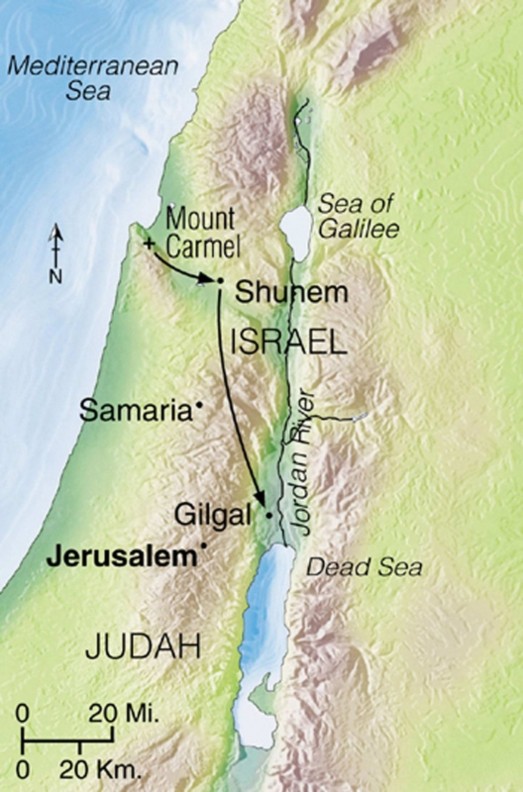
Shunem002Solomon is credited with having written 1,005 songs. Whether or not he wrote this book is just one of the things about the Song of Solomon that is disputed. The bride in the song is a young Shulamite woman (chapter 6:13).  Because of this, it is considered by many that she came from the village of Shunem (mentioned in Joshua 19:17-21 and 2 Kings 4:8), located in the land the tribe of Issachar. Tirzah is mentioned as well, and the towns of Shunem and Tirzah were in the northern kingdom.

It is quite obvious to virtually everyone that reads the book that the sexual relationship is the subject of most of the book. But perhaps partly due to embarrassment, and partly due to the view that sex is a most ungodly subject, one does not need to search very hard to find writers that try to make the book into something else.

One viewpoint comes from traditional Targumim (Targum) explanations, which defines the book as an allegory with the congregation of Israel being the bride, and Solomon a representation of God. Another holds that the Shulamite is the church of Jesus Christ, and that Solomon in the story represents God. Neither of these theories make any sense, however, if one considers the great sin of Solomon with women. Apparently, the song was written fairly early in his exploits, as it only lists “sixty queens and eighty concubines,  and virgins without number” (Song of Solomon 6:8).  This was explicitly forbidden for a king in Deuteronomy 17:15-17. Another theory holds that there are actually three chief characters – Solomon, the Shulamite, and a shepherd boy who is her true love.  But this one makes no sense either, because the Scripture clearly states that the Shulamite’s “beloved” is the king himself (Song of Solomon  1:12-14).

wedding ringsAnything, it seems, would be more palatable than a book of Scripture written about the fundamental and healthy relationship of love between a man and a woman. But such should not be the case if one considers it carefully. Who is there that is more qualified than the Creator of life (and yes, of sex itself), to “breathe out” the word on the subject of the most sacred act between a man and a woman? Time and again in the Bible, God has made it known to man (and woman) under what circumstances the sexual relationship is proper, as well as how it is best enjoyed.

Such “misunderstanding” was apparently not always the case. In his commentary, Franz Delitzsch wrote: “because of its apparently erotic, but in truth mysterious contents, it was a Jewish saying, as Origen and Jerome mention, that the Song should not be studied by any one till he was thirty years of age” (Delitzsch, F. J. Commentary on the Song of Songs and Ecclesiastes, Grand Rapids, Mi.: William B. Eerdmans Publishing).

Read or listen to audio of ESV version of this selection from this link.

/Bob’s boy
___________________
some images © V. Gilbert & Arlisle F. Beers

Please note: I did not design the reading plan that I am following in my blog.  All of my comments in this blog, however, are solely my responsibility.  When reading ANY commentary, you should ALWAYS refer first to the scripture, which is God’s unchanging and unfailing word. Reading schedules, as well as a link to the site where you can get the reading plan that I’m currently following for yourself can be found on the “Bible Reading Schedules” page of my website at http://graceofourlord.com.  
Ecclesiastes 10 – Wisdom and Folly

At first reading, chapter 10 seems a little out of place. All of these proverbs look like they belong in a different book. But the theme of the chapter is the same as some previous chapters, and most of the proverbs relate to two contrasting things – wisdom and folly. Verse 4 seems to encourage those who serve in a position close to authority to stand their ground with gentleness under adversity. The evil “under the sun” Solomon speaks of in verse 5 refers to the fact that “fools”often are put in places of high position. One should not assume a person in such a position necessarily knows what they are doing.


English: Ecclesiastes, (קֹהֶלֶת, Kohelet, &quo...

English: Ecclesiastes, (קֹהֶלֶת, Kohelet, “son of David, and king in Jerusalem” alias Solomon, Wood engraving (Photo credit: Wikipedia)


Verses 8-9 remind us that those who plan evil often fall victim to such things. Verse 10 indicates the value of working smarter – not harder. The wise man will take the time to sharpen the saw, whereas the fool struggles with the dull instrument. The remainder of the chapter deals with the proper conduct of those in authority, but verse 20 warns that one’s lips can easily get one into trouble when it comes to voicing unfavorable opinions of those in power. Better to not gossip in the first place.


Read or listen to audio of ESV version of this selection from this link.


/Bob’s boy


___________________


some images © V. Gilbert & Arlisle F. Beers


Please note: I did not design the reading plan that I am following in my blog.  All of my comments in this blog, however, are solely my responsibility.  When reading ANY commentary, you should ALWAYS refer first to the scripture, which is God’s unchanging and unfailing word. Reading schedules, as well as a link to the site where you can get the reading plan that I’m currently following for yourself can be found on the “Bible Reading Schedules” page of my website at http://graceofourlord.com.  

 

Ecclesiastes 9 – Joy In Life and Love

Verses 1-3 continue the thought of the last chapter that man cannot know what awaits him in this life – what will happen along the way. The preacher says that there is one fate for all – for the righteous and the wicked. For those who serve the Lord, and for those who do not, it is all the same – their fate “under the sun” is death. Solomon says that this fact is “an evil” in verse 3, meaning that it is an “unfair” fact of life.

sunset_002It does seem most unfair that good is often not rewarded in this life, while at the same time, evil’s punishment often does not come quickly. And then in the end they both are dead anyway. This also means that the wicked not only get the same end under the sun, but seeing no consequences for their evil they just continue – thumbing their noses at the rest of the world. So what is the advantage for those who try to do good while “under the sun?”

It is in verse 4 that the preacher begins to answer that question – while we are living under the sun, we still have hope. For the dead, there is no reward to work toward. Their fate is determined, and the Lord will judge their deeds.  In verse 5, a “living dog” being better that a “dead lion” means that no matter how great and powerful one may be while under the sun, once dead there is (for them) no more love, no more hate, and no more share of things in this life. But again the living still have hope.

This leads up to an important point that the wise man is making. It is a fact that our own pleasure and happiness while “under the sun” are not God’s foremost concern, nor should they be ours. But while serving God and leading others to do the same, we should not neglect to have joy in what we have been blessed with here – in this mere breath of a life (verse 9).  Verse 10’s admonition (whatever your hand finds to do, do it with your might”) is the basis for the hymn “To the work!”

The preacher then points out that being the fastest runner, the strongest in battle, or the most intelligent person – none of these guarantee one’s successes. The variable of chance will often find its way into the equation when one takes his own abilities too seriously. This leads to the final point Solomon makes in verses 13-18. Wise council may be ignored and unappreciated if it does not come from those that are favored among men, but it is no less valuable.

Read or listen to audio of ESV version of this selection from this link.

/Bob’s boy
___________________
some images © V. Gilbert & Arlisle F. Beers

Please note: I did not design the reading plan that I am following in my blog.  All of my comments in this blog, however, are solely my responsibility.  When reading ANY commentary, you should ALWAYS refer first to the scripture, which is God’s unchanging and unfailing word. Reading schedules, as well as a link to the site where you can get the reading plan that I’m currently following for yourself can be found on the “Bible Reading Schedules” page of my website at http://graceofourlord.com.