Psalm 59 – My Fortress

King Saul grew insanely jealous of David because of David's success and the praise people heaped upon him. Before long, Saul made plans to murder David. Eventually Saul's daughter Michal, who was also David's wife, helped David escape (1 Samuel 19).

King Saul grew insanely jealous of David because of David’s success and the praise people heaped upon him. Before long, Saul made plans to murder David. Eventually Saul’s daughter Michal, who was also David’s wife, helped David escape (1 Samuel 19).

According to the superscription, this is another psalm sung to the tune of “Do not destroy.” It also says that it was written at the time when Saul sent men to watch his house to kill him (this occurred in 1 Samuel 19). The psalm fits with that time in his life, if for no other reason, because of his claims of innocence from sin for these events. Verses 3-4 say that they lie in wait and “for no transgression or sin of mine, O Lord, for no fault of mine, they run and make ready.”

Verses 8-10 demonstrate David’s trust in the Lord through all of this, as he says that God laughs at them, and proclaims Him as his fortress in His steadfast love. David then asks God not to kill them because the people would just soon forget. Instead, he wants them subdued so that their punishment can serve as an example to his people.  The verses about them wandering about for food, but not getting their fill are allusions to the comparison he made of them to howling dogs in verse 14. David himself is the prey they seek. But David is unafraid and again promises to sing of God’s strength – his fortress.

Read or listen to audio of ESV version of this selection from this link.

/Bob’s boy
___________________
some images © V. Gilbert & Arlisle F. Beers

Please note: I did not design the reading plan that I am following in my blog.  All of my comments in this blog, however, are solely my responsibility.  When reading ANY commentary, you should ALWAYS refer first to the scripture, which is God’s unchanging and unfailing word. Reading schedules, as well as a link to the site where you can get the reading plan that I’m currently following for yourself can be found on the “Bible Reading Schedules” page of my website at http://graceofourlord.com.  

Proverbs 14 – The End of Joy May Be Grief

depression_anxiety_003Verse 10 says that “The heart knows its own bitterness, and no stranger shares its joy.” No matter how close we get to someone, rarely does anyone ever reach the point that we share every detail of the heart. Almost without exception it is just human nature to hold something back – at a minimum, the darkest moments are not shared. By the same token, nobody who is not close truly shares the joy that comes to us at those rare times when fortunes are at their best.

Verse 13 says “Even in laughter the heart may ache, and the end of joy may be grief.” Outward appearances can sometimes be deceptive; and we do not always know what is in another’s heart. Many times, people surround themselves with those they believe will make them happy, hoping the sorrow will go away. But often, the charade ends up leaving them still in need of support.

The answer to these enigmas is prayer. The Lord knows our needs and wants to listen to us when we are in despair. Casting our burdens on him is not simply a good thing to do – it is scriptural; and develops the trust in Him that we need.

Psalm 34:18 – The Lord is near to the brokenhearted and saves the crushed in spirit.

Psalm 147:3 – He heals the brokenhearted and binds up their wounds.

1 Peter 5:7 – Casting all your anxieties on him, because he cares for you.

Read or listen to audio of ESV version of this selection from this link.

/Bob’s boy
___________________
some images © V. Gilbert & Arlisle F. Beers

Please note: I did not design the reading plan that I am following in my blog.  All of my comments in this blog, however, are solely my responsibility.  When reading ANY commentary, you should ALWAYS refer first to the scripture, which is God’s unchanging and unfailing word. Reading schedules, as well as a link to the site where you can get the reading plan that I’m currently following for yourself can be found on the “Bible Reading Schedules” page of my website at http://graceofourlord.com.  For questions and help, please see the “FAQ” and “Summaries” pages there.
Psalm 111 – Great Are the Lord’s Works

Preceding Psalm 112, which is clearly a psalm of wisdom, this hymn of praise and thanksgiving begins with recognition of the great works of the Lord on behalf of His chosen people. The theme is the splendor an majesty of the acts of power and might that only God Himself could possibly work.

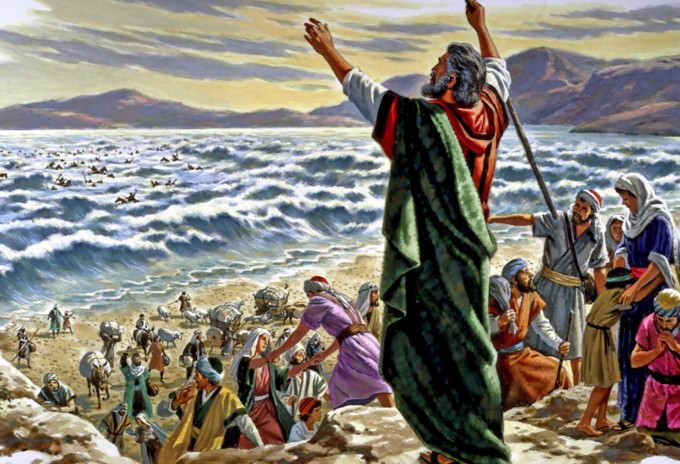
When the Israelites were safely across the Red Sea, crossing on dry land, Moses stretched out his hands and the waters of the sea poured back over the Egyptians and their chariots (Exodus 14:23-31).

When the Israelites were safely across the Red Sea, crossing on dry land, Moses stretched out his hands and the waters of the sea poured back over the Egyptians and their chariots (Exodus 14:23-31).

He has caused His works to be remembered by His people through their grateful word passed down through the generations as He had willed them to do (Exodus 12:25-27, Job 4:1-7) – and by His holy word through His prophets. It reminds us that God cares for His people (“He provides food for those who fear him; he remembers his covenant forever”). Verses 6-9 appear to continue the covenant remembrance as it recalls deliverance from Egypt. The psalm concludes in verse 10 with a phrase pointing to Proverbs 9:10 (“The fear of the Lord is the beginning of wisdom”).

Read or listen to audio of ESV version of this selection from this link.

/Bob’s boy
___________________
some images © V. Gilbert & Arlisle F. Beers

Please note: I did not design the reading plan that I am following in my blog.  All of my comments in this blog, however, are solely my responsibility.  When reading ANY commentary, you should ALWAYS refer first to the scripture, which is God’s unchanging and unfailing word. Reading schedules, as well as a link to the site where you can get the reading plan that I’m currently following for yourself can be found on the “Bible Reading Schedules” page of my website at http://graceofourlord.com.  
2 Chronicles – The Events of the Days

The Book of 2 Chronicles starts out in verse 1 saying “Solomon the son of David established himself in his kingdom, and the Lord his God was with him and made him exceedingly great.” It ends in chapter 36 with the proclamation of Cyrus, inviting the exiles to return to Judea and rebuild. This spans a time period of about 430 years. The capstone chapter is chapter 34, which begins the reign of King Josiah and his dramatic reforms and restoration.

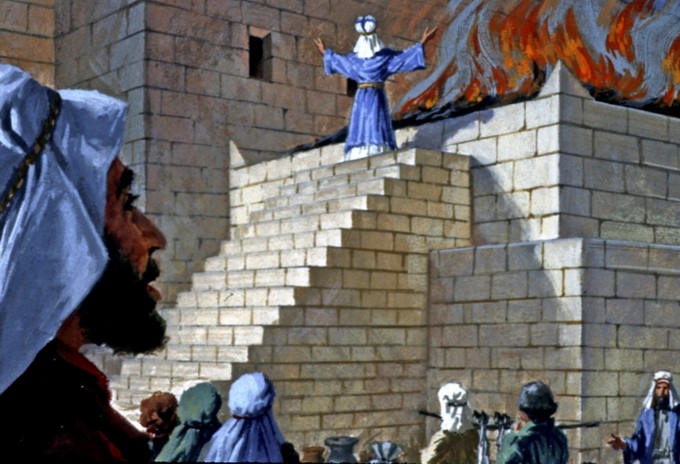
During the eighteenth year of King Josiah's reign, he held a great Passover festival to celebrate the restored Temple 2 Chronicles 35:1-27)

During the eighteenth year of King Josiah’s reign, he held a great Passover festival to celebrate the restored Temple 2 Chronicles 35:1-27)

As the temple was being repaired, the priest Hilkiah found the book of the law in the house of the Lord. Then Shaphan the scribe read it to Josiah. When the great king realized the extent of the utter failure of his people in serving the Lord, he became extremely upset (2 Chronicles 34:19-24). At his bidding, Hilkiah went to Huldah the prophetess, who issued the news of the dire fate that awaited the people. Thus began a period of great change that put off the wrath of the Lord until Josiah’s death in 2 Chronicles 35. But the evil returned under the reign of his son, Jehoiakim (2 Chronicles 36:1-5).

Key events of 2 Chronicles

Solomon’s wisdom and prosperity  (2 Chronicles  1)
The building of the Temple (2 Chronicles 3–5:1)
Ark transported to the Temple (2 Chronicles 5:2–12)
God’s glory fills the temple (2 Chronicles 5:13–14)
Solomon blesses the people and consecrates the temple (2 Chronicles 6)
Fire from the Lord consumes the sacrifices (2 Chronicles 7:1–7)
Feast of Tabernacles and covenant confirmation (2 Chronicles 7:8–22)
Queen of Sheba visits (2 Chronicles 9:1–12)
Death of Solomon (2 Chronicles 9:29–31)

Division of the kingdom (2 Chronicles 10:1–11:23)
Reign of Rehoboam (Judah) (2 Chronicles 12:13–16)
War between Judah and Israel (2 Chronicles 13:1–22)
Asa’s reforms (2 Chronicles 15:8–19)
Asa defeats Syria (2 Chronicles 16:1–10)
Expansion of Judah (2 Chronicles 17:10–19)
Jehoshaphat’s alliance with Ahab and the death of Ahab (2 Chronicles 18:1–34)
Jehoshaphat’s reforms and his reign (2 Chronicles 19:1–20:37)

/Bob’s boy
___________________
image © V. Gilbert & Arlisle F. Beers

Please note: I did not design the reading plan that I am following in my blog.  All of my comments in this blog, however, are solely my responsibility.  When reading ANY commentary, you should ALWAYS refer first to the scripture, which is God’s unchanging and unfailing word. Reading schedules, as well as a link to the site where you can get the reading plan that I’m currently following for yourself can be found on the “Bible Reading Schedules” page of my website at http://graceofourlord.com.  

Psalm 103 – Bless the Lord, O My Soul

Though both the Northern Kingdom and the Southern Kingdom would be sent into exile, God still promised to bring them back. While Joab and the Israelite army were far off attacking Rabbah, David stayed behind in Jerusalem and eventually committed adultery with Bathsheba, the wife of one of David's best soldiers.

Though both the Northern Kingdom and the Southern Kingdom would be sent into exile, God still promised to bring them back. While Joab and the Israelite army were far off attacking Rabbah, David stayed behind in Jerusalem and eventually committed adultery with Bathsheba, the wife of one of David’s best soldiers.

Again the superscription of this psalm assigns the author as David, while many scholars believe that it’s origin was during the time of Babylonian captivity. The reason there are so many psalms which have this ambiguity and controversy is because the time of captivity and exile bears great similarity to the time when David had his ordeal with Absalom – following his sins with Bathsheba and the murder of Uriah the Hittite. God’s proclamation through Nathan of the woes to come for David were, as always, utterly fulfilled as was the judgment on his people for their idolatry. It was the shame for their sin, repentance and regret, and utter despair at the consequences of their action that was the common denominator.

Psalm 103 is another hymn of praise, declaring the love of the Lord for His people despite the punishment he had brought to pass on them. The recognition in verse 6 of the Lord’s justice for the righteous and the oppressed applies equally to David’s situation as it does to Uriah in his death, as well as to the poor and unfortunate that the people had abandoned in their selfishness, greed, and idolatry before exile. The text speaks of the brevity of life on earth for man contrasted with the everlasting and steadfast love that the Lord has for His people.

Read or listen to audio of ESV version of this selection from this link.

/Bob’s boy
___________________
some images © V. Gilbert & Arlisle F. Beers

Please note: I did not design the reading plan that I am following in my blog.  All of my comments in this blog, however, are solely my responsibility.  When reading ANY commentary, you should ALWAYS refer first to the scripture, which is God’s unchanging and unfailing word. Reading schedules, as well as a link to the site where you can get the reading plan that I’m currently following for yourself can be found on the “Bible Reading Schedules” page of my website at http://graceofourlord.com.  

Job 26 – God’s Majesty

earth_004Occasionally, it seems difficult to know when to take some of the conversations between Job and the three guests at face value. In this case, the first few verses appear to be full of sarcastic irony – particularly verse 4 (“With whose help have you uttered words,and whose breath has come out from you?”). It really feels like Job is asking if they came up with these “brilliant conclusions” about man and his relationship to God all by themselves.

Job then demonstrates his own insight into the awesome power of the Lord. “He stretches out the north over the void and hangs the earth on nothing.” He makes the clouds, filling them with downpours of rain, and they hold together until he wills it to be released (He binds up the waters in his thick clouds, and the cloud is not split open under them”). He continues his poetic illustrations of God’s mighty power with references to the moon, the heavens, and the seas. He knows that God is ruler over all creation, but he still believes that the Lord has been unfair about justice where Job himself is concerned. Still, he refuses to speak of Him in an openly disrespectful manner.

Read or listen to audio of ESV version of this selection from this link.

/Bob’s boy
___________________
some images © V. Gilbert & Arlisle F. Beers

Please note: I did not design the reading plan that I am following in my blog.  All of my comments in this blog, however, are solely my responsibility.  When reading ANY commentary, you should ALWAYS refer first to the scripture, which is God’s unchanging and unfailing word. Reading schedules, as well as a link to the site where you can get the reading plan that I’m currently following for yourself can be found on the “Bible Reading Schedules” page of my website at http://graceofourlord.com.  For questions and help, please see the “FAQ” and “Summaries” pages there.

Psalms 42-43 – As the Deer Panteth

Mount Hermon is one traditional site for Jesus' transfiguration, and is near the site of mount Mizar, mentioned in Psalm 42

Mount Hermon is one traditional site for Jesus’ transfiguration, and is near the site of mount Mizar, mentioned in Psalm 42

Psalms 42-43 compose Book 2 of the Psalms; and many believe that 42 and 43 are actually a single psalm that was divided in error. The case for that claim is strengthened by the fact that the two share a couple of refrains – 42:9 and 43:2 are mostly the same, as are 42:11 and 43:5. When the two psalms are read together, they flow quite smoothly.

Psalm 42 is the basis for the  hymn “As the Deer Panteth,” by Martin Nystrom. It is the song of a child of God who is separated by miles from the place where worship was done. The psalmist longs to be in the presence of God to worship and praise Him in song. It is believed that the psalm was written by David, and Psalm 42’s superscription supports that belief – at least where chapter 42 is concerned. But the circumstances and verses well fit a psalmists possible words during the Babylonian captivity. It is the timeless nature of God’s word that makes these possibilities equally credible.

Read or listen to audio of ESV version of this selection from this link.

/Bob’s boy
___________________
some images © V. Gilbert & Arlisle F. Beers

Please note: I did not design the reading plan that I am following in my blog.  All of my comments in this blog, however, are solely my responsibility.  When reading ANY commentary, you should ALWAYS refer first to the scripture, which is God’s unchanging and unfailing word. Reading schedules, as well as a link to the site where you can get the reading plan that I’m currently following for yourself can be found on the “Bible Reading Schedules” page of my website at http://graceofourlord.com.  

Proverbs 13 – Always Rejoicing

In verses 7-9, the Holy Spirit teaches us that which is of the greatest value in life, yet is seldom seen as such by most people. Nobody begins life as an adult by seeking to be unsuccessful. We get the best education that we can. We try to earn our wages in a field in which we possess some skill; and if possible, we try to put some away for our later years when we are no longer able to work. For some, success at doing these things comes very easily. Others do not always find that to be the case.

early 1890sV. 7
One pretends to be rich, yet has nothing;
another pretends to be poor, yet has great wealth.
V. 8
The ransom of a man’s life is his wealth,
but a poor man hears no threat.
v. 9
The light of the righteous rejoices,
but the lamp of the wicked will be put out

Are the wealthy always so much better off than the poor indeed? The accumulation of such great wealth, though appealing to most of us, does not always result in the best quality of life. Mountains of money and endless possessions did not seem to make life joyous for Howard Hughes. Elvis Presley’s fame and fortune often kept him from going out in public, and he died seemingly “before his time” as did Michael Jackson.

family reunionMy parents were “products” of the Great Depression, and knew first-hand what poverty was like. My father had to leave school in the 8th great to go to work just so the family could survive. They never had much in worldly possessions when they were growing up; and after the Great War, life was still a struggle. We never had great wealth even after I was born, but I and my siblings never knew what it was like to be truly hungry or to do without any of what most people would consider to be the real necessities of life. All the way into my teenage years, I often marveled at the simple life my grandparents still lived in a house no larger in square footage than the game room in my current home.

But who is rich, and who is poor really? My grandparents and their siblings made up a large extended family that was always close through the years before and after the “baby boom.” And though they had little in the way of material wealth, they were incredibly happy because they had been given a precious gift – great love for the Lord, and for each other. and nearly 60 years later, the family reunions have remained large in numbers.

Paul’s words in 2 Corinthians 6:8-10 come to mind:

…We are treated as impostors, and yet are true; as unknown, and yet well known; as dying, and behold, we live; as punished, and yet not killed; as sorrowful, yet always rejoicing; as poor, yet making many rich; as having nothing, yet possessing everything.

Read or listen to audio of ESV version of this selection from this link.

/Bob’s boy
___________________
some images © V. Gilbert & Arlisle F. Beers

Please note: I did not design the reading plan that I am following in my blog.  All of my comments in this blog, however, are solely my responsibility.  When reading ANY commentary, you should ALWAYS refer first to the scripture, which is God’s unchanging and unfailing word. Reading schedules, as well as a link to the site where you can get the reading plan that I’m currently following for yourself can be found on the “Bible Reading Schedules” page of my website at http://graceofourlord.com.  For questions and help, please see the “FAQ” and “Summaries” pages there.

Psalm 110 – The Lord Says To My Lord

War came to the land in the days of Abram and Lot when five subject kings rebelled against Chedorlaomer, or Kedorlaomer and Lot was captured (Genesis 13:5--14:24). Abraham rallied his men, attacked at night, conquered the enemy, and rescued Lot. In this painting, he is sharing the spoils of battle with Melchizedek, king of Salem.

War came to the land in the days of Abram and Lot when five subject kings rebelled against Chedorlaomer, or Kedorlaomer and Lot was captured (Genesis 13:5–14:24). Abraham rallied his men, attacked at night, conquered the enemy, and rescued Lot. In this painting, he is sharing the spoils of battle with Melchizedek, king of Salem.

This short psalm is cited, or is referred to in several important New Testament passages concerning the Lord Jesus Christ. We find verse one in Matthew 22:44, Mark 12:36, Luke 20:42-43, and Acts 2:34-35, and Hebrews 10:13. Verse 4 (the Lord has sworn and will not change his mind, “You are a priest forever after the order of Melchizedek.”) is cited in Hebrews 7:17-21 and Hebrews 5:6. In Genesis 14:17-18, we learn that Melchizedek was “priest of God Most High,” though he was not even a Jew.

In the gospels, Jesus draws attention to the fact that David called the king “my Lord,” meaning that the king (the Messiah) was greater than David.  Verses 2-7 look to the Davidic king’s rule over God’s people, even when threatened by hostile powers (rule in the midst of your enemies). The people of God will offer themselves freely on the day of your power – as in on the day God exerts his power to bring the Gentiles into the fold (verse 7).

Read or listen to audio of ESV version of this selection from this link.

/Bob’s boy
___________________
some images © V. Gilbert & Arlisle F. Beers

Please note: I did not design the reading plan that I am following in my blog.  All of my comments in this blog, however, are solely my responsibility.  When reading ANY commentary, you should ALWAYS refer first to the scripture, which is God’s unchanging and unfailing word. Reading schedules, as well as a link to the site where you can get the reading plan that I’m currently following for yourself can be found on the “Bible Reading Schedules” page of my website at http://graceofourlord.com.  
1 Chronicles – The Annals of the Times

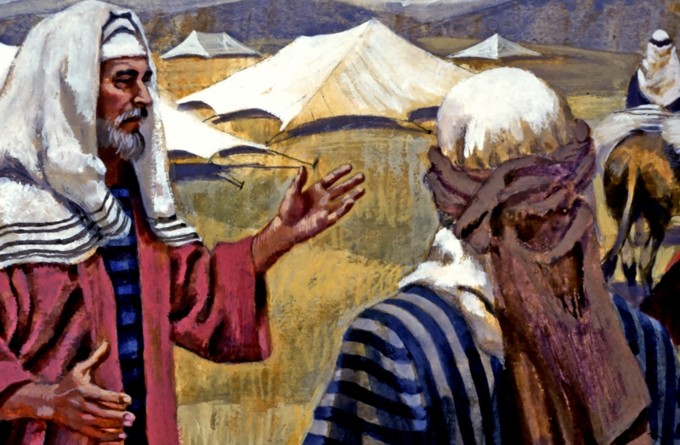
David bringing the Ark to Jerusalem

David bringing the Ark to Jerusalem

Like the Book of Samuel, 1 & 2 Chronicles were originally one book. The Hebrew title is “Dibre Hayyamim” (meaning “Events of the Times” or “Annals”), which can be assumed to have been abbreviated from “Sepher Dibre Hayyamim,” for “The Book of the Events of the Times.”  In the Septuagint, it is known as “Paraleipomena,” or “The Things Omitted,” suggesting information supplemental to The Books of Samuel and Kings. In fact, so much of the Scripture in the Books of Chronicles can be found in Kings that many people wonder why God would have wanted two such similar records.

There are a couple of very good answers to that question. As always, it is good to remember that any time we see something repeated in Scripture, it is a pretty good indication that it is important. Secondly, unlike Kings, the Books of Chronicles have little at all to say about the northern kingdom, but instead they are centered almost totally around Judah, or the southern kingdom. It is also argued that the perspective in the Chronicles is less from a historical viewpoint than it is for edification.

As an act of pride, King David forced Joab to take a census of men of military age. The Lord was displeased with David for this and sent a great plague.

As an act of pride, King David forced Joab to take a census of men of military age. The Lord was displeased with David for this and sent a great plague.

Jewish tradition holds that Ezra was the author, although there is nothing in the books to verify this. It was once believed that the Chronicles along with Ezra and Nehemiah were once one book, but most scholars now recognize them as separate works of approximately the same period. A post-exilic date of 450-400 BC for the Book seems to be validated by the mention of several descendants of David from the period in places such as 1 Chronicles 3:17-24.

The first nine chapters of 1 Chronicles are a lengthy list of genealogies that begin with Adam and conclude with that of the returning exiles. Such a long and tedious (to us) list provokes questions about the reason for them to be there at all.  In fact, they are important for more than one reason. First, it would be important to identify the Levites after returning from captivity in order to properly preserve the priesthood. Secondly, the proper heirs for the land could be identified for distribution to those returning to Jerusalem from captivity. Finally, it preserves the record of the lineage of David – important to validate the lineage of the Messiah.

Outline of 1 Chronicles

 /Bob’s boy

___________________
image © V. Gilbert & Arlisle F. Beers

Please note: I did not design the reading plan that I am following in my blog.  All of my comments in this blog, however, are solely my responsibility.  When reading ANY commentary, you should ALWAYS refer first to the scripture, which is God’s unchanging and unfailing word. Reading schedules, as well as a link to the site where you can get the reading plan that I’m currently following for yourself can be found on the “Bible Reading Schedules” page of my website at http://graceofourlord.com.