Psalm 121 – My Help Comes from the Lord

Psalm 121 is another of those known as a “Song of Ascents” (Psalms 120-134). The superscription in the KJV terms it a “Song of Degrees.” These psalms are otherwise known as “Pilgrim Songs,” “Songs of the Steps”, or “the Gradual Songs.” As tradition holds that these psalms were sung by those making the pilgrimage to Jerusalem, this one appears to be intended to give reassurance to those making that journey.

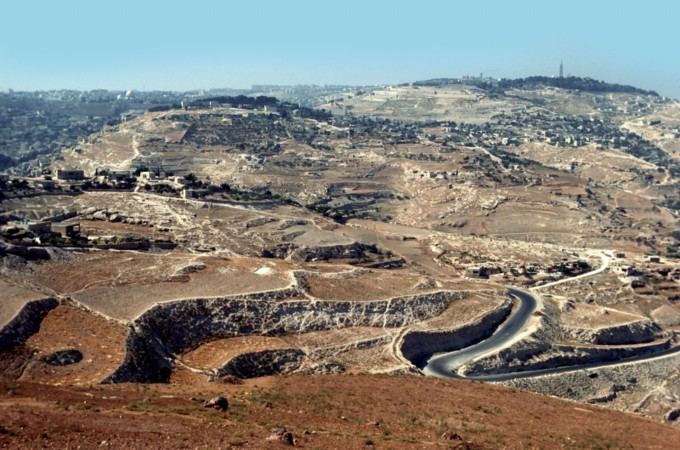
City of Jerusalem from a distance

City of Jerusalem from a distance

Verse one begins with “I lift up my eyes to the hills,” which would fit very well for someone traveling to Jerusalem. The question that follows (“from where does my help come?”) and its answer in verse 2 (“my help comes from the Lord, who made heaven and earth”) both are meant to apply to the traveler in his present circumstance, as well as to all of us throughout life. The idea is that we are in good hands with He “who created the heavens and the earth” as our keeper.

In these eight short verses, the reference to God as the “keeper” is made six times. The line in verse 5 (“the Lord is your keeper; the Lord is your shade on your right hand”),  recalls the words of Psalm 91:1 (“he who dwells in the shelter of the Most High will abide in the shadow of the Almighty”). Verse 7 (“the Lord will keep you from all evil”) does not mean that He will never allow anything bad to happen to His people. The second part of the verse tells the story of the promise of salvation for His people (“he will keep your life”). As Paul said to the Romans, “if God is for us, who can be against us?” (Romans 8:31).

Read or listen to audio of ESV version of this selection from this link.

/Bob’s boy
___________________
some images © V. Gilbert & Arlisle F. Beers

Please note: I did not design the reading plan that I am following in my blog.  All of my comments in this blog, however, are solely my responsibility.  When reading ANY commentary, you should ALWAYS refer first to the scripture, which is God’s unchanging and unfailing word. Reading schedules, as well as a link to the site where you can get the reading plan that I’m currently following for yourself can be found on the “Bible Reading Schedules” page of my website at http://graceofourlord.com.  


Book of Lamentations (Major Prophets – Part 1)

In the Hebrew Bible, Lamentations is called Ekah (Hebrew for “how”), after the first word in the book, which has been referred to as either a groan or a cry of  grief – therefore, a lament. The word begins the first two sentences in chapter one. It also begins chapter 2, and is used twice in the first sentence of chapter 4. The statements that these sentences make accentuate the fallen state of Jerusalem and its people, as well as the anger the Lord has for them at the time (Lamentations 2:1). The book is sometimes also referred to by use of the Hebrew word “kinnoth,” which is “lamentations,” which ultimately comes from the verb “konen” for “lament.”

"Jeremiah Lamenting the Destruction of Je...

“Jeremiah Lamenting the Destruction of Jerusalem” by Rembrandt Harmenszoon van Rijn. (Photo credit: Wikipedia)

Most scholars attribute the writing of the book to Jeremiah and (notwithstanding some pretty feeble arguments by a few) there really is no reason to dispute that. The book served to solidify for the prophet the title of “the weeping prophet.” There are some that suggest that the prophet was writing about events that had not yet occurred, but that really does not seem likely, as the descriptions of the dire circumstances, despair, and suffering of the people are very personal and passionate, and highly suggestive of an eyewitness account, especially in chapter 4.

The chapters of the book are usually referred to as 5 poems – an assessment that seems very accurate when one reads them. The Book of Lamentations is an expression of immense grief in a very poetic literary style. However, each lament moves rapidly from one tragic point to another, demonstrating the utter despair and turmoil in Jeremiah’s soul. The poems in Lamentations express profound loss, recalling bygone days of glory, while lamenting in the enumeration of what is now gone forever, trying to find some measure of consolation in his sorrows, as well as some hope for the future. At the center of it all, of course, is the destruction of Jerusalem by Nebuchadnezzar.

The entire book (with the exception of the last chapter) has an acrostic pattern that is unique. Chapters 1, 2 and 4 each have 22 verses – one for each letter of the Hebrew alphabet. And each verse begins with a different letter. Chapter 3 has 66 verses, and each letter is represented by three verses in succession, repeating the alphabet three times. Each verse of chapters 1 and 2 consist of three dual clauses (except for 1:7 and 2:19, which have four). Each verse of chapter 4 consists of two dual clauses. But there are two aspects of the book’s composition that are even more puzzling. The first is that in chapters 2, 3, and 4 the 17th letter (“pey” or “phey”) occurs before the 16th (“ayin”). Secondly, although the 5th chapter is not an acrostic, it contains exactly 22 verses.

English: Woodcut for "Die Bibel in Bilder...

English: Woodcut for “Die Bibel in Bildern”, 1860. Lamentations of Jeremiah Deutsch: Holzschnitt aus “Die Bibel in Bildern”, 1860. Français : Gravure en bois pour «Die Bibel in Bildern», 1860. Русский: Гравюра из цикла «Библия в картинах», 1860 год. Плач Иеремии (Photo credit: Wikipedia)

The first chapter begins the observations of the prophet concerning the despair of hunger and the deaths from the “war,” as well as the desecration and plundering of the sanctuary.  It describes the fall of Judah from God’s favor because of its unfaithfulness, just as an adulteress. It concludes with the plea that God will punish Babylon in the end.

The second poem describes the suffering of the people with more vivid passion, but makes it clear throughout the chapter that it was God who brought this fate upon the people, and that the reason He did it was because of their sins. In the third poem, the prophet spells out the fact that what has happened is for the best, where the believers  – especially those yet to be born – are concerned, and that even this tragedy shows that God keeps His promises.  The hymn “Great is Thy Faithfulness” by Thomas Chisholm has its roots in Lamentations 3:19-24. It also expresses Jeremiah’s certain knowledge that God will redeem His people, and that His enemies will be punished.

Chapter 4 contains the graphic eyewitness account of the prophet concerning the desperate plight of the people. Young children were dying from lack of  food or water (Lamentations 4:4). The noblemen and even the wealthy were starving in the streets (Lamentations 4:7-8). The most disturbing account is that of mothers who boiled and ate their own children to keep from starving to death (Lamentations 4:10). Verse 9 makes a good summary statement: “Happier were the victims of the sword…”

The fifth and final poem continues this account with the description of the slavery that had become their lot, the rape of the women (Lamentations 5:11), and the public display of the executed nobles (Lamentations 5:13). But it also contains the prophet’s prayer that God will restore the people and take away their shame and disgrace. He also prays for their repentance, and for God to restore them. Verse 21 sums it up: “Restore us to yourself, O Lord, that we may be restored! Renew our days as of old…”

/Bob’s boy
___________________
image © V. Gilbert & Arlisle F. Beers

Please note: I did not design the reading plan that I am following in my blog.  All of my comments in this blog, however, are solely my responsibility.  When reading ANY commentary, you should ALWAYS refer first to the scripture, which is God’s unchanging and unfailing word. Reading schedules, as well as a link to the site where you can get the reading plan that I’m currently following for yourself can be found on the “Bible Reading Schedules” page of my website at http://graceofourlord.com.  

Psalm 105, 113 – High Above All Nations!

Psalm 105 is the second of four psalms that contain substantial historical narratives (Psalm 78, 105, 106, and 136).  Unlike Psalm 78, this one does not recount any of the disobedience of the people along the way. The first 15 verses are also found almost word for word in 1 Chronicles 16:8-22, which has prompted some debate over which was written first. Regardless, this is a hymn of praise to God; and the historical content serves to demonstrate God’s faithfulness to His people, the fulfillment of His promises, and His care for them along the way.

Isaac Blessing Jacob, painting by Govert Flinc...

Isaac Blessing Jacob, painting by Govert Flinck (Rijksmuseum Amsterdam). (Photo credit: Wikipedia)

Verses 1-6 are a general call for thanksgiving and praise to the Lord. Verses 7-11 recall His covenant with Abraham, Isaac, and Jacob, and His promise confirmed to Israel of the land of Canaan as an inheritance. Verses 12-15 tell of His care and protection as they sojourned in the land of Canaan prior to Egyptian bondage, and His protection of them from those who might do them harm. Verses 16-22 detail the life and rise of Joseph, while verses 23-25 deal with the years in Egypt leading up to the time of Moses. Egypt is referred to as the land of Ham because in the “table of nations” (Genesis 10), Egypt is named as one of the sons of Ham.

Verses 26-36 detail Moses and Aaron’s arrival on the scene, as well as the plagues God brought on Egypt. Verses 37-42 tell of the Exodus and the wilderness wandering. The chapter concludes in verses 43-45 with confirmation that God gave the land over to them, followed by final words of praise to God for his faithfulness to that promise.

Psalm 113 is a short hymn full of great praise, exalting the Lord our God “who is seated on high.” It is a hymn in which the people sing of a great and majestic God who loves and cares for the poor and those who are in need (verses 7-9). Verses 7-8 are almost word for word a part of Hannah’s song (1 Samuel 2:8).

Read or listen to audio of ESV version of this selection from this link.

/Bob’s boy
___________________
some images © V. Gilbert & Arlisle F. Beers

Please note: I did not design the reading plan that I am following in my blog.  All of my comments in this blog, however, are solely my responsibility.  When reading ANY commentary, you should ALWAYS refer first to the scripture, which is God’s unchanging and unfailing word. Reading schedules, as well as a link to the site where you can get the reading plan that I’m currently following for yourself can be found on the “Bible Reading Schedules” page of my website at http://graceofourlord.com.  

Job 28 – To Turn Away From Evil

Solomon's Pillars, hill with mine

Solomon’s Pillars, hill with mine

The poetic beauty that is so prevalent in the Wisdom Literature is seldom more lovely than in much of this chapter of Job. Verses 1-11 begin the chapter by extolling the accomplishments of man in extracting precious metals from the depths of the earth.  Verse three appears to be referring to an example of man’s mastery of darkness with the use of torches in deep and dark mines – said much more beautifully by the verse itself (“Man puts an end to darkness and searches out to the farthest limit the ore in gloom and deep darkness”). Or consider verse 9’s description of the act of mining itself (“Man puts his hand to the flinty rock and overturns mountains by the roots”).

Man, the verses tell us, is the only creature on earth who is able to go into these depths and accomplish the extraction of these precious metals, and so it is only man who knows the secrets of these labyrinths or has even seen  them. Only man is able to so carve out and alter the face of the earth to find and acquire these resources.

Then verses 12-22 point out that even God’s greatest creation (man) cannot find wisdom by the physical acts at which he has become so masterful. And he cannot even use the great wealth that he accumulates from these great feats of manipulating the earth in order to purchase that wisdom, for it cannot be bought. Wisdom is hidden from all living things by the Creator, and man cannot penetrate to any deep or hidden place in order to find understanding.

Storm clouds gather over mountains of Maui, Hawaii

Storm clouds gather over mountains of Maui, Hawaii

Verses 23 and following point out the obvious conclusion that God alone knows the way to it and understands where it lays. He gave to the wind its weight and apportioned the waters by measure.” And just as he created the laws of nature for such things as the rains and lightning and thunder, he established wisdom.

Then, just as Solomon said in Proverbs 1:7, verse 28 tells us that “he said to man,‘Behold, the fear of the Lord, that is wisdom, and to turn away from evil is understanding.'” It is again important to understand that it does not say that the fear of the Lord is the beginning of wisdom about only religious matters. Just as was Solomon’s point, it is the beginning of all knowledge. Only by God’s power, His will, and the fact that He holds consistent and constant the created order of the universe in which we live, can man even have the ability to have understanding.

Read or listen to audio of ESV version of this selection from this link.

/Bob’s boy
___________________
some images © V. Gilbert & Arlisle F. Beers

Please note: I did not design the reading plan that I am following in my blog.  All of my comments in this blog, however, are solely my responsibility.  When reading ANY commentary, you should ALWAYS refer first to the scripture, which is God’s unchanging and unfailing word. Reading schedules, as well as a link to the site where you can get the reading plan that I’m currently following for yourself can be found on the “Bible Reading Schedules” page of my website at http://graceofourlord.com.  For questions and help, please see the “FAQ” and “Summaries” pages there.

Psalm 85 – Revive Us Again

Daberath, a city in the tribal territories of Issachar and Naphtali near Mount Tabor (background); probably the site of the defeat of the Canaanite king Jabin's army under Sisera (Judges 4). Barak gathered an army here to fight Sisera, and it is one traditional site of the Transfiguration.

Daberath, a city in the tribal territories of Issachar and Naphtali near Mount Tabor (background); probably the site of the defeat of the Canaanite king Jabin’s army under Sisera (Judges 4). Barak gathered an army here to fight Sisera, and it is one traditional site of the Transfiguration.

The vast majority of commentators and scholars attribute this psalm to a post-exilic writing, but that seems hardly to be a given.  Verse 1 is most often used as the basis of that assumption, which in most translations reads “Lord, you were favorable to your land; you restored the captivity of Jacob.” But the ESV translates it as “…you restored the fortunes of Jacob.” Even if the former translation is taken as correct, the sentence structure makes such a conclusion suspect in the first place.

Secondly, even if it does refer to a restoration from captivity, that does not preclude an earlier occurrence of some sort of captivity. As Barnes points out, it likely refers to bondage in Egypt in addition to other instances – which could include any number of such times written about in the Book of Judges, for example. Also, the next few verses indicate that the psalmist is praying for the Lord to restore their fortunes again, and to no longer be angry with them – indicating that their fortunes are once again not so great in the present:

Restore us again, O God of our salvation,
and put away your indignation toward us!
Will you be angry with us forever?
Will you prolong your anger to all generations?
Will you not revive us again,
that your people may rejoice in you?

The plea the psalmist makes for God to revive his people probably means more than to rejuvenate them – probably to strengthen and make them powerful again (rather than the powerlessness that they feel and are experiencing at present). The remainder of the psalm expresses confidence that the Lord will do just that, and suggests that there are many saints – many of those who are of a penitent heart ready to serve. The psalmist prays for those people not to return to their folly:

Let me hear what God the Lord will speak,
for he will speak peace to his people, to his saints;
but let them not turn back to folly.
Surely his salvation is near to those who fear him,
that glory may dwell in our land

The lesson in this psalm for us today is that when we are in desperate times, we need to remember that God cares for us, and that he will deliver the righteous. But our patience for God acting in His time, rather than in our own, must be strengthened along with our faith.

Faithfulness springs up from the ground,
and righteousness looks down from the sky.
Yes, the Lord will give what is good,
and our land will yield its increase

Read or listen to audio of ESV version of this selection from this link.

/Bob’s boy
___________________
some images © V. Gilbert & Arlisle F. Beers

Please note: I did not design the reading plan that I am following in my blog.  All of my comments in this blog, however, are solely my responsibility.  When reading ANY commentary, you should ALWAYS refer first to the scripture, which is God’s unchanging and unfailing word. Reading schedules, as well as a link to the site where you can get the reading plan that I’m currently following for yourself can be found on the “Bible Reading Schedules” page of my website at http://graceofourlord.com.  

Proverbs 15 – Feeding on Folly

We have said before that one of the main senses in which the Old Testament, and particularly the Book of Proverbs, uses the word “fool” is in reference to someone who is an unbeliever. Other definitions include one who acts unwisely or imprudently, and (our favorite) someone who is incorrigible – which often goes with the unbeliever. It is with these facts in mind that we now turn to the 14th verse of Proverbs 15:

The heart of him who has understanding seeks knowledge,
but the mouths of fools feed on folly

space_003By definition, the one who has understanding has already begun to acquire some measure of wisdom (knowledge). And as Solomon has constantly drove home the point, beginning in Proverbs 1:7, “the fear of the Lord is the beginning of knowledge.” So having gained wisdom, what does the person who fears the Lord continue to do? He continues to seek knowledge. And why is that? It is because he has learned for himself what is told to us in Proverbs 2:10-12:

…for wisdom will come into your heart,
and knowledge will be pleasant to your soul;
discretion will watch over you,
understanding will guard you,
delivering you from the way of evil

But as verse 14 also says, “the mouths of fools feed on folly.” The fool, whose mind is “set on the flesh”, having rejected God – having become hostile to God, and so cannot submit to God’s law (Roman’s 8:7), therefore must feed on folly in order to validate in his own mind that rejection. He will swallow any folly (or even delusion) that feeds that ignorance – from Darwinism to false religions, or even ancient alien ancestors! Anything, in his own mind, is better to the fool than bowing to the authority of the Almighty God.

Read or listen to audio of ESV version of this selection from this link.

/Bob’s boy
___________________
some images © V. Gilbert & Arlisle F. Beers

Please note: I did not design the reading plan that I am following in my blog.  All of my comments in this blog, however, are solely my responsibility.  When reading ANY commentary, you should ALWAYS refer first to the scripture, which is God’s unchanging and unfailing word. Reading schedules, as well as a link to the site where you can get the reading plan that I’m currently following for yourself can be found on the “Bible Reading Schedules” page of my website at http://graceofourlord.com.  For questions and help, please see the “FAQ” and “Summaries” pages there.

Psalm 112 – The Righteous Will Never Be Moved

lake_and_mountainsPsalms 111, 112, and 113 are sometimes referred to as “Hallelujah” psalms because they each begin with that exclamation (the ESV and some other versions translate as “Praise the Lord!”). Psalms 111 and 112 complement each other, as they each consists of an acrostic of 22 clauses or phrases arranged in 10 verses each.  Psalm 111 proclaims God’s greatness, mercy, and righteousness, whereas Psalm 112 considers and encourages the happiness, benevolence, and righteousness of God’s children. It praises God for all of the loving care He gives to those who truly fear Him, but says that such fear encompasses something more – a genuine delight in God’s word (verse 1b).

The righteous are to be blessed by God for treating his fellow-man with generosity, and conducting his affairs with justice. The righteous, the psalmist says, shall never be moved, with his heart steady and firm. He has no need for fear of bad news because he can trust in the Lord, secure in the knowledge that his righteousness endures forever.

Paul quotes from verse 9 in 2 Corinthians 9:9, encouraging the Corinthians to give generously to the collection for the needy brethren. The psalm tells the righteous that the reason they should have no fear is because the Lord will honor and care for him.

Read or listen to audio of ESV version of this selection from this link.

/Bob’s boy
___________________
some images © V. Gilbert & Arlisle F. Beers

Please note: I did not design the reading plan that I am following in my blog.  All of my comments in this blog, however, are solely my responsibility.  When reading ANY commentary, you should ALWAYS refer first to the scripture, which is God’s unchanging and unfailing word. Reading schedules, as well as a link to the site where you can get the reading plan that I’m currently following for yourself can be found on the “Bible Reading Schedules” page of my website at http://graceofourlord.com.  

Book of Esther – The Providence of God

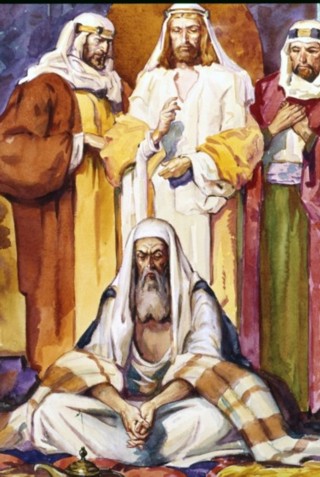
The Book of Esther is another of several in the old Testament for which the identity of the author is unknown. Some people have suggested that it may have been Mordecai himself (mainly because of the statements in Esther 9:20-23 about other things he had written and “recorded”). But the three verses of chapter 10 make that theory seem really doubtful. The verses are so full of praise for Mordecai that it is hard to imagine that an author guided by the Holy Spirit would be so self-serving in his writing.

Of all the young ladies of the land, Esther pleased the king of Persia the most. She was not only beautiful, but filled with wisdom and grace. Esther, a poor Jewish orphan girl, suddenly became queen of Persia, the most powerful woman in the world (Esther 2).

Of all the young ladies of the land, Esther pleased the king of Persia the most. She was not only beautiful, but filled with wisdom and grace. Esther, a poor Jewish orphan girl, suddenly became queen of Persia, the most powerful woman in the world (Esther 2).

There has been a considerable amount of negative writing from some believing critics, and even some who argue that the book should not be part of the Holy Scriptures.  Part of the reason given for this is the cruelty of the decree against the Jews given in Esther 3:8-11. This criticism is puzzling, given the notorious cruelty of Artaxerxes (King Ahasuerus in the Book of Esther). Another reason given is that no mention of God is made in the book. But the 10 short chapters of the Book of Esther total up to fewer verses than the 119th Psalm, and God’s hand in the events of the book is quite evident

The Book of Esther demonstrates God’s divine providence, as Mordecai and Esther gain positions of power prior to the menace of Haman – Esther rising from poverty as a Jewish orphan to become one of the most powerful women in the world. And then one event after another continues to fall into place perfectly, including the king’s insomnia the night before Mordecai’s planned execution in Esther 6:1-3. The event not only prevents his execution, but results in Mordecai gaining the favor of the king (Esther 6:9-11). Esther and Mordecai themselves teach us to take advantage of opportunities to act courageously and do the right thing (Esther 4:9-16).  As is often the case, God once again used unlikely people and circumstances to accomplish His will. Haman could not be allowed to decimate God’s people.

/Bob’s boy
___________________
image © V. Gilbert & Arlisle F. Beers

Please note: I did not design the reading plan that I am following in my blog.  All of my comments in this blog, however, are solely my responsibility.  When reading ANY commentary, you should ALWAYS refer first to the scripture, which is God’s unchanging and unfailing word. Reading schedules, as well as a link to the site where you can get the reading plan that I’m currently following for yourself can be found on the “Bible Reading Schedules” page of my website at http://graceofourlord.com.  

Psalm 104 – From Your Lofty Abode

This hymn of praise begins in the first few verses with colorful illustrations of God’s splendor and majesty that is full of poetic beauty.

He lays the beams of his chambers on the waters;
he makes the clouds his chariot;
he rides on the wings of the wind;
he makes his messengers winds,
his ministers a flaming fire.

Waimea Canyou, Kauai, Hawaii

Waimea Canyou, Kauai, Hawaii

Then in verse 5, he states the wondrous things that the Lord has created, the power and wisdom that he has in his mighty hands, and then continues with his ongoing care for the world. Verse 5 has been used by skeptics to discredit scientific awareness in the Bible (“He set the earth on its foundations, so that it should never be moved”). But the verse is simply poetry that speaks to the stability and indestructibility of the earth as in Job 26:7.  Knowledge of the shape and placement of the earth is clearly not in question (see also Isaiah 40:22).

The psalmist notes in intricate detail the care with which God has seen to the renewal, nourishment and growth of all things living on the earth, and the beauty with which the lands and oceans are both combined and separated, teeming with “creatures innumerable.” The psalm closes as it began, with “Bless the Lord, O my Soul” and words of praise for the God who rules even the mountains:

May the glory of the Lord endure forever;
may the Lord rejoice in his works,
who looks on the earth and it trembles,
who touches the mountains and they smoke!

Read or listen to audio of ESV version of this selection from this link.

/Bob’s boy
___________________
some images © V. Gilbert & Arlisle F. Beers

Please note: I did not design the reading plan that I am following in my blog.  All of my comments in this blog, however, are solely my responsibility.  When reading ANY commentary, you should ALWAYS refer first to the scripture, which is God’s unchanging and unfailing word. Reading schedules, as well as a link to the site where you can get the reading plan that I’m currently following for yourself can be found on the “Bible Reading Schedules” page of my website at http://graceofourlord.com.  

Job 27 – As Long As My Breath Is In Me

Job_007Job is adamant that he will not surrender his position in this chapter, but he still believes God has caused his troubles. Verse 2 begins “As God lives, who has taken away my right,and the Almighty, who has made my soul bitter…”But he says that as long as his breath is in him, he will not speak falsehoods or utter deceit. In other words, he will not say that he has done wrong, simply to appease them. He will hold on to his integrity, and hold fast his righteousness. His heart does not tell him that he has guilt.

As for any enemies (other than God himself, of course), Job says they are the wicked, and any that rise up against him are the unrighteous. God, he is still convinced, will be his witness and his avenger. He puts forward that God will not hear their cry, and they do not call upon the Lord at all times – implying that he does. Then he begins to show his own confidence and says that he will teach his friends about God. He tells them that they have seen themselves, but they have become vain in their thinking.

Job then goes into a long explanation of what will happen to the wicked and oppressors – but it is the “heritage that oppressors receive from the Almighty.” Job knows that their punishment will come indeed. It just is not set to do so swiftly in this life. This is the truth that his three friends have missed.

Read or listen to audio of ESV version of this selection from this link.

/Bob’s boy
___________________
some images © V. Gilbert & Arlisle F. Beers

Please note: I did not design the reading plan that I am following in my blog.  All of my comments in this blog, however, are solely my responsibility.  When reading ANY commentary, you should ALWAYS refer first to the scripture, which is God’s unchanging and unfailing word. Reading schedules, as well as a link to the site where you can get the reading plan that I’m currently following for yourself can be found on the “Bible Reading Schedules” page of my website at http://graceofourlord.com.  For questions and help, please see the “FAQ” and “Summaries” pages there.