Psalms 49 – Why Should I Fear in Times of Trouble?

This song is one of the few passages in the Old Testament that speaks so clearly about eternal life.  Focusing at first on the type of wealthy people who arrogantly live as if they will last forever in their position, verses 7-8 comment that no man can ransom his own life, or that of another, because the price is too great.  Of course, Jesus was no ordinary man, and he did pay the ransom for us (1 Timothy 2:6).

cross03The ESV does a poor job in translating verse 11 as saying “their graves are their homes forever.”  The NASB and other versions correctly translate it as “their inner thought is that their houses are forever,” dramatically changing the meaning to illustrate the point the psalmist intended – that they placed their trust in their wealth instead of in God.

Verse 13 expands the focus to all of those who have foolish confidence.  Obviously talking about those who live wicked lives, the psalmist allows that they will never escape death.  But he is confident that God will ransom his soul and receive him (verse 15).  Rich, poor, living on easy street, or enrolled in the school of hard knocks – it’s all the same in the end.  All of our fears will amount to nothing if we have served the Lord.

Read or listen to audio of ESV version of this selection from this link.

/Bob’s boy
___________________
some images © V. Gilbert & Arlisle F. Beers

Please note: I did not design the reading plan that I am following in my blog.  All of my comments in this blog, however, are solely my responsibility.  When reading ANY commentary, you should ALWAYS refer first to the scripture, which is God’s unchanging and unfailing word. Reading schedules, as well as a link to the site where you can get the reading plan that I’m currently following for yourself can be found on the “Bible Reading Schedules” page of my website at http://graceofourlord.com.  For questions and help, please see the “FAQ” and “Summaries” pages there.

Job 13 – Worthless Physicians

broken2In the first section of chapter 13, Job rebukes his three friends soundly, calling them “worthless physicians” in verse four, and declaring their eloquent speeches garbage in verse 12.  He accuses them of formulating lies, when they should be comforting him.  And he rightly predicts the future, telling them that God will rebuke them for their position concerning the character of man determining his lot in life.  Then in verses 13-18, he again declares his righteousness, as well as his trust that God will recognize it.

In verses 20-29, he again addresses God.  One  commentator called this last section “a new attack on God.”  But though he will come to reconsider the wisdom of demanding an audience with God, Job is certainly not launching any attack here.  Clearly though, Job is convinced that God must be mistaken about something concerning himself, and he wants his time to plead his case.  He even suggests in verse 26 that God may be punishing him for sins he committed in his youth.  He was a better man now, and wanted the chance to get the Lord to recognize that fact.  But even so, he allows for the possibility that he may really be guilty; and if so, he wants God to tell him what he has done – and that then he should just accept what has happened (verse 19, 23).

These seemingly different and wandering thoughts on Job’s part simply underscore his confusion and pain.  He is hurting so badly, and wants to understand why it is so.  It is this fact that explains much of the value to us in this book that can be very difficult to take at times.  It teaches us much about ourselves.

Read or listen to audio of ESV version of this selection from this link.

/Bob’s boy
___________________
some images © V. Gilbert & Arlisle F. Beers

Please note: I did not design the reading plan that I am following in my blog.  All of my comments in this blog, however, are solely my responsibility.  When reading ANY commentary, you should ALWAYS refer first to the scripture, which is God’s unchanging and unfailing word. Reading schedules, as well as a link to the site where you can get the reading plan that I’m currently following for yourself can be found on the “Bible Reading Schedules” page of my website at http://graceofourlord.com.  For questions and help, please see the “FAQ” and “Summaries” pages there.

Psalm 44 – Why are you sleeping, O Lord?

This lament psalm has been the subject of much speculation as to when it was written, and under what circumstances.  Some of the proposed answers for those questions have been the reign of Jehoiachin (2 Kings 24), the time of the Macabees (inter-testamental), the reign of Hezekiah (2 Kings 18), and even the time of Babylonian captivity (2 Kings 25). It is reasonable however to more narrowly define the circumstances in terms of a group or community of people who are simply persecuted unjustly.

The time and circumstances really do not matter though.  It begins in verses 1-8 as a wonderful hymn of praise to God.  From there, it becomes much like several other lament psalms that cry for help from God, while it appears to the psalmist that God not only is ignoring their pain, but may well be responsible for some of it; and the psalmist cannot understand what they could have done to deserve such.   We may even read in shock at the way the psalmist addresses the Lord, as in verses 23-24:  Awake! Why are you sleeping, O Lord?  Rouse yourself!  …Why do you hide your face? Why do you forget our affliction and oppression?

In that respect, the psalm is of great value to God’s people today in a couple of ways.  First, it demonstrates without a doubt that even in keeping with God’s will, godly and righteous people do often suffer undeservedly.  The apostle Paul pointed this out very well in Romans 8:36, as he linked the sufferings of persecuted 1st century Christians with that of God’s people in this psalm, quoting verse 22:

“For your sake we are being killed all the day long;
we are regarded as sheep to be slaughtered.”

Rembrandt - Apostle Paul - WGA19120

Rembrandt – Apostle Paul – WGA19120 (Photo credit: Wikipedia)

The second thing that we can take away from this psalm, which is the inspired word of God, is that when we are hurting it is not wrong to cry out to Him – and yes even to express the unfairness of it all and our grieving disappointment that He has not yet taken away our pain.    It may be His will that we have that pain eased soon, or He may have more important plans for us and for those we influence.  But no, it is not sinful to be hurt, nor to plead for His mercy for us.  But keeping our eyes on the promise to which He will surely be faithful, we can know that He loves us even in those times.  And we should keep close Paul’s words that follow in Romans 8:37-39:

“in all these things we are more than conquerors through him who loved us. For I am sure that neither death nor life, nor angels nor rulers, nor things present nor things to come, nor powers, nor height nor depth, nor anything else in all creation, will be able to separate us from the love of God in Christ Jesus our Lord.”

Read or listen to audio of ESV version of this selection from this link.

/Bob’s boy
___________________
some images © V. Gilbert & Arlisle F. Beers

Please note: I did not design the reading plan that I am following in my blog.  All of my comments in this blog, however, are solely my responsibility.  When reading ANY commentary, you should ALWAYS refer first to the scripture, which is God’s unchanging and unfailing word. Reading schedules, as well as a link to the site where you can get the reading plan that I’m currently following for yourself can be found on the “Bible Reading Schedules” page of my website at http://graceofourlord.com.  For questions and help, please see the “FAQ” and “Summaries” pages there.

Proverbs 22 – Riches, Honor, and Life

We have mentioned before that reading the book of Proverbs can be challenging (see previous post).  That it contains great wisdom is unquestionable, but one of the many mistakes made easily is to draw faulty conclusions about general truths.  This is often done with passages in both the Old and New Testaments that may appear to some to predict financial gain for godly behavior, as in verse 9 (Whoever has a bountiful eye will be blessed, for he shares his bread with the poor).   Being generous with the poor will result in being blessed indeed.  But the richness that such actions results in is more often of a different type of blessing.  Take verse 4 of this chapter for example:

The reward for humility and fear of the Lord
is riches and honor and life.

Gold_BarsIt should be obvious that being modest and respectful and living a godly life does not guarantee one wealth in return.  Matthew Henry said it best: “Where the fear of God is, there will be humility. And much is to be enjoyed by it; spiritual riches, and eternal life at last.”

More often than not, generosity, good character, and doing the right thing bring richness of life in and of themselves in the form of spirituality.  Those who truly practice it have learned that it is so.  Verse one sets the tone as far as we are concerned:

A good name is to be chosen rather than great riches,
and favor is better than silver or gold.

Read or listen to audio of ESV version of this selection from this link.

/Bob’s boy
___________________
some images © V. Gilbert & Arlisle F. Beers

Please note: I did not design the reading plan that I am following in my blog.  All of my comments in this blog, however, are solely my responsibility.  When reading ANY commentary, you should ALWAYS refer first to the scripture, which is God’s unchanging and unfailing word. Reading schedules, as well as a link to the site where you can get the reading plan that I’m currently following for yourself can be found on the “Bible Reading Schedules” page of my website at http://graceofourlord.com.  For questions and help, please see the “FAQ” and “Summaries” pages there.

Psalm 119:97-104; Psalm 65

mem-01

Today’s stanza of the acrostic Psalm 119 is centered around the 13th letter of the Hebrew Aleph-bet “mem.”  For more information about this psalm, see this previous post.   The Isaac Watts hymn “Oh How I Love Thy Law” is based on this stanza.  The main point of the stanza is that study and meditation on God’s word does indeed bring wisdom.   The psalmist says he is wiser than his enemies, his teachers and the aged because of God’s word.

Psalm 65 is deemed in its superscription to be a song of David.  It is, however, a song of praise to God, beginning in the first few verses with His goodness, holiness, for His justice, and because He hears our prayers.  Verses 5 and following continue praise for the one true and living God as the one hope for all people who dwell on the earth.  The inspired writer emphasizes this again in verse 8.  The following verses praise the one who set the earth in its perfect position and tilt, the designer of all that man knows as science for His power, might, and wisdom in creating the world, as well as His continued care for it and all who dwell therein.

Read or listen to audio of ESV version of this selection from this link.

/Bob’s boy
___________________
some images © V. Gilbert & Arlisle F. Beers

Please note: I did not design the reading plan that I am following in my blog.  All of my comments in this blog, however, are solely my responsibility.  When reading ANY commentary, you should ALWAYS refer first to the scripture, which is God’s unchanging and unfailing word. Reading schedules, as well as a link to the site where you can get the reading plan that I’m currently following for yourself can be found on the “Bible Reading Schedules” page of my website at http://graceofourlord.com.  For questions and help, please see the “FAQ” and “Summaries” pages there.

Understanding the Cross of Christ – Part 4 – (God’s Plan)

This series began in Part One as a search for a more meaningful answer to an aspiring young Christian’s question: “Why did God send His only son to die?”  The short answer “to save us from our sins,” while correct, really only serves to raise more questions.  In part 2, we looked at what sin is, why it matters so much to God, and why it should matter to us.  In part 3, we delved into God’s response to sin.  In all of that discussion, we have made great mention of the fact that God has a plan for our salvation.  Now, in part 4, let us look at how Jesus really fits into that plan.

So how does Jesus fit into this plan of God’s?

If you were to say that Jesus, in fact, is God’s plan for our salvation, you would be correct.  God first promised this savior in Genesis 3:15, when sin first entered the world.  The verse reads in the ESV:

I will put enmity between you and the woman,
and between your offspring and her offspring;
he shall bruise your head,
and you shall bruise his heel.

The enmity that God refers to here is opposition to Satan through the offspring born of the woman.  Clearly, the “he” in the verse that will “bruise your head” is that offspring.  What is meant by bruising the head is the complete victory over the evil one that had the power over death, as told to us in Hebrews 2:14-15.  As for how the Crucifixion can be classified as  the bruising of the heel, consider that Jesus overcame death itself, and that the ultimate fate of Satan is his utter destruction (Revelation 20:10).

There are a great many prophecies throughout the Bible that promise the coming of this Messiah  – many more than we can include in this outline.  But the most important of these is arguably that which is written in 2 Samuel 7, where God makes a covenant with David which promises a kingdom from his offspring that will endure forever.  He would be the son of God (Psalm 2:7).  It is through this offspring of David that the one promised in Genesis 3 will come.  He would be sacrificed for our transgressions (Isaiah 53:5-12).  And most importantly, he would be risen from the dead (Psalm 16:10, Psalm 49:15).

Who was Jesus really, and where did He come from?

Let us begin with his name.  Most people know of Him as Jesus Christ.  He has been known this way for so long that many people actually assume that His last name – His surname – was Christ.  But that is, of course, not the case.  Over the years the reference to Him as Jesus the Christ has simply been shortened.  The Hebrew for Messiah and the Greek for Christ (Khristos) both mean anointed or “anointed one.”

Most people know that He was born in Bethlehem of a virgin, and many have wondered what the point is of the long genealogy written in Matthew 1:1-17.   This was to document the fact that Jesus’ birth came forth through the line of King David.  The names of many of those in that genealogical record are found in books of the Bible (the Old Testament) written in the inspired word of God over many hundreds of years.

But though Jesus was born of a woman, just as had been prophesied, that is not the entire significance of His origin.  In John 1:1-18, we are told that before He came to live as a man, Jesus was with God since the beginning of time:

“He was in the beginning with God. All things were made through him, and without him was not any thing made that was made.”

Some say that Jesus never claimed to be deity, but that is certainly not true.  In John 10:30, he told the Jewish leaders at the temple “I and the Father are one.”  And in John 8:58, he told them “before Abraham was, I am,” which was clearly a reference to the way God identified Himself to Moses in Exodus 3:14.

Paul, in his letter to the Philippians in Philippians 2:5-8, summed up how much Jesus gave up to come to Earth, to become a man, and to suffer a cruel death:

“Have this mind among yourselves, which is yours in Christ Jesus, who, though he was in the form of God, did not count equality with God a thing to be grasped, but emptied himself, by taking the form of a servant, being born in the likeness of men. And being found in human form, he humbled himself by becoming obedient to the point of death, even death on a cross.”

As we near the conclusion of this series, we will  examine how Jesus measures up with what the people were expecting from the Messiah that had been anticipated for well over a thousand years, what His death meant then and, more importantly, what it means to us now.

/Bob’s boy

___________________
image © V. Gilbert & Arlisle F. Beers

Please note: I did not design the reading plan that I am following in my blog.  All of my comments in this blog, however, are solely my responsibility.  When reading ANY commentary, you should ALWAYS refer first to the scripture, which is God’s unchanging and unfailing word. Reading schedules, as well as a link to the site where you can get the reading plan that I’m currently following for yourself can be found on the “Bible Reading Schedules” page of my website at http://graceofourlord.com.  For questions and help, please see the “FAQ” and “Summaries” pages there.

Psalms 48 – Great Is the Lord!

The Pool of Hezekiah, Jerusalem

The Pool of Hezekiah, Jerusalem (Photo credit: Wikipedia)

Psalm 48 is considered by some to be the last of a trilogy (46, 47, 48), all three of which appear to express praise and rejoicing for their deliverance from Sennacherib‘s army.  Some believe the occasion in question was deliverance during Hezekiah’s reign in 701 BC (2 Kings 19).  Others believe it to be concerning events during the reign of Jehoshaphat (2 Chronicles 20:1-28).   Either way, this is a prayer of praise and thanksgiving to God for deliverance.

But it is more than that.  Verses 8-14 speak of God dwelling in His city forever, of how His praise reaches to the ends of the earth.  But we know that the literal Jerusalem would be destroyed in 70 A.D. after Israel rejected the Messiah; and we also know that most of the literal earth hardly was in the habit of praising God.  The key is in the second part of verse 8 – “the city of our God, which God will establish forever.”  This is clearly a reference to the New Jerusalem that will fulfill this passage by way of our Lord Jesus.

Read or listen to audio of ESV version of this selection from this link.

/Bob’s boy
___________________
some images © V. Gilbert & Arlisle F. Beers

Please note: I did not design the reading plan that I am following in my blog.  All of my comments in this blog, however, are solely my responsibility.  When reading ANY commentary, you should ALWAYS refer first to the scripture, which is God’s unchanging and unfailing word. Reading schedules, as well as a link to the site where you can get the reading plan that I’m currently following for yourself can be found on the “Bible Reading Schedules” page of my website at http://graceofourlord.com.  For questions and help, please see the “FAQ” and “Summaries” pages there.

Job 12 – Job Replies: The Lord Has Done This

Verse 2 (“No doubt you are the people, and wisdom will die with you”), rather than being flattery, is obvious sarcasm on Job’s part concerning his wise friends.  He already knows, he tells them, about God’s great power and goodness; and he tells them in verse 3 that “I am not inferior to you.”   Job seems to have had enough of their self-righteous speeches about their supposed insight into the wisdom of the ages and the wisdom of God Himself.

whale-001Concerning Job’s description of his treatment by his neighbors in verses 4-5, Coffman comments “he truly spoke of a universal trait of our fallen human nature, namely, that of despising the unfortunate.”  He again disputes his friends’ assertions in verse 6 by pointing out that thieves and other ungodly people do enjoy peace and prosperity.

He then points them toward the animal kingdom, nature, and even the rest of mankind.  Gentle creatures, lush forests, and righteous men are not favored by God with abundance over predators, weeds, or evil dictators. Princes, kings, and even great nations can rise quickly and just as easily fall.  God, Job points out, controls all nature and everything on the earth.

Read or listen to audio of ESV version of this selection from this link.

/Bob’s boy
___________________
some images © V. Gilbert & Arlisle F. Beers

Please note: I did not design the reading plan that I am following in my blog.  All of my comments in this blog, however, are solely my responsibility.  When reading ANY commentary, you should ALWAYS refer first to the scripture, which is God’s unchanging and unfailing word. Reading schedules, as well as a link to the site where you can get the reading plan that I’m currently following for yourself can be found on the “Bible Reading Schedules” page of my website at http://graceofourlord.com.  For questions and help, please see the “FAQ” and “Summaries” pages there.

Psalms 41 – Even My Close Friend

Hushai was a counselor for King David, but when Absalom rebelled against his father David, David asked Hushai to pretend to shift loyalty to Absalom, but act instead as a spy. Absalom accepted Hushai's advice instead of the advice of Ahithophel, so Ahithophel committed suicide (2 Samuel 17:1-14).

Hushai was a counselor for King David, but when Absalom rebelled against his father David, David asked Hushai to pretend to shift loyalty to Absalom, but act instead as a spy. Absalom accepted Hushai’s advice instead of the advice of Ahithophel, so Ahithophel committed suicide (2 Samuel 17:1-14).

Traditionally, the Hebrew text divided the psalms into five books, the last of which in each finishes with a doxology (a short hymn of praise to God, which occurs here in verse 13); and chapter 41 concludes book one.  As is the case with many psalms, this one has meaning for the situation in David’s life at the time, as well as having application for the Jesus the Messiah.

communion trayMany consider that this psalm was written at a time when David suffered from a great illness that may have facilitated Absalom’s rebellion (2 Samuel 15).  The word “poor” in verse one is sometimes translated “weak,” which especially fits verses 1-8.  Jesus applies verse 9 to Judas in John 13:18.  In David’s case, the identity of the close friend of that verse is believed by many to be Ahithophel (2 Samuel 15:31).  The reference to the resurrection and ascension to heaven are hard to miss in verses 10-12, with the enemy in verse 11 clearly as Satan.  And verse 9 unmistakably points to Judas during Jesus’ act of instituting the Lord’s supper:

“Even my close friend in whom I trusted,
who ate my bread, has lifted his heel against me”

Read or listen to audio of ESV version of this selection from this link.

/Bob’s boy
___________________
some images © V. Gilbert & Arlisle F. Beers

Please note: I did not design the reading plan that I am following in my blog.  All of my comments in this blog, however, are solely my responsibility.  When reading ANY commentary, you should ALWAYS refer first to the scripture, which is God’s unchanging and unfailing word. Reading schedules, as well as a link to the site where you can get the reading plan that I’m currently following for yourself can be found on the “Bible Reading Schedules” page of my website at http://graceofourlord.com.  For questions and help, please see the “FAQ” and “Summaries” pages there.

Proverbs 21 – Refusing Justice

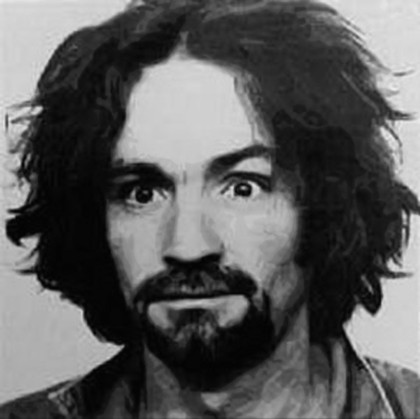
Charles Manson

Charles Manson

This chapter is laden with proverbs concerning righteousness, justice, and evil.  Consider verses 7 and 10:

The violence of the wicked will sweep them away,
because they refuse to do what is just.

The soul of the wicked desires evil;
his neighbor finds no mercy in his eyes.

That there are people in this world that are simply evil is demonstrated to us at various times in our lives, but it often takes by surprise nonetheless.  We want to believe in the inherent good of man for the most part, and are sometimes shocked at how easily some can do evil – from the fearless and brazen thief to the cold calculating killer, our faith in humanity sometimes gets shaken as we learn of someone who has behaved with depravity, sometimes for years on end.

Osama Bin Laden

Osama Bin Laden

The truth is that there are wicked people who do horrible things not because they just cannot help themselves, but instead they do so eagerly and without remorse.  They have no mercy on their fellow man because they are ruthless.  But such evil will not escape punishment forever.  Eventually, their evil and violence will destroy them.  God wants everyone to be saved (1 Timothy 2:4).  But not everyone will be.  And so, there is no shame for us in the truth of verse 15:

When justice is done, it is a joy to the righteous
but terror to evildoers.

Read or listen to audio of ESV version of this selection from this link.

/Bob’s boy
___________________
some images © V. Gilbert & Arlisle F. Beers

Please note: I did not design the reading plan that I am following in my blog.  All of my comments in this blog, however, are solely my responsibility.  When reading ANY commentary, you should ALWAYS refer first to the scripture, which is God’s unchanging and unfailing word. Reading schedules, as well as a link to the site where you can get the reading plan that I’m currently following for yourself can be found on the “Bible Reading Schedules” page of my website at http://graceofourlord.com.  For questions and help, please see the “FAQ” and “Summaries” pages there.