Ecclesiastes 4 – Evil Under the Sun

The “preacher” speaks compassionately at the beginning of this chapter about those people who suffer oppression. The preacher speculates that those oppressed who have died are better off than those who are still alive.  No longer “under the sun,” they have gone on to eternity. But he also says that those who have never even been born are better off still because they have not seen the evil deeds that man does. 

powerful_and_oppressiveHe has made two points here.  The first is the same message that he has been driving home in this book previously. What really matters is what comes after – when we are no longer “under the sun”; and those who have already moved on are better off.  This is obviously so. But even those people have seen man’s inhumane treatment of his fellow man; and that alone makes them less fortunate than those who have not been born. Seeing the distress, tears, and hopelessness of those who are oppressed is painful to anyone who cares about his fellow man; and clearly, Solomon did.

He then has some things to say about work. Verse 5 agrees with many of the verses in the Book of Proverbs about how foolish it is to be lazy. But then in verse 6, he points out the foolishness of the other extreme – the “workaholic,” saying “Better is a handful of quietness than two hands full of toil and a striving after wind.” Worse yet are the people described in verses 7-8 – those who have no one else or even have isolated themselves through their insatiable hunger for more wealth, and their lack of balance in their lives.

Some have tried to ascribe verses 13-16 to Joseph, but it seems to be simply a parable.  It points out on the one hand that powerful people who become so egotistic that they no longer listen to anyone else can find themselves losing it all.   But even the poor, but wise youth he compares him to (though becoming enormously successful himself) is no better off in the end, for power and riches “under the sun” will not matter in the end.

Read or listen to audio of ESV version of this selection from this link.

/Bob’s boy
___________________
some images © V. Gilbert & Arlisle F. Beers

Please note: I did not design the reading plan that I am following in my blog.  All of my comments in this blog, however, are solely my responsibility.  When reading ANY commentary, you should ALWAYS refer first to the scripture, which is God’s unchanging and unfailing word. Reading schedules, as well as a link to the site where you can get the reading plan that I’m currently following for yourself can be found on the “Bible Reading Schedules” page of my website at http://graceofourlord.com.  

Ecclesiastes 3 – A Time For Everything

There is no doubt that the Book of Ecclesiastes is one of the most poetically ageless of the Bible’s books of wisdom.   Beyond the countless verses that are still quoted today, we also have the song “Turn! Turn! Turn!” written by Pete Seeger and made popular by the Byrds, quoting from Ecclesiastes 3:1-8.  The book, we see here and again, has much to say about life, death, the joys that work brings to us (as well as its irritations), and reverence for God.


Pete Seeger (right), nearly 89, with his longt...

Pete Seeger (right), nearly 89, with his longtime friend the writer/musician Ed Renehan on March 7, 2008. (Photo credit: Wikipedia)


These eight verses contain statements of opposites, all of which are simple mini-proverbs in their own right, but all teaching the same conclusive truth.  All that becomes of man while “under the sun” is out of his control.  Birth, death, emotions, gain, loss, wealth, poverty, love, hate.  We do all that we can do make sure that we get the best possible outcome for our own well-being, but despite all of it,  in the end everything depends on God’s will; and it is all out of our hands.


Consider verses 9-11 (which is the source for a beautiful hymn): “what gain has the worker from his toil?  I have seen the business that God has given to the children of man to be busy with. He has made everything beautiful in its time. Also, he has put eternity into man’s heart, yet so that he cannot find out what God has done from the beginning to the end.”   Though God has blessed man immensely, he put a longing for eternity in his heart, and even great wisdom is useless when it comes to matters of life, death, and the hereafter.  These are beyond man’s control and even his own real understanding; and that fact frustrates the evil man just as much as it frustrated the incredibly wise Solomon.


Then verses 12-13: “I perceived that there is nothing better for them than to be joyful and to do good as long as they live; also that everyone should eat and drink and take pleasure in all his toil—this is God’s gift to man.”  Of all his wisdom, this may be one of the wisest things we get from Solomon.  Be joyful and do good all of your life.  Eat, drink, and take pleasure in your work.   These are God’s gifts to man.  Since we cannot really control life “under the sun,” we should make the best of these and all of the other things that we know we must do.  Be joyful and take pleasure in them all; and while we do so, do the most important thing – do good to others.  For the joy that will give us is from God as well.  The righteous will end up dust just like the wicked, and just like the beasts.  But doing good for our fellow man, and taking pleasure in our work “under the sun” is God’s gift while we wait for that which we truly long for – eternity.


Read or listen to audio of ESV version of this selection from this link.


/Bob’s boy


___________________


some images © V. Gilbert & Arlisle F. Beers


Please note: I did not design the reading plan that I am following in my blog.  All of my comments in this blog, however, are solely my responsibility.  When reading ANY commentary, you should ALWAYS refer first to the scripture, which is God’s unchanging and unfailing word. Reading schedules, as well as a link to the site where you can get the reading plan that I’m currently following for yourself can be found on the “Bible Reading Schedules” page of my website at http://graceofourlord.com.  


Ecclesiastes 2 – Vanity of Self-Indulgence

Solomon was one of the wealthiest of the ancient kings. Part of his wealth came from a fleet of ships that traded in ivory; gold, and other valuables (1 Kings 9:26-28)

Solomon was one of the wealthiest of the ancient kings. Part of his wealth came from a fleet of ships that traded in ivory; gold, and other valuables (1 Kings 9:26-28)

Still trying to satisfy his insatiable craving for knowledge, answers, and that which he cannot know, Solomon turns to pleasure; and he has the great wealth to do so with a vengeance.  One of the richest men alive at the time, the king had collected gold and silver in great quantities.  He says that he denied himself nothing – whatever he wanted, he came to possess it.  He indulged himself with wine for distraction, but says that he kept his wisdom.  He had 700 wives and 300 concubines (1 Kings 11:3).  He built great structures and houses, planted vineyards for himself. obtained large herds and flocks of livestock.  And with his wealth, he acquired many slaves.  None of the possessions nor the pleasures did more than temporarily amuse him because none of them possessed the lasting quality he was looking for.

He then realized that even his great wisdom was all for nothing.  In the end, he will end up the same as any fool, and no better.  Everything that happened to the fool would eventually happen to him as well.  Nothing “under the sun” mattered to him.  His only hope was that all of the work that he did to build an empire would be passed on to his heirs.  Then he realized that he had no assurance that even this would be so.  The kingship could be passed on to one that was not of his house, and along with it, all that he himself had worked for.  The ultimate irony, he realized, was that the person to whom it went could himself be a fool.   All of it, he repeated, was “striving after wind.”

Read or listen to audio of ESV version of this selection from this link.

/Bob’s boy
___________________
some images © V. Gilbert & Arlisle F. Beers

Please note: I did not design the reading plan that I am following in my blog.  All of my comments in this blog, however, are solely my responsibility.  When reading ANY commentary, you should ALWAYS refer first to the scripture, which is God’s unchanging and unfailing word. Reading schedules, as well as a link to the site where you can get the reading plan that I’m currently following for yourself can be found on the “Bible Reading Schedules” page of my website at http://graceofourlord.com

Ecclesiastes 1 – The Words of the Preacher

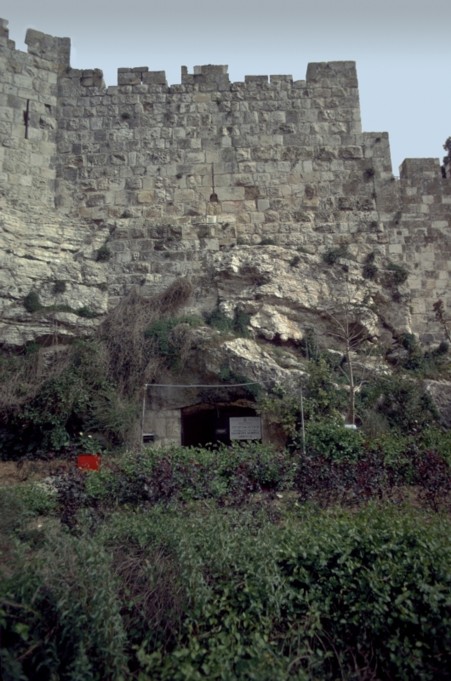
Jerusalem, Solomon's quarries

Jerusalem, Solomon’s quarries

Clearly Solomon, the writer identifies himself as the son of David, king of Israel, and someone who has “acquired great wisdom, surpassing all who were over Jerusalem before me.”  By also identifying himself as “the preacher” Solomon obviously knows that his words will be used for learning and instruction, and certainly intends them as such.  In fact, some have speculated that he may actually have directly addressed an assembly of some sort with some of these teachings.

The same man who wrote many proverbs extolling the value of work and the foolishness of being lazy says in verse 3 “What does man gain by all the toil at which he toils under the sun?” In fact, many verses here talk about things “under the sun,” which is the key to understanding here.  All the work that we accomplish here “under the sun” will one day pass away, unlike the earth, the sun itself, the wind and the sea, all of which remain constant.  No matter how grand man’s accomplishments here may be, they will not matter when this life is over.

Even his quest for wisdom, he says, is “striving after wind” because “in much wisdom is much vexation, and he who increases knowledge increases sorrow.”  What he learned in the end is that there is much that man simply cannot know while “under the sun,” and those truths are the only things that really matter.  All else is but vapor…

Read or listen to audio of ESV version of this selection from this link.

/Bob’s boy
___________________
some images © V. Gilbert & Arlisle F. Beers

Please note: I did not design the reading plan that I am following in my blog.  All of my comments in this blog, however, are solely my responsibility.  When reading ANY commentary, you should ALWAYS refer first to the scripture, which is God’s unchanging and unfailing word. Reading schedules, as well as a link to the site where you can get the reading plan that I’m currently following for yourself can be found on the “Bible Reading Schedules” page of my website at http://graceofourlord.com.  
Summer Schedule – Beginning Ecclesiastes This Week!

English: Ecclesiastes, (קֹהֶלֶת, Kohelet, &quo...

English: Ecclesiastes, (קֹהֶלֶת, Kohelet, “son of David, and king in Jerusalem” alias Solomon, Wood engraving (Photo credit: Wikipedia)

For the next four weeks, we will be taking a break from our regular schedule for this year, as we begin the Book of Ecclesiastes tomorrow.  We will continue through all 12 chapters, and then read the 8 chapters of Song of Solomon.  It will surely be a blessed month in God’s word!

The English title for the Book of Ecclesiastes comes from the Latin Vulgate heading “Libre Ecclesiastes.”  The word that we derive it from comes from the Greek translation for the title the writer gives himself in Ecclesiastes 1:1.  The Greek word is “ekklēsiastēs.”  The Hebrew is “Qoheleth,” and the general consensus is that it denotes something akin to “one who addresses an assembly.”  But it is more often translated as a teacher or preacher, as in the ESV of the text.  There is some disagreement on whether Solomon is himself the author, but considering all of the factors (not the least of which is the reference to the preacher as the son of David, a king, and wise), it seems very unlikely that it was someone else.

This book is viewed so differently by different scholars, one might think that they are all reading different books.  Some see it as optimistic, some pessimistic, poetic, sacrilegious, a book of wisdom, a dialog between a believer and an infidel, and on and on.  The best observances we have gleaned from it is that the writer is acutely aware of the consequences of “the fall” and the resulting condition of man, and that of creation itself.  But more than that, he has learned great gratitude for the blessed gifts God has given us,  his saving grace, and why man has the duty and, more importantly, the genuine need to love, serve, and fear Him all at the same time.

The word vanity is used 38 times in this book in many different contexts, which some say makes it very difficult to translate.  Literally the word most closely aligns with “vapor,” which makes perfect sense when one uses it in practically any of those contexts, where vapor would easily be seen as something without substance, fleeting – evaporating into meaninglessness.  It is interesting to note that the word used in the Septuagint is the same word Paul used in Romans 8:20-23, when he speaks of the whole creation being “subjected to futility.”

Many believe that Solomon wrote these words in his later years, and that the book strongly indicates that he had repented for his idolatry.  This blogger, for one, genuinely hopes that is the case.

/Bob’s boy
___________________
image © V. Gilbert & Arlisle F. Beers

Please note: I did not design the reading plan that I am following in my blog.  All of my comments in this blog, however, are solely my responsibility.  When reading ANY commentary, you should ALWAYS refer first to the scripture, which is God’s unchanging and unfailing word. Reading schedules, as well as a link to the site where you can get the reading plan that I’m currently following for yourself can be found on the “Bible Reading Schedules” page of my website at http://graceofourlord.com.  

Psalms 72 – Blessed Be His Glorious Name Forever

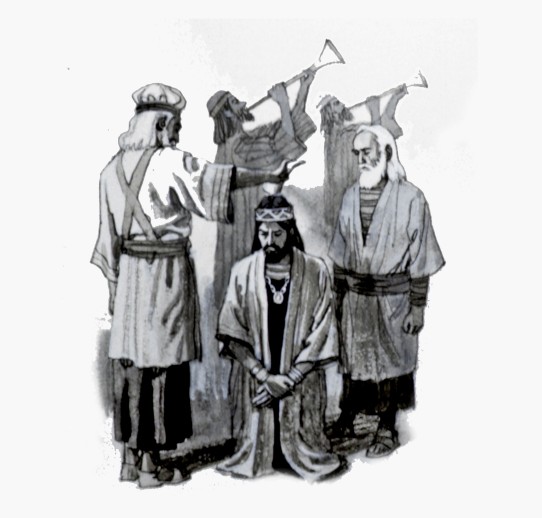
While David was still living, he arranged for his son Solomon to become king

While David was still living, he arranged for his son Solomon to become king

Psalm 72 is the last psalm in “book 2” of the Psalms, and contains the books doxology at the end.  The superscription deems it a song “of” Solomon, obviously as the young heir to David’s throne.  Some have attributed authorship to Solomon himself, but Matthew Henry’s view that it is David’s prayer on behalf of Solomon is likely correct.

There are some obvious Messianic aspects to the psalm in addition to the obvious parts in which there is fervent prayer for the earthly king.  The care for the poor and the needy in verse 4 certainly sounds like Jesus during His ministry; and verses 12-14 referring to one who delivers and redeems are pointing to Him as well.

The prayer ends with the doxology and praise to the Lord:  “Blessed be his glorious name forever; may the whole earth be filled with his glory!  Amen and Amen!”  The last line – “The prayers of David, the son of Jesse, are ended” could refer to this psalm, but could also refer to the assembling of this section of the psalms by the psalter.  Matthew Henry took the view that it referred to the ending of Psalms 71 and 72 as a whole, having been written in David’s old age.  Now with a young king to take his place, his “prayers have ended.”

Read or listen to audio of ESV version of this selection from this link.

/Bob’s boy
___________________
some images © V. Gilbert & Arlisle F. Beers

Please note: I did not design the reading plan that I am following in my blog.  All of my comments in this blog, however, are solely my responsibility.  When reading ANY commentary, you should ALWAYS refer first to the scripture, which is God’s unchanging and unfailing word. Reading schedules, as well as a link to the site where you can get the reading plan that I’m currently following for yourself can be found on the “Bible Reading Schedules” page of my website at http://graceofourlord.com.  For questions and help, please see the “FAQ” and “Summaries” pages there.
Basic Old Testament Facts (Part 1)

A couple of years ago, I was privileged to participate in a Bible study series that concentrated on revisiting and strengthening knowledge of basic Bible facts – literally just hitting the highlights.  Here is part 1 of an outline of part of the Old testament portion of that study that I find useful from time to time for reference.  I hope you find it useful as well.  We may do some more of this with the New Testament later on.

Here are some book and chapter citings, as well as dates of key Old Testament events

In part 2, we will attempt a one or two sentence description of the 39 books of the OT.

/Bob’s boy
___________________
image © V. Gilbert & Arlisle F. Beers

Please note: I did not design the reading plan that I am following in my blog.  All of my comments in this blog, however, are solely my responsibility.  When reading ANY commentary, you should ALWAYS refer first to the scripture, which is God’s unchanging and unfailing word. Reading schedules, as well as a link to the site where you can get the reading plan that I’m currently following for yourself can be found on the “Bible Reading Schedules” page of my website at http://graceofourlord.com.  For questions and help, please see the “FAQ” and “Summaries” pages there.

Psalm 119:33-40; Psalm 14 – The Fool Says, There Is No God

heiToday’s reading of Psalm 119 is brought to you by the 5th letter of the Hebrew Aleph-Bet, “He” or “Hei.”   The numeric value is of course, five. The pictograph for Hey looks like a man with his arms raised ().  The meaning of the name “Hey” is “look,” or “behold!”

This stanza, or strophe, brings to us a thought which stands apart from the other eight verses – verse 37 “Turn my eyes from looking at worthless things,” which points to the lust of the eyes that has been the ruin of men (and women) for all time.  Proverbs 23:31 warns of looking at wine “when it is red, when it sparkles in the cup and goes down smoothly.”  Isaiah 33:15 reminds that a righteous man “shuts his eyes from looking on evil.”

Verse 36 is cited in  1 Kings 8:58, where Solomon gives his benediction prior to sacrifice before the new temple, and verse 38 may well be pointing to the Davidic promise of 2 Samuel 7:25.

Psalm 14 is almost identical to Psalm 53, and is a “wisdom” psalm in every sense of the word.  The way of the fool, who today would term himself an atheist, is what Coffman referred to when he wrote of the “judicial hardening of man.” What happens when men are hardened? (1) They are blinded (2 Corinthians 4:4), meaning that they are incapable of seeing or understanding the plainest truth. (2) ‘Their foolish heart (the scriptural heart is the mind) is darkened (Romans 1:21), with the meaning that an essential element of human intelligence has been judiciously removed by God Himself. (3) They become vain in their reasonings (Romans 1:21). (4) They become fools (Romans 1:22), and (5) God gives them up (Romans 1:22,26,28).

Read or listen to audio of ESV version of this selection from this link.

/Bob’s boy
___________________
some images © V. Gilbert & Arlisle F. Beers

Please note: I did not design the reading plan that I am following in my blog.  All of my comments in this blog, however, are solely my responsibility.  When reading ANY commentary, you should ALWAYS refer first to the scripture, which is God’s unchanging and unfailing word. Reading schedules, as well as a link to the site where you can get the reading plan that I’m currently following for yourself can be found on the “Bible Reading Schedules” page of my website at http://graceofourlord.com.  For questions and help, please see the “FAQ” and “Summaries” pages there.

Psalms 20-21 – Trust in the Name of the Lord Our God

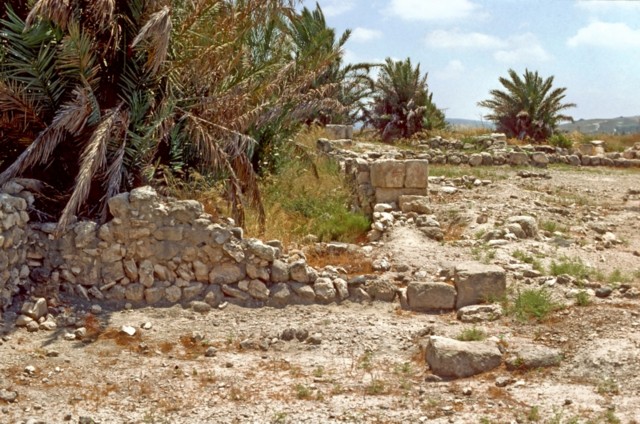
Megiddo - residence of Solomon's chariot commanders.

Megiddo – residence of Solomon’s chariot commanders.

Psalm 20 is clearly a battle hymn for David.  The suggestion of the absence of chariots and horses points to a time before Solomon (“Some trust in chariots and some in horses, but we trust in the name of the Lord our God“), for when know that Solomon as king had many of both (1 Kings 10:26). Verse 8’s continuation of the characterization of verse 7 (“They collapse and fall, but we rise and stand upright”) is a reference to the grace of God, rather than the might of his people.

Psalm 21 is can be divided into two sections at verse 7.  The first half deals with the king’s blessings in the face of his enemies.  The second half, beginning in verse 8 describes God’s vengeance upon them, and his “destroying them” in his wrath.  Verse 13 concludes with praise to God for his strength and power.

Read or listen to audio of ESV version of this selection from this link.

/Bob’s boy
___________________
some images © V. Gilbert & Arlisle F. Beers

Please note: I did not design the reading plan that I am following in my blog.  All of my comments in this blog, however, are solely my responsibility.  When reading ANY commentary, you should ALWAYS refer first to the scripture, which is God’s unchanging and unfailing word. Reading schedules, as well as a link to the site where you can get the reading plan that I’m currently following for yourself can be found on the “Bible Reading Schedules” page of my website at http://graceofourlord.com.  For questions and help, please see the “FAQ” and “Summaries” pages there.

Proverbs 12 – The Way of a Fool

Because of the nature of the book of Proverbs, and the impossibly of commenting on all of a single chapter in these short paragraphs,we choose to pick one or two verses on which to focus.. Please see our  previous post on study tips for Proverbs.

Today this blog will focus on a single short verse from chapter 12. verse 15 reads:

“The way of a fool is right in his own eyes, but a wise man listens to advice.”  

This has been the plague of men (and women) since  time began; and the more learned we become the worse it gets.  During the cycle of the Judges 17:6 and 21:25 in Israel,  the text says “In those days there was no king in Israel. Everyone did what was right in his own eyes.”  The people would fall into apostasy over and over again until God rescued them and they would start the cycle all over again.   People worshiped their idols and turned away from God until things got so bad that they ended up crying out to him, and then he would save and deliver them.  This continued throughout the kingship of David and even the author of this book.

Even Solomon allowed the women that he turned to lead him into idolatry.  God often has tolerated foolishness by the self-deception of man since time immemorial and has allowed him to continue to make those kinds of mistakes because we have our own freedom to make our mistakes.The wise man listens to the advice and wisdom of our God, His son, and the Holy Spirit.

We are brought up in a world that teaches our children macro-evolution that we are no more than advanced animals that, this world is all there is, and that the Bible is little more than a book of fables.  So-called educated men make it their purpose in life to convince people who there is no purpose in life.  But His evidence is all around us, including His attributes (Romans 1:20).  We exchange the wisdom of God for the foolishness of man that we call wisdom, in order to justify our own unrighteousness and worship our own idols of sin and depravity (Romans 1:22-23). We tell the child there is no God and that he was foolish to believe there is and then we  wonder why so many lose heart and hope.

We must give true wisdom to our children though God’s word to combat the lies that this world tells them about who we are and where we come from; and teach them where they can go.

Read or listen to audio of ESV version of this selection from this link.

/Bob’s boy
___________________
some images © V. Gilbert & Arlisle F. Beers

Please note: I did not design the reading plan that I am following in my blog.  All of my comments in this blog, however, are solely my responsibility.  When reading ANY commentary, you should ALWAYS refer first to the scripture, which is God’s unchanging and unfailing word. Reading schedules, as well as a link to the site where you can get the reading plan that I’m currently following for yourself can be found on the “Bible Reading Schedules” page of my website at http://graceofourlord.com.  For questions and help, please see the “FAQ” and “Summaries” pages there.