Isaiah 11 – The Righteous Reign of the Branch

Isaiah 1:1 tells us that this prophet prophesied “in the days of Uzziah, Jotham, Ahaz, and Hezekiah, kings of Judah”.  His call to ministry came about 740 BC – “in the year that King Uzziah died” (Isaiah 6:1). He lived at least until 681 BC, as he writes of the death of Sennacherib in Isaiah 37:37-38.

English: Isaiah; illustration from a Bible car...

English: Isaiah; illustration from a Bible card published by the Providence Lithograph Company (Photo credit: Wikipedia)

Isaiah 11 is a very short, but very important chapter in the message of God’s plan for salvation.  Isaiah opens the chapter right away in verse 1 with the promise of the coming of the Messiah.  The reference to  being from the “stump of Jesse” – a greater David is prophesied (Ezekiel 37:24-25), a better king to serve (Hosea 3:5).   Much imagery and evocative language follows, stressing that nothing will stand in the way of God’s plan (see verses 11-16).  Paul refers to these verses, speaking about Jesus in Romans 15:8-13 – saying that “The root of Jesse will come, even he who arises to rule the Gentiles; in him will the Gentiles hope.”

Read or listen to audio of ESV version of this selection from this link.

/Bob’s boy
___________________
some images © V. Gilbert & Arlisle F. Beers

Please note: I did not design the reading plan that I am following in my blog.  All of my comments in this blog, however, are solely my responsibility.  When reading ANY commentary, you should ALWAYS refer first to the scripture, which is God’s unchanging and unfailing word. Reading schedules, as well as a link to the site where you can get the reading plan that I’m currently following for yourself can be found on the “Bible Reading Schedules” page of my website at http://graceofourlord.com.  For questions and help, please see the “FAQ” and “Summaries” pages there.

2 Kings 4 – God’s Power in Elisha’s Deeds

English: Elisha raising the Shunammites Son

English: Elisha raising the Shunammites Son (Photo credit: Wikipedia)

The creditors are about to take the children of a widow of a prophet as slaves for debt she cannot pay.  Elisha becomes her redeemer, as she has no kin to do so for her.  In verses 2-7, the oil God provides in abundance from the little that she has is enough to pay her debts and provide for her and her sons.

The kindness of the Shunnamite woman in providing food and generous shelter for Elisha whenever he came her way (verses 8-10) prompts him to desire to do something for her.  She was wealthy, and needed no help in the same regard as the widow.  When Elisha’s servant, Gehazi, tells him that the woman has no son and that her husband is old, he tells the disbelieving woman that she will embrace a son the next year; and it was so.  Some years passed, as the child had grown, was struck ill, then died (verse 18-20).  So the woman went to Mount Carmel to appeal to Elisha, “the man of God” she had befriended.  Elisha sends Gehazi with his staff, and instructions to raise the boy; but the woman stayed with him, sure that no less than Elisha’s own intervention would do.  That did turn out to be the case; and Elisha’s healing of the boy reminds us of the similar deed of Elijah for the widow in 1 Kings 17:17-22.

Then in verses 38-44, Elisha purifies a pot of stew that the famine-stricken prophets had perceived to have been poisoned by the wild gourds one of them had added; and then provides in abundance for a hundred more men, using meager resources (this latter, on a smaller scale, being similar to Jesus feeding the multitude in Matthew 14:13-21). This chapter is intended to once again demonstrate God’s awesome power; and that His will is going to be done.

Read or listen to audio of ESV version of this selection from this link.

/Bob’s boy
___________________
some images © V. Gilbert & Arlisle F. Beers

Please note: I did not design the reading plan that I am following in my blog.  All of my comments in this blog, however, are solely my responsibility.  When reading ANY commentary, you should ALWAYS refer first to the scripture, which is God’s unchanging and unfailing word. Reading schedules, as well as a link to the site where you can get the reading plan that I’m currently following for yourself can be found on the “Bible Reading Schedules” page of my website at http://graceofourlord.com.  For questions and help, please see the “FAQ” and “Summaries” pages there.

2 Samuel 7 – The Lord’s Covenant with David

If you asked this blogger for an opinion of the most important passages in the Bible,  it would be a tough task.  But the seventh chapter of 2 Samuel would definitely make the short list.  This is where God makes His covenant with David (although the word covenant itself is not used here, see Psalm 89).  Again, this passage is so important, we will find it again in 1 Chronicles 17.

Nathan advises King David

Nathan advises King David (Photo credit: Wikipedia)

The chapter begins with David in his majestic home built of cedars, realizing that while God has made his kingdom great, David has not built a temple (a fine house) for God.  At first, the prophet Nathan tells David to go ahead – “for the Lord is with you” (verse 3).  But Nathan was wrong, and the Lord let him know that he should tell David not to do it. we will find out in 1 Chronicles 22:7-9 more reasons why God does not want David to build him a house.  But that is not the important message the Lord wants delivered here.

Instead, the Lord proclaims that He will establish David’s house, raise up his offspring, and establish his kingdom forever (verses 12-16 – compare to the Hebrew writer’s words about Jesus in  Hebrews 1:1-5). The comparison there seems similar to the explanation of the covenant with Abraham and his offspring that we find in Galatians 3:11-16 (especially verse 16), although Solomon is clearly the intended for the “short-term” kingdom.  But the kingdom that will last forever will be of Jesus the Christ (Acts 2:25-34).

Notice the prayer from David in verses 18-29 – full of intimate feelings of humility, thanksgiving, honor and respect (David uses the phrase “O Lord God” eight times).  Truly one of the great prayers of the Bible, and fitting to the momentous news he has received from God.  David indicates that he understands the monumental result of this news, but is filled with wonder, that God has chosen him to do his this great thing through.

Read or listen to audio of ESV version of this selection from this link.

/Bob’s boy
___________________
some images © V. Gilbert & Arlisle F. Beers

Please note: I did not design the reading plan that I am following in my blog.  All of my comments in this blog, however, are solely my responsibility.  When reading ANY commentary, you should ALWAYS refer first to the scripture, which is God’s unchanging and unfailing word. Reading schedules, as well as a link to the site where you can get the reading plan that I’m currently following for yourself can be found on the “Bible Reading Schedules” page of my website at http://graceofourlord.com.  For questions and help, please see the “FAQ” and “Summaries” pages there.

Ruth 3-4 – Ruth and Boaz

Ruth in Boaz's Field

Ruth in Boaz's Field (Photo credit: Wikipedia)

Some have suggested that the uncovering of Boaz’s feet in 3:7 suggests some sort of sexual contact, but that is not the case and it does not fit the story or the characters.  Ruth’s calling Boaz her redeemer is what amounts to a marriage proposal.  He knows that there is a closer relative who has the first right of redemption, so he tells her that he will work the matter out with that relative.  If that closer relative to does not step up, Boaz promises to do so.  The land of Naomi’s husband Elimelech must be bought by a kinsman and Ruth will be part of the bargain (an overview of the process can be found in Deuteronomy 25:7-8).

Boaz meets with the relative at the city gate (equivalent to our town hall) with the elders and proposes the situation to the other relative.  At first, he likes the idea of buying the land, but taking Ruth could muddy the waters of inheritance for the children he already has.  So under witness of the elders, Boaz claims the right that this relative passes to him (chapter 4:7-11).

So Boaz marries Ruth and they have a son named Obed who will be the grandfather of David (4:22).  Ruth is the third foreign woman in this line of Jesus Christ’s ancestry (Matthew 1:1-6).  The other two are Rahab and Tamar.

Read or listen to audio of ESV version of this selection from this link.

/Robert
___________________
some images © V. Gilbert & Arlisle F. Beers

Please note: I did not design the reading plan that I am following in my blog.  All of my comments in this blog, however, are solely my responsibility.  When reading ANY commentary, you should ALWAYS refer first to the scripture, which is God’s unchanging and unfailing word. Reading schedules, as well as a link to the site where you can get the reading plan that I’m currently following for yourself can be found on the “Bible Reading Schedules” page of my website at http://graceofourlord.com.  For questions and help, please see the “FAQ” and “Summaries” pages there.

Joshua 1 – God Commissions Joshua

Joshua prepares to lead

We move past the end of Deuteronomy and the death of Moses and into Joshua.  God speaks to Joshua and gives him the same charge that Moses did in Deuteronomy 31:6-8.  Many of God’s words here are identical to the text in Deuteronomy (Moses was speaking for the Lord, after all), and God repeats that He will be with him, will not leave or forsake him.  Three times Joshua is told to be strong and courageous – but he is also told to meditate on, and not to turn aside from, all of the law that the Lord commanded Moses.  One can surmise from this that there are going to be times during the taking of the land that it would be easy for Joshua as a leader to become frightened, dismayed, or both.

Indeed, the people he is charged with performing this task will face large numbers of opposing forces and there will be blood shed.  But the Lord said in verse 5 “No man shall be able to stand before you all the days of your life.”  With that, Joshua takes charge, and has his officers prepare to pass over the Jordan river in three days (verse 11).  he then reminds the tribes of Reuben, Gad, and Manasseh of their responsibility.  They acknowledge and pledge their allegiance (verses 16-18).

God repeats Himself as He does in the opening verses of Joshua in other places in the Bible, which is a good clue that what He is saying to us has great importance.  He reinforces His covenant now with Joshua, and promises that as long as he keeps God’s commandments, he will be successful in achieving the goal.  Our charge to keep the Lord’s commandments come from the lips of our Savior, Jesus Christ, and from His apostles repeatedly (John 14:23-24, 1 John 5:3-5,). His promise to us is that if we do so, we will make our home with Him in the end.

As we will see again soon in this very book, God always keeps His promises.

Read or listen to audio of ESV version of this selection from this link.

/Robert
___________________
some images © V. Gilbert & Arlisle F. Beers

Please note: I did not design the reading plan that I am following in my blog.  All of my comments in this blog, however, are solely my responsibility.  When reading ANY commentary, you should ALWAYS refer first to the scripture, which is God’s unchanging and unfailing word. Reading schedules, as well as a link to the site where you can get the reading plan that I’m currently following for yourself can be found on the “Bible Reading Schedules” page of my website at http://graceofourlord.com.  For questions and help, please see the “FAQ” and “Summaries” pages there.

Numbers 21:4-9 / Num 25 – Baal Worship at Peor

Mount Hor where it is believed that Aaron brot...

Image via Wikipedia

Much has happened in the wilderness as we come into this reading.  We have skipped over Aaron’s death in chapter 20; and Moses has descended Mount Hor with Aaron’s son Eleazar.  The first part of this reading is about the bronze serpent in chapter 21, on the heels of their first victory against the Canaanites (brought on by the attack by the king of Arad).    The people have been grumbling about the “miserable food” and God has begun dealing with them in a dramatic way – with fiery serpents.  At God’s instruction, Moses makes the bronze serpent, which saves the lives of those who look upon it.  Verse 5 suggests that their grumbling was more than just a little bit disrespectful.  After the close brush with self-destruction in the golden calf fiasco, it is almost surprising to see that any of them would dare to behave in that way.  But, as we will see in the second part of this reading, it gets worse.

So why make such note of the bronze serpent passage – just about 6 verses?  Great question, actually.  First, it begs some questions – what actually saved the people?  Was it just the fact that they looked at the bronze serpent?  Did they have to believe that it would save them?  Could that belief alone have saved them – without actually doing the act of looking at it?  Jesus refers to this event in John 3:14, where he tells Nicodemus (and us) how to achieve salvation.  This reference by and about our savior is “sandwiched” between Jesus telling Nicodemus he must be born again, and the baptisms and lessons in obedience to Christ in the verses all the way to the end of John 3.   Do yourself a favor and read this entire chapter of John (36 verses) after reading Numbers 21:4-9.  Jesus’ references to being lifted up has other meaning here, as it does in John 8:28 and John 12:32.

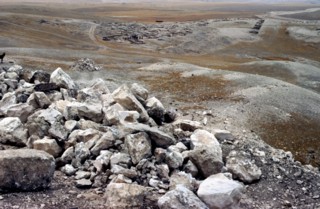
In chapter 25, Shittim is the last encampment before the people cross the Jordan, and apostasy again rears its ugly head in a horrible affront to God.  Some scholars think this may be Tell el-Hammam (about 16 kilometers east of Jericho).  The sins are numerous and include the worship of Baal with the Moabites.  we do not find out for sure until chapter 31, but it is Balaam who leads them to this.  We are not reading his story from the last few chapters in this schedule, but he is referred to again in 2 Peter 2:15 and Jude 1:11. Eleazar’s son, Phineas gains favor with the Lord and keeps the ensuing plague from getting any worse (verses 7-9).  But this sin at Peor will not keep the Lord from sending His people to conquer the Canaanites.  It is not for their righteousness, as Moses will remind them – but for the evil of the Canaanites themselves.

Read or listen to audio of ESV version of this selection from this link.

/Robert
___________________
image © V. Gilbert & Arlisle F. Beers 

Please note: I did not design the reading plan that I am following in my blog.  All of my comments in this blog, however, are solely my responsibility.  When reading ANY commentary, you should ALWAYS refer first to the scripture, which is God’s unchanging and unfailing word. Reading schedules, as well as a link to the site where you can get the reading plan that I’m currently following for yourself can be found on the “Bible Reading Schedules” page of my website at http://graceofourlord.com.  For questions and help, please see the “FAQ” and “Summaries” pages there.

Exodus 32 – The Golden Calf

English: Worshiping the golden calf, as in Exo...

Image via Wikipedia

It is hard to believe that these are the people who in Exodus 20:18-19 were so fearful and in awe of the Lord; and that in Exodus 20:23 were explicitly warned not to make idols.  Could it be any coincidence that the disaster of Jeroboam I making the two idols was done with him using almost the exact words of verse 4, when he said in 1 Kings 12:28 “Behold your gods, O Israel, who brought you up out of the land of Egypt”?  The golden calf was probably the Egyptian bull “deity” Apis.  Sadly, Aaron’s confession to Moses about what they had done is so lame in verses 22-24 – He just threw their gold into the fire, and out comes this calf!  Does any of that remind you of Adam in Genesis 3:12, as it does me?

Joshua had been waiting for Moses at his post on the mountain when he remarked to Moses that the noise from the people below sounded like war.  Notice that Moses, having been informed by the Lord, asks in verse 26 “Who is on the Lord’s side?”  When the sons of Levi come to his side, he orders them to put to death a number of those who did not come at that time – an easy detail to miss with so much happening.  In verse 29, he blesses them, saying that they have been ordained for the Lord.

But the Lord is rightfully hot with anger at this “stiff-necked people” and He wants nothing more to do with them.  Stephen refers to those who had rejected Jesus in the same way in Acts 7:51, before he is stoned.

(Side note: more information about the Egyptian idol that the calf may have been fashioned after can be found in this Wikipedia article)

Read or listen to audio of ESV version of this selection from this link.

/Robert
___________________
image © V. Gilbert & Arlisle F. Beers

Please note: I did not design the reading plan that I am following in my blog.  All of my comments in this blog, however, are solely my responsibility.  When reading ANY commentary, you should ALWAYS refer first to the scripture, which is God’s unchanging and unfailing word. Reading schedules, as well as a link to the site where you can get the reading plan that I’m currently following for yourself can be found on the “Bible Reading Schedules” page of my website at http://graceofourlord.com.  For questions and help, please see the “FAQ” and “Summaries” pages there.
Exodus 16 – Bread from Heaven

Wilderness

The people are hungry as they travel though the wilderness, and their grumbling begins again as they remind Moses yet again how “good” they had it back in Egypt (verse 3).  A ridiculous assertion that tends to make us shake our heads, but we weren’t wandering in that barren land.  Moses rebukes them well when he makes the Lord’s intentions known to them in verses 6-8, letting them know that they are really grumbling against the one who delivered them.  The “glory of the Lord” in verse 10 is “just” another physical manifestation of God that we will read of again in many passages.  It may be helpful to remember these passages when someone is struggling (wrestling?) with the passage about Jacob wrestling with the Lord in Genesis 32:22-30.

We still do not know what it is, but the “manna” (which sounds like “what is it”) that the lord rained down is referred to as bread.  It served the obvious purpose of feeding them for 40 years (almost as amazing as the way it was provided), but also was part of the “testing” that the Lord referred to in verse 4. They are being prepared for the way of life that God intends to present to them in the ten commandments later.  The sabbath is to be a day of rest with no gathering.  When some tried to save some for the following day, contrary to instructions, it would stink and grow worms (verse 20).   But not so with the manna they gathered the day before the sabbath – when no manna would fall (verse 27).  They would have to learn for themselves, though.

Paul quotes verse 18 in 2 Corinthians 8:15, when he is admonishing the Christians there to use their abundance to help supply the needs of other Christians.  Jesus refers to the manna in John 6:41-58, where He says that He is the bread that came down from heaven, foreshadowing His death and our salvation.  The manna was more than just nourishment for the people of Israel.  Jesus came to earth to be more than just a teacher or just a “good man,” as some would claim.

Read or listen to audio of ESV version of this selection from this link.

/Robert
___________________
image © V. Gilbert & Arlisle F. Beers

Please note: I did not design the reading plan that I am following in my blog.  All of my comments in this blog, however, are solely my responsibility.  When reading ANY commentary, you should ALWAYS refer first to the scripture, which is God’s unchanging and unfailing word. Reading schedules, as well as a link to the site where you can get the reading plan that I’m currently following for yourself can be found on the “Bible Reading Schedules” page of my website at http://graceofourlord.com.  For questions and help, please see the “FAQ” and “Summaries” pages there.

Genesis 39 – Joseph and Potiphar’s Wife

We move past Genesis 38 and the story of Judah and Tamar, who are related (pun intended) in the genealogy of Jesus Christ, as told in Mt 1:3 – and into chapter 39.  Potiphar, an officer of Pharaoh and captain of the guard, had bought Joseph from Ishmaelites.  Joseph was successful in this Egyptians master’s home because the Lord was with him; and because of that,  Potiphar enjoyed prosperity (v 5).  Verse 6 says “Joseph was handsome in form and appearance” (exactly as his mother, Rachel was described in Gen 29:17); and Potiphar’s wife would not leave him alone, trying to persuade him to “lie with” her. Unable to slip her grasp, Joseph just leaves her holding the garment and puts some “gone” between him and the master’s wife.

Considering her behavior, it’s not too surprising that she makes up the story that gets Joseph thrown in prison (v 17-18).  She places an interesting play on the term “laugh” in this chapter to drive the stake in deep.  She first uses the contempt that the men of the household would have for Joseph both as a slave, and by not being Egyptian of birth, to make the “attack” on her personal to them (v 14 “See, he has brought among us a Hebrew to laugh at us”).  Since the “he” in that statement is Potiphar, the whole thing then becomes partly his fault – further pushing any suspicion from herself.  In verse 17, she uses “laugh” in the intimate form as when Abimilech discovered “Isaac laughing with Rebekah his wife” in Gen 26:8,  and knew she was not his sister.

Joseph again goes from a “most favored” status to fellowship with the king’s prisoners. But the Lord showed him steadfast love (v 21) and he succeeded in whatever he did there as he again won favor, this time with the prison keeper.

Two things are remarkable about Joseph in this chapter. The first is obvious – a young man being seduced by a desirable woman, yet he does the right thing.  Contrast his character with his brothers (Reuben with his father’s concubine in ch 35, and Judah with his own daughter-in-law – thinking he was visiting a prostitute as her face was covered in ch 38).  The other notable thing about Joseph is his statement to Potiphar’s wife that he could not do “this great wickedness and sin against God.” It is his recognition of what sin really means that has meaning for us today.  We sometimes hurt ourselves when we sin, and we often hurt other people because of it.  But it always hurts the Lord.

Notice as was the case with Potiphar, Joseph’s success with the Lord’s help was such that the prison keeper did not have to think about any of the things he was in charge of.

Read or listen to audio of ESV version of this selection from this link.

___________________

Please note: I did not design the reading plan that I am following in my blog.  All of my comments in this blog, however, are solely my responsibility.  When reading ANY commentary, you should ALWAYS refer first to the scripture, which is God’s unchanging and unfailing word. Reading schedules, as well as a link to the site where you can get the reading plan that I’m currently following for yourself can be found on the “Schedules” page of my website at http://graceofourlord.com.  For questions and help, please see the “FAQ” and “Summaries” pages there.
/Robert

Genesis 32 – Jacob Wrestles with God

Jacob Fears Esau

Genesis 32 is a key turning point for Jacob.  He is finally headed home after 20 years of being away – and he had left out of fear that his brother Esau was going to take his life!  Now, he’s coming back to the very same place, and he is not at all confident that his brother won’t do just that (much less be happy to see him).  But the Lord has told him to return, and that is what he intends to do.  And when his messengers return to tell him that Esau is coming to meet him with four hundred men, it must have been a bit frightening.  But when he left, he had only his staff (as he says in his remarkable prayer to God in verses 9-12). But now, the wealth he has accumulated makes it possible to split his livestock and people into “two camps.”  He does this after the “angels of God” have met him along the way (in v 1).  He named the place where that happened “Mahanaim” which means “two camps,” and that theme is repeated in the chapter.

Jacob decides to try to appease his brother by sending his servants ahead of him, along with large amounts of livestock as presents for Esau from “your servant Jacob.”  A bit ironic, since the Lord had said in Gen 25:23 that “the older shall serve the younger.”  So for safety, Jacob splits the caravan into droves, and his camp into two camps, so one could get away if necessary.

Jacob Wrestles with God

The unexpected wrestling event of verses 22 and following are a source of much confusion to readers.  Jacob realizes quickly that he is actually wrestling with God, but we know that scripture says no one looks on God in His true form and lives, so how do we explain this – or Moses and his later encounters?  God’s word has several examples of God appearing to His people in biblical times in human form for His own reasons.  Remember Abraham’s encounter in Genesis 18 before the Lord destroyed Sodom?  Also, Jesus was fully God, and took human form.  There is much that we do not know, but the important thing is the change that is to come over Jacob, along with the change of his name from Jacob (which means “trickster”) to his new name “Israel,” (which means “God fights”).

The other important thing to take away from this chapter is the above-mentioned prayer in v 9-12.  Read it again, and notice the reverence, the humbleness, and the thanksgiving that accompanies his petition to God.  Only Jesus gives us a better example for prayer.

(Side note: Here is an interesting article about the possible site of Mahanaim)

Read or listen to audio of ESV version of this selection from this link.

___________________

Please note: I did not design the reading plan that I am following in my blog.  All of my comments in this blog, however, are solely my responsibility.  When reading ANY commentary, you should ALWAYS refer first to the scripture, which is God’s unchanging and unfailing word.  Reading schedules, as well as a link to the site where you can get the reading plan that I’m currently following for yourself can be found on the “Schedules” page of my website at http://graceofourlord.com.   For questions and help, please see the “FAQ” and “Summaries” pages there.
/Robert