Mark 6 – The Death of John the Baptist

Here, we have another account of Jesus returning to His hometown.  Verse 5 simply means that their lack of faith prevented him from doing many mighty works.  Indeed, His own family had already believed him to be out of His mind (Mark 3:20-21).  In verses 7-13, He sends out the apostles, giving them authority over the unclean spirits, and to heal.
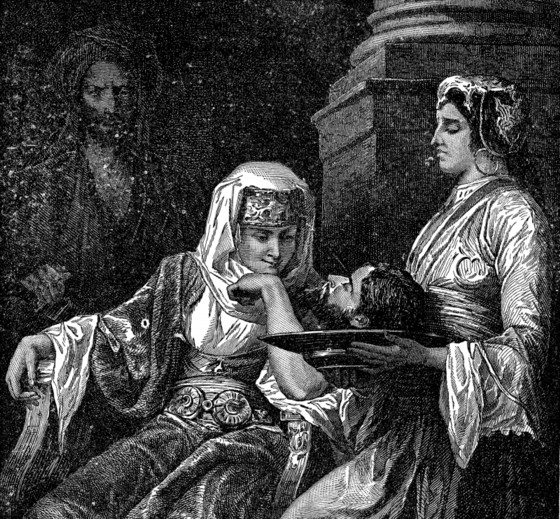
In verses 14-16, we find Herod Antipas leaning toward the belief that Jesus must be John the Baptist raised from the dead – perhaps because of fear from his own guilt in John’s death.  Verse 17-29 detail the death of John the Baptist, as his pronouncement of lawlessness on Herod’s part (he had committed adultery by marrying his brother Philip’s wife, Herodias) cost John his life in an ugly and inhumane act of murder (verses 27-28).

Verse 30 takes up when the apostles return to Jesus, and tell Him all that they had done.  He takes them to a “desolate place” by boat to get away from the crowds and to rest.  But people were already waiting for them when they came ashore.  In verse 34 He “had compassion on them, because they were like sheep without a shepherd,” and began teaching them.  The disciples wanted to send them away so they could eat, but Jesus told them that they would feed them.  This time, there were five thousand men, plus women and children, and they fed them with five loaves of bread and two fish; and they took up twelve baskets full when everyone was full (verse 43).  Two hundred denarii in verse 37 was about 200 days worth of a laborer’s wages.

Jesus sent His disciples ahead to Bethsaida by boat, as He dismissed the crowds and went up to the mountain to pray.  But they were making their way “painfully” because of the wind, and Jesus began walking out to them on the water about the fourth watch (between 3:00 and 6:00 a.m.).  When they saw Him, they thought it was a ghost, but He told them not to be afraid – “it is I.”  As He got in the boat, the wind ceased.  Mark explains that the hardness of their hearts kept them from seeing who He really was, despite the miracle of the loaves or seeing Him walk on the sea with their own eyes.
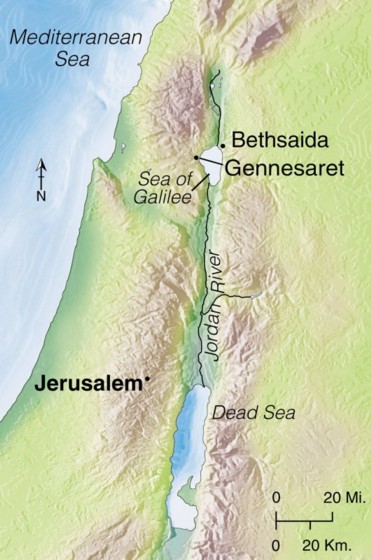
Verse 53 seems to indicate that the wind had taken them southwest of Bethsaida to Gennesaret.  As He came to the villages, cities and countryside, word had spread of His arrival; and people brought the sick to Him.  “On their beds” in verse 55 would indicate some gravely ill people being brought.  Contrast verse 5 with verse 56.  Many just wanted to touch the fringe of His garment, believing that would heal them.  That faith made it so.

Read or listen to audio of ESV version of this selection from this link.

/Bob’s boy
___________________
some images © V. Gilbert & Arlisle F. Beers

Please note: I did not design the reading plan that I am following in my blog.  All of my comments in this blog, however, are solely my responsibility.  When reading ANY commentary, you should ALWAYS refer first to the scripture, which is God’s unchanging and unfailing word. Reading schedules, as well as a link to the site where you can get the reading plan that I’m currently following for yourself can be found on the “Bible Reading Schedules” page of my website at http://graceofourlord.com.  For questions and help, please see the “FAQ” and “Summaries” pages there.

Matthew 15 – What Defiles a Person

The Pharisees and scribes that came from Jerusalem in verse 1 would have been of considerable import and influence during the day.  They accuse the disciples (and therefore, Jesus) of breaking the tradition of the elders by eating without having washed their hands.  This was not a matter of hygiene on their part, but is a good example of the extra-biblical customs they were fond of imposing upon people – this one is supposed to have been based on the ritual purity commandments for priests (i.e. Exodus 30:17-21), extending them to apply to people and situations beyond that of God’s word .

The response from Jesus is to throw it right back at them.  The Pharisees were breaking the commandment of God – not the traditions of elders!  By making a claim that their money or property was vowed as a gift to God, they would exclude it from their wealth in consideration of their parents in need, and be excused for not caring for them by their own interpretation of the law – and who knows if they ever actually would give the possessions anyway, even after they died?  Jesus does not mince any words in exposing this hypocrisy (verse 7-9).   The prophecy quoted in verses 8-9 is from Isaiah 29:13.  The disciples then point out the obvious to Jesus – that the Pharisees were offended by what He had said.  But Jesus is not surprised by the opposition of the Pharisees, and tells the disciples that they are intentionally blind to the gospel.  Verses 10-20 then are His lesson to them that it is not what goes into the body that corrupts us, but what comes from our hearts.

The conversation with the Canaanite woman in verses 21-28 seems to be harsh toward her, but we must realize that Jesus came to the regions of Tyre and Sidon (verse 21) not by accident – He would be expecting encounters with Gentiles!  Her faith did pass the test, and her daughter was healed.  Remember that He had already healed the Centurion’s servant.

He then goes on by the Sea of Galilee healing still more in verses 29-31.  Verses 32-39 detail the feeding of the four thousand – this was just the number of men, not including women and children.  This numeration, as well as that of the feeding of the five thousand could be an indication of what sort of size crowds the scripture speaks of in other places.  All were fed and satisfied with just seven loaves of bread and a few fish, and the seven baskets of food gathered up afterward represents more than what they even started with.

Read or listen to audio of ESV version of this selection from this link.

/Bob’s boy
___________________
some images © V. Gilbert & Arlisle F. Beers

Please note: I did not design the reading plan that I am following in my blog.  All of my comments in this blog, however, are solely my responsibility.  When reading ANY commentary, you should ALWAYS refer first to the scripture, which is God’s unchanging and unfailing word. Reading schedules, as well as a link to the site where you can get the reading plan that I’m currently following for yourself can be found on the “Bible Reading Schedules” page of my website at http://graceofourlord.com.  For questions and help, please see the “FAQ” and “Summaries” pages there.

Luke 7 – Who Is This?

A centurion was a Roman soldier in charge of a hundred men.  This one was a friend to the Jewish people (see verses 3-5).  When Jesus went with the elders to go to heal the centurion’s servant, he sent people to meet Jesus along the way, and told him not to trouble Himself.  Verses 6-8 show his faith in Jesus was strong enough to believe that his servant would be healed simply by Jesus saying so.  Jesus’s statement in verse 9 “I tell you, not even in Israel have I found such faith”  foreshadows the welcoming of Gentiles into the kingdom.

When a widow of Nain lost her only son, Jesus raised him from the dead, a mighty miracle — Luke 7: 11-17.

His compassion for the widow whose son had died (his death would also mean economic hardship for her) causes him to bring her son back to life in front of a great crowd of people, including those carrying the body.  Imagine the fear among them as he sat up and spoke!  His fame grew even more as verse 17 says “this report about him spread through the whole of Judea and all the surrounding country.”  As word spread back to John the Baptist, he sent two disciples to go and ask Jesus point-blank if He really was the Messiah.  Apparently, even John was expecting a very different savior than this.  After they witnessed Jesus healing numerous people (verse 21), he sent them back to him quoting from Isaiah 35:5-6 and 61:1.

The woman whose sins He forgives in verses 36-50 is not Mary who anoints His feet before the crucifixion in John 12:3-8.  The Pharisee (who we learn in verse 40 is named Simon) had invited Jesus into his home to eat, and did not know that Jesus knew what he was thinking.  He was convinced that Jesus could not be a” prophet,” or else He would not be letting a known sinful woman like this touch Him.  Jesus answers with a short parable and a question, and forgives the woman of her sins, prompting those at table to say in verse 49 “Who is this, who even forgives sins?”

Read or listen to audio of ESV version of this selection from this link.

/Bob’s boy
___________________
some images © V. Gilbert & Arlisle F. Beers

Please note: I did not design the reading plan that I am following in my blog.  All of my comments in this blog, however, are solely my responsibility.  When reading ANY commentary, you should ALWAYS refer first to the scripture, which is God’s unchanging and unfailing word. Reading schedules, as well as a link to the site where you can get the reading plan that I’m currently following for yourself can be found on the “Bible Reading Schedules” page of my website at http://graceofourlord.com.  For questions and help, please see the “FAQ” and “Summaries” pages there.

Week 31 summary posted

English: The Wedding at Cana (watercolour)

English: The Wedding at Cana (watercolour) (Photo credit: Wikipedia)

Last week we finished the Sermon on the Mount, the Wedding at Cana, and Jesus’ encounter with Nicodemus, and important Pharisee of the day.  This week we will see look at some of the great parables of the Lord, and see His more typical encounters with the Pharisees become more accusatory on their part, as those in power become more afraid of His popularity.  How will Jesus respond to this?

Summing Up

Each weekend, I am now posting a small PDF of one week of chapter summaries (on the website’s “Summaries” page), current to the beginning of the previous week.  I have posted the summary for Week 31 (July Week 5) of the schedule I am following.  This short PDF document contains condensed comments about John 1, Luke 1, Luke 2, and Matthew 3 and 4, with hyperlinks to the ESV version of each chapter for listening or reading, and joins the summaries for other weeks already posted there.

/Bob’s boy
___________________
image © V. Gilbert & Arlisle F. Beers

Please note: I did not design the reading plan that I am following in my blog.  All of my comments in this blog, however, are solely my responsibility.  When reading ANY commentary, you should ALWAYS refer first to the scripture, which is God’s unchanging and unfailing word. Reading schedules, as well as a link to the site where you can get the reading plan that I’m currently following for yourself can be found on the “Bible Reading Schedules” page of my website at http://graceofourlord.com.  For questions and help, please see the “FAQ” and “Summaries” pages there.
John 3 – For God So Loved the World

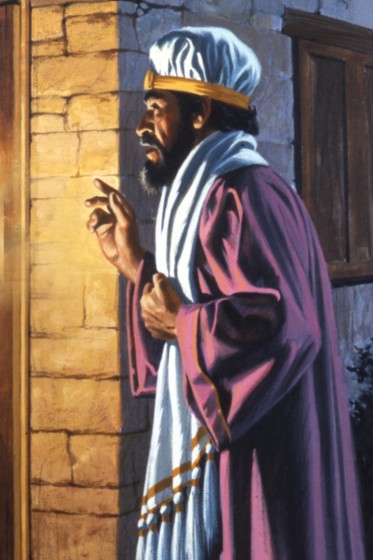
Nicodemus was a Pharisee.  Verse one says that he was a “ruler of the Jews,” which would make him a member of the Sanhedrin – the Jewish governing council.  In fact, one of the other two places he is mentioned is in John 7:50, as there is division among them concerning arresting Jesus. Nicodemus states his belief that Jesus is sent from God because of the signs that he did, confirming that Jesus did many more miracles than were written in the gospel, as John states in John 20:30-31.  Nicodemus seems to be trying to understand what Jesus means by being born again in a physical manner.  But Jesus is speaking of being re-born by the Spirit by way of baptism (Romans 6:3-4, Colossians 2:12-13).  In verse 14, Jesus refers to Moses lifting up the Bronze Serpent in Numbers 21:5-9 to save the people when they had spoken against God; and gives Nicodemus a preview of His crucifixion, which likely he would also not understand – yet.  He will repeat this reference to being lifted up in John 8:28 and John 12:32-33.

The Bronze Serpent

Verse 16 is one of the most famous of the New Testament, and most Bibles that put the words of Jesus in red assign verses 16-21 as His words.  But many scholars believe that these verses are actually John’s inspired words, and the fact that he speaks of God having given His son in the past tense seems to bear that out.  In any case, these verses are joined with verse 15 in such a way that together they well represent the message of the gospel concerning salvation.  The phrase “God so loved the world” followed by the other references to the world are often overlooked in their significance – not only for salvation being open to all, but the declaration of God’s love for all the world, not just the people of Israel.

It is no coincidence that the text immediately jumps to the baptism being done by John the Baptist (who is not yet in prison in this part of the gospel) and now by Jesus and His disciples (verses 22-26). John’s disciples note that people are going to Jesus for baptism now, and John reminds them that he himself told them that he is not the Christ, but had been sent before him.  And in verse 30, says “He must increase, but I must decrease.”  John had done what God had sent him to do.

Read or listen to audio of ESV version of this selection from this link.

/Bob’s boy
___________________
some images © V. Gilbert & Arlisle F. Beers

Please note: I did not design the reading plan that I am following in my blog.  All of my comments in this blog, however, are solely my responsibility.  When reading ANY commentary, you should ALWAYS refer first to the scripture, which is God’s unchanging and unfailing word. Reading schedules, as well as a link to the site where you can get the reading plan that I’m currently following for yourself can be found on the “Bible Reading Schedules” page of my website at http://graceofourlord.com.  For questions and help, please see the “FAQ” and “Summaries” pages there.

Matthew 6 – The Sermon on the Mount – part 2

Verses 1-8 are the Lord’s admonitions to us not to try to parade our righteousness before others, and likewise not to pray with an empty heart.  When we do good works, such as helping those who are in need, to attract the attention, admiration, or approval of others, it taints the very act we are doing by putting the focus on ourselves.  All good instead should be to the glory of God, living by His commandments and doing good because of the reign of the Lord in our hearts and lives.  The “empty phrases” of verse 7 are translated as “vain repetitions” in some versions, causing some to be critical of those praying fervently with over-used and repetitious phrases.  But such is not what Jesus was speaking about (just think of his own heart-felt prayers at Gethsemane in Mark 14:39), but many so-called pious pagans of the day would beseech their “gods” with endless empty chatter. Prayer to the Lord cannot be centered from the heart if the mind is not to be used in earnest.

Most people know verses 9-13 as the “Lord’s prayer.”  But that designation is ours and is unfortunate in some ways, as there is a tendency to use it in the very way that Jesus warned against in the previous verses!  It is an example and a model for our own prayers from our hearts – it was meant to teach us how to pray – with reverence and honor to the Lord, before presenting our petitions.  The “kingdom” was to come in the power of the God’s son which would be fulfilled through the crucifixion and resurrection (Mark 9:1 and Romans 1:4).

The references to fasting in verses 16-18 are not a command for us to fast, though there is nothing wrong with doing so.  The only time that the Old Testament Law required fasting was for the Day of Atonement (Leviticus 16:29-31), but many other days had been added by the people themselves, especially after the events of the destruction of Jerusalem and Babylonian captivity.   And by now, the Pharisees had made it a weekly activity.  The problem came in the fact that people were purposely making themselves look more haggard than they were, so as to draw attention to themselves for their piety.

Verses 19-21 speak to the heart as well.  If we place the most value on the things of this world, we do so at the expense of our spiritual well-being.  The treasures we store in heaven are our own salvation and is all that will truly last.  The “eye” of verses 22-23 is similar to the heart in Jewish literature.  If the eye is healthy, the light that fills the heart comes from devotion to the Lord.

Verses 25-34 do not meant God’s people have no need to work for anything (see  2 Thessalonians 3:10).  But if we put our service to the Lord above all else, that means that we will of necessity be doing all that we should be doing that is right for ourselves as well.   If God takes care of the lowliest of His creation, why should we be worried for our own care?  If we had to spend an inordinate amount of time on that kind of worry, we would have less time to devote to what is important – our salvation and that of others.  Again, it is what we value most that determines where our heart lays.

Read or listen to audio of ESV version of this selection from this link.

/Bob’s boy
___________________
some images © V. Gilbert & Arlisle F. Beers

Please note: I did not design the reading plan that I am following in my blog.  All of my comments in this blog, however, are solely my responsibility.  When reading ANY commentary, you should ALWAYS refer first to the scripture, which is God’s unchanging and unfailing word. Reading schedules, as well as a link to the site where you can get the reading plan that I’m currently following for yourself can be found on the “Bible Reading Schedules” page of my website at http://graceofourlord.com.  For questions and help, please see the “FAQ” and “Summaries” pages there.

Luke 1 – The Birth of John the Baptist

Luke, who also wrote the Book Acts, addressed this book specifically to Theophilus, who was likely a government official (note the way that he refers to him in verse 3).   As it opens, it has been 400 years since Malachi prophesied.  John the Baptist’s father, Zechariah, was a priest.  In those days, the priests were separated in divisions, each of which served for a week – except during times of major feasts, such as Passover or the Feast of Tabernacles.    Zechariah was chosen by lot to serve in the Temple (verses 8-9).  Zechariah (as he and his wife Elizabeth were childless and advanced in years) had no doubt prayed often for a child.  An angel of the Lord appeared to him and told him they would have a son, and that his name would be John.  He was not to drink wine or strong drink, and would be filled with the Holy Spirit “even from his mother’s womb” (indicating he would then already be a human person), and would “make ready for the Lord” (verses 11-17).  Also, jumping ahead to (verses 41-44), upon Mary’s visit, Elizabeth’s baby leaped for joy in her womb.

Birth of St. John the Baptist, depicting Zecha...

Birth of St. John the Baptist, depicting Zechariah writing, “His name is John”. (Photo credit: Wikipedia)

Both as a rebuke for his unbelief, as well as the sign he asked for, the angel Gabriel told Zechariah that he would be unable speak until his son was born (verses 18-23), and  Elizabeth did conceive.  The “sixth month” in verse 26 refers to the sixth month of Elizabeth’s pregnancy.  At this time, the Angel Gabriel appeared to a virgin (Mary), who was pledged to be married to Joseph, who was of the house of David (verses 26-27).  The reference to Nazareth being a city of Galilee is confirmation that Luke’s intended audience was unfamiliar with the territory.  Mary is told that she would have a son and name him Jesus, that God would give him the throne of his father, David, and that “he will reign over the house of Jacob forever, and of his kingdom there will be no end” (verses 28-33). He also tells her of her relative, Elizabeth’s pregnancy.  Verses 46-55 are Mary’s praise to the Lord, and are known as Mary’s song.

When Elizabeth bore her child, the neighbors expected them to name him Zechariah after his father, but she insisted that he would be called John.  Not satisfied, they tried to get Zechariah to give them a sign (since he still could not speak).  He wrote on a tablet that “his name is John,” and immediately he could speak again – because then all that the angel of the Lord had said to him previously had come to pass.  Verses 65-66 indicate that the word of this miraculous birth and Zechariah’s change became famous very quickly.  Zechariah’s prophecy in verses 67-79 verify that the fulfillment of God’s promise to his people through Abraham – and the Messianic age – had indeed begun!

Side note: Excavations at Nazareth by archaeologists have located tombs, olive presses and other indications that it was a small agricultural community.  The most interesting discovery of the past few years is that of a first-century house there.  A very good article on this discovery can be found at this article at BiblePlaces.com.

Read or listen to audio of ESV version of this selection from this link.

/Bob’s boy
___________________
some images © V. Gilbert & Arlisle F. Beers

Please note: I did not design the reading plan that I am following in my blog.  All of my comments in this blog, however, are solely my responsibility.  When reading ANY commentary, you should ALWAYS refer first to the scripture, which is God’s unchanging and unfailing word. Reading schedules, as well as a link to the site where you can get the reading plan that I’m currently following for yourself can be found on the “Bible Reading Schedules” page of my website at http://graceofourlord.com.  For questions and help, please see the “FAQ” and “Summaries” pages there.

Malachi 4 – The Great Day of the Lord

Malachi 4 continues the message begun in previous chapters of Malachi.  The people have returned from captivity, and the problem of idol worship that has plagued them ever since the time of their deliverance from Egypt in the Exodus appears now to be under control.  But they are spiritually bankrupt.  Even their priests are rebuked for offering sacrifices of diseased animals (Malachi 1:1-2:3).  The “day of the Lord” is coming – a theme repeated in the books of the prophets, which always refers to a time when God will take some sort of decisive action – as he did with the destruction and captivity previously.  But this time, the action will be glorious for the righteous (verse 2).  In verses 5-6, as previously stated in Malachi 3:1, He will send a prophet to prepare the way for the Messiah.  That prophet will be John the Baptist, and is confirmed by Jesus in Mark 9:11-13 and in Matthew 11:10-14.

Read or listen to audio of ESV version of this selection from this link.

/Bob’s boy
___________________
some images © V. Gilbert & Arlisle F. Beers

Please note: I did not design the reading plan that I am following in my blog.  All of my comments in this blog, however, are solely my responsibility.  When reading ANY commentary, you should ALWAYS refer first to the scripture, which is God’s unchanging and unfailing word. Reading schedules, as well as a link to the site where you can get the reading plan that I’m currently following for yourself can be found on the “Bible Reading Schedules” page of my website at http://graceofourlord.com.  For questions and help, please see the “FAQ” and “Summaries” pages there.
Amos 5 – Let Justice Roll Down

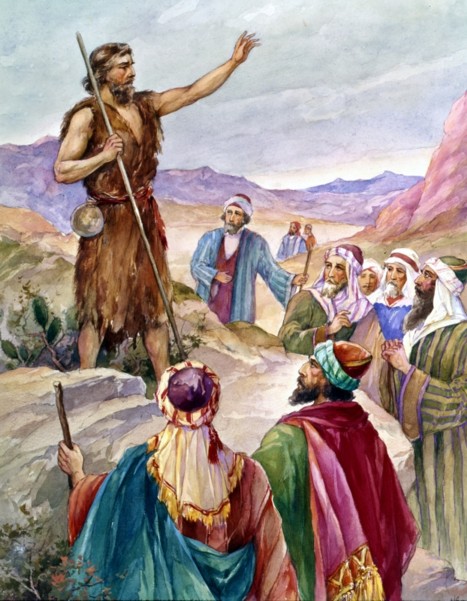
This prophecy from Amos is directed to the northern kingdom during the time of the reign of Jeraboam II.  Amos’s message from God is that doom is coming to Israel because of social injustice.  They are mistreating and persecuting the poor and at the same time, offering worship that is insincere at best.  The “lamentation” in verse 1 stresses that Amos – and God – grieve at what lays ahead for Israel.  Jesus offers a similar lament in Matthew 23:37-39.   But there is still time.  Verses 4-9 are a plea for them to seek the Lord, rather than the pagan forms of worship being done at Bethel, Gilgal, and Beersheba.

Assyria

Assyria (Photo credit: nafmo)

Their worship had deteriorated to the point that there was no visible line between worship to God and worship to idols.   Sikkuth and Kiyyun in verse 26 were Mesopotamian deities.  There were also golden calves, priests who were not Levites, and other violations of the Law.  God despises their sacrifices because of their sinful acts, the perversion of their worship, and their injustice to the needy and the righteous (verse 12).  The scriptures have shown over and over that God cares a great deal about social justice.  He made it clear though Moses, for example, in Exodus 22:21-26.  Their hearts were not right.

Verse 27’s “exile beyond Damascus” was a poignant prediction, as Assyria in the time of Amos was not yet a strong power.

Read or listen to audio of ESV version of this selection from this link.

/Bob’s boy
___________________
some images © V. Gilbert & Arlisle F. Beers

Please note: I did not design the reading plan that I am following in my blog.  All of my comments in this blog, however, are solely my responsibility.  When reading ANY commentary, you should ALWAYS refer first to the scripture, which is God’s unchanging and unfailing word. Reading schedules, as well as a link to the site where you can get the reading plan that I’m currently following for yourself can be found on the “Bible Reading Schedules” page of my website at http://graceofourlord.com.  For questions and help, please see the “FAQ” and “Summaries” pages there.

Jeremiah 31 – The New Covenant

Jeremiah begins this famous chapter with words of encouragement, speaking of a time when the people are returned from captivity.  In verses 15-16, Rachel is weeping for her children; and God says that they will come back.  Rachel was Jacob’s second, and most loved, wife and Joseph’s mother (Genesis 30:22-24).  Ephraim and Manasseh were Joseph’s sons.  The message is summed up in verse 17 “There is hope for your future, declares the Lord.”

Verses 21-39 then describe the new covenant that God will make with His people, and the new relationship that they will have with Him (verses 33-34).   Rather than the forgiveness by the sacrifice of animals through a priest, everyone will be able to know the Lord and have true forgiveness – The Lord “will remember their sin no more.”  The Hebrew writer quotes these verses in Hebrews 8, as he speaks of Jesus being the High Priest of a new covenant.  They are repeated in Hebrews 10.   Also in Hebrews 10:12-14, we are told of the gift that Christ gave us by making a single offering, for all time, of Himself in order to cleanse our sins.

Read or listen to audio of ESV version of this selection from this link.

/Bob’s boy
___________________
some images © V. Gilbert & Arlisle F. Beers

Please note: I did not design the reading plan that I am following in my blog.  All of my comments in this blog, however, are solely my responsibility.  When reading ANY commentary, you should ALWAYS refer first to the scripture, which is God’s unchanging and unfailing word. Reading schedules, as well as a link to the site where you can get the reading plan that I’m currently following for yourself can be found on the “Bible Reading Schedules” page of my website at http://graceofourlord.com.  For questions and help, please see the “FAQ” and “Summaries” pages there.