The Tempting of Jesus

As Luke chapter four opens, Jesus is just returning from the Jordan River and His baptism, filled with the Holy Spirit. And it was the Spirit, Luke tells us, that led Him into the wilderness for 40 days, where He was tempted by the devil. The 40 days reminds us of the 40 days that Moses went without food in Exodus 34:28, as well as the 40 years that the Israelites spent wandering in the desert before entering the Promised Land (Numbers 14:34). The parallel with this latter seems significant. God provided manna for them daily, teaching them dependence on Him. The Spirit, it would seem, was leading Jesus to depend on faith that God would provide for Him. It was this faith that the devil was determined to derail.

There are those who have expressed the opinion that Jesus could not truly have sinned, since He was the Son of God. This opinion refers to what is called peccability,” from the Latin verb “peccare” – meaning to sin. If He had not been able to sin, there would have been no real temptation. But we know this to be false, as the Hebrew writer tells us in Hebrews 4:14-16.

The Temptation of Christ (detail)

The Temptation of Christ (detail) (Photo credit: Wikipedia)

John the baptist had indeed prepared the way for Him, and God knew that Jesus needed these tests. This was a great opportunity for Satan because he knew that Jesus’ ministry was about to begin. His hunger and weakness was very real after 40 days in the wilderness. The temptation to deviate from the Spirit’s direction and satisfy His own hunger would be great. Then Satan showed Jesus a large portion of what must have been the Roman Empire (the “kingdoms of the world” in verse 5) that could be under his authority if he would simply bow down to him. The last temptation would have made Jesus famous throughout the land, and nobody would have been able to doubt His greatness after throwing Himself down from the Temple. And after all, would God really allow harm to come to Him?

One of the lessons we can learn from these temptations that Jesus was able to overcome can be seen by looking at how Jesus answered the devil. In each case, he used the Scriptures to answer (Deuteronomy 8:3, Deuteronomy 6:13, and Deuteronomy 6:16). Jesus showed us that our best defense against temptations is a thorough knowledge of God’s word. By reading and studying the Bible, we come closer to God, and His word gives us the answers – the knowledge and understanding to get through the trials of this world.

(This year’s reading plan for Luke, Acts, and 1 and 2 Chronicles averages just 15 verses per day – 5 days per week!)
Schedule for this week
Read or listen to audio of today’s selection from Luke here
Read or listen to audio of today’s selection from 1 Chronicles here

/Bob’s boy
___________________
some images © V. Gilbert & Arlisle F. Beers

All of my comments in this blog, however, are solely my responsibility.  When reading ANY commentary, you should ALWAYS refer first to the scripture, which is God’s unchanging and unfailing word. Reading schedules can be found on the “Bible Reading Schedules” page of my website at http://graceofourlord.com.

Enhanced by Zemanta

The Wheat and the Chaff

The baptisms performed by John the baptist, the truth in his preaching, and the authoritative warnings of the urgency of repentance were just some of the things that made the people who witnessed it all (and, no doubt, many who simply had heard about him) wonder if he was the Messiah that had been promised to come since the beginning (Genesis 3:15). Indeed, Luke 3:15 points out that many must have desperately wanted him to be “the one.” But verse 16 tells us how John answered that question:

“I baptize you with water, but he who is mightier than I is coming, the strap of whose sandals I am not worthy to untie. He will baptize you with the Holy Spirit and fire.”

Winnowing grain by tossing it into the wind so the chaff will blow away

Winnowing grain by tossing it into the wind so the chaff will blow away

The concept of being baptized with the Holy Spirit is fairly straightforward to us as Christians – followers of Christ, who have been baptized with true repentance have had their lives changed, and can be guided by the indwelling of the Holy Spirit. But what is meant by the statement that He will baptize with fire? The answer can be found in the following verse:

“His winnowing fork is in his hand, to clear his threshing floor and to gather the wheat into his barn, but the chaff he will burn with unquenchable fire.”

Rather than being something positive for Christ’s followers, the baptism by fire is the judgment for the unbelievers, with the unbelievers represented by “chaff” in that verse. Chaff is the dry, scaly, inedible casing of seed or grain. Before the invention of the threshing machine in the latter part of the 18th century, threshing was often done by placing the sheaves on the threshing floor and beating them or running over them. It was the most labor intensive part of the harvest. Afterward, the wheat would be separated by winnowing, often done with a winnowing fork by tossing the grain into the wind so that the chaff would be blown away. The chaff was often burned then to dispose of it.

The Baptism of Jesus

The Baptism of Jesus (Photo credit: Travis S.)

Luke then speaks in verse 18 of John’s distinction of being the first preacher of the “good news” of the kingdom of heaven – a very different sort of prophet from those who had come before him in the Old Testament. But not everyone was happy with the preaching of John the baptist (verse 19). Herod the Great’s son, Herod Antipas, had the title of “tetrarch,” which means “ruler of a quarter” (his father had divided Judea into districts, and he was given Galilee and Perea). He had divorced his first wife, and taken his brothers wife, Herodias. John’s condemnation of this and many evil acts done by the ruler resulted in Herod having him thrown in prison.

Verses 21-22 tell of Jesus submitting to the baptism, and of the sign of the Holy Spirit and God’s pleasure in His Son. Though these verses come after the verse about John’s imprisonment, one should not infer that Luke did not know of John’s role in Jesus’ baptism, as he acknowledges John’s role in Acts 1:22.

(This year’s reading plan for Luke, Acts, and 1 and 2 Chronicles averages just 15 verses per day – 5 days per week!)
Schedule for this week
Read or listen to audio of today’s selection from Luke here
Read or listen to audio of today’s selection from 1 Chronicles here

/Bob’s boy
___________________
some images © V. Gilbert & Arlisle F. Beers

All of my comments in this blog, however, are solely my responsibility.  When reading ANY commentary, you should ALWAYS refer first to the scripture, which is God’s unchanging and unfailing word. Reading schedules can be found on the “Bible Reading Schedules” page of my website at http://graceofourlord.com.

Enhanced by Zemanta

Preparing the Way

John the Baptist preaching repentance - polych...

John the Baptist preaching repentance – polychrome, Amiens cathedral (Photo credit: Wikipedia)

If this writer kept a “top ten list” of the most important chapters of scripture in the Bible, Luke Chapter 3 would almost certainly be in that list, for reasons that will hopefully become apparent by the end of this blog. In verse 7, John the Baptist is speaking to the crowds that came out to be baptized. In Matthew chapter 3, we are told that Pharisees and Saduccees were among those who had come. The impression that is most natural to take away from John’s harsh-sounding words here are that they are meant for those two groups. But just as likely, they are aimed at any of those who had come without true repentance on their minds. That is what John had been preaching – a baptism of repentance.

Referring to them as a “brood of vipers,” the question he poses is “who warned you to flee from the wrath to come?” Judging from the verses that follow, it seems that what he meant was “where did you get the idea that you can avoid the wrath that is to come simply by baptism – that is, without repentance?” “Bear fruits in keeping with repentance” means that they must not only repent, but they must show the change in their lives by how they live, and by how they treat others from this day forward. He then admonishes them not to have the idea in mind that because they are descendants of Abraham, they have nothing to fear. God, he tells them, can raise up children of Abraham from the stones present around them. In other words, it is not enough – God is not so impressed with their pedigree.

Jesus warned His disciples that the Temple would be completely destroyed. His prophecy was fulfilled in 70 A.D. by the Roman general Titus (Matthew 24:1-2)

Jesus warned His disciples that the Temple would be completely destroyed. His prophecy was fulfilled in 70 A.D. by the Roman general Titus (Matthew 24:1-2)

In verse 9, John tells them that already “the axe is laid to the root of the trees.” They do not know it, but the imminent destruction that this alludes to is the coming destruction that will result from the Jews’ rejection of Jesus. And “every tree,” he says, “that does not bear good fruit is cut down and thrown into the fire.” So when the various people asked what they were to do, everything that he tells each of them in verses 10-14 has to do with a complete change in the way John knows (from the Spirit) that they are living – mostly how unjust they are to others, especially the poor and down-trodden. That part is the same story throughout the Old and New Testaments – God has always cared very deeply about how those two groups of people are treated.

All of these things together make up the crux of what John’s commission by God is all about, as far as “to prepare the way” is concerned. This is part of what makes this chapter of Luke one of the most important in the New Testament. There has been no word from God for 400 years – since Malachi foretold the coming of John the Baptist in Malachi 3:1 and 4:5. Now comes John the Baptist, filled with the Holy Spirit and preaching a baptism of repentance for the forgiveness of sins.

Although baptism in some form did exist before John the Baptist received his calling from God, it was not a baptism of repentance, nor was it for the forgiveness of sins. There was no real forgiveness of sins under the Law of Moses because, as Paul said, it is impossible for the blood of bulls and goats to take away sins” (Hebrews 10:1-4). There was washing for purification, as first implemented with Aaron and his sons (Exodus 29:4, Leviticus 16:23-24), and for remedy of defilement (Numbers 19). And at some point (though not Biblically required), baptism (immersion in water) was added to circumcision as a requirement for Gentile proselytes to be converted to Judaism.

But now it was different. John the Baptist did not come up with the idea of this baptism on his own. It was part of “the word” that came from God (Luke 3:2-3). John the Baptist “prepared the way” for Jesus in three important ways that we can clearly see: 1) by proclaiming and practicing the baptism of repentance for the forgiveness of sins (Luke 3:3) 2) by proclaiming that the kingdom of heaven (and, necessarily, the Messiah’s arrival at last) was at hand (Matthew 3:2, Matthew 3:11-12), and 3) by clearly pointing his followers to Jesus as that long-awaited Messiah – the Son of God (John 1:29-34).

(This year’s reading plan for Luke, Acts, and 1 and 2 Chronicles averages just 15 verses per day – 5 days per week!)
Schedule for this week
Read or listen to audio of today’s selection from Luke here
Read or listen to audio of today’s selection from 1 Chronicles here

/Bob’s boy
___________________
some images © V. Gilbert & Arlisle F. Beers

All of my comments in this blog, however, are solely my responsibility.  When reading ANY commentary, you should ALWAYS refer first to the scripture, which is God’s unchanging and unfailing word. Reading schedules can be found on the “Bible Reading Schedules” page of my website at http://graceofourlord.com.

Enhanced by Zemanta

In the Presence of All Peoples

In verses 22-24 of Luke chapter 2, we learn that Mary and Joseph have brought Jesus to Jerusalem to make an offering once the days of her purification following childbirth are complete. This is in accord with the Law of Moses given in Leviticus 12:3-8, and it means that it was 40 days after his birth. The offering is to be a lamb and a turtle-dove or pigeon unless she cannot afford a lamb, in which case it would be two turtle-doves or two pigeons. Since Joseph was not a man with much wealth, the offering would be the latter.

St Joseph with the Infant Jesus (c. 1635), at ...

St Joseph with the Infant Jesus (c. 1635), at the Hermitage, in St. Petersburg. Oil on canvas, 126 x 101 cm. (Photo credit: Wikipedia)

Beginning in verse 25, we are told of a righteous and devout man who was there that was filled with the Holy Spirit. The text says that he was waiting for”the consolation of Israel,” which is to say that he was waiting for God to send the Messiah to redeem His people. In fact, verse 26 says that the Holy Spirit had revealed that he would see the Christ in his lifetime. There are some scholars (particularly Dr. John Lightfoot) that believed this Simeon was the son of a great philosopher and doctor of that day, Hillel, and that Simeon was also president of the Sanhedrin. If true, this would mean that he was also the father of Gamaliel, who Saul of Tarsus studied under. All very interesting, and we are sure, quite educated calculations, but still historically unsubstantiated.

As he took the child in his arms, he offered his blessing to God, saying “…that you have prepared in the presence of all peoples, a light for revelation to the Gentiles, and for glory to your people Israel.”  Filled with the Holy Spirit, Simeon already knew what many would not figure out until after Jesus’ death and resurrection – that he had come for the Gentiles as well. He then blessed the parents, and addressed Mary with some prophecy in verses 34-35 that points to the rise of many ordinary men to be His apostles, the fall of unbelievers such as Annas and Caiaphas, and a darker prophecy of Mary’s heartbreaking witness of her son’s death (“a sword will pierce through your own soul”).

In verses 36-38, we are told of a prophetess named Anna, who was “advanced in years.” The words “did not depart from the temple” simply refer to the fact that despite her age, she did not forsake her temple duties. Verse 38 says of her: “and coming up at that very hour she began to give thanks to God and to speak of him to all who were waiting for the redemption of Jerusalem.” “To speak of him” refers to Jesus, not God, as is obvious from the context.

So we can deduce from these two accounts, that a number of people were being told of the fact that this child was the long-awaited Messiah.

(This year’s reading plan for Luke, Acts, and 1 and 2 Chronicles averages just 15 verses per day – 5 days per week!)
Schedule for this week
Read or listen to audio of today’s selection from Luke here
Read or listen to audio of today’s selection from 1 Chronicles here

/Bob’s boy
___________________
some images © V. Gilbert & Arlisle F. Beers

All of my comments in this blog, however, are solely my responsibility.  When reading ANY commentary, you should ALWAYS refer first to the scripture, which is God’s unchanging and unfailing word. Reading schedules can be found on the “Bible Reading Schedules” page of my website at http://graceofourlord.com.

Enhanced by Zemanta

Psalm 78:1-24 – Give Ear, O My People

English: Solomon and the Plan for the Temple, ...

English: Solomon and the Plan for the Temple, as in 1 Kings 6, illustration from a Bible card published by the Providence Lithograph Company (Photo credit: Wikipedia)

Today, we read the first 24 verses of this comparatively lengthy historical psalm, which according to the superscription was one of about a dozen written by Asaph – one of the singers at Solomon’s dedication of the temple (2 Chronicles 5:7-14). Verses 2-3 are somewhat familiar to Christians today, as Jesus referred to it in Matthew 13:35:

I will open my mouth in a parable;
I will utter dark sayings from of old,
things that we have heard and known,
that our fathers have told us

Parables and “dark sayings” (somewhat the kin of riddles) were used by great teachers to impart wisdom, while challenging and exercising the imagination more than to entertain. Obviously, as any good teacher knows, the more thought the student has to put into the lesson, the more that student will learn. One has to be interested in learning the subject in order to benefit – which is one reason Jesus used them.

Verses 5-8 speak of the covenant with Jacob and the tradition of fathers teaching their children about the covenant, the law, and the wondrous things that God has done for them. Verses 9-16 continue with the parting of the Red Sea (Exodus 14) and God’s providing of water from the rocks to an ungrateful and unfaithful people (Numbers 20:5-9). Verses 17-20 tell of their rebellion in the desert and how they tested the Lord (Numbers 20:2-4). Verses 21-24 recount how, though God’s anger was kindled against these people who did not trust Him despite all He had done, He still provided food for them in the form of manna from heaven (Exodus 16).

Read or listen to audio of ESV version of this selection from this link.

/Bob’s boy
___________________
some images © V. Gilbert & Arlisle F. Beers

Please note: I did not design the reading plan that I am following in my blog.  All of my comments in this blog, however, are solely my responsibility.  When reading ANY commentary, you should ALWAYS refer first to the scripture, which is God’s unchanging and unfailing word. Reading schedules, as well as a link to the site where you can get the reading plan that I’m currently following for yourself can be found on the “Bible Reading Schedules” page of my website at http://graceofourlord.com.  

Psalm 18:25-50 – His Way Is Perfect

David, King Over All Israel, as in 2 Samuel 5:...

David, King Over All Israel, as in 2 Samuel 5:1-12, illustration from a Bible card published 1896 by the Providence Lithograph Company (Photo credit: Wikipedia)

In this second half of Psalm 18, David continues singing God’s praises for being a just and merciful God, and specifically for care and help He has given David. In verse 29, the phrase “and by my God I can leap over a wall” may refer to David’s victory over the stronghold of the Jebusites at Jerusalem in 2 Samuel 5:6-10.  Verses 31-45 continue in that line of thought, as David recounts his military victories, his leadership, and his prowess as a warrior.

But he does not do so in a boastful manner. Instead, he rightly gives all the credit and glory to God, where it belongs. In verse 34, he says that “He trains my hands for war.” In verses 39-40:

For you equipped me with strength for the battle;
you made those who rise against me sink under me.
You made my enemies turn their backs to me,
and those who hated me I destroyed

Verse 46 continues the words that now are the lyrics for the popular hymn “I Will Call Upon the Lord” (which began in verse 3): “the Lord lives, and blessed be my rock, and exalted be the God of my salvation.” In verse 49, David writes: “for this I will praise you, O Lord, among the nations, and sing to your name.” This verse is also written in 2 Samuel 22:50, and Paul sites them in Romans 15:9-12, as he explains that it was always God’s plan to include the Gentiles as the children of God through the Davidic line in Jesus Christ. To this point, verse 50 ties up the entire chapter into a succinct summary:

Great salvation he brings to his king,
and shows steadfast love to his anointed,
to David and his offspring forever

Read or listen to audio of ESV version of this selection from this link.

/Bob’s boy
___________________
some images © V. Gilbert & Arlisle F. Beers

Please note: I did not design the reading plan that I am following in my blog.  All of my comments in this blog, however, are solely my responsibility.  When reading ANY commentary, you should ALWAYS refer first to the scripture, which is God’s unchanging and unfailing word. Reading schedules, as well as a link to the site where you can get the reading plan that I’m currently following for yourself can be found on the “Bible Reading Schedules” page of my website at http://graceofourlord.com.  

Proverbs 25 – Having Your Fill

English: A hive of Apis dorsata (giant honey b...

English: A hive of Apis dorsata (giant honey bees) I photographed whilst in Mt Abu, India. This hive was situated right next to a glass window of a building enabling me to get close enough. (Photo credit: Wikipedia)


Bee hive honey bee colony swarm Verse 16 conveys an idea that is certainly not very pleasant, and we might wonder what it is that Solomon may be getting at exactly:


If you have found honey, eat only enough for you,
lest you have your fill of it and vomit it


But verse 17 makes the meaning clearer:


Let your foot be seldom in your neighbor’s house,
lest he have his fill of you and hate you


Too much of a good thing – even something we enjoy very much – is often bad for us. Likewise, too much time in the company of friends can end up in strife and bitterness. But Solomon’s warning goes beyond honey, neighbors, and friends. When we find something we really enjoy, it is easy to become obsessive about it to some degree. This is more true of some people than others.


It is important for God’s people to remember what things are most important in the Lord’s kingdom, and not be carried away with diversion, pleasure, and entertainment to the detriment of those things that are of the most importance. When we allow that to happen, those things become our idols. honey bees and hives and honeycommbs


Read or listen to audio of ESV version of this selection from this link.


/Bob’s boy


___________________


some images © V. Gilbert & Arlisle F. Beers


Please note: I did not design the reading plan that I am following in my blog.  All of my comments in this blog, however, are solely my responsibility.  When reading ANY commentary, you should ALWAYS refer first to the scripture, which is God’s unchanging and unfailing word. Reading schedules, as well as a link to the site where you can get the reading plan that I’m currently following for yourself can be found on the “Bible Reading Schedules” page of my website at http://graceofourlord.com.  For questions and help, please see the “FAQ” and “Summaries” pages there.


Psalm 18:1-24 – I Call Upon the Lord

cherubim_002We are breaking this relatively long psalm up into two sections, and so we will cover verses 1-24 in this blog. Occasionally there is some disagreement among scholars as to the author of certain psalms. But with Psalm 18, there can be no doubt. The psalm is also found in 2 Samuel 22. In fact, even most of the superscription is contained in verses 1-2 of that passage practically word for word:

“And David spoke to the Lord the words of this song on the day when the Lord delivered him from the hand of all his enemies, and from the hand of Saul. He said…”

This is one of the “royal psalm,” and it shows God’s faithfulness to his people by giving them the Davidic monarchy, and keeping him safe through many dangers. The hymn “I will call upon the Lord” is taken from this psalm. Consider verse 3: “I call upon the Lord, who is worthy to be praised, and I am saved from my enemies.”

Though there are few differences between this psalm and the passage in 2 Samuel 22, the distinction is in context. The latter is David’s personal prayer of praise and thanksgiving to God for His deliverance of him. Psalm 18 is the adaptation of it to a song that the whole congregation can sing to give thanks for the line of David, and to pray for the faithfulness and strength of the heirs to his throne.

The words of the first half of psalm, when referring to God’s deliverance of David, convey imagery of God rushing to the rescue of His anointed one like an angry and powerful protector, arriving on winged transport with swiftness of speed. His voice like thunder, flinging fire and hailstones, the picture of a powerful and protective God is painted in such a way as to instill awe, reverence and gratitude for the swiftness of action with which God acts to protect His righteous.

Read or listen to audio of ESV version of this selection from this link.

/Bob’s boy
___________________
some images © V. Gilbert & Arlisle F. Beers

Please note: I did not design the reading plan that I am following in my blog.  All of my comments in this blog, however, are solely my responsibility.  When reading ANY commentary, you should ALWAYS refer first to the scripture, which is God’s unchanging and unfailing word. Reading schedules, as well as a link to the site where you can get the reading plan that I’m currently following for yourself can be found on the “Bible Reading Schedules” page of my website at http://graceofourlord.com.  

Psalm 143 – I Stretch Out My Hands To You

Absalom

Absalom (Photo credit: Wikipedia)


This psalm of David is one of  those which are referred to as “the penitentials.” It still has all the elements of a lament, however, and as such it is clear that it was one written during his flight from Jerusalem during Absalom’s rebellion. The penance in his prayer is far too deep and genuine to be of the time of Saul’s persecution. Franz Delitzsch wrote of this psalm that it:


“is certainly composed as coming out of the situation of David who was persecuted by Absalom; and it is distinguished from those of the time of Saul’s persecution by the psalmist’s deep melancholy, founded upon the penitential sorrow of David’s consciousness of his own guilt.”


David is paying the price for his sin with Bathsheba, and his atrocious murder of his loyal friend, Uriah the Hittite – of which Nathan warned him to be prepared for in 2 Samuel 12:7-12.  Psalm 143 is another great model of prayer for us today. In the midst of praying for his deliverance, David also prays not only for deliverance, but for strength to serve God better:


Teach me to do your will,
for you are my God!
Let your good Spirit lead me
on level ground!

For your name’s sake, O Lord, preserve my life!
In your righteousness bring my soul out of trouble!


Read or listen to audio of ESV version of this selection from this link.


/Bob’s boy


___________________


some images © V. Gilbert & Arlisle F. Beers


Please note: I did not design the reading plan that I am following in my blog.  All of my comments in this blog, however, are solely my responsibility.  When reading ANY commentary, you should ALWAYS refer first to the scripture, which is God’s unchanging and unfailing word. Reading schedules, as well as a link to the site where you can get the reading plan that I’m currently following for yourself can be found on the “Bible Reading Schedules” page of my website at http://graceofourlord.com.  


Psalm 148 – Hallelujah, Praise Jehovah!

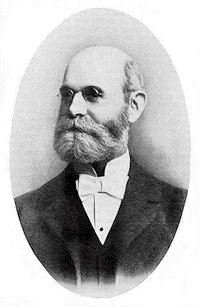
William J. Kirkpatrick

William J. Kirkpatrick

Another of the “Hallelujah Psalms,” Psalm 148 is certainly one of the most familiar to people in song. The ever-popular hymn “Hallelujah, Praise Jehovah!” by William J. Kirkpatrick is practically taken word for word from this psalm; and it is a personal favorite of this blogger.

The psalm calls on all of God’s creatures to praise Him, but it goes further – declaring that all of His creation should sing His praises as well.  Parts of this psalm bring to mind the Triumphal Entry of Jesus into Jerusalem (Luke 19:28-44). When the Pharisees suggested that Jesus should silence His disciples who were shouting praises to Him, he answered in verse 40 “I tell you, if these were silent, the very stones would cry out.”

Praise the Lord!
Praise the Lord from the heavens;
praise him in the heights!

Praise him, all his angels;
praise him, all his hosts!

Praise him, sun and moon,
praise him, all you shining stars!

Praise him, you highest heavens,
and you waters above the heavens!
Let them praise the name of the Lord!
For he commanded and they were created.

Read or listen to audio of ESV version of this selection from this link.

/Bob’s boy
___________________
some images © V. Gilbert & Arlisle F. Beers

Please note: I did not design the reading plan that I am following in my blog.  All of my comments in this blog, however, are solely my responsibility.  When reading ANY commentary, you should ALWAYS refer first to the scripture, which is God’s unchanging and unfailing word. Reading schedules, as well as a link to the site where you can get the reading plan that I’m currently following for yourself can be found on the “Bible Reading Schedules” page of my website at http://graceofourlord.com.