Nehemiah 1 – Nehemiah’s Prayer

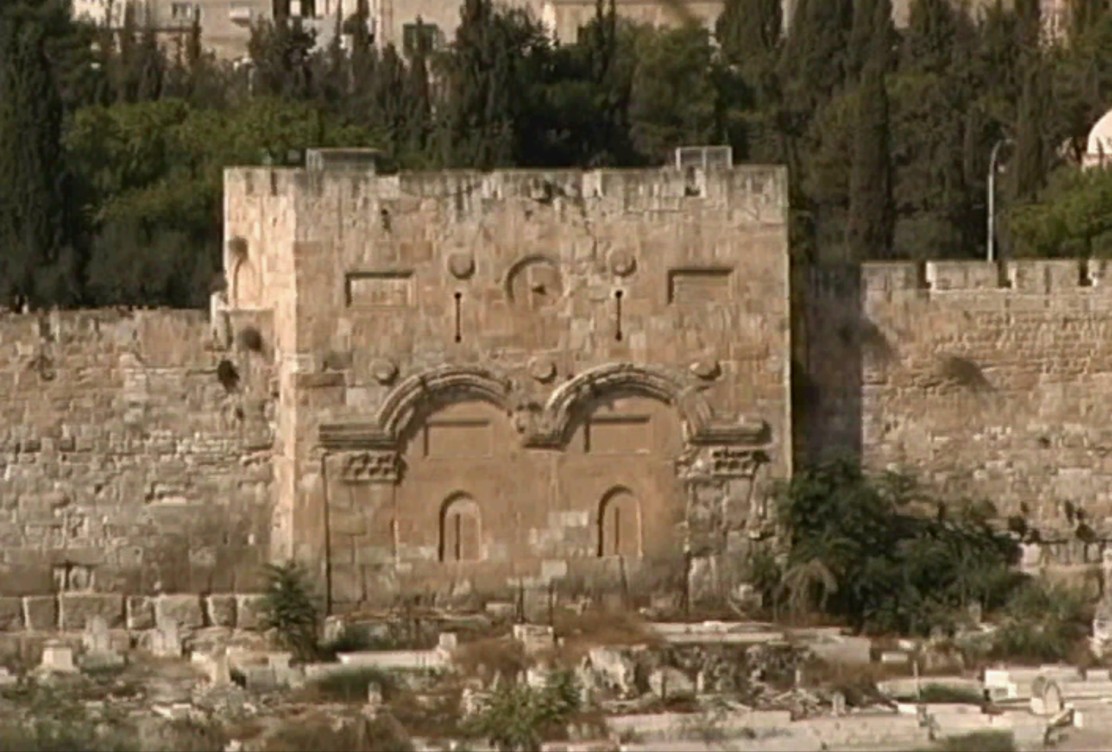
Jerusalem Golden Gate

Nehemiah opens 13 years after Ezra arrived in Jerusalem (compare verse 1 to Ezra 7:7).  Ezra came about 57 years after the Temple was built, which was about 515 BC.  The twentieth year in this verse refers to that of the reign of Artaxerxes, which is about 445 BC.  At least one attempt at rebuilding the wall had been started  (note Ezra 4:12), but it had never been finished.  Some have surmised that the distress of Nehemiah at the news about the condition of the wall could be because he thought that because so many captives had already returned to Jerusalem so long ago, it should have already been rebuilt.  Whatever the case, he is living hundreds of miles away in another land in the Persian citadel, or fortress, Susa.

Nehemiah was cupbearer to the Persian king – a position of some prominence, and would afford great access to the king – as well as scrutiny.  His prayer to God in verses 5-11 is one of the great ones of the Old Testament.  It includes praise to God, heartfelt and genuine confession and remorse without excuses, and a plea of petition to the Lord.  In his plea, Nehemiah humbly asks the Lord to forgive them and restore them after having been scattered for their sins, as the Lord had promised in scriptures that include Deuteronomy 4:25-30 and Deuteronomy 30:1-6.

Read or listen to audio of ESV version of this selection from this link.

/Bob’s boy
___________________
some images © V. Gilbert & Arlisle F. Beers

Please note: I did not design the reading plan that I am following in my blog.  All of my comments in this blog, however, are solely my responsibility.  When reading ANY commentary, you should ALWAYS refer first to the scripture, which is God’s unchanging and unfailing word. Reading schedules, as well as a link to the site where you can get the reading plan that I’m currently following for yourself can be found on the “Bible Reading Schedules” page of my website at http://graceofourlord.com.  For questions and help, please see the “FAQ” and “Summaries” pages there.

Ezra 6 – The Decree of Darius

Chapters 4 and 5 refer to both the building of the Temple and the construction of the wall; and discuss the opposition that the Jews ran into – despite Cyrus’s decree.  The reign of Cyrus ended upon his death in 530 BC, and the construction of the Temple was halted due to that opposition for more than 15 years.  In chapter 6, by the time that Darius became king, the record of the decree of Cyrus was in question as to whether it had actually taken place.  So Darius made a decree that it would be searched for.  Verses 3-12 detail the additional orders that Darius decreed concerning the construction, once the record of the decree of Cyrus was found.

English: Tomb of Cyrus the Great

English: Tomb of Cyrus the Great (Photo credit: Wikipedia)

Verses 13-22 mark the completion of the Temple (as verse 15 notes that it was in the sixth year of the reign of Darius, that would be about 515 BC).  Then the text describes its dedication and the celebration of Passover.   Verse 14 emphasizes that completion of the Temple was really influenced by the will of God, speaking through His prophets Haggai (Haggai 1:1-11) and Zechariah (Zechariah 1:7-17).

Read or listen to audio of ESV version of this selection from this link.

/Bob’s boy
___________________
some images © V. Gilbert & Arlisle F. Beers

Please note: I did not design the reading plan that I am following in my blog.  All of my comments in this blog, however, are solely my responsibility.  When reading ANY commentary, you should ALWAYS refer first to the scripture, which is God’s unchanging and unfailing word. Reading schedules, as well as a link to the site where you can get the reading plan that I’m currently following for yourself can be found on the “Bible Reading Schedules” page of my website at http://graceofourlord.com.  For questions and help, please see the “FAQ” and “Summaries” pages there.

Ezra 3 – Rebuilding the Temple

In verse 1, by Israel’s calendar, the seventh month was Tishri (about September).  It was the month of the Day of Atonement (Leviticus 23:26–32), and then came the Feast of Booths (Leviticus 23:33–43), celebrating the exodus.  It was important to build the altar first, as it was the first thing done when the people first entered the land after the exodus (Deuteronomy 27:1-8); and it was built at the site of the old altar (verse 3), and they began sacrificing at once.  In verse 7, they gave money to the masons and carpenters, and to the Sidonians and the Tyrians for the cedars of Lebanon to be brought.

Day of Atonement

Day of Atonement (Photo credit: Wikipedia)

The Temple project began in the  second year (about 537 BC). The second month, in verse 8, was Ziv (1 Kings 6:1) and is in the spring.  It was the same time of year that Solomon began construction of the original temple (2 Chronicles 3:2).  In verses 10-11, the people shouted with joy at the laying of the foundation.  But in verses 12-13, some of the very old remembered the first temple, and they did not believe that the new one would be as awesome and beautiful as the first (see Haggai 2:2-9).  So the sounds of weeping and joy could not be distinguished from each other.

Read or listen to audio of ESV version of this selection from this link.

/Bob’s boy
___________________
some images © V. Gilbert & Arlisle F. Beers

Please note: I did not design the reading plan that I am following in my blog.  All of my comments in this blog, however, are solely my responsibility.  When reading ANY commentary, you should ALWAYS refer first to the scripture, which is God’s unchanging and unfailing word. Reading schedules, as well as a link to the site where you can get the reading plan that I’m currently following for yourself can be found on the “Bible Reading Schedules” page of my website at http://graceofourlord.com.  For questions and help, please see the “FAQ” and “Summaries” pages there.

Ezra 1 – The Proclamation of Cyrus

Cyrus Cylinder. Terracotta, Babylonian, ca. 53...

Cyrus Cylinder. Terracotta, Babylonian, ca. 539-530 BC. From Babylon, southern Iraq. (Photo credit: Wikipedia)

Ezra begins in 539 BC with the proclamation of Cyrus.  This was prophesied hundreds of years before he was even born – in Isaiah 44:28-45:1.  Verse 1 says that “the Lord stirred up the spirit of Cyrus king of Persia,” affirming that the proclamation was the Lord’s doing.  The reference to the words of Jeremiah is about Jeremiah 25:11-14 and 32:36-38, wherein the prophet predicts the exile to Babylon as well as their return.  The leaders of the tribes of Benjamin and Judah, along with the priests and Levites, gather money and material for the temple – as Cyrus decreed it to be rebuilt.  Cyrus also brings the treasures that were taken from the temple in 586 b.c. for them to take back to Jerusalem (verses 7-11).

Side note: The Cyrus Cylinder was discovered in 1879 by Hormuzd Rassam.  Cyrus conquered the Babylonians and captured Nabonidus, the last Babylonian king.  He details the restoration of exiles and the return of temple “gods” to their sanctuaries.  There is a great story about this cylinder in this article from BibleArchaeology.org.

Read or listen to audio of ESV version of this selection from this link.

/Bob’s boy
___________________
some images © V. Gilbert & Arlisle F. Beers

Please note: I did not design the reading plan that I am following in my blog.  All of my comments in this blog, however, are solely my responsibility.  When reading ANY commentary, you should ALWAYS refer first to the scripture, which is God’s unchanging and unfailing word. Reading schedules, as well as a link to the site where you can get the reading plan that I’m currently following for yourself can be found on the “Bible Reading Schedules” page of my website at http://graceofourlord.com.  For questions and help, please see the “FAQ” and “Summaries” pages there.

Exile Ends \ Week 27 summary posted

This week, we move to the end of Babylonian captivity, as Cyrus of Persia sends people home after conquering the empire  So, God’s people go home.  But home to what?  The Temple was destroyed, as was the wall that protected the city from invaders.  What will become of God’s people?  Let’s find out this week, starting with Ezra.

Perspective on the captivity…
Destruction of Jerusalem under the Babylonian ...

Destruction of Jerusalem under the Babylonian rule. Illustration from the Nuremberg Chronicle (Photo credit: Wikipedia)

The warnings from God concerning their idolatry began much earlier than the Books of Kings.  God gives clear warning that it would happen in Leviticus 26:33-39, and again in Deuteronomy 4:27.  Despite his own guilt in idolatry, Solomon knew of it for certain, as the Lord told him after he built the Temple in 1 Kings 9:1-7.  In his prayer of dedication in the previous chapter (specifically 1 Kings 8:46-50), Solomon had asked that if they are carried away captive and repent, that God will hear their plea, and “maintain their cause.”  As for how God will maintain their cause, we read some last week – the promise of the Messiah.  This week, we will see what is in their immediate future.

Summing Up

Each weekend, I am now posting a small PDF of one week of chapter summaries (on the website’s “Summaries” page), current to the beginning of the previous week.  I have posted the summary for Week 27 (July Week 1) of the schedule I am following.  This short PDF document contains condensed comments about 2 Kings 23, 24, 25, and Daniel 1 and 2, with hyperlinks to the ESV version of each chapter for listening or reading, and joins the summaries for other weeks already posted there.

/Bob’s boy
___________________
image © V. Gilbert & Arlisle F. Beers

Please note: I did not design the reading plan that I am following in my blog.  All of my comments in this blog, however, are solely my responsibility.  When reading ANY commentary, you should ALWAYS refer first to the scripture, which is God’s unchanging and unfailing word. Reading schedules, as well as a link to the site where you can get the reading plan that I’m currently following for yourself can be found on the “Bible Reading Schedules” page of my website at http://graceofourlord.com.  For questions and help, please see the “FAQ” and “Summaries” pages there.

Amos 5 – Let Justice Roll Down

This prophecy from Amos is directed to the northern kingdom during the time of the reign of Jeraboam II.  Amos’s message from God is that doom is coming to Israel because of social injustice.  They are mistreating and persecuting the poor and at the same time, offering worship that is insincere at best.  The “lamentation” in verse 1 stresses that Amos – and God – grieve at what lays ahead for Israel.  Jesus offers a similar lament in Matthew 23:37-39.   But there is still time.  Verses 4-9 are a plea for them to seek the Lord, rather than the pagan forms of worship being done at Bethel, Gilgal, and Beersheba.

Assyria

Assyria (Photo credit: nafmo)

Their worship had deteriorated to the point that there was no visible line between worship to God and worship to idols.   Sikkuth and Kiyyun in verse 26 were Mesopotamian deities.  There were also golden calves, priests who were not Levites, and other violations of the Law.  God despises their sacrifices because of their sinful acts, the perversion of their worship, and their injustice to the needy and the righteous (verse 12).  The scriptures have shown over and over that God cares a great deal about social justice.  He made it clear though Moses, for example, in Exodus 22:21-26.  Their hearts were not right.

Verse 27’s “exile beyond Damascus” was a poignant prediction, as Assyria in the time of Amos was not yet a strong power.

Read or listen to audio of ESV version of this selection from this link.

/Bob’s boy
___________________
some images © V. Gilbert & Arlisle F. Beers

Please note: I did not design the reading plan that I am following in my blog.  All of my comments in this blog, however, are solely my responsibility.  When reading ANY commentary, you should ALWAYS refer first to the scripture, which is God’s unchanging and unfailing word. Reading schedules, as well as a link to the site where you can get the reading plan that I’m currently following for yourself can be found on the “Bible Reading Schedules” page of my website at http://graceofourlord.com.  For questions and help, please see the “FAQ” and “Summaries” pages there.

Jeremiah 31 – The New Covenant

Jeremiah begins this famous chapter with words of encouragement, speaking of a time when the people are returned from captivity.  In verses 15-16, Rachel is weeping for her children; and God says that they will come back.  Rachel was Jacob’s second, and most loved, wife and Joseph’s mother (Genesis 30:22-24).  Ephraim and Manasseh were Joseph’s sons.  The message is summed up in verse 17 “There is hope for your future, declares the Lord.”

Verses 21-39 then describe the new covenant that God will make with His people, and the new relationship that they will have with Him (verses 33-34).   Rather than the forgiveness by the sacrifice of animals through a priest, everyone will be able to know the Lord and have true forgiveness – The Lord “will remember their sin no more.”  The Hebrew writer quotes these verses in Hebrews 8, as he speaks of Jesus being the High Priest of a new covenant.  They are repeated in Hebrews 10.   Also in Hebrews 10:12-14, we are told of the gift that Christ gave us by making a single offering, for all time, of Himself in order to cleanse our sins.

Read or listen to audio of ESV version of this selection from this link.

/Bob’s boy
___________________
some images © V. Gilbert & Arlisle F. Beers

Please note: I did not design the reading plan that I am following in my blog.  All of my comments in this blog, however, are solely my responsibility.  When reading ANY commentary, you should ALWAYS refer first to the scripture, which is God’s unchanging and unfailing word. Reading schedules, as well as a link to the site where you can get the reading plan that I’m currently following for yourself can be found on the “Bible Reading Schedules” page of my website at http://graceofourlord.com.  For questions and help, please see the “FAQ” and “Summaries” pages there.

Joel 2 – The Day of the Lord

Joel 2 begins in verses 1-11 with reference to the locust plague that brought terrible destruction, and warns of even worse judgment.  Verse 12 is a call for repentance.  There is still time to avoid disaster.  As has always been the case, the Lord gives the people hope if they will only repent.  Verses 28-32 are quoted by Peter in his sermon at Pentecost in Acts 2:16-21.  The time of revelation and prophecy that Joel points to in verses 28-29 will be followed by a time of destruction (verses 30-31).

The prophet Joel

The prophet Joel (Photo credit: Wikipedia)

But verse 32 says that those who call upon the name of the Lord will be saved.  In Peter’s sermon, this is echoed as he continues, culminating in Acts 2:38, where he names the method for “calling on the name of the Lord” in both the first century and today – “repent and be baptized.”  Here in verse 32 of Joel the words are “the survivors shall be those whom the Lord calls.”  In Acts 2:39, he says that “the promise is for you and for your children and for all who are far off, everyone whom the Lord our God calls to himself.”

Read or listen to audio of ESV version of this selection from this link.

/Bob’s boy
___________________
some images © V. Gilbert & Arlisle F. Beers

Please note: I did not design the reading plan that I am following in my blog.  All of my comments in this blog, however, are solely my responsibility.  When reading ANY commentary, you should ALWAYS refer first to the scripture, which is God’s unchanging and unfailing word. Reading schedules, as well as a link to the site where you can get the reading plan that I’m currently following for yourself can be found on the “Bible Reading Schedules” page of my website at http://graceofourlord.com.  For questions and help, please see the “FAQ” and “Summaries” pages there.

Isaiah 53 – The Suffering Servant

In chapters 46 -53, the prophet Isaiah introduces four “Servant” songs.  The fourth, the Suffering Servant begun in chapter 52:13-15, continues here in chapter 53.  It is considered one of the most important prophecies of Jesus in the Old Testament.   Twelve verses that foretell the most important event in mankind’s history!  The people are expecting that the Messiah as king will lead them to  military  and political greatness – possibly becoming a great world power.  Isaiah says that when he arrives, they won’t even get it.  The “Arm of the Lord” in verse one refers to God’s power in action.   This verse is referred to in John 12:37-38, and John goes on in 39-41 to quote Isaiah 6:10, elaborating on their blindness, and the hardness of their hearts.  Verses 2-3 show that he will be an outwardly unimpressive man from humble beginnings, rather than a majestically handsome ruler from the elite.  The  “dry ground” of verse two refers to the fallen kingdom of David.

The heart of the song is verses 4-6, as he bore the sins of the world though he was himself innocent – pierced for our transgressions (also see Matthew 8:17).  The event of the crucifixion of Jesus could not be better summed up by these verses.  Notice the words “pierced, crushed, chastisement, wounds.”   Isaiah stresses how much God punished the rejected servant for the sins of all.   Verses 7-8, led like a lamb led to slaughter or a sheep that before its shearers is silent – innocent, yet submissive.

The prophecy of verse 9 (“And they made his grave with the wicked and with a rich man in his death, although he had done no violence, and there was no deceit in his mouth”) is fulfilled in Matthew 27:57-60.  Verses 10-12 make it plain that it was the will of God to crush Him; and the result is not regret, but a sense of triumph and accomplishment.  The crux of verse 10 – “he shall see his offspring” (the new Israel); “he shall prolong his days” (the resurrection); “the will of the Lord shall prosper in his hand” (God’s plans are carried out).

Isaiah points ahead to the greatest act of love ever done for man!

Read or listen to audio of ESV version of this selection from this link.

/Bob’s boy
___________________
some images © V. Gilbert & Arlisle F. Beers

Please note: I did not design the reading plan that I am following in my blog.  All of my comments in this blog, however, are solely my responsibility.  When reading ANY commentary, you should ALWAYS refer first to the scripture, which is God’s unchanging and unfailing word. Reading schedules, as well as a link to the site where you can get the reading plan that I’m currently following for yourself can be found on the “Bible Reading Schedules” page of my website at http://graceofourlord.com.  For questions and help, please see the “FAQ” and “Summaries” pages there.

Isaiah 11 – The Righteous Reign of the Branch

Isaiah 1:1 tells us that this prophet prophesied “in the days of Uzziah, Jotham, Ahaz, and Hezekiah, kings of Judah”.  His call to ministry came about 740 BC – “in the year that King Uzziah died” (Isaiah 6:1). He lived at least until 681 BC, as he writes of the death of Sennacherib in Isaiah 37:37-38.

English: Isaiah; illustration from a Bible car...

English: Isaiah; illustration from a Bible card published by the Providence Lithograph Company (Photo credit: Wikipedia)

Isaiah 11 is a very short, but very important chapter in the message of God’s plan for salvation.  Isaiah opens the chapter right away in verse 1 with the promise of the coming of the Messiah.  The reference to  being from the “stump of Jesse” – a greater David is prophesied (Ezekiel 37:24-25), a better king to serve (Hosea 3:5).   Much imagery and evocative language follows, stressing that nothing will stand in the way of God’s plan (see verses 11-16).  Paul refers to these verses, speaking about Jesus in Romans 15:8-13 – saying that “The root of Jesse will come, even he who arises to rule the Gentiles; in him will the Gentiles hope.”

Read or listen to audio of ESV version of this selection from this link.

/Bob’s boy
___________________
some images © V. Gilbert & Arlisle F. Beers

Please note: I did not design the reading plan that I am following in my blog.  All of my comments in this blog, however, are solely my responsibility.  When reading ANY commentary, you should ALWAYS refer first to the scripture, which is God’s unchanging and unfailing word. Reading schedules, as well as a link to the site where you can get the reading plan that I’m currently following for yourself can be found on the “Bible Reading Schedules” page of my website at http://graceofourlord.com.  For questions and help, please see the “FAQ” and “Summaries” pages there.