James 3 – Wisdom From Above

In this chapter, James opens with a declaration that not many of them should be teachers. The reason he gives first is that as teachers, they will be judged by higher standards by other men; and there are fewer that can live up to those standards than there are those who would like to teach. One of the chief ways that such a man can “stumble” is by his tongue. As James points out, that part of the body causes more trouble (and is harder to control) than any other. He aptly states it this way “With it we bless our Lord and Father, and with it we curse people who are made in the likeness of God.” How timelessly true!

Image by Erik Beckman @ Oakland Zoo

Image by Erik Beckman @ Oakland Zoo

Another problem in these early days of the the church, was that there were still many Judaizers who were trying to impose the Old Law on the Christians of the day, despite the clarity God had given on the subject through the apostles. Verse 14’s mention of selfish ambition brings to light still another bad reason some would want to teach. Perhaps because of jealousy, or just wishing to put themselves in positions of respect without regard for their ability or adherence to the truth, some would seek to teach anyway, being “false to the truth.” Verse 15 says “This is not the wisdom that comes down from above, but is earthly, unspiritual, demonic.”

Read or listen to audio of ESV version of this selection from this link.

/Bob’s boy
___________________
some images © V. Gilbert & Arlisle F. Beers

Please note: I did not design the reading plan that I am following in my blog.  All of my comments in this blog, however, are solely my responsibility.  When reading ANY commentary, you should ALWAYS refer first to the scripture, which is God’s unchanging and unfailing word. Reading schedules, as well as a link to the site where you can get the reading plan that I’m currently following for yourself can be found on the “Bible Reading Schedules” page of my website at http://graceofourlord.com.  

Convicted By the Law – James 2

Chapter 2 of James spends fully half of the chapter on the subject of showing partiality to those who are rich over those who are poor. The second half deals with faith, and though it is a very important part of the chapter, we have covered it in this previous post if you would like to read more about verses 14-26.

lonely

lonely (Photo credit: Vermario)

The chapter begins by talking about how it is a sin to show partiality to those who come into the assembly. But the following verses make it clear that it is a sin to do so under any circumstances or setting. How natural it seems to most of us to consider ourselves compassionate toward others. But how natural still it is to turn our attentions more fully to those who surround us that are more popular. Usually, they are favored because of their station in life, their better dress, fine cars, and other material reasons. But sometimes, their material possessions may not have so much to do with it.

Often, all it takes to make them more attractive to us is literally how physically attractive, or even athletic, they are. It is a sad fact that those who are less attractive, or perhaps even those who seem less capable to most people often get left out – or even left behind. That is a lesson that those who are left out begin to learn even as children. Sadly, those guilty of this sin often never outgrow it. Sadder still, are the hearts that often get broken.

The key is in the tie-in to verses 8-11. The Lord commanded us to love our neighbor. But as the scripture points out, you can love your neighbors and treat one of them better than the other for really lousy reasons. Conducting ourselves this way, the verses say is no better than committing murder while patting ones self on the back for not being an adulterer.

Read or listen to audio of ESV version of this selection from this link.

/Bob’s boy
___________________
some images © V. Gilbert & Arlisle F. Beers

Please note: I did not design the reading plan that I am following in my blog.  All of my comments in this blog, however, are solely my responsibility.  When reading ANY commentary, you should ALWAYS refer first to the scripture, which is God’s unchanging and unfailing word. Reading schedules, as well as a link to the site where you can get the reading plan that I’m currently following for yourself can be found on the “Bible Reading Schedules” page of my website at http://graceofourlord.com.  

Proverbs of the New Testament – James 1

The Book of James has been called the “Proverbs of the New Testament.” So, it is with that in mind that we conclude this year’s study of the Wisdom Literature with that great book. Most scholars are convinced that this is the James known as “James the Just,” who was the Lord’s brother. He is referred to as such in the New Testament (Galatians 1:19) and in secular history, such as Josephus’s Antiquities (20.200). He played a prominent role in the early days of the church, including the Jerusalem Conference (Acts 15), until his execution in A.D. 62. This means that if it was he who wrote this epistle, it was before 62 A.D.

English: fragment of Epistle of James, verso

English: fragment of Epistle of James, verso (Photo credit: Wikipedia)

James opens this letter by including the greeting “to the twelve tribes in the Dispersion.” Often, when the Bible refers to the “dispersion” or “diaspora” it refers to the fact that the Jews had been scattered around in various places by all of the exiles and such. But the term takes on New meaning after the events of Acts 11:19. It was there that we are told of the scattering of Jewish Christians to “as far as Phoenicia and Cyprus and Antioch” in the wake of the persecution that followed the stoning of Stephen (Acts 7), and it grew to include the Christians that were Gentiles who fled for the same reason. It is clearly a mix of this group to which Peter speaks in 1 Peter 1:1.

Although this chapter, like all of the book, is full of wisdom, without question the most famous passage in chapter one is found in verses 2,3, and 4: “Count it all joy, my brothers, when you meet trials of various kinds, for you know that the testing of your faith produces steadfastness. And let steadfastness have its full effect, that you may be perfect and complete, lacking in nothing.”  The persecuted Christians he addressed here would have been having their full share of trials; and it resonates soundly for us today. Anyone who has been a child of God for a long time knows without question that the trials and hardships we experience throughout life help to build our character, and when we stand firm in our faith in the face of them, that faith is greatly strengthened over time.

The chapter is just 26 verses long, but contains wisdom rivaling many different chapters of the Book of Proverbs, so we will not attempt to comment on every one of them. We have already written at some length of this chapter in this previous post. So we will leave it with the observation that we often pray for God to do something for us – usually when we have trouble of some sort in our lives. How often, when things work out to our advantage or great relief, do we forget the urgency with which we asked for His help? Do we not sometimes even look at it without regard to God having any part in the resolution? James 1:17 always gets me thinking about this: “Every good gift and every perfect gift is from above, coming down from the Father of lights…” We should never hesitate to give thanks to our Lord for the blessings we receive.

Read or listen to audio of ESV version of this selection from this link.

/Bob’s boy
___________________
some images © V. Gilbert & Arlisle F. Beers

Please note: I did not design the reading plan that I am following in my blog.  All of my comments in this blog, however, are solely my responsibility.  When reading ANY commentary, you should ALWAYS refer first to the scripture, which is God’s unchanging and unfailing word. Reading schedules, as well as a link to the site where you can get the reading plan that I’m currently following for yourself can be found on the “Bible Reading Schedules” page of my website at http://graceofourlord.com.  

Prophet of Hope – Zechariah

Zechariah (fresco by Michelangelo)

Zechariah (fresco by Michelangelo) (Photo credit: Wikipedia)

The Book of Zechariah begins in the first verse with the word of the Lord coming to this prophet in the eighth month of the second year of Darius’s reign. This is October/November of 520 B.C., and places it between Haggai 2:1 and 2:10. Zechariah was a priest. The text tells us that he was the grandson of Iddo, who was one of the Levitical priests that came back from Babylon with Zerubbabel, the grandson of king Jehoiachin (Nehemiah 12:1-4). 

Zechariah is sometimes referred to as the prophet of hope. The people had been back from captivity for twenty years. Taxes were high, especially in light of Darius’s preparations for his campaign against Egypt. Jerusalem was far from restored – in fact, the people felt like they were nothing on the world’s “stage.” The temple foundation had been started shortly after their return, but the effort had stalled due to opposition. Discouragement ruled the day, and the only thing to do seemed to be to just try to get by in the best ways that one could.

Zechariah's vision of the four horsemen (Zecha...

Zechariah’s vision of the four horsemen (Zechariah 6:1-8), engraving by Gustave Doré. (Photo credit: Wikipedia)

That is where Zechariah comes in, letting the people know that despite adversity from hostile enemies, they must remain faithful because God is in control. He was in control of everything before, during, and after captivity. He is in control of what is happening now, and He is in control of what will come to pass. The book is full of apocalyptic visions and oracles that read much like the apocalyptic literature that would come to be so popular, and filled with language and symbolism that would be very meaningful to the people of the times.

The first six chapters are a series of eight night visions that we could spend several pages discussing. They are a combination of reassurances of God’s favor for His people and of Messianic promise – restoring the covenant and the house of David. Chapter 7 takes up two years after these night visions, dealing with all of the fasting that the people are doing. The Lord has not commanded them to do so much fasting. What He wants from the people is for them to return to faithfulness and live by His commandments.

Concluding with chapters 9-14, various future events are addressed – at the forefront are God’s coming judgment on the nations that oppressed them and much emphasis on the coming Messiah. There is much encouragement in these chapters, but also warning – God has had more than enough of idolatry and wicked leadership! The future looks good indeed, but it depends on their faithfulness.

/Bob’s boy
___________________
image © V. Gilbert & Arlisle F. Beers


Psalm 150 – Everything That Has Breath

creation_008Psalm 150 is the final chapter of the Book of Psalms, closing out Book 5; and as such, it servers as the final doxology. It is, of course, also the last of the “Hallelujah Psalms,” beginning and ending with “Praise the Lord!” That is indeed what each of the six short verses are about; and we will let them speak for themselves – as they do quite adequately.

Praise the Lord!
Praise God in his sanctuary;
praise him in his mighty heavens!

Praise him for his mighty deeds;
praise him according to his excellent greatness!

Praise him with trumpet sound;
praise him with lute and harp!

Praise him with tambourine and dance;
praise him with strings and pipe!

Praise him with sounding cymbals;
praise him with loud clashing cymbals!

Let everything that has breath praise the Lord!
Praise the Lord!

Read or listen to audio of ESV version of this selection from this link.

/Bob’s boy
___________________
some images © V. Gilbert & Arlisle F. Beers

Please note: I did not design the reading plan that I am following in my blog.  All of my comments in this blog, however, are solely my responsibility.  When reading ANY commentary, you should ALWAYS refer first to the scripture, which is God’s unchanging and unfailing word. Reading schedules, as well as a link to the site where you can get the reading plan that I’m currently following for yourself can be found on the “Bible Reading Schedules” page of my website at http://graceofourlord.com.  

Job 42 – The Lord Rebukes Job’s Friends

This closing chapter of the Book of Job begins with Job confessing to the Lord that he knows God’s power, His knowledge, and the inevitability of His will, and he repents. Then the Lord turns to Eliphaz and rebukes him (along with Bildad and Zophar) for wrongly speaking about Him. He then requires a sacrifice from them, and states that Job will pray for them because of their folly – it is Job’s prayer only that He will accept on their behalf. This is as much an endorsement of Job as a rebuke for them. The book concludes with Job’s fortunes turning completely around, as God blessed him with great wealth, much in the way of possessions, and 10 more children. Then it says that God blessed him with a very long life.

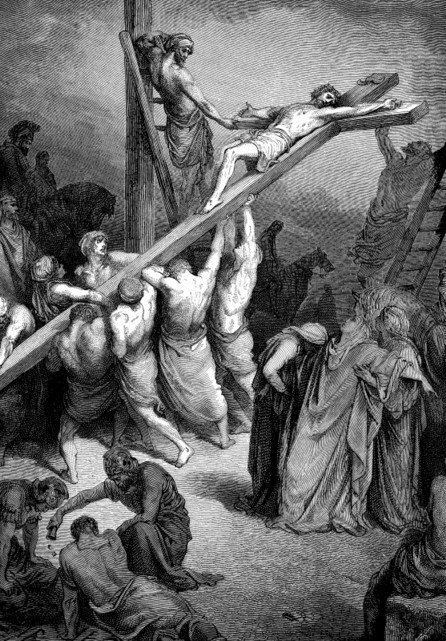
crucifixion01As we conclude the reading of this great book, it should be noted that it is characterized somewhat incorrectly by most people, in our opinion. Many say that the book of Job is all about the question of why there is pain and suffering in the world. But we do not believe this is the case. Note that at no time did God explain to Job anything about His conversation with the devil. Nor did He state any type of regret to Job or indeed, offer any explanation of suffering whatsoever.

We believe that this book is mostly about teaching us how wrong it is to assume bad things about others without having good reason. Man tends to be harshly judgmental of others, often at the worst times or in the most inappropriate circumstances. It also serves to teach us how to cope with the pain and trials of a life that can often be unfair – and to know that those who fear the Lord will come through it all to a much better end. That is the promise of Job, and it is the promise of God, through the sacrifice of His son, our Lord Jesus the Christ. He is our “mediator” (Job 9:33, Hebrews 4:14-16).

“Let us then with confidence draw near to the throne of grace, that we may receive mercy and find grace to help in time of need.”

Read or listen to audio of ESV version of this selection from this link.

/Bob’s boy
___________________
some images © V. Gilbert & Arlisle F. Beers

Please note: I did not design the reading plan that I am following in my blog.  All of my comments in this blog, however, are solely my responsibility.  When reading ANY commentary, you should ALWAYS refer first to the scripture, which is God’s unchanging and unfailing word. Reading schedules, as well as a link to the site where you can get the reading plan that I’m currently following for yourself can be found on the “Bible Reading Schedules” page of my website at http://graceofourlord.com.  For questions and help, please see the “FAQ” and “Summaries” pages there.

Psalm 71- When My Strength Is Spent

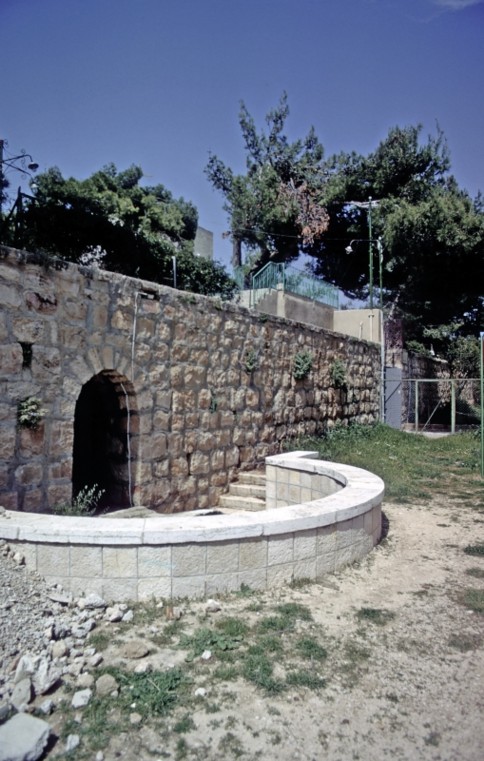
This is one traditional place of David's tomb. The other is on Mount Zion, in Jerusalem, on the first floor of the same building where one traditional site of the Upper Room is on the second floor. In Jacob's time, it was called Ephrath, which meant "fruitful." Jacob buried his favorite wife Rachel there after she gave birth to Benjamin. After the conquest of the Promised Land, it was called Bethlehem-judah (Ruth 1: 1). Famine drove Elimelech and Naomi from Bethlehem to Moab, where their sons married Ruth and Orpah. When all three husbands died, Ruth returned to Bethlehem with Naomi and gleaned in the fields of Boaz. She and Boaz married, and their great-grandson was David. In his childhood, David cared for the sheep of his father Jesse in the fields of Bethlehem, possibly the same fields where his great-grandmother Ruth gleaned. A thousand years later, Jesus was born in Bethlehem and angels announced His birth to shepherds caring for their sheep in the fields near there. These fields have become known as The Shepherds' Fields.

This is one traditional place of David’s tomb. The other is on Mount Zion, in Jerusalem, on the first floor of the same building where one traditional site of the Upper Room is on the second floor. In Jacob’s time, it was called Ephrath, which meant “fruitful.” Jacob buried his favorite wife Rachel there after she gave birth to Benjamin. After the conquest of the Promised Land, it was called Bethlehem-judah (Ruth 1: 1). Famine drove Elimelech and Naomi from Bethlehem to Moab, where their sons married Ruth and Orpah. When all three husbands died, Ruth returned to Bethlehem with Naomi and gleaned in the fields of Boaz. She and Boaz married, and their great-grandson was David. In his childhood, David cared for the sheep of his father Jesse in the fields of Bethlehem, possibly the same fields where his great-grandmother Ruth gleaned. A thousand years later, Jesus was born in Bethlehem and angels announced His birth to shepherds caring for their sheep in the fields near there. These fields have become known as The Shepherds’ Fields.

The Hebrew text for this psalm has no superscription or title. The Septuagint, the Vulgate, and others have it as “by David, a song sung by the sons of Jonadab, and the first that were taken captive.” Many commentators do take the position that it was probably written by David in his old age. The inclusion of the fact that it was sung by the sons of Jonadab and by the first of those taken captive is somewhat puzzling,  but must have had some historical significance at the time the superscription was added. The sons of Jonadab (the Rechabites) are the subject of Jeremiah 35 for their faithfulness to their father’s command.

It is a song of lament, easily fitting for anyone who is weak and in distress. it is easy to see why the captives would sing this psalm, as it both cries out for help in a dire situation and when one feels helpless:

“forsake me not when my strength is spent…
O God, be not far from me;
O my God, make haste to help me!…
I will hope continually
and will praise you yet more and more.
My mouth will tell of your righteous acts,
of your deeds of salvation all the day,
for their number is past my knowledge.”

Read or listen to audio of ESV version of this selection from this link.

/Bob’s boy
___________________
some images © V. Gilbert & Arlisle F. Beers

Please note: I did not design the reading plan that I am following in my blog.  All of my comments in this blog, however, are solely my responsibility.  When reading ANY commentary, you should ALWAYS refer first to the scripture, which is God’s unchanging and unfailing word. Reading schedules, as well as a link to the site where you can get the reading plan that I’m currently following for yourself can be found on the “Bible Reading Schedules” page of my website at http://graceofourlord.com.  
Proverbs 31 – The Last Chapter

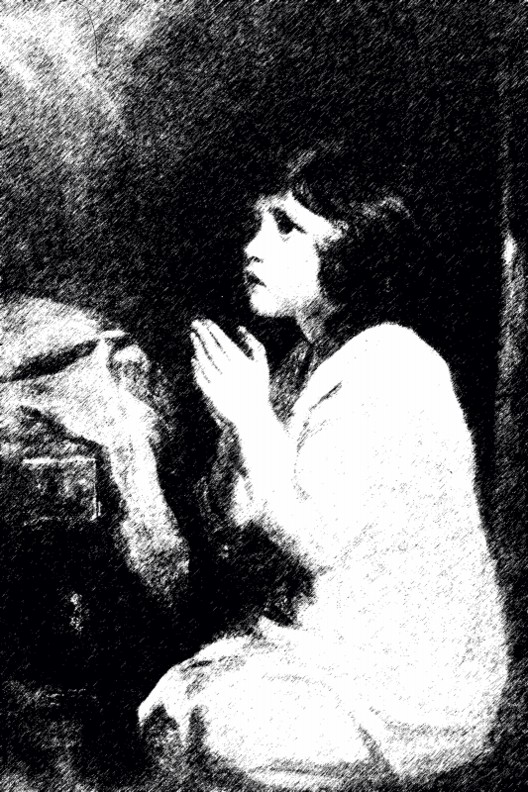
pray-002The last chapter of the book of Proverbs is considered by many to be like an appendix, as it is very different from any previous chapter. For our full comments on this chapter concerning the “Excellent Wife,” please see this previous post.

Our time this year in the Wisdom Literature is coming to a close, and this is it for the Book of Proverbs. Though we went through the entire book twice, we still covered only a small portion of the verses. We hope you will spend more time in this wonderful book. If you have not seen it already, please take time to read this post with helpful tips for reading this book of wisdom.

As for this chapter, we would like to leave you with this thought. If you find a good godly woman, hold on to her with all your love and honor. If you are a good godly woman, thank you. It is you and others like you that make our children grow up right, and it is you that make our men better men. With respect to that, we salute you with the final words of this book:

Charm is deceitful, and beauty is vain,
but a woman who fears the Lord is to be praised.
Give her of the fruit of her hands,
and let her works praise her in the gates

Read or listen to audio of ESV version of this selection from this link.

/Bob’s boy
___________________
some images © V. Gilbert & Arlisle F. Beers

Please note: I did not design the reading plan that I am following in my blog.  All of my comments in this blog, however, are solely my responsibility.  When reading ANY commentary, you should ALWAYS refer first to the scripture, which is God’s unchanging and unfailing word. Reading schedules, as well as a link to the site where you can get the reading plan that I’m currently following for yourself can be found on the “Bible Reading Schedules” page of my website at http://graceofourlord.com.  For questions and help, please see the “FAQ” and “Summaries” pages there.
Psalm 147 – He Sends Out His Word

Carrying Branches To Make Booths (illustration...

Carrying Branches To Make Booths (illustration from the 1897 Bible Pictures and What They Teach Us by Charles Foster) (Photo credit: Wikipedia)

Of the five final “Hallelujah Psalms,” Psalm 147 is the longest, though only 20 verses itself.  The psalmist is unknown, as is the occasion that it was written. Some have supposed that it was during the Feast of Tabernacles – mainly due to verse 14’s reference possibly to harvest. The references to the building up of Jerusalem may mean that it was written after the captivity (along with verse 2’s “he gathers the outcasts of Israel.”

As a song of praise, it speaks in general terms of all the wonderful things God does in this world to care for man and even for the animals. But the bulk of the praise is for all that God has done for His chosen people. The psalm closes out in verses 18-20 with verses about the power of His word and how God has entrusted them with keeping it for all:

He sends out his word, and melts them;
he makes his wind blow and the waters flow.

He declares his word to Jacob,
his statutes and rules to Israel.

He has not dealt thus with any other nation;
they do not know his rules.
Praise the Lord!

Read or listen to audio of ESV version of this selection from this link.

/Bob’s boy
___________________
some images © V. Gilbert & Arlisle F. Beers

Please note: I did not design the reading plan that I am following in my blog.  All of my comments in this blog, however, are solely my responsibility.  When reading ANY commentary, you should ALWAYS refer first to the scripture, which is God’s unchanging and unfailing word. Reading schedules, as well as a link to the site where you can get the reading plan that I’m currently following for yourself can be found on the “Bible Reading Schedules” page of my website at http://graceofourlord.com.  
Restoring God’s House – Haggai

The biblical prophet Haggai. Woodcut from the ...

The biblical prophet Haggai. Woodcut from the Nuremberg Chronicle (Photo credit: Wikipedia)

On most of the occasions in scripture that we read of a prophet who had been preaching to God’s people about a particular subject, that prophet finds little good to come from the recipients of that preaching. A notable exception was Nineveh’s repentance when Jonah gave them God’s warning – but Jonah wasn’t exactly thrilled about that response, was he? Haggai and Zechariah are two exceptions that stand alone – at least as far as the rebuilding of the temple is concerned.

Haggai begins with reference to “the second year of Darius,” and that historically sets this book in the year 520 B.C. Chapter 1:1 gives us “the first day of the 6th month,” which makes the starting date of this book August 29, 520 B.C. It just doesn’t get any better than that with biblical dating. In fact, we get 5 such exact accounts of dates from Haggai. Just 24 days after Haggai’s first message, the people start work on the temple on September 21, 520 B.C. (Haggai 1:15 – the 24th day of the sixth month). Haggai 2:1 occurs in “the seventh month, on the twenty-first day of the month,” which is October 17, 520 B.C. Haggai 2:10 and 2:20 both happened on “the twenty-fourth day of the ninth month,” which is December18, 520.

Per the decree of Cyrus, the people began returning from captivity in 538 B.C. They started working on the temple in 537, but that ceased in 536 due to opposition (see Ezra 3:1-4:5). The work had been left unfinished for 18 years when the Book of Haggai begins. The reign of Cyrus the Great ended about 530 B.C. When his son Cambyses died in 522, a general, Darius I, rose to power in his place.

Haggai and Zechariah were present at the rebuilding of the Temple of God during the time of Ezra and Nehemiah, after the return from exile. The Medo-Persian Empire included the lands of Media and Persia, much of the area shown on this map and more. The Jewish exiles were concentrated in the area around Nippur in the Babylonian province. The decree by King Cyrus that allowed the Israelites to return to their homeland and rebuild the Temple was discovered in the palace at Ecbatana.

Haggai and Zechariah were present at the rebuilding of the Temple of God during the time of Ezra and Nehemiah, after the return from exile.
The Medo-Persian Empire included the lands of Media and Persia, much of the area shown on this map and more. The Jewish exiles were concentrated in the area around Nippur in the Babylonian province. The decree by King Cyrus that allowed the Israelites to return to their homeland and rebuild the Temple was discovered in the palace at Ecbatana.

Haggai picks up in verse one of the first chapter where Ezra 5:1 makes mention of the prophets Haggai and Zechariah, as it was after Haggai’s message that the temple construction was re-started. Then came Tattenai’s letter to Darius to try and stop the rebuilding. But the elders did not stop while they were waiting for the letter to reach him (Ezra 5:3-17). It was Darius’s decree (Ezra 6) that ensured the temple would be completed.

It was God’s will, of course, that ensured Darius would make such a decree. God called Haggai to move the people to action because they were stalled in completing the work of rebuilding the temple. Some form of “thus says the Lord” occurs 19 times in 38 verses, and the words”Lord of hosts” occurs 14 times, illustrating God’s sovereignty. Haggai’s message has them examine their situations and their lack of prosperity (Haggai 1:5-7, 2:15-19) in light of the work they had left unfinished. In chapter 2, the Lord (through Haggai) spoke to Zarubbabel, (who was in the line of David as the grandson of Jehoiachin) and Joshua, the High Priest.

The Lord intended to re-establish His people in their land, along with the house of David (Haggai 2:23). He had promised to bless the world through them (Haggai 2:9). There was a coming Messiah to prepare for. It was time to go to work!

/Bob’s boy
___________________
image © V. Gilbert & Arlisle F. Beers