Proverbs 25 – Having Your Fill

English: A hive of Apis dorsata (giant honey b...

English: A hive of Apis dorsata (giant honey bees) I photographed whilst in Mt Abu, India. This hive was situated right next to a glass window of a building enabling me to get close enough. (Photo credit: Wikipedia)


Bee hive honey bee colony swarm Verse 16 conveys an idea that is certainly not very pleasant, and we might wonder what it is that Solomon may be getting at exactly:


If you have found honey, eat only enough for you,
lest you have your fill of it and vomit it


But verse 17 makes the meaning clearer:


Let your foot be seldom in your neighbor’s house,
lest he have his fill of you and hate you


Too much of a good thing – even something we enjoy very much – is often bad for us. Likewise, too much time in the company of friends can end up in strife and bitterness. But Solomon’s warning goes beyond honey, neighbors, and friends. When we find something we really enjoy, it is easy to become obsessive about it to some degree. This is more true of some people than others.


It is important for God’s people to remember what things are most important in the Lord’s kingdom, and not be carried away with diversion, pleasure, and entertainment to the detriment of those things that are of the most importance. When we allow that to happen, those things become our idols. honey bees and hives and honeycommbs


Read or listen to audio of ESV version of this selection from this link.


/Bob’s boy


___________________


some images © V. Gilbert & Arlisle F. Beers


Please note: I did not design the reading plan that I am following in my blog.  All of my comments in this blog, however, are solely my responsibility.  When reading ANY commentary, you should ALWAYS refer first to the scripture, which is God’s unchanging and unfailing word. Reading schedules, as well as a link to the site where you can get the reading plan that I’m currently following for yourself can be found on the “Bible Reading Schedules” page of my website at http://graceofourlord.com.  For questions and help, please see the “FAQ” and “Summaries” pages there.


Psalm 149 – The Lord Takes Pleasure In His People

Psalm 149 is another of the “Hallelujah Psalms” that begin and end with the phrase “Praise the Lord!” In the first verse of this one, the psalmist speaks of singing “a new song.” This is a familiar phrase throughout the psalms. For example, we find it in Psalm 33:1-3, Psalm 96:1, and Psalm 98:1. But what does it really mean? The best explanation we have heard is that it does not simply refer to a newly composed song, but to a call to sing in response to a new blessing given by the Lord to His people.

Mount Zion, Aceldama, Akeldama, or Hakeldamia, the Field of Blood.

Mount Zion, Aceldama, Akeldama, or Hakeldamia, the Field of Blood.

Verse 4 states that “the Lord takes pleasure in His people,” meaning that those who serve Him are certainly favored by the Lord. And the verse adds that He “adorns the humble with salvation,” which means that He blesses those who come to Him with their hearts in the right place – not arrogantly, boastful, or presumptuously.  The rest of the psalm expands on verse 5’s exhortation for the godly to exult in joy because of God’s power and might – even over those who may have great earthly power; and it praises Him again for His justice, which is “honor for all his godly ones.”

Read or listen to audio of ESV version of this selection from this link.

/Bob’s boy
___________________
some images © V. Gilbert & Arlisle F. Beers

Please note: I did not design the reading plan that I am following in my blog.  All of my comments in this blog, however, are solely my responsibility.  When reading ANY commentary, you should ALWAYS refer first to the scripture, which is God’s unchanging and unfailing word. Reading schedules, as well as a link to the site where you can get the reading plan that I’m currently following for yourself can be found on the “Bible Reading Schedules” page of my website at http://graceofourlord.com.  

The Vision of Obadiah (Minor Prophets Part 4)

Mountains of Edom rise abruptly out of the desert landscarpe forming a natural barrier against attack

Mountains of Edom rise abruptly out of the desert landscarpe forming a natural barrier against attack

Consisting of one chapter with 21 verses, Obadiah is the shortest book in the Old Testament. The superscription calls it the “Vision of Obadiah.” The subject of the book, made very clear from the start, is Edom. The nation of Edom was fathered by Jacob’s brother, Esau, as detailed in Genesis 36, so they were actually relatives of the Israelites. Deuteronomy 2 tells us that God had given the Edomites Mount Seir and the mountain land around it for them to live in, which goes to explain a bit about  verse 3’s description of them and their false sense of security:

The pride of your heart has deceived you,
you who live in the clefts of the rock,
in your lofty dwelling,
who say in your heart,
“Who will bring me down to the ground?”

Dating this book is not difficult. Verse 11 speaks of the fall of Jerusalem as a past event, and the fall of Edom itself as a future event. The former event was in 586 B.C., and Babylon took Edom down in 553 B.C. – a span of about 33 years. So the book was probably written during the first half of the Babylonian exile.   In 586, when Israel was being attacked, the Edomites who were the brother nation of Israel, joined in (instead of assisting them), as they were hoping to gain favor with Babylon. They brutalized them, plundered Jerusalem, and even thwarted the escape of those who would flee the destruction. This book foretells God’s vengeance on them for their part in the persecution of God’s people. It certainly answers the plea of Psalm 137:7.

Though the message is that those who oppose God and His people will get their just judgment (verse 15), the book ends with the promise of restoration for His covenant people and the promise of the kingdom (verses 19-21).

/Bob’s boy
___________________
image © V. Gilbert & Arlisle F. Beers


Psalm 18:1-24 – I Call Upon the Lord

cherubim_002We are breaking this relatively long psalm up into two sections, and so we will cover verses 1-24 in this blog. Occasionally there is some disagreement among scholars as to the author of certain psalms. But with Psalm 18, there can be no doubt. The psalm is also found in 2 Samuel 22. In fact, even most of the superscription is contained in verses 1-2 of that passage practically word for word:

“And David spoke to the Lord the words of this song on the day when the Lord delivered him from the hand of all his enemies, and from the hand of Saul. He said…”

This is one of the “royal psalm,” and it shows God’s faithfulness to his people by giving them the Davidic monarchy, and keeping him safe through many dangers. The hymn “I will call upon the Lord” is taken from this psalm. Consider verse 3: “I call upon the Lord, who is worthy to be praised, and I am saved from my enemies.”

Though there are few differences between this psalm and the passage in 2 Samuel 22, the distinction is in context. The latter is David’s personal prayer of praise and thanksgiving to God for His deliverance of him. Psalm 18 is the adaptation of it to a song that the whole congregation can sing to give thanks for the line of David, and to pray for the faithfulness and strength of the heirs to his throne.

The words of the first half of psalm, when referring to God’s deliverance of David, convey imagery of God rushing to the rescue of His anointed one like an angry and powerful protector, arriving on winged transport with swiftness of speed. His voice like thunder, flinging fire and hailstones, the picture of a powerful and protective God is painted in such a way as to instill awe, reverence and gratitude for the swiftness of action with which God acts to protect His righteous.

Read or listen to audio of ESV version of this selection from this link.

/Bob’s boy
___________________
some images © V. Gilbert & Arlisle F. Beers

Please note: I did not design the reading plan that I am following in my blog.  All of my comments in this blog, however, are solely my responsibility.  When reading ANY commentary, you should ALWAYS refer first to the scripture, which is God’s unchanging and unfailing word. Reading schedules, as well as a link to the site where you can get the reading plan that I’m currently following for yourself can be found on the “Bible Reading Schedules” page of my website at http://graceofourlord.com.  

Job 37 – By the Breath of God

waterfall_003Chapter 37 brings the conclusion of Elihu’s speech, and (thankfully, one might say) the end of the speeches of all of Job’s companions. Like in the last chapter, Elihu has much to say about God and about His power that are appropriate in their awe for God, but not so in the context of the situation.

Again, Elihu uses his knowledge of the world (so fond is he of using examples of the weather, one would think he might be some sort of teacher) to attempt to validate his assessment of Job’s guilt. Although, God will in the next chapter pick up some of Elihu’s ideas in His questioning of Job, one should not take that to signify God’s approval of Elihu’s speech. It is, however, beautiful poetry; and it provides great imagery and material for prayer, as well as praise to God, as shown in this snip from verses 10-13:

By the breath of God ice is given,
and the broad waters are frozen fast.
He loads the thick cloud with moisture;
the clouds scatter his lightning.

They turn around and around by his guidance,
to accomplish all that he commands them
on the face of the habitable world.
Whether for correction or for his land
or for love, he causes it to happen

Read or listen to audio of ESV version of this selection from this link.

/Bob’s boy
___________________
some images © V. Gilbert & Arlisle F. Beers

Please note: I did not design the reading plan that I am following in my blog.  All of my comments in this blog, however, are solely my responsibility.  When reading ANY commentary, you should ALWAYS refer first to the scripture, which is God’s unchanging and unfailing word. Reading schedules, as well as a link to the site where you can get the reading plan that I’m currently following for yourself can be found on the “Bible Reading Schedules” page of my website at http://graceofourlord.com.  For questions and help, please see the “FAQ” and “Summaries” pages there.

Psalm 143 – I Stretch Out My Hands To You

Absalom

Absalom (Photo credit: Wikipedia)


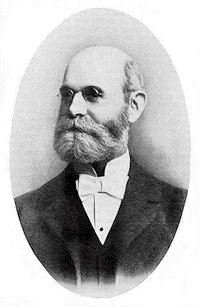
This psalm of David is one of  those which are referred to as “the penitentials.” It still has all the elements of a lament, however, and as such it is clear that it was one written during his flight from Jerusalem during Absalom’s rebellion. The penance in his prayer is far too deep and genuine to be of the time of Saul’s persecution. Franz Delitzsch wrote of this psalm that it:


“is certainly composed as coming out of the situation of David who was persecuted by Absalom; and it is distinguished from those of the time of Saul’s persecution by the psalmist’s deep melancholy, founded upon the penitential sorrow of David’s consciousness of his own guilt.”


David is paying the price for his sin with Bathsheba, and his atrocious murder of his loyal friend, Uriah the Hittite – of which Nathan warned him to be prepared for in 2 Samuel 12:7-12.  Psalm 143 is another great model of prayer for us today. In the midst of praying for his deliverance, David also prays not only for deliverance, but for strength to serve God better:


Teach me to do your will,
for you are my God!
Let your good Spirit lead me
on level ground!

For your name’s sake, O Lord, preserve my life!
In your righteousness bring my soul out of trouble!


Read or listen to audio of ESV version of this selection from this link.


/Bob’s boy


___________________


some images © V. Gilbert & Arlisle F. Beers


Please note: I did not design the reading plan that I am following in my blog.  All of my comments in this blog, however, are solely my responsibility.  When reading ANY commentary, you should ALWAYS refer first to the scripture, which is God’s unchanging and unfailing word. Reading schedules, as well as a link to the site where you can get the reading plan that I’m currently following for yourself can be found on the “Bible Reading Schedules” page of my website at http://graceofourlord.com.  


Proverbs 24:19-34 – Build Your House

preparing02The first reading of verse 27 of Proverbs 24 can be a little puzzling:

Prepare your work outside;
get everything ready for yourself in the field,
and after that build your house.

Wouldn’t even someone living in a farming community want to build a place to live while they are working the field? Some commentaries on the subject suggest that some of the meaning is actually lost in translation, and that a better interpretation would be “build up your house.”

At any rate, the meaning seems to be more related to the preparation one is making for his future. the practical advice and custom of working to accumulate some measure of wealth before proposing marriage fits this very well. But the principle applies to just about anything in this life. One must do their due diligence to prepare for the future in all things, including having children. Humans are one of the few species that seem to forget about “making their nest” first.

Read or listen to audio of ESV version of this selection from this link.

/Bob’s boy
___________________
some images © V. Gilbert & Arlisle F. Beers

Please note: I did not design the reading plan that I am following in my blog.  All of my comments in this blog, however, are solely my responsibility.  When reading ANY commentary, you should ALWAYS refer first to the scripture, which is God’s unchanging and unfailing word. Reading schedules, as well as a link to the site where you can get the reading plan that I’m currently following for yourself can be found on the “Bible Reading Schedules” page of my website at http://graceofourlord.com.  For questions and help, please see the “FAQ” and “Summaries” pages there.

Psalm 148 – Hallelujah, Praise Jehovah!

William J. Kirkpatrick

William J. Kirkpatrick

Another of the “Hallelujah Psalms,” Psalm 148 is certainly one of the most familiar to people in song. The ever-popular hymn “Hallelujah, Praise Jehovah!” by William J. Kirkpatrick is practically taken word for word from this psalm; and it is a personal favorite of this blogger.

The psalm calls on all of God’s creatures to praise Him, but it goes further – declaring that all of His creation should sing His praises as well.  Parts of this psalm bring to mind the Triumphal Entry of Jesus into Jerusalem (Luke 19:28-44). When the Pharisees suggested that Jesus should silence His disciples who were shouting praises to Him, he answered in verse 40 “I tell you, if these were silent, the very stones would cry out.”

Praise the Lord!
Praise the Lord from the heavens;
praise him in the heights!

Praise him, all his angels;
praise him, all his hosts!

Praise him, sun and moon,
praise him, all you shining stars!

Praise him, you highest heavens,
and you waters above the heavens!
Let them praise the name of the Lord!
For he commanded and they were created.

Read or listen to audio of ESV version of this selection from this link.

/Bob’s boy
___________________
some images © V. Gilbert & Arlisle F. Beers

Please note: I did not design the reading plan that I am following in my blog.  All of my comments in this blog, however, are solely my responsibility.  When reading ANY commentary, you should ALWAYS refer first to the scripture, which is God’s unchanging and unfailing word. Reading schedules, as well as a link to the site where you can get the reading plan that I’m currently following for yourself can be found on the “Bible Reading Schedules” page of my website at http://graceofourlord.com.  

Amos, Shepherd of Tekoa (Minor Prophets Part 3)

Historical marker outside Hazor.

Historical marker outside Hazor.

We continue to stress the fact that the minor prophets are called such because of the short books of the Bible that they represent, not their importance. The Book of Amos is a great illustration of that. Though not the shortest book of the Old Testament, it only consists of nine chapters, and with the exception of chapter 5, none of them contain more than 17 verses (chapter 5 has a whopping 27). But we could take many more pages to comment on this book than would suit the purpose of this series (that purpose being to present a general overview of each of the books of the minor prophets).

The best place to begin is in the very first verse of the book, which tells us that Amos was one of the shepherds of Tekoa. Situated about 20 kilometers south of Jerusalem, Tekoa was referred to in 2 Samuel 14 as the place that the wise woman came from – the one that Joab used to deceive David, convincing him to let Absalom come home.  The same verse tells us that Amos made these prophecies during the days of Uzziah, king of Judah and Jeraboam, the son of Joash, king of Israel during the two years before “the earthquake.”

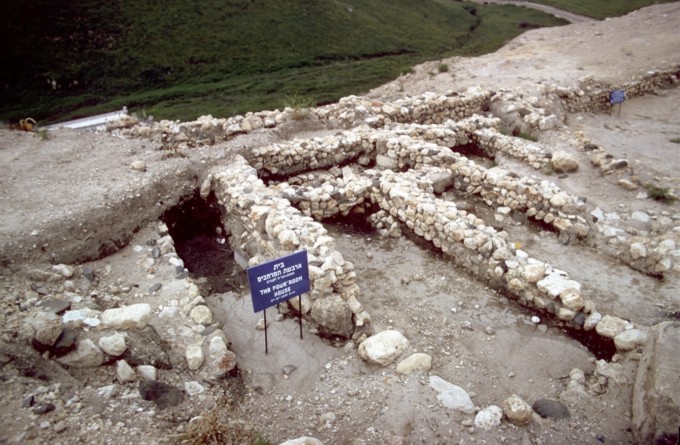
Before we get to the matter of the earthquake, let us address the date of the reigns of these two kings. Estimates of the reigns of these two kings range from about 800 B.C down to Uzziah’s death in about 739 B.C., leaving us with about a 60 year period when the prophecies could have occurred. Then there is the matter of this earthquake. The one mentioned is obviously one that was great in magnitude, as it was eventful enough to be used as a time reference here, and it is mentioned also in Zechariah 14:5. Excavations around Hazor in 1955 revealed evidence of an earthquake in the 8th century B.C. (some estimates are at 750 B.C. with a possible variance of 30 years). More than 50 years later, earthquake damage was still being discovered. More information can be found in this article at ICR.ORG and this article at the Jewish Virtual Library.

Hazor, house foundation

Hazor, house foundation

The book addresses the people of the northern kingdom, Through verse 5 of chapter 2, the judgment of the Lord against Israel’s enemies  (which the people expected) is prophesied. But what they did not expect, and had not counted on, was the judgment that would come to them for their injustice to the poor, and their pretense of worship to the Lord while they were actually doing nothing of the sort (the sarcasm in Amos 4:1-5 underscores this point). The Lord’s patience with them has come to an end (Amos 8:1-2). But He speaks in chapter 9 of a time when restoration will occur (note Amos 9:11, which is cited in Acts 15:16).

During this time, the northern kingdom was experiencing much prosperity, which they translated as a sign that God was pleased with them, and was blessing them. Amos’s message to them was exactly the opposite. A great deal of their wealth had been accumulated by their oppression of the poor. And their worship was more like an attempt at manipulating events in much of the same way that pagans worshiped their “gods.” Amos’s message was most unwelcome because it made the prediction that the “day of the Lord,” that they were expecting to usher in their further rise to power, would actually bring the end of their kingdom.

/Bob’s boy
___________________
image © V. Gilbert & Arlisle F. Beers

Please note: I did not design the reading plan that I am following in my blog.  All of my comments in this blog, however, are solely my responsibility.  When reading ANY commentary, you should ALWAYS refer first to the scripture, which is God’s unchanging and unfailing word. Reading schedules, as well as a link to the site where you can get the reading plan that I’m currently following for yourself can be found on the “Bible Reading Schedules” page of my website at http://graceofourlord.com.  


Psalm 145 – I Will Extol You

Hebrew letter "nun"

Hebrew letter “nun”

Psalm 145 is the last of the psalms of David in Book 5, and is followed by the “Hallelujah Psalms” (Psalms 146-150). It is an acrostic, but like a couple of other acrostics, there is a letter missing – at least in some manuscripts – the letter “nun.” But both the Septuagint and the Dead Sea Scrolls supply the line with the missing letter (the second part of verse 13 – “the Lord is faithful in all his words and kind in all his works.”, and it flows perfectly, suggesting evidence of an earlier manuscript that matches.

It is a song of praise, and in its acrostic style, it uses a variety of words for communicating the idea of praise (extol, comment, pour forth, etc.), as well as the timeless continuity of this praise and of God’s grace, love, and mercy (forever and ever, everlasting, throughout all generations, etc. The theme of praising God for His righteousness and faithfulness continues throughout the acrostic. It points out that God is in control of even the most minute details of the world – down to even the various supplies of food He makes available to all His creatures.

Read or listen to audio of ESV version of this selection from this link.

/Bob’s boy
___________________
some images © V. Gilbert & Arlisle F. Beers

Please note: I did not design the reading plan that I am following in my blog.  All of my comments in this blog, however, are solely my responsibility.  When reading ANY commentary, you should ALWAYS refer first to the scripture, which is God’s unchanging and unfailing word. Reading schedules, as well as a link to the site where you can get the reading plan that I’m currently following for yourself can be found on the “Bible Reading Schedules” page of my website at http://graceofourlord.com.