
Psalm 112 – The Righteous Will Never Be Moved

lake_and_mountainsPsalms 111, 112, and 113 are sometimes referred to as “Hallelujah” psalms because they each begin with that exclamation (the ESV and some other versions translate as “Praise the Lord!”). Psalms 111 and 112 complement each other, as they each consists of an acrostic of 22 clauses or phrases arranged in 10 verses each.  Psalm 111 proclaims God’s greatness, mercy, and righteousness, whereas Psalm 112 considers and encourages the happiness, benevolence, and righteousness of God’s children. It praises God for all of the loving care He gives to those who truly fear Him, but says that such fear encompasses something more – a genuine delight in God’s word (verse 1b).

The righteous are to be blessed by God for treating his fellow-man with generosity, and conducting his affairs with justice. The righteous, the psalmist says, shall never be moved, with his heart steady and firm. He has no need for fear of bad news because he can trust in the Lord, secure in the knowledge that his righteousness endures forever.

Paul quotes from verse 9 in 2 Corinthians 9:9, encouraging the Corinthians to give generously to the collection for the needy brethren. The psalm tells the righteous that the reason they should have no fear is because the Lord will honor and care for him.

Read or listen to audio of ESV version of this selection from this link.

/Bob’s boy
___________________
some images © V. Gilbert & Arlisle F. Beers

Please note: I did not design the reading plan that I am following in my blog.  All of my comments in this blog, however, are solely my responsibility.  When reading ANY commentary, you should ALWAYS refer first to the scripture, which is God’s unchanging and unfailing word. Reading schedules, as well as a link to the site where you can get the reading plan that I’m currently following for yourself can be found on the “Bible Reading Schedules” page of my website at http://graceofourlord.com.  

Book of Esther – The Providence of God

The Book of Esther is another of several in the old Testament for which the identity of the author is unknown. Some people have suggested that it may have been Mordecai himself (mainly because of the statements in Esther 9:20-23 about other things he had written and “recorded”). But the three verses of chapter 10 make that theory seem really doubtful. The verses are so full of praise for Mordecai that it is hard to imagine that an author guided by the Holy Spirit would be so self-serving in his writing.

Of all the young ladies of the land, Esther pleased the king of Persia the most. She was not only beautiful, but filled with wisdom and grace. Esther, a poor Jewish orphan girl, suddenly became queen of Persia, the most powerful woman in the world (Esther 2).

Of all the young ladies of the land, Esther pleased the king of Persia the most. She was not only beautiful, but filled with wisdom and grace. Esther, a poor Jewish orphan girl, suddenly became queen of Persia, the most powerful woman in the world (Esther 2).

There has been a considerable amount of negative writing from some believing critics, and even some who argue that the book should not be part of the Holy Scriptures.  Part of the reason given for this is the cruelty of the decree against the Jews given in Esther 3:8-11. This criticism is puzzling, given the notorious cruelty of Artaxerxes (King Ahasuerus in the Book of Esther). Another reason given is that no mention of God is made in the book. But the 10 short chapters of the Book of Esther total up to fewer verses than the 119th Psalm, and God’s hand in the events of the book is quite evident

The Book of Esther demonstrates God’s divine providence, as Mordecai and Esther gain positions of power prior to the menace of Haman – Esther rising from poverty as a Jewish orphan to become one of the most powerful women in the world. And then one event after another continues to fall into place perfectly, including the king’s insomnia the night before Mordecai’s planned execution in Esther 6:1-3. The event not only prevents his execution, but results in Mordecai gaining the favor of the king (Esther 6:9-11). Esther and Mordecai themselves teach us to take advantage of opportunities to act courageously and do the right thing (Esther 4:9-16).  As is often the case, God once again used unlikely people and circumstances to accomplish His will. Haman could not be allowed to decimate God’s people.

/Bob’s boy
___________________
image © V. Gilbert & Arlisle F. Beers

Please note: I did not design the reading plan that I am following in my blog.  All of my comments in this blog, however, are solely my responsibility.  When reading ANY commentary, you should ALWAYS refer first to the scripture, which is God’s unchanging and unfailing word. Reading schedules, as well as a link to the site where you can get the reading plan that I’m currently following for yourself can be found on the “Bible Reading Schedules” page of my website at http://graceofourlord.com.  

Psalm 104 – From Your Lofty Abode

This hymn of praise begins in the first few verses with colorful illustrations of God’s splendor and majesty that is full of poetic beauty.

He lays the beams of his chambers on the waters;
he makes the clouds his chariot;
he rides on the wings of the wind;
he makes his messengers winds,
his ministers a flaming fire.

Waimea Canyou, Kauai, Hawaii

Waimea Canyou, Kauai, Hawaii

Then in verse 5, he states the wondrous things that the Lord has created, the power and wisdom that he has in his mighty hands, and then continues with his ongoing care for the world. Verse 5 has been used by skeptics to discredit scientific awareness in the Bible (“He set the earth on its foundations, so that it should never be moved”). But the verse is simply poetry that speaks to the stability and indestructibility of the earth as in Job 26:7.  Knowledge of the shape and placement of the earth is clearly not in question (see also Isaiah 40:22).

The psalmist notes in intricate detail the care with which God has seen to the renewal, nourishment and growth of all things living on the earth, and the beauty with which the lands and oceans are both combined and separated, teeming with “creatures innumerable.” The psalm closes as it began, with “Bless the Lord, O my Soul” and words of praise for the God who rules even the mountains:

May the glory of the Lord endure forever;
may the Lord rejoice in his works,
who looks on the earth and it trembles,
who touches the mountains and they smoke!

Read or listen to audio of ESV version of this selection from this link.

/Bob’s boy
___________________
some images © V. Gilbert & Arlisle F. Beers

Please note: I did not design the reading plan that I am following in my blog.  All of my comments in this blog, however, are solely my responsibility.  When reading ANY commentary, you should ALWAYS refer first to the scripture, which is God’s unchanging and unfailing word. Reading schedules, as well as a link to the site where you can get the reading plan that I’m currently following for yourself can be found on the “Bible Reading Schedules” page of my website at http://graceofourlord.com.  
Job 27 – As Long As My Breath Is In Me

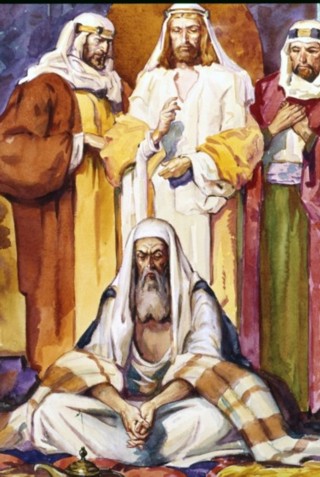
Job_007Job is adamant that he will not surrender his position in this chapter, but he still believes God has caused his troubles. Verse 2 begins “As God lives, who has taken away my right,and the Almighty, who has made my soul bitter…”But he says that as long as his breath is in him, he will not speak falsehoods or utter deceit. In other words, he will not say that he has done wrong, simply to appease them. He will hold on to his integrity, and hold fast his righteousness. His heart does not tell him that he has guilt.

As for any enemies (other than God himself, of course), Job says they are the wicked, and any that rise up against him are the unrighteous. God, he is still convinced, will be his witness and his avenger. He puts forward that God will not hear their cry, and they do not call upon the Lord at all times – implying that he does. Then he begins to show his own confidence and says that he will teach his friends about God. He tells them that they have seen themselves, but they have become vain in their thinking.

Job then goes into a long explanation of what will happen to the wicked and oppressors – but it is the “heritage that oppressors receive from the Almighty.” Job knows that their punishment will come indeed. It just is not set to do so swiftly in this life. This is the truth that his three friends have missed.

Read or listen to audio of ESV version of this selection from this link.

/Bob’s boy
___________________
some images © V. Gilbert & Arlisle F. Beers

Please note: I did not design the reading plan that I am following in my blog.  All of my comments in this blog, however, are solely my responsibility.  When reading ANY commentary, you should ALWAYS refer first to the scripture, which is God’s unchanging and unfailing word. Reading schedules, as well as a link to the site where you can get the reading plan that I’m currently following for yourself can be found on the “Bible Reading Schedules” page of my website at http://graceofourlord.com.  For questions and help, please see the “FAQ” and “Summaries” pages there.

Psalm 59 – My Fortress

King Saul grew insanely jealous of David because of David's success and the praise people heaped upon him. Before long, Saul made plans to murder David. Eventually Saul's daughter Michal, who was also David's wife, helped David escape (1 Samuel 19).

King Saul grew insanely jealous of David because of David’s success and the praise people heaped upon him. Before long, Saul made plans to murder David. Eventually Saul’s daughter Michal, who was also David’s wife, helped David escape (1 Samuel 19).

According to the superscription, this is another psalm sung to the tune of “Do not destroy.” It also says that it was written at the time when Saul sent men to watch his house to kill him (this occurred in 1 Samuel 19). The psalm fits with that time in his life, if for no other reason, because of his claims of innocence from sin for these events. Verses 3-4 say that they lie in wait and “for no transgression or sin of mine, O Lord, for no fault of mine, they run and make ready.”

Verses 8-10 demonstrate David’s trust in the Lord through all of this, as he says that God laughs at them, and proclaims Him as his fortress in His steadfast love. David then asks God not to kill them because the people would just soon forget. Instead, he wants them subdued so that their punishment can serve as an example to his people.  The verses about them wandering about for food, but not getting their fill are allusions to the comparison he made of them to howling dogs in verse 14. David himself is the prey they seek. But David is unafraid and again promises to sing of God’s strength – his fortress.

Read or listen to audio of ESV version of this selection from this link.

/Bob’s boy
___________________
some images © V. Gilbert & Arlisle F. Beers

Please note: I did not design the reading plan that I am following in my blog.  All of my comments in this blog, however, are solely my responsibility.  When reading ANY commentary, you should ALWAYS refer first to the scripture, which is God’s unchanging and unfailing word. Reading schedules, as well as a link to the site where you can get the reading plan that I’m currently following for yourself can be found on the “Bible Reading Schedules” page of my website at http://graceofourlord.com.  

Proverbs 14 – The End of Joy May Be Grief

depression_anxiety_003Verse 10 says that “The heart knows its own bitterness, and no stranger shares its joy.” No matter how close we get to someone, rarely does anyone ever reach the point that we share every detail of the heart. Almost without exception it is just human nature to hold something back – at a minimum, the darkest moments are not shared. By the same token, nobody who is not close truly shares the joy that comes to us at those rare times when fortunes are at their best.

Verse 13 says “Even in laughter the heart may ache, and the end of joy may be grief.” Outward appearances can sometimes be deceptive; and we do not always know what is in another’s heart. Many times, people surround themselves with those they believe will make them happy, hoping the sorrow will go away. But often, the charade ends up leaving them still in need of support.

The answer to these enigmas is prayer. The Lord knows our needs and wants to listen to us when we are in despair. Casting our burdens on him is not simply a good thing to do – it is scriptural; and develops the trust in Him that we need.

Psalm 34:18 – The Lord is near to the brokenhearted and saves the crushed in spirit.

Psalm 147:3 – He heals the brokenhearted and binds up their wounds.

1 Peter 5:7 – Casting all your anxieties on him, because he cares for you.

Read or listen to audio of ESV version of this selection from this link.

/Bob’s boy
___________________
some images © V. Gilbert & Arlisle F. Beers

Please note: I did not design the reading plan that I am following in my blog.  All of my comments in this blog, however, are solely my responsibility.  When reading ANY commentary, you should ALWAYS refer first to the scripture, which is God’s unchanging and unfailing word. Reading schedules, as well as a link to the site where you can get the reading plan that I’m currently following for yourself can be found on the “Bible Reading Schedules” page of my website at http://graceofourlord.com.  For questions and help, please see the “FAQ” and “Summaries” pages there.
Psalm 111 – Great Are the Lord’s Works

Preceding Psalm 112, which is clearly a psalm of wisdom, this hymn of praise and thanksgiving begins with recognition of the great works of the Lord on behalf of His chosen people. The theme is the splendor an majesty of the acts of power and might that only God Himself could possibly work.

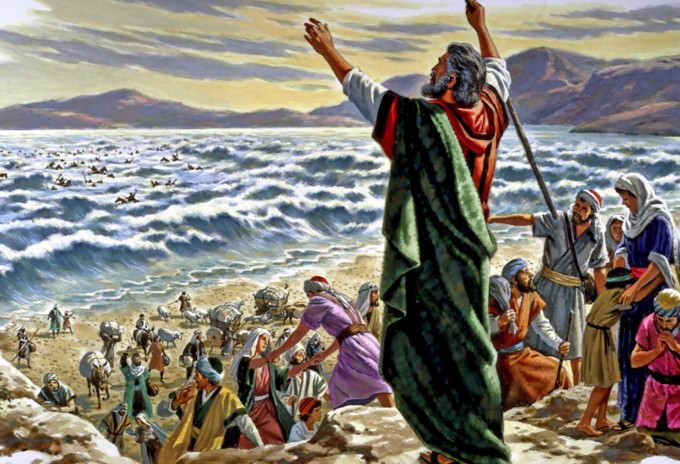
When the Israelites were safely across the Red Sea, crossing on dry land, Moses stretched out his hands and the waters of the sea poured back over the Egyptians and their chariots (Exodus 14:23-31).

When the Israelites were safely across the Red Sea, crossing on dry land, Moses stretched out his hands and the waters of the sea poured back over the Egyptians and their chariots (Exodus 14:23-31).

He has caused His works to be remembered by His people through their grateful word passed down through the generations as He had willed them to do (Exodus 12:25-27, Job 4:1-7) – and by His holy word through His prophets. It reminds us that God cares for His people (“He provides food for those who fear him; he remembers his covenant forever”). Verses 6-9 appear to continue the covenant remembrance as it recalls deliverance from Egypt. The psalm concludes in verse 10 with a phrase pointing to Proverbs 9:10 (“The fear of the Lord is the beginning of wisdom”).

Read or listen to audio of ESV version of this selection from this link.

/Bob’s boy
___________________
some images © V. Gilbert & Arlisle F. Beers

Please note: I did not design the reading plan that I am following in my blog.  All of my comments in this blog, however, are solely my responsibility.  When reading ANY commentary, you should ALWAYS refer first to the scripture, which is God’s unchanging and unfailing word. Reading schedules, as well as a link to the site where you can get the reading plan that I’m currently following for yourself can be found on the “Bible Reading Schedules” page of my website at http://graceofourlord.com.  
2 Chronicles – The Events of the Days

The Book of 2 Chronicles starts out in verse 1 saying “Solomon the son of David established himself in his kingdom, and the Lord his God was with him and made him exceedingly great.” It ends in chapter 36 with the proclamation of Cyrus, inviting the exiles to return to Judea and rebuild. This spans a time period of about 430 years. The capstone chapter is chapter 34, which begins the reign of King Josiah and his dramatic reforms and restoration.

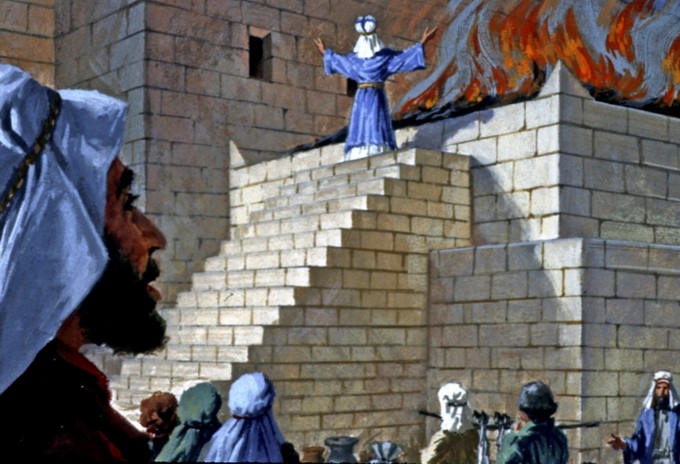
During the eighteenth year of King Josiah's reign, he held a great Passover festival to celebrate the restored Temple 2 Chronicles 35:1-27)

During the eighteenth year of King Josiah’s reign, he held a great Passover festival to celebrate the restored Temple 2 Chronicles 35:1-27)

As the temple was being repaired, the priest Hilkiah found the book of the law in the house of the Lord. Then Shaphan the scribe read it to Josiah. When the great king realized the extent of the utter failure of his people in serving the Lord, he became extremely upset (2 Chronicles 34:19-24). At his bidding, Hilkiah went to Huldah the prophetess, who issued the news of the dire fate that awaited the people. Thus began a period of great change that put off the wrath of the Lord until Josiah’s death in 2 Chronicles 35. But the evil returned under the reign of his son, Jehoiakim (2 Chronicles 36:1-5).

Key events of 2 Chronicles

Solomon’s wisdom and prosperity  (2 Chronicles  1)
The building of the Temple (2 Chronicles 3–5:1)
Ark transported to the Temple (2 Chronicles 5:2–12)
God’s glory fills the temple (2 Chronicles 5:13–14)
Solomon blesses the people and consecrates the temple (2 Chronicles 6)
Fire from the Lord consumes the sacrifices (2 Chronicles 7:1–7)
Feast of Tabernacles and covenant confirmation (2 Chronicles 7:8–22)
Queen of Sheba visits (2 Chronicles 9:1–12)
Death of Solomon (2 Chronicles 9:29–31)

Division of the kingdom (2 Chronicles 10:1–11:23)
Reign of Rehoboam (Judah) (2 Chronicles 12:13–16)
War between Judah and Israel (2 Chronicles 13:1–22)
Asa’s reforms (2 Chronicles 15:8–19)
Asa defeats Syria (2 Chronicles 16:1–10)
Expansion of Judah (2 Chronicles 17:10–19)
Jehoshaphat’s alliance with Ahab and the death of Ahab (2 Chronicles 18:1–34)
Jehoshaphat’s reforms and his reign (2 Chronicles 19:1–20:37)

/Bob’s boy
___________________
image © V. Gilbert & Arlisle F. Beers

Please note: I did not design the reading plan that I am following in my blog.  All of my comments in this blog, however, are solely my responsibility.  When reading ANY commentary, you should ALWAYS refer first to the scripture, which is God’s unchanging and unfailing word. Reading schedules, as well as a link to the site where you can get the reading plan that I’m currently following for yourself can be found on the “Bible Reading Schedules” page of my website at http://graceofourlord.com.  

Psalm 103 – Bless the Lord, O My Soul

Though both the Northern Kingdom and the Southern Kingdom would be sent into exile, God still promised to bring them back. While Joab and the Israelite army were far off attacking Rabbah, David stayed behind in Jerusalem and eventually committed adultery with Bathsheba, the wife of one of David's best soldiers.

Though both the Northern Kingdom and the Southern Kingdom would be sent into exile, God still promised to bring them back. While Joab and the Israelite army were far off attacking Rabbah, David stayed behind in Jerusalem and eventually committed adultery with Bathsheba, the wife of one of David’s best soldiers.

Again the superscription of this psalm assigns the author as David, while many scholars believe that it’s origin was during the time of Babylonian captivity. The reason there are so many psalms which have this ambiguity and controversy is because the time of captivity and exile bears great similarity to the time when David had his ordeal with Absalom – following his sins with Bathsheba and the murder of Uriah the Hittite. God’s proclamation through Nathan of the woes to come for David were, as always, utterly fulfilled as was the judgment on his people for their idolatry. It was the shame for their sin, repentance and regret, and utter despair at the consequences of their action that was the common denominator.

Psalm 103 is another hymn of praise, declaring the love of the Lord for His people despite the punishment he had brought to pass on them. The recognition in verse 6 of the Lord’s justice for the righteous and the oppressed applies equally to David’s situation as it does to Uriah in his death, as well as to the poor and unfortunate that the people had abandoned in their selfishness, greed, and idolatry before exile. The text speaks of the brevity of life on earth for man contrasted with the everlasting and steadfast love that the Lord has for His people.

Read or listen to audio of ESV version of this selection from this link.

/Bob’s boy
___________________
some images © V. Gilbert & Arlisle F. Beers

Please note: I did not design the reading plan that I am following in my blog.  All of my comments in this blog, however, are solely my responsibility.  When reading ANY commentary, you should ALWAYS refer first to the scripture, which is God’s unchanging and unfailing word. Reading schedules, as well as a link to the site where you can get the reading plan that I’m currently following for yourself can be found on the “Bible Reading Schedules” page of my website at http://graceofourlord.com.  

Job 26 – God’s Majesty

earth_004Occasionally, it seems difficult to know when to take some of the conversations between Job and the three guests at face value. In this case, the first few verses appear to be full of sarcastic irony – particularly verse 4 (“With whose help have you uttered words,and whose breath has come out from you?”). It really feels like Job is asking if they came up with these “brilliant conclusions” about man and his relationship to God all by themselves.

Job then demonstrates his own insight into the awesome power of the Lord. “He stretches out the north over the void and hangs the earth on nothing.” He makes the clouds, filling them with downpours of rain, and they hold together until he wills it to be released (He binds up the waters in his thick clouds, and the cloud is not split open under them”). He continues his poetic illustrations of God’s mighty power with references to the moon, the heavens, and the seas. He knows that God is ruler over all creation, but he still believes that the Lord has been unfair about justice where Job himself is concerned. Still, he refuses to speak of Him in an openly disrespectful manner.

Read or listen to audio of ESV version of this selection from this link.

/Bob’s boy
___________________
some images © V. Gilbert & Arlisle F. Beers

Please note: I did not design the reading plan that I am following in my blog.  All of my comments in this blog, however, are solely my responsibility.  When reading ANY commentary, you should ALWAYS refer first to the scripture, which is God’s unchanging and unfailing word. Reading schedules, as well as a link to the site where you can get the reading plan that I’m currently following for yourself can be found on the “Bible Reading Schedules” page of my website at http://graceofourlord.com.  For questions and help, please see the “FAQ” and “Summaries” pages there.