Psalm 149 – The Lord Takes Pleasure In His People

Psalm 149 is another of the “Hallelujah Psalms” that begin and end with the phrase “Praise the Lord!” In the first verse of this one, the psalmist speaks of singing “a new song.” This is a familiar phrase throughout the psalms. For example, we find it in Psalm 33:1-3, Psalm 96:1, and Psalm 98:1. But what does it really mean? The best explanation we have heard is that it does not simply refer to a newly composed song, but to a call to sing in response to a new blessing given by the Lord to His people.

Mount Zion, Aceldama, Akeldama, or Hakeldamia, the Field of Blood.

Mount Zion, Aceldama, Akeldama, or Hakeldamia, the Field of Blood.

Verse 4 states that “the Lord takes pleasure in His people,” meaning that those who serve Him are certainly favored by the Lord. And the verse adds that He “adorns the humble with salvation,” which means that He blesses those who come to Him with their hearts in the right place – not arrogantly, boastful, or presumptuously.  The rest of the psalm expands on verse 5’s exhortation for the godly to exult in joy because of God’s power and might – even over those who may have great earthly power; and it praises Him again for His justice, which is “honor for all his godly ones.”

Read or listen to audio of ESV version of this selection from this link.

/Bob’s boy
___________________
some images © V. Gilbert & Arlisle F. Beers

Please note: I did not design the reading plan that I am following in my blog.  All of my comments in this blog, however, are solely my responsibility.  When reading ANY commentary, you should ALWAYS refer first to the scripture, which is God’s unchanging and unfailing word. Reading schedules, as well as a link to the site where you can get the reading plan that I’m currently following for yourself can be found on the “Bible Reading Schedules” page of my website at http://graceofourlord.com.  

Psalm 18:1-24 – I Call Upon the Lord

cherubim_002We are breaking this relatively long psalm up into two sections, and so we will cover verses 1-24 in this blog. Occasionally there is some disagreement among scholars as to the author of certain psalms. But with Psalm 18, there can be no doubt. The psalm is also found in 2 Samuel 22. In fact, even most of the superscription is contained in verses 1-2 of that passage practically word for word:

“And David spoke to the Lord the words of this song on the day when the Lord delivered him from the hand of all his enemies, and from the hand of Saul. He said…”

This is one of the “royal psalm,” and it shows God’s faithfulness to his people by giving them the Davidic monarchy, and keeping him safe through many dangers. The hymn “I will call upon the Lord” is taken from this psalm. Consider verse 3: “I call upon the Lord, who is worthy to be praised, and I am saved from my enemies.”

Though there are few differences between this psalm and the passage in 2 Samuel 22, the distinction is in context. The latter is David’s personal prayer of praise and thanksgiving to God for His deliverance of him. Psalm 18 is the adaptation of it to a song that the whole congregation can sing to give thanks for the line of David, and to pray for the faithfulness and strength of the heirs to his throne.

The words of the first half of psalm, when referring to God’s deliverance of David, convey imagery of God rushing to the rescue of His anointed one like an angry and powerful protector, arriving on winged transport with swiftness of speed. His voice like thunder, flinging fire and hailstones, the picture of a powerful and protective God is painted in such a way as to instill awe, reverence and gratitude for the swiftness of action with which God acts to protect His righteous.

Read or listen to audio of ESV version of this selection from this link.

/Bob’s boy
___________________
some images © V. Gilbert & Arlisle F. Beers

Please note: I did not design the reading plan that I am following in my blog.  All of my comments in this blog, however, are solely my responsibility.  When reading ANY commentary, you should ALWAYS refer first to the scripture, which is God’s unchanging and unfailing word. Reading schedules, as well as a link to the site where you can get the reading plan that I’m currently following for yourself can be found on the “Bible Reading Schedules” page of my website at http://graceofourlord.com.  

Psalm 143 – I Stretch Out My Hands To You

Absalom

Absalom (Photo credit: Wikipedia)


This psalm of David is one of  those which are referred to as “the penitentials.” It still has all the elements of a lament, however, and as such it is clear that it was one written during his flight from Jerusalem during Absalom’s rebellion. The penance in his prayer is far too deep and genuine to be of the time of Saul’s persecution. Franz Delitzsch wrote of this psalm that it:


“is certainly composed as coming out of the situation of David who was persecuted by Absalom; and it is distinguished from those of the time of Saul’s persecution by the psalmist’s deep melancholy, founded upon the penitential sorrow of David’s consciousness of his own guilt.”


David is paying the price for his sin with Bathsheba, and his atrocious murder of his loyal friend, Uriah the Hittite – of which Nathan warned him to be prepared for in 2 Samuel 12:7-12.  Psalm 143 is another great model of prayer for us today. In the midst of praying for his deliverance, David also prays not only for deliverance, but for strength to serve God better:


Teach me to do your will,
for you are my God!
Let your good Spirit lead me
on level ground!

For your name’s sake, O Lord, preserve my life!
In your righteousness bring my soul out of trouble!


Read or listen to audio of ESV version of this selection from this link.


/Bob’s boy


___________________


some images © V. Gilbert & Arlisle F. Beers


Please note: I did not design the reading plan that I am following in my blog.  All of my comments in this blog, however, are solely my responsibility.  When reading ANY commentary, you should ALWAYS refer first to the scripture, which is God’s unchanging and unfailing word. Reading schedules, as well as a link to the site where you can get the reading plan that I’m currently following for yourself can be found on the “Bible Reading Schedules” page of my website at http://graceofourlord.com.  
 

Psalm 148 – Hallelujah, Praise Jehovah!

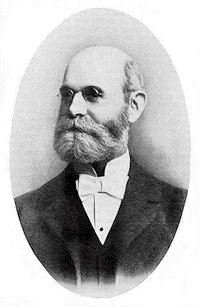
William J. Kirkpatrick

William J. Kirkpatrick

Another of the “Hallelujah Psalms,” Psalm 148 is certainly one of the most familiar to people in song. The ever-popular hymn “Hallelujah, Praise Jehovah!” by William J. Kirkpatrick is practically taken word for word from this psalm; and it is a personal favorite of this blogger.

The psalm calls on all of God’s creatures to praise Him, but it goes further – declaring that all of His creation should sing His praises as well.  Parts of this psalm bring to mind the Triumphal Entry of Jesus into Jerusalem (Luke 19:28-44). When the Pharisees suggested that Jesus should silence His disciples who were shouting praises to Him, he answered in verse 40 “I tell you, if these were silent, the very stones would cry out.”

Praise the Lord!
Praise the Lord from the heavens;
praise him in the heights!

Praise him, all his angels;
praise him, all his hosts!

Praise him, sun and moon,
praise him, all you shining stars!

Praise him, you highest heavens,
and you waters above the heavens!
Let them praise the name of the Lord!
For he commanded and they were created.

Read or listen to audio of ESV version of this selection from this link.

/Bob’s boy
___________________
some images © V. Gilbert & Arlisle F. Beers

Please note: I did not design the reading plan that I am following in my blog.  All of my comments in this blog, however, are solely my responsibility.  When reading ANY commentary, you should ALWAYS refer first to the scripture, which is God’s unchanging and unfailing word. Reading schedules, as well as a link to the site where you can get the reading plan that I’m currently following for yourself can be found on the “Bible Reading Schedules” page of my website at http://graceofourlord.com.  

Psalm 145 – I Will Extol You

Hebrew letter "nun"

Hebrew letter “nun”

Psalm 145 is the last of the psalms of David in Book 5, and is followed by the “Hallelujah Psalms” (Psalms 146-150). It is an acrostic, but like a couple of other acrostics, there is a letter missing – at least in some manuscripts – the letter “nun.” But both the Septuagint and the Dead Sea Scrolls supply the line with the missing letter (the second part of verse 13 – “the Lord is faithful in all his words and kind in all his works.”, and it flows perfectly, suggesting evidence of an earlier manuscript that matches.

It is a song of praise, and in its acrostic style, it uses a variety of words for communicating the idea of praise (extol, comment, pour forth, etc.), as well as the timeless continuity of this praise and of God’s grace, love, and mercy (forever and ever, everlasting, throughout all generations, etc. The theme of praising God for His righteousness and faithfulness continues throughout the acrostic. It points out that God is in control of even the most minute details of the world – down to even the various supplies of food He makes available to all His creatures.

Read or listen to audio of ESV version of this selection from this link.

/Bob’s boy
___________________
some images © V. Gilbert & Arlisle F. Beers

Please note: I did not design the reading plan that I am following in my blog.  All of my comments in this blog, however, are solely my responsibility.  When reading ANY commentary, you should ALWAYS refer first to the scripture, which is God’s unchanging and unfailing word. Reading schedules, as well as a link to the site where you can get the reading plan that I’m currently following for yourself can be found on the “Bible Reading Schedules” page of my website at http://graceofourlord.com.  

Psalm 141 – My Eyes Are Toward You

English: Michal Watching David from a Window, ...

English: Michal Watching David from a Window, as in 2 Samuel 6:16: “And it was so, as the ark of the Lord came into the city of David, that Michal the daughter of Saul looked out at the window, and saw king David leaping and dancing before the Lord; and she despised him in her heart.”; watercolor circa 1896–1902 by James Tissot (Photo credit: Wikipedia)


This lament, according to the superscription, is a psalm of David. And it does have the “flavor” of one of David’s psalms. There is no clue given as to the occasion of the writing. It could be during his flight from Saul or from the Absalom rebellion. It is likely the former, as this period was a long one in David’s life, and would provide the most opportunities for writing such laments.


Unlike imprecatory psalms, David is not praying for God to strike down his enemies. Nor is he praying for God to give him might against them. Instead, he is asking for the strength to withstand what his enemies would do to him, and to restrain his lips against speaking evil of them (verses 3-5).


He tells the Lord that he will continue praying against their evil deeds, asks God to be his defense and his refuge, and prays that his enemies will be the cause of their own demise (verse 10), rather than having him fall victim to them. What a great model of prayer from one who is so persecuted!


Read or listen to audio of ESV version of this selection from this link.


/Bob’s boy


___________________


some images © V. Gilbert & Arlisle F. Beers


Please note: I did not design the reading plan that I am following in my blog.  All of my comments in this blog, however, are solely my responsibility.  When reading ANY commentary, you should ALWAYS refer first to the scripture, which is God’s unchanging and unfailing word. Reading schedules, as well as a link to the site where you can get the reading plan that I’m currently following for yourself can be found on the “Bible Reading Schedules” page of my website at http://graceofourlord.com.  


Psalm 146 – The Lord Lifts Up!

benedictionConsidered by some as a part of the Hallel (Psalms 113-118), the last five psalms of the book (Psalms 146-150) are often called the “Hallelujah Psalms.” Each one of them starts and ends with the sentence “Praise the Lord!” The message of this song is simple. It tells the us not to put our trust in those in positions of political or ruling authority, but to put all of our trust in the Lord.

The psalm is obviously a song sung by the entire congregation; and it emphasizes the everlasting authority of God as the Creator of heaven and earth, and the giver of life. It also praises God for His love and care for the righteous, the oppressed, the hungry, and all of those who depend on Him. It declares that He is a just God, who will take care of the wicked in His own way and in His time (verse 9).

Read or listen to audio of ESV version of this selection from this link.

/Bob’s boy
___________________
some images © V. Gilbert & Arlisle F. Beers

Please note: I did not design the reading plan that I am following in my blog.  All of my comments in this blog, however, are solely my responsibility.  When reading ANY commentary, you should ALWAYS refer first to the scripture, which is God’s unchanging and unfailing word. Reading schedules, as well as a link to the site where you can get the reading plan that I’m currently following for yourself can be found on the “Bible Reading Schedules” page of my website at http://graceofourlord.com.  

Psalm 139 – I Am Fearfully and Wonderfully Made

lake and mountain02This psalm is ascribed to David in the superscription, and its writing style does not contradict that in the least. It is regarded by some as one of the greatest passages in the Old Testament, and it is not hard to understand why when one reads it. Edward J. Young wrote an entire book on these 24 verses (“The Way Everlasting: A Study in Psalm 139”, The Banner of Truth Trust, Edinburgh, Great Britain, November 1, 1997). Most commentators recognize 4 sections to the psalm, consisting of 6 verses each. The first section deals with God’s omniscience. Verse one begins “O Lord, you have searched me and known me!” Verses 7-12 are concerned with his omnipresence. Verse 7 asks “Where shall I go from your Spirit? Or where shall I flee from your presence?”

The third section (verses 13-18) praises God for His omnipotence. Verse 14 is one of the more famous verses: “I praise you, for I am fearfully and wonderfully made.” Put those last four words in a search engine, and you will have hours of reading available; and we cannot do the verse justice here. Suffice to say that “fearfully made” is intended with the same sort of respect and awe that we are to have of the Lord (as in “fear of the Lord”), and the meaning of “wonderfully made” is quite obvious to those who study the intricacies of the human body all the way down to the cell level.

The final section (verse 19-24) is one of supplication for God. It pleads for the Lord to deal with the wicked and with those who speak against him. It is also a plea for God to examine the psalmist’s heart, leading him away from any sin and “in the way everlasting.”

The psalm points out in a most elegant way how much God knows, while acknowledging how little we really know about that very fact. He knows all about us, and He knew us before we were even born, as God told the prophet in Jeremiah 1:4-5. Even His very thoughts are too vast and wonderful for us to comprehend (verses 17-18).

Altogether, these 24 verses speak volumes about the nature and power of our Creator and His care for us, and make an excellent source of thoughts for our prayers to Him.

Read or listen to audio of ESV version of this selection from this link.

/Bob’s boy
___________________
some images © V. Gilbert & Arlisle F. Beers

Please note: I did not design the reading plan that I am following in my blog.  All of my comments in this blog, however, are solely my responsibility.  When reading ANY commentary, you should ALWAYS refer first to the scripture, which is God’s unchanging and unfailing word. Reading schedules, as well as a link to the site where you can get the reading plan that I’m currently following for yourself can be found on the “Bible Reading Schedules” page of my website at http://graceofourlord.com.  

Psalm 137 – By the Waters of Babylon

Destruction of Jerusalem under the Babylonian ...

Destruction of Jerusalem under the Babylonian rule. Illustration from the Nuremberg Chronicle (Photo credit: Wikipedia)


This psalm is one that is often misunderstood. It is also one that skeptics and critics like to quote to “prove” that the Bible, of all things, is somehow evil (he says, rolling eyes toward heaven). Verses 1-3 make it clear – psalm 137 is obviously written either during the time of Babylonian captivity or just afterward, making it some time between 587 BC and 537 BC.


It is a lament for the destruction of Jerusalem, and for all that was lost in human life, in heritage, in freedom, and in dignity. It is lament of a people who were taken off forcibly and with certain ferocity, while others they knew – and loved – were killed violently.


What causes the misunderstanding – even among some of those scholars who are genuinely faithful – is verse 9. First it should be pointed out that the word that is translated “blessed” in some versions (here and in other parts of the Bible) is more accurately translated as “happy.” Secondly, verses 8-9 are not recounting what has happened, but they are a prediction of what will be.


“Happy shall he be who repays you with what you have done to us! Happy shall he be who takes your little ones and dashes them against the rock!” The third thing to remember is that the prediction in this passage is of what the Medes and the Persians are going to do to the Babylonians. God is not instructing them to do so (nor does He condone it), but His word accurately predicts what will happen – the same atrocities the Babylonians committed. And the invading soldiers in this prediction will be just as joyful in their cruel conquest as the Babylonians were.


Read or listen to audio of ESV version of this selection from this link.


/Bob’s boy


___________________


some images © V. Gilbert & Arlisle F. Beers


Please note: I did not design the reading plan that I am following in my blog.  All of my comments in this blog, however, are solely my responsibility.  When reading ANY commentary, you should ALWAYS refer first to the scripture, which is God’s unchanging and unfailing word. Reading schedules, as well as a link to the site where you can get the reading plan that I’m currently following for yourself can be found on the “Bible Reading Schedules” page of my website at http://graceofourlord.com.  


Psalm 144 – O Lord, What Is Man?

German theologian Hermann Gunkel

German theologian Hermann Gunkel (Photo credit: Wikipedia)

Psalm 144 is one of the 10 psalms that Hermann Gunkel (a German scholar of the Old Testament) classified as “Royal Psalms” because of their subject matter of the king and his role in the worship of God. Other psalms have been placed in this category by other scholars. This one is very similar to Psalm 18 (which is another psalm on Gunkel’s list). The style of both is unquestionably that of David, as the superscription states. But Psalm 18 was written during the time when David was rescued by the Lord “from the hand of Saul” (see that psalm’s superscription), whereas Psalm 144 is generally believed to have been written following the defeat of Absalom.

David praises God as his fortress, stronghold, and deliverer. He is with him in times of battle (verses 1-2, 10-11), and He blesses him and his people with abundance in their daily lives (verses 12-15). Some of the most beautiful, humble, and poetic praise in the chapter occurs in verses 3-4:

O Lord, what is man that you regard him,
or the son of man that you think of him?
Man is like a breath;
his days are like a passing shadow.

Read or listen to audio of ESV version of this selection from this link.

/Bob’s boy
___________________
some images © V. Gilbert & Arlisle F. Beers

Please note: I did not design the reading plan that I am following in my blog.  All of my comments in this blog, however, are solely my responsibility.  When reading ANY commentary, you should ALWAYS refer first to the scripture, which is God’s unchanging and unfailing word. Reading schedules, as well as a link to the site where you can get the reading plan that I’m currently following for yourself can be found on the “Bible Reading Schedules” page of my website at http://graceofourlord.com.