1 Samuel 9 – Saul Chosen to Be King

From the tribe of Benjamin, Saul comes with a servant looking for his father’s lost donkeys.  With no luck in finding them, his servant tells him of a seer, known to be a man of God (a prophet), and  happens to have bit of silver to bring him ( a gift was customary).

God had already told Samuel that the young man was coming in verse 16, and again tells him that he has arrived in verse 17, and that he is the one that will rescue them from the Philistines.  Saul is just the sort of man that the people are looking for – very handsome, and very tall (verse 2).  In verses 20 and 23, Samuel has already demonstrated to Saul that he has special knowledge from God, so that what he is about to tell him will be believed.  The leg presented to Saul to eat in verse 24 would be known to Saul to normally be the priest’s portion (Exodus 29:27).

Read or listen to audio of ESV version of this selection from this link.

/Robert
___________________
some images © V. Gilbert & Arlisle F. Beers

Please note: I did not design the reading plan that I am following in my blog.  All of my comments in this blog, however, are solely my responsibility.  When reading ANY commentary, you should ALWAYS refer first to the scripture, which is God’s unchanging and unfailing word. Reading schedules, as well as a link to the site where you can get the reading plan that I’m currently following for yourself can be found on the “Bible Reading Schedules” page of my website at http://graceofourlord.com.  For questions and help, please see the “FAQ” and “Summaries” pages there.

1 Samuel 8 – Israel Demands a King

Samuel is getting old, and has appointed his sons Joel and Abijah as judges.  But they are corrupt (verse 3) and the elders come to Samuel and tell him that they want a king.  It was not wrong for them to want a king – as a matter of fact, Moses had told them in Deuteronomy 17:14-15 that they could have one when the time came.  But what they wanted was a military leader, when all along it had been God who fought for them.  It was a rejection of the Lord (verse 7) and God points out to Samuel in verse 8 that it had been so with them ever since he brought them out of Egypt.

So although Samuel didn’t want to do it, the Lord told him to “make them a king.”  But at God’s instruction, Samuel warned them of the “ways of the king” that will reign over them (verses 11-17) – “he will take…”  is emphasized over and over.  Some of this is the common practice of rulers, and necessary – like taxes.  But some as in 14 and 16 were prophetic of abuse, and indeed verse 18 predicts that they will “cry out because of your king”  as slaves.  This type of servitude labor would come to pass for them, as we will see in 1 Kings 5:13-16 and elsewhere.

Read or listen to audio of ESV version of this selection from this link.

/Robert
___________________
some images © V. Gilbert & Arlisle F. Beers

Please note: I did not design the reading plan that I am following in my blog.  All of my comments in this blog, however, are solely my responsibility.  When reading ANY commentary, you should ALWAYS refer first to the scripture, which is God’s unchanging and unfailing word. Reading schedules, as well as a link to the site where you can get the reading plan that I’m currently following for yourself can be found on the “Bible Reading Schedules” page of my website at http://graceofourlord.com.  For questions and help, please see the “FAQ” and “Summaries” pages there.

From Samuel to Saul \ April Week 4 Summary Posted

This week, we will meet Saul.  A case of “be careful what you wish for” if ever there was one.  As Samuel judges Israel, Israel demands a king.

Saul meeteth with Samuel

Saul meeteth with Samuel (Photo credit: Wikipedia)

Summing Up

Each weekend, I am now posting a small PDF of one week of chapter summaries (on the website’s “Summaries” page), current to the beginning of the previous week.  I have posted the summary for Week 17 (April Week 4) of the schedule I am following.  This short PDF document contains condensed comments about Judges 14, 15, 16, and Ruth 1 and 2, with hyperlinks to the ESV version of each chapter for listening or reading, and joins the summaries for other weeks already posted there.

/Robert
___________________
image © V. Gilbert & Arlisle F. Beers

Please note: I did not design the reading plan that I am following in my blog.  All of my comments in this blog, however, are solely my responsibility.  When reading ANY commentary, you should ALWAYS refer first to the scripture, which is God’s unchanging and unfailing word. Reading schedules, as well as a link to the site where you can get the reading plan that I’m currently following for yourself can be found on the “Bible Reading Schedules” page of my website at http://graceofourlord.com.  For questions and help, please see the “FAQ” and “Summaries” pages there.

1 Samuel 5-6 – Return of the Ark

Mosaic showing the Philistine god
Dagon, half fish and half man.
Excavations at Ashkelon have revealed
many period of history.

Now that the Philistines had captured the ark of God, they brought it to Ashdod and took it into the house of their “god” Dagon.  When they woke early the next day, they found their idol face down on the ground in front of the ark, as if their “god” was bowing to the Lord.  They put it back in place, only to find the next day that the head and both hands were cut off and laying on the threshold – with only its trunk left (verse 4).

Done toying with them, verse 6 says that the Lord afflicted the people with tumors.  The men had enough and sent the ark to Gath, where the Lord caused a great panic, afflicting young and old with tumors.  So they sent it to Ekron, where verse 11 says there grew a deathly panic which verse 12 says was quite literal.  Those who did not die were struck with tumors.

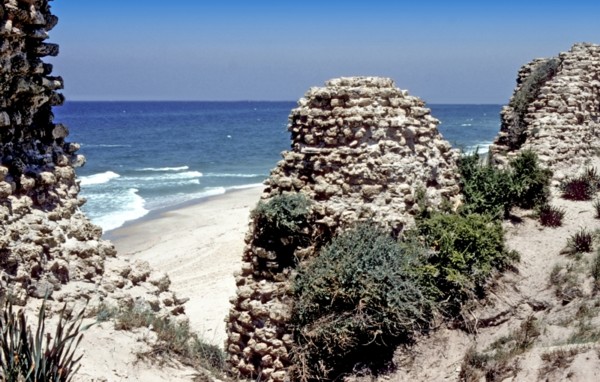
Ashdod was one of the five
significant Philistine cities.
Archaeological excavations
at Ashdod have uncovered
remains from many periods
of history.

By chapter 6, the ark had been in their land for seven months, and they were ready to get rid of it.  Their priests and diviners advise to send it back with golden images of their tumors and of mice.  Verse 5 speaks of the mice that had ravaged the land.  Some people think that this could indicate that the bubonic plague had been at work in all of this.  Whatever the case, verse 6 makes it clear that the word of the plagues on the Egyptians and Pharaoh so long ago had spread, and was not forgotten.  The ark is finally returned and ends up in Kiriath-jearim.

Read or listen to audio of ESV version of this selection from this link.

/Robert
___________________
some images © V. Gilbert & Arlisle F. Beers

Please note: I did not design the reading plan that I am following in my blog.  All of my comments in this blog, however, are solely my responsibility.  When reading ANY commentary, you should ALWAYS refer first to the scripture, which is God’s unchanging and unfailing word. Reading schedules, as well as a link to the site where you can get the reading plan that I’m currently following for yourself can be found on the “Bible Reading Schedules” page of my website at http://graceofourlord.com.  For questions and help, please see the “FAQ” and “Summaries” pages there.
1 Samuel 4 – Philistines Capture the Ark

So far in the book of Samuel, we have read of little mention of real worship – other than some sacrificial offerings.  Indeed chapter 3:1 says “the word of the Lord was rare in those days.” And Eli’s consultation with the Lord is especially and conspicuously absent in this chapter, as the Israelites go to do battle with the Philistines.  They are soundly defeated in verse 2, and the elders seem to decide on their own that the Ark should be brought to the battle to put the Lord with them, treating it – and God – like little more than a talisman.  Hophni and Phinehas, Eli’s sons are right there with it when the Israelites were defeated even worse this time.  And now, the Ark has been captured!  Containing the tablets of the Ten Commandments, this loss of the sign of the Lord’s covenant with Israel is devastating!

One of the men of the tribe of Benjamin from the field of battle runs and gives the news to Eli, who is more distressed at the loss of the Ark than the death of his sons – and he dies on the spot (verse 18)!  The verse states that he had judged Israel for 40 years.  Samuel the prophet would be the final judge.  Eli’s daughter-in-law, too, is more distressed at the loss of the Ark; and she goes into labor.  She dies giving birth and names her son Ichabod – which means “Where is the glory?” Because the glory has left Israel.  It would seem to the people that the Lord himself has left them!

Read or listen to audio of ESV version of this selection from this link.

/Robert
___________________
some images © V. Gilbert & Arlisle F. Beers

Please note: I did not design the reading plan that I am following in my blog.  All of my comments in this blog, however, are solely my responsibility.  When reading ANY commentary, you should ALWAYS refer first to the scripture, which is God’s unchanging and unfailing word. Reading schedules, as well as a link to the site where you can get the reading plan that I’m currently following for yourself can be found on the “Bible Reading Schedules” page of my website at http://graceofourlord.com.  For questions and help, please see the “FAQ” and “Summaries” pages there.

1 Samuel 3 – The Lord Calls Samuel

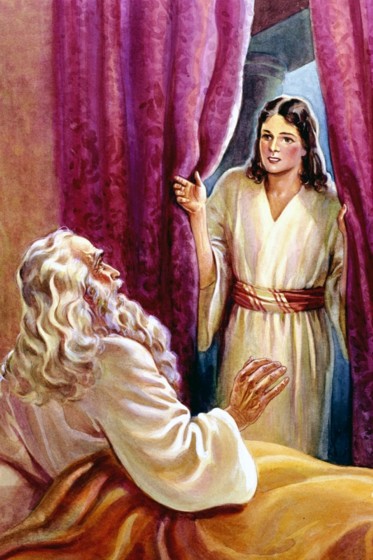
The Lord calls Samuel twice as he is laying down in the temple, and both times he thinks it is Eli calling him.  But when he runs to him to see what he wants, Eli sends him back to bed.  But the third time, Eli finally gets it, and tells Samuel what to say when the Lord calls him again.  This time, God calls his name twice (verse 10).  The Lord does not waste words.  When we read of Him calling someone’s name  twice, it is of great importance.  he did so to Abraham when he was being tested with Isaac (Genesis 22:11), to Jacob to let him know it was OK to go to Egypt (Genesis 46:2), and to Moses at the burning bush (Exodus 3:4).

Then the Lord told Samuel that he was about to punish Eli’s house forever for his son’s blasphemy and Eli’s own failure to restrain them (verses 13-14).  The corruption of Eli’s sons and Eli’s failure to deal with it were very public sins – all the people would know of it.  And their sexual use of women at the temple (1 Samuel 2:22) defiled the temple of the Lord, as that was the sort of thing that went on at idol worship.  This public “high-handed” sin was warned about in scripture (Numbers 15:30, for example), and Eli was not exactly shocked when Samuel reluctantly told him of the Lord’s plans for him and his house (verse 18).

Verse 19-21 tell how Samuel’s growth and establishment as a prophet became known to Israel because the Lord revealed himself by His word there – meaning that what Samuel prophesied came to pass (see Deuteronomy 18:21-22) there at Shiloh.

Read or listen to audio of ESV version of this selection from this link.

/Robert
___________________
some images © V. Gilbert & Arlisle F. Beers

Please note: I did not design the reading plan that I am following in my blog.  All of my comments in this blog, however, are solely my responsibility.  When reading ANY commentary, you should ALWAYS refer first to the scripture, which is God’s unchanging and unfailing word. Reading schedules, as well as a link to the site where you can get the reading plan that I’m currently following for yourself can be found on the “Bible Reading Schedules” page of my website at http://graceofourlord.com.  For questions and help, please see the “FAQ” and “Summaries” pages there.
1 Samuel 2 – The Lord Rejects Eli’s Household

The second chapter begins with Hannah’s song of praise to the Lord – a hymn; and many passages in the Old Testament are similar, particularly Psalm 113 – especially verse 9 of that Psalm’s reference to a barren woman.  Verse 12 then moves to the despicable behavior of Hophni and Phinehas, Eli’s sons.  Eli was a priest in the line of Ithamar, a son of Aaron; and the sacrifices brought to the temple were to be handled according to the commands of God.  Their lack of regard for God as demonstrated in verses 12-17 was certainly known to be wrong not only to themselves, but to those bringing their offerings, as the law stated in Exodus 29:13 and Leviticus 3:3-5.

In verses 22-25, Eli does rebuke his sons, but clearly he not forceful, and they have no more regard for what he says than they have for the Lord.  Samuel, on the other hand, is growing “in stature and in favor with the Lord” (verse 26), and his mother made him a robe and brought it to him each year when they came to sacrifice (verse 19).

Beginning in verse 27, the “man of God” who came and told Eli of God’s rejection of him and his house may be a prophet.  We just do not know, but this seems likely because if he was a manifestation of the Lord, usually the scripture would refer to an angel of the Lord instead.  The prophecy of the end of Eli’s priestly line is told and verse 34 serves as the sign that he will know it is true – the day is coming when both Hophni and Phinehas will die on the same day.

Read or listen to audio of ESV version of this selection from this link.

/Robert
___________________
some images © V. Gilbert & Arlisle F. Beers

Please note: I did not design the reading plan that I am following in my blog.  All of my comments in this blog, however, are solely my responsibility.  When reading ANY commentary, you should ALWAYS refer first to the scripture, which is God’s unchanging and unfailing word. Reading schedules, as well as a link to the site where you can get the reading plan that I’m currently following for yourself can be found on the “Bible Reading Schedules” page of my website at http://graceofourlord.com.  For questions and help, please see the “FAQ” and “Summaries” pages there.

1 Samuel 1 – The Birth of Samuel

Peninnah, Elkanah’s other wife tormented Hannah because she was barren.  Another great example the Old Testament shows us of how deviating from God’s intention of one woman and one man in marriage (Genesis 2:24, Matthew 19:3-9) so often causes problems and heartache.  Two other of many cases in point are Abraham (Sarah and Hagar, Gen 16:1-6), and Jacob (Leah and Rachel, Gen 30).

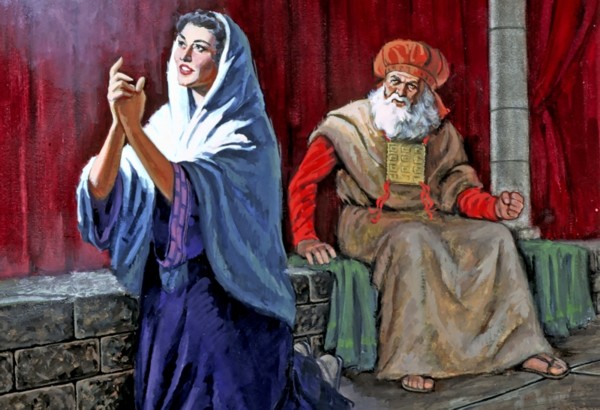
Shiloh, the modern Khirbet-Seilum is 20 miles north of Jerusalem toward eastern border of Ephraim is where Hannah went with her husband Elkanah, as he sacrificed there. Hannah went to the temple (verse 11) and prayed to God for a son, and promised to give him to serve the Lord dedicated as a Nazirite (Num 6).  She was weeping, and Eli the priest thought she was drunk, and rebuked her. When she explains her grief, he blesses her. After she returns to Ramathain-Zophin with Elkanah, she does conceive a son and names him Samuel (verse 20).  After he was weaned, Elkanah supported her in her vow to the Lord and took sacrifices with them to Shiloh (verses 23-24). Hannah reminded Eli of their meeting, and presented Samuel to him for service to the Lord (verses 26-27).

Read or listen to audio of ESV version of this selection from this link.

/Robert
___________________
some images © V. Gilbert & Arlisle F. Beers

Please note: I did not design the reading plan that I am following in my blog.  All of my comments in this blog, however, are solely my responsibility.  When reading ANY commentary, you should ALWAYS refer first to the scripture, which is God’s unchanging and unfailing word. Reading schedules, as well as a link to the site where you can get the reading plan that I’m currently following for yourself can be found on the “Bible Reading Schedules” page of my website at http://graceofourlord.com.  For questions and help, please see the “FAQ” and “Summaries” pages there.