Understanding the Cross of Christ – Part 2 (What is Sin?)

This series began in Part One as a search for a more meaningful answer to an aspiring young Christian’s question: “Why did God send His only son to die?”  The short answer “to save us from our sins,” while correct, really only serves to raise more questions.  Whether the question comes from a young person or someone older, I should be able to do better.  Hopefully I will be more prepared to answer that question by the end of this series.

A real understanding of the answer to this question naturally begins with understanding some things about sin.  So as we turn to that subject, the first set of questions we brought up in part one center around just what the problem is with sin.

What is sin anyway?

English: Man's Sin, and God's Promise; as in G...

English: Man’s Sin, and God’s Promise; as in Genesis 3:1-6, 13-15; illustration from a Bible card published by the Providence Lithograph Company (Photo credit: Wikipedia)

Simply put, sin is that which is contrary to God’s will, His commandments, even that which is against His very nature.  Sin came into the world in what we know as “the fall” way back in Genesis 3.  At that time, man had a practical paradise on earth, as well the blessing of being really close to God.  But despite clear warning, he threw it all away in rebellion against the Lord, and nothing has been the same since that time.  God’s first reference to sin as a word in the scripture appears in Genesis 4, when Cain had become angry.  God had warned him that sin was “crouching at his door,” after which he in fact murdered his own brother.  Since that time, many specific acts that are sinful have been named in the Bible.  Some of those are named by Paul as “works of the flesh” in Galatians 5:19-20.  The fact that this is not a complete list of all sins is obvious, and made clear by the words “and things like these” at the end of the passage.

We know that those things in Paul’s letter to the Galatians are wrong.  We even know that such things as lying and murder are wrong.  But if there is no clearly exhaustive list of sins in the Bible to which we can refer, how should one know what else may be sinful?   The answer is by studying God’s word – the Scriptures.  The more we learn by reading and hearing God’s word, the more we know about what is right, what is wrong, and what is abhorrent to God (Proverbs 6:16-19, for example).   But we usually have to look no further than our own hearts.  God gave us a conscience; and if we truly examine ourselves with honesty, our internal conflict will betray our true knowledge of what God really expects from us (Romans 2:14-16).

English: The Story of Cain and Abel; as in Gen...

English: The Story of Cain and Abel; as in Genesis 4:3-15; illustration from a Bible card published by the Providence Lithograph Company (Photo credit: Wikipedia)

So why does sin matter so much to God?

God has revealed Himself in many ways to us.  One of those of those ways is by His word. One could write a dissertation on that very subject, but we should know that the Bible declares (among other things) that God is the very definition of goodness and faithfulness, and that He has enduring and steadfast love (Psalm 100:5) – indeed that He is love (1 John 4:8)!  And from His word, we know that He is truth and holiness (Leviticus 19:2) – that He is light, and in Him is no darkness (1 John 1:5).  There is no evil in His character, and He is too pure to tolerate sin or evil (Habakkuk 1:13).

Why should sin matter to us?

We will have more to say about this in Part Three of this series.  But sin is important to us first and foremost because it separates us from God.  That separation is absolutely the worst thing that has ever happened to mankind.  It separated man from God after “the fall” of Genesis 3, and God has been at work to restore that relationship with Him ever since then.  The good news is that He has a plan to do just that very thing; and that hope for us has always pointed to the Cross.

On a Sunday within the next few short weeks, we will present part three of this series with a look at God’s response to sin. as we begin to examine His plan for our salvation and hope for being with Him forever.

/Bob’s boy
___________________
image © V. Gilbert & Arlisle F. Beers

Please note: I did not design the reading plan that I am following in my blog.  All of my comments in this blog, however, are solely my responsibility.  When reading ANY commentary, you should ALWAYS refer first to the scripture, which is God’s unchanging and unfailing word. Reading schedules, as well as a link to the site where you can get the reading plan that I’m currently following for yourself can be found on the “Bible Reading Schedules” page of my website at http://graceofourlord.com.  For questions and help, please see the “FAQ” and “Summaries” pages there.

Exhausted and Overwhelmed

Monday started out bad, and things got worse.  My wife, having just recovered from a previous surgery (mostly) was suddenly scheduled for day surgery on Friday that she really needed months ago.  The first surgery had been more important, and had to heal first; but now it was time and had to be done.  But a dear friend had died unexpectedly, and we had to work a funeral into the week.  And since the family was close, we needed to host the post-funeral gathering for food at our home.  No problem.  Good people offered to help out.  But our cooktop had gone out.  Time to call for help.  Then I get to work and discover I am on (24/7) call.

A wonderful man who runs a wonderful repair company took pity on us and sends his best man out on very short notice the morning of the funeral.  The job ended up being much more than a simple repair.  But when most companies would have apologetically had us waiting for parts, and another service call, they had us going in a little over four hours.  The next day was mid-week services, bringing the grandchildren to Bible classes after work. By the time Friday got there, day surgery ended up being an overnight stay – and I had committed to baby-sitting Saturday night.  Wife was finally released Saturday afternoon with 25 minutes to get to the pharmacy before they closed with 3 grandchildren in tow.  Made it.

Neither my wife, nor myself were prepared for the level of pain and immobility she is having.  But I was able to get someone to care for my wife  long enough to make it to worship Sunday morning with the grandchildren.  Then I served a nice lunch to about a dozen people afterward, while caring for my wife all day.  Now I discover that I sent out today’s blog yesterday.

So what else did I miss?  Have not taken the time to Really pray fervently to God for His care today.  I am blessed with a good job, a wife that I cannot imagine life without, grandchildren that I adore, a home that is more than adequate, brethren who care about us, and a Savior that cared enough to give His life for me.  Wow.  I need a verse from James.  How about 5:11:

“…you have seen the purpose of the Lord, how the Lord is compassionate and merciful.”

/Bob’s boy
___________________
image © V. Gilbert & Arlisle F. Beers

Please note: I did not design the reading plan that I am following in my blog.  All of my comments in this blog, however, are solely my responsibility.  When reading ANY commentary, you should ALWAYS refer first to the scripture, which is God’s unchanging and unfailing word. Reading schedules, as well as a link to the site where you can get the reading plan that I’m currently following for yourself can be found on the “Bible Reading Schedules” page of my website at http://graceofourlord.com.  For questions and help, please see the “FAQ” and “Summaries” pages there.

Understanding the Cross of Christ (Part 1)

cross-004Recently, a young person asked me why God sent His only son to die – why was it necessary? Not a real unusual question for someone learning about Christianity to ask. And as someone who was “raised in the church,” it seemed so basic to our Christianity that I remember thinking that it should be a relatively easy question for me to answer. But to my surprise, I found that the spontaneous explanation I was able to come up with in an admittedly brief time seemed wholly inadequate to me – and I vowed to prepare myself to do a better job. What question could be more important for us as Christians to answer? So, as I begin to study and prepare for that “better answer,” I am beginning this series on “Understanding the Cross,” which will be featured on selected Sundays for the next few weeks.

To be sure, the first thing that popped into my head (“to save us from our sins”) was absolutely the correct answer. But it was also one that my young student in his own limited study of God’s word, already knew. After all, the words are in practically every prayer he has ever heard. But standing by itself, it really isn’t much of an answer, is it?

Admittedly, a real study of this question could be made into countless individual lessons, articles, and discussions. It is, after all, what the entire Bible from the Genesis to Revelation is all about, right? So let’s begin in part one of this series, with a brief outline and some more questions; and see if we can provide a meaningful answer to my young friend’s question that is not too difficult to call up to memory when needed. Let’s start by separating the questions into four categories:

What is the problem with sin?

  • What is sin, and how does it affect us?
  • Why does sin matter so much to God?
  • What is its importance to us?

What is God’s response to sin?

  • What are the consequences to us?
  • How was sin dealt with in the Old Testament?
  • Why does God demand a price to be paid for our sin?

How does Jesus fit into God’s plan?

  • Where did Jesus come from?
  • Was He all that everyone expected the Messiah to be?
  • What did his death on the cross accomplish?

What must we do to be saved?

  • What \ Who is a sinner?
  • What can a sinner do to earn salvation?
  • What is the importance of baptism?

Be watching for part 2 of this series, where we will examine the first category of questions above: “What is the problem with sin?”

/Bob’s boy
___________________
image © V. Gilbert & Arlisle F. Beers

Please note: I did not design the reading plan that I am following in my blog.  All of my comments in this blog, however, are solely my responsibility.  When reading ANY commentary, you should ALWAYS refer first to the scripture, which is God’s unchanging and unfailing word. Reading schedules, as well as a link to the site where you can get the reading plan that I’m currently following for yourself can be found on the “Bible Reading Schedules” page of my website at http://graceofourlord.com.  For questions and help, please see the “FAQ” and “Summaries” pages there.

How do we know the Bible is God’s Word?

The following illustration of memory technique for this subject has been attributed to the “Stand to Reason” folks, e.g. Greg Koukl.  We’re not sure this is exactly correct, as the pretext has been passed around for many years, but we’re happy to make that attribution nonetheless.
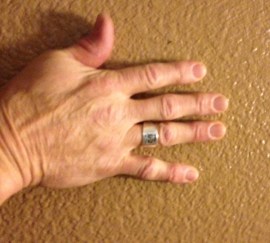
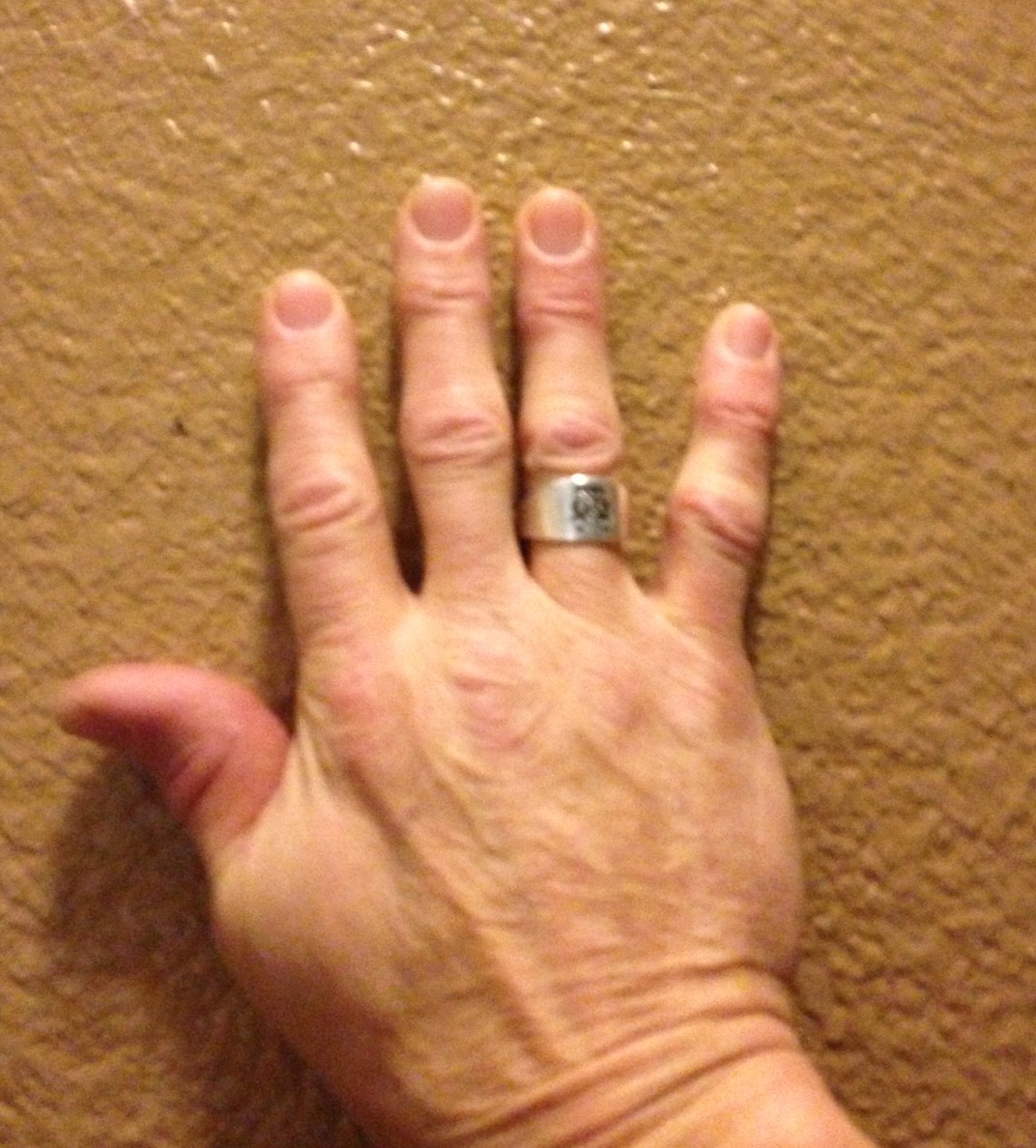
handIf you are reading this blog, the chances are that you already believe that the Bible is the word of God.  But what about those times when the subject comes up with our friends and acquaintances that aren’t so convinced?  We know from 2 Timothy 2:16 that “All Scripture is breathed out by God and profitable for teaching, for reproof, for correction, and for training in righteousness.” But the world is full of people who believe the Bible is little more than myths and fairy tales.

And rarely do we carry around for ready recollection a list of convincing arguments or evidences for what we ourselves know to be the truth of the matter.  And it’s true also that we are not likely to be able to do that even with the following memory aids.  But we should be prepared (1 Peter 3:15)  to present some general truths for which we can later provide examples in evidence in a meaningful manner; and it’s as plain as the hand in front of our face.

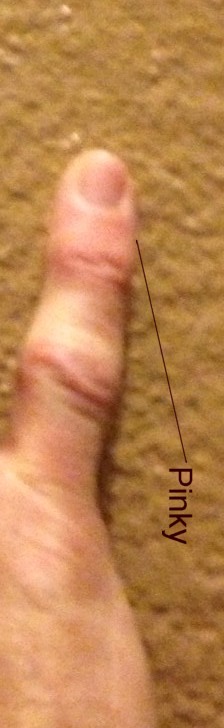
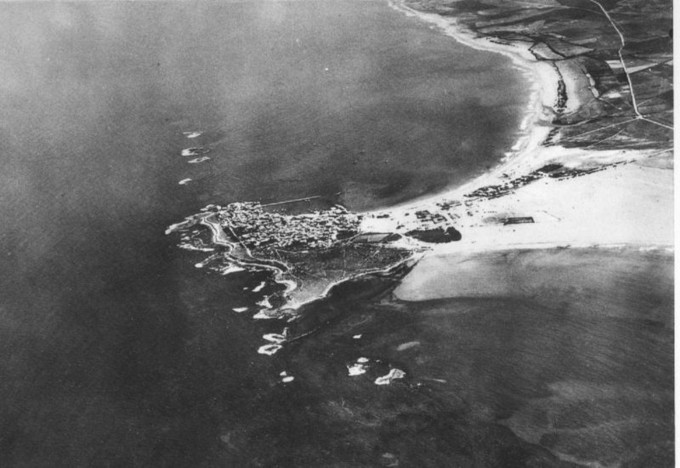
pinkySo let’s start with the pinkie.  When you think of this digit, thing “P” for prophecy.  The Bible has many examples of fulfilled prophecy.  And none other than Moses gave us the measure of how easy it is to know true prophecy (Deuteronomy 18:22).  How about some examples of those?  Take Daniel chapter 8, which was written around 550 B.C and accurately predicted the rise of several empires to Belshazzar in interpretation of his dream.  Validated as far as time goes by the historian Josephus, this prophecy predicted even the rise of Alexander the Great.  For an expanded dissertation, please see this article at ApologeticsPress.org.  Here’s more.  Read about Ezekiel’s stunningly accurate prediction of the fate of the city of Tyre in this article.  Here is an aerial photo of the site taken by the French military in 1934.800px-Tyre-aerial-photo-by-France-Military-1934  This aerial view of Tyre vividly shows the land bridge that Alexander the Great created. Much silt and sand has accumulated over the years to widen the area of the original causeway.

Then there’s Isaiah’s prediction written almost two hundred years in advance of Cyrus’ conquest of Babylon (539 B.C.) –  “The Prophecy of Cyrus.”

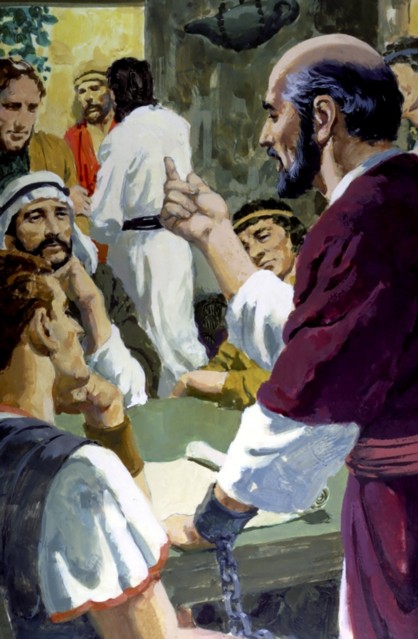
Paul was a prisoner in Rome, under house arrest, but he was free to preach the Gospel to many who came to listen (Acts 28:7-31).

Paul was a prisoner in Rome, under house arrest, but he was free to preach the Gospel to many who came to listen (Acts 28:7-31).

ring_fingerNext, we take the ring finger.  This represents the unity of the Scriptures.  Written over the course of thousands of years with diverse authorship, and in a variety of writing conditions such as battlefields, dungeons, prisons and caves, all showing pieces of the same puzzle and still when assembled together they all tell the same story of God’s plan for the salvation of mankind – none of which was fully even known by all of the authors.  Kings, tax collectors, physicians, servants, shepherds, and warriors were all guided by the Spirit of the Lord to record His word in amazing unity. A substantial portion of the new Testament was even written by Saul of Tarsus, who before his conversion, was known to have hated the Lord Jesus so much at one time, that he was responsible for the persecution and cruel murders of many of his disciples. It is impossible for anyone to truly read and study this entire book (for it is one book, in the end) in honesty of heart and open-mindedness without realizing that this cannot be the work of mere men.

big fingerLet’s not skip the big finger.  The Bible has the answers to the important epistemological, moral, ethical, and scientific questions of our age and any age.  No other religion and no other collection of writings can provide the answers to the big questions that have been on the minds of philosophers, educators, kings and yes, even clergy throughout the ages in the way that the Bible clearly reasons.  Genesis provides the answers to the great questions of where the universe came from, how man fits into that universe, how things such as love beauty, laws of logic and other universals are possible.

What makes something right or wrong?  Is it the mere acceptance of society concerning moral absolutes.  If so, why should one society’s view of those morality or right and wrong over truly that of another – like say that of Nazi Germany? The Bible gives us the answers to these and other truths, such as uniformity of nature.  We fully expect that scientific experiments can be repeated with accuracy because we know that certain physical things occur with expected results.  But what gives us the reason to know and believe that this will continue to be the case?  Our creator gives us the answers, as he has promised to “hold things together” (Colossians 1:17).  And why do we recognize human dignity, have funerals, etc? Could it be because we recognize that man was indeed created in God’s image?  To paraphrase the late Dr. Greg Bahnsen, without the Christian world view, whether you acknowledge it or not, you couldn’t make sense out of anything – you cannot provide the preconditions of intelligibility.   What are laws of logic anyway, and how can an atheist account for them?  They certainly are not just the way the human brain thinks because my gray matter is not the same as yours.  And if one claims that they are conventions, then I should be able to claim my own conventions, and be just as logical.

pointerNext we have the index of the pointer finger that points the way to history, archaeology, and even scientific fore-knowledge (see  this article for that information).  Even scientists and archaeologists who do not believe the Bible is the word of God consult it when they want to know where to dig, and it proves itself historically time after time.  Just type in “archaeology” in the search box on this page, and you will be rewarded with one example after another of this truth.  If it is written in the Bible, and it is possible to validate or invalidate what is written, the bible has always been proven correct.  The Bible is the only book that can look to historical evidence to support its unique theological claims.  The New Testament documents are the best historical documents of the ancient world when approached using the standard cannons of historical research untainted by naturalistic presuppositions.  Time and again even in recent decades, the Bible has been proven correct in such controversies as who Pilate actually was, whether he actually lived and what his title actually had been – and much more.

thumb2Next, we move on to the thumb.  In olden times, an emperor would give a thumb up or thumb down to spare or condemn a man.  The Bible has the power to change lives no other medium, and no other way of life.  Those life changes do not occur because of something we’ve done.  God changes us in a way we never could change ourselves when we obey the Scriptures.  This experience is universal, is the same everywhere in the world in which it is taught. It transcends all economic, ethnic, and even geographical boundaries.

Finally, we have the fist.  The Bible is from God, who fights for us (the name of Israel actually translates “God fights”).  He has protected His word for centuries.  There are no “lost books” of the Bible.  We have copies today that are older even than those we had 100 years ago, and there are no substantive differences in any of them.    How does it compare with other historical manuscripts?  The works of Plato, for example, written 427-347 B.C . The earliest copy we have today is about 900 A.D. Tacitus wrote around 100 A.D, and the earliest copy is about 1100 A.D. Only about 20 manuscripts exist.  Homer’s “Iliad” was written about 900 B.C .  The earliest copy from about 400 B.C.  Number of manuscripts – 643.  The New Testament was written 40-100 A.D.  The earliest copy about 125 A.D.  Number of manuscripts – 24,000.  The Bible stands the test of time.

fistNo other book has been so thoroughly censored throughout the ages, yet it cannot be destroyed. Just as so-called “renowned” atheists of today disparage faith they cannot even comprehend, and make it their mission in life to destroy that faith in others, men throughout the ages have attempted to silence God’s word. Virtually all of the apostles were martyred for proclaiming the Lord Jesus crucified.  From A.D. 303-311, the Roman emperor Diocletian, during the empire’s bloodiest persecution of Christians, ordered every Bible burned, thinking he could destroy Christianity by executing anyone who was apprehended in possession of a Bible. Just 25 years later, the Roman emperor Constantine ordered that 50 perfect copies of the Bible be made at government expense, and Christianity became the empire’s officially preferred religion. The French philosopher Voltaire, a skeptic  who attempted to destroy the faith of many people boasted that within 100 years of his death, the Bible would disappear from the face of the earth. Voltaire died in 1728, but ironically, 50 years after his death, the Geneva Bible Society moved into his former house and used his printing presses to print thousands of Bibles.  William Tyndale was executed by strangulation and burned at the stake for heresy for his crime of translating the Bible from Greek to English.  Hundreds of years later, Joan Bridgman made the comment in the Contemporary Review that, “He (Tyndale) is the mainly unrecognized translator of the most influential book in the world. Although the Authorized King James Version is ostensibly the production of a learned committee of churchmen, it is mostly cribbed from Tyndale with some reworking of his translation.”

The Hammer and the Anvil

Last eve I passed beside a blacksmith’s door
And heard the anvil ring the vesper chime;
When looking in, I saw upon the floor,
Old hammers worn with beating years of time.

“How many anvils have you had,” said I,
“To wear and batter these hammers so?”
“Just one,” said he; then with a twinkling eye,
“The anvil wears the hammers out, you know.”

And so, I thought, the anvil of God’s Word,
For ages, skeptics blows have beat upon;
Yet, though the noise of falling blows was heard,
The anvil is unharmed – the hammers gone.

~ John Clifford

/Bob’s boy
___________________
image © V. Gilbert & Arlisle F. Beers

Please note: I did not design the reading plan that I am following in my blog.  All of my comments in this blog, however, are solely my responsibility.  When reading ANY commentary, you should ALWAYS refer first to the scripture, which is God’s unchanging and unfailing word. Reading schedules, as well as a link to the site where you can get the reading plan that I’m currently following for yourself can be found on the “Bible Reading Schedules” page of my website at http://graceofourlord.com.  For questions and help, please see the “FAQ” and “Summaries” pages there.

Revelation 22 – Jesus Is Coming

The imagery used here to describe heaven, the dwelling place of God and our Lord Jesus (and one day us as well) in these first few verses harkens back to Ezekiel 47:1-12.  No longer will there be anything accursed, verse 3 says; and the tree of life will be there (see Genesis 2:9).  This seems to be a symbol for the restored condition of things as they were between man and God before the fall (Genesis 3).

cross-005Verse 6 is a reminder that the other events spoken of in this book are to occur soon, but Jesus reminds that He is coming back (verse 7).  John affirms in verse 8 that it was he that received all of these visions; and he fell down to worship the angel who showed him, but was rebuked for doing so, as the angel reminded him that only the Lord was to be worshiped.

Jesus again promises that He is coming to bring his recompense for each of us for what we have done (Isaiah 62:11).  Verse 13 (“I am the Alpha and the Omega, the first and the last, the beginning and the end”) signifies the eternal supremacy of God and His Son.  Verse 17 repeats the promise that eternal life is available freely to all who will come – Jesus paid the price for it already.

John finishes the New Testament with the yearning call to Jesus as Lord to come.  Then finally, and appropriately: “The grace of the Lord Jesus be with all. Amen.”

Amen, indeed!

Read or listen to audio of ESV version of this selection from this link.

/Bob’s boy
___________________
some images © V. Gilbert & Arlisle F. Beers

Please note: I did not design the reading plan that I am following in my blog.  All of my comments in this blog, however, are solely my responsibility.  When reading ANY commentary, you should ALWAYS refer first to the scripture, which is God’s unchanging and unfailing word. Reading schedules, as well as a link to the site where you can get the reading plan that I’m currently following for yourself can be found on the “Bible Reading Schedules” page of my website at http://graceofourlord.com.  For questions and help, please see the “FAQ” and “Summaries” pages there.

Revelation 21 – The New Jerusalem

With all of the imagery amid these chapters, just what is meant by a new heaven and a new earth is highly debated.  Many see it as a literal renewal of earth after the old has passed away.  But much about what is spoken of in this chapter simply does not fit into such a notion.  2 Peter 3:10-13 affirms that the earth and the heavenly bodies will be destroyed – burned up  – after the judgment.  Just how this imagery of a new heaven and a new earth does fit into the coming of the faithful to heaven is uncertain.  What is certain is that there will be a literal new home for the faithful that is so wonderful than our minds probably could not grasp it without the imagery contained here that is full of references to precious metals and jewels and such.

Alexander building a wall against Gog and Magog

Alexander building a wall against Gog and Magog (Photo credit: Wikipedia)

No sun or moon will be needed because “the glory of God gives it light, and its lamp is the Lamb.”  No temple is there because God will be in the midst of his faithful, and they shall be His people.  This is an echo of the prophetic language in Isaiah 60:19-20.  The description of John being carried away in the Spirit to the high mountain to view the new Jerusalem is reminiscent of the time after “Gog and Magog’s” destruction Ezekiel 38-39, when Ezekiel was transported to “a very high mountain” (Ezekiel 40:2-3) to see the future temple of God.  The measurements done this time are enormous (a stadia was about 185 meters) and all are multiples of twelve; and the number is repeated in other descriptions here as both the twelve apostles and the twelve tribes of Israel are mentioned.  Both of these groups were important, after all, in both the old covenant and the new covenant.

The last word of comfort in this chapter for these first century Christians – and for us – is that once in heaven, no longer will they have to live among those who do evil in the world or, most especially, do evil to them, as verse 27 says “…nothing unclean will ever enter it, nor anyone who does what is detestable or false, but only those who are written in the Lamb’s book of life.”

Read or listen to audio of ESV version of this selection from this link.

/Bob’s boy
___________________
some images © V. Gilbert & Arlisle F. Beers

Please note: I did not design the reading plan that I am following in my blog.  All of my comments in this blog, however, are solely my responsibility.  When reading ANY commentary, you should ALWAYS refer first to the scripture, which is God’s unchanging and unfailing word. Reading schedules, as well as a link to the site where you can get the reading plan that I’m currently following for yourself can be found on the “Bible Reading Schedules” page of my website at http://graceofourlord.com.  For questions and help, please see the “FAQ” and “Summaries” pages there.

Revelation 5 – The Scroll and the Lamb

The lion is the symbol of the Tribe of Judah. ...

The lion is the symbol of the Tribe of Judah. It is often represented in Jewish art, such as this sculpture outside a synagogue (Photo credit: Wikipedia)

The image here of God holding the scroll that no one in heaven or on earth was worthy to open is certainly a symbol of the fulfillment of God’s plan for the redemption of man and our salvation.  Jesus is the only one that could fill that post.  The image of the Lamb who is the Lion of Judah ( a reference to Genesis 49:9) from the root of David all point back to Isaiah (Isaiah 11:1, 10, Isaiah 53:4-7).  Taking the scroll from the hand of God is clearly symbolic of Jesus, the Lamb, having been crucified, thereby fulfilling God’s plan and taking His place there with God, having proved himself worthy to be praised and worshiped as God was in the previous chapter (verses 9-11).

Read or listen to audio of ESV version of this selection from this link.

/Bob’s boy
___________________
some images © V. Gilbert & Arlisle F. Beers

Please note: I did not design the reading plan that I am following in my blog.  All of my comments in this blog, however, are solely my responsibility.  When reading ANY commentary, you should ALWAYS refer first to the scripture, which is God’s unchanging and unfailing word. Reading schedules, as well as a link to the site where you can get the reading plan that I’m currently following for yourself can be found on the “Bible Reading Schedules” page of my website at http://graceofourlord.com.  For questions and help, please see the “FAQ” and “Summaries” pages there.

Revelation 4 – The Throne in Heaven

John’s vision here begins with a door open into heaven.  The first voice he hears in verse one is generally accepted to be that of Jesus.  John had heard that voice on earth.  As John is then aware of being fully in the manifested presence of the Holy Spirit, the visions that occur after that remind us of a similar reference in Ezekiel 3:12-15.   Much interpretation of the detail of the imagery that follows has been made to the point of extremity.  One writer noted: One who adapts Biblical images as freely as he (John) has in this chapter should not be expected to preserve an undeviating consistency in his pictures. They are for kindling the imagination, not for transference to the drawing board.

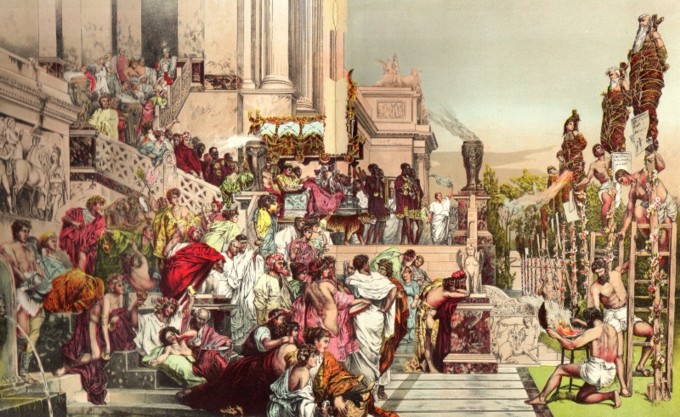
Nero's human torches of Christians

Nero’s human torches of Christians

No matter what interpretation you give each of these eleven verses, keep in mind the original audience.  These were persecuted Christians, many of whom may have known people – even had loved ones – that had been killed because of their faith in the Lord.  But they were holding on to that faith while looking toward heaven.  Here, as instructed by the Lord in Revelation 1:10-11, John gives them a grand glimpse of that splendor in the sort of literary imagery that was common to their day.  In the middle of the Lord’s battle with Satan, John gets that look at the throne of our Creator in heaven, and the worship that He worthily receives there.

Read or listen to audio of ESV version of this selection from this link.

/Bob’s boy
___________________
some images © V. Gilbert & Arlisle F. Beers

Please note: I did not design the reading plan that I am following in my blog.  All of my comments in this blog, however, are solely my responsibility.  When reading ANY commentary, you should ALWAYS refer first to the scripture, which is God’s unchanging and unfailing word. Reading schedules, as well as a link to the site where you can get the reading plan that I’m currently following for yourself can be found on the “Bible Reading Schedules” page of my website at http://graceofourlord.com.  For questions and help, please see the “FAQ” and “Summaries” pages there.

Hebrews 11 – By Faith

Shadrach, Meshach, and Abednego refused to bow to the Babylonian king's golden statue, so the king ordered them thrown into a fiery furnace. But God protected them (Daniel 3)

Shadrach, Meshach, and Abednego refused to bow to the Babylonian king’s golden statue, so the king ordered them thrown into a fiery furnace. But God protected them (Daniel 3)

Famous for the great description of faith in verse 1 (“faith is the assurance of things hoped for, the conviction of things not seen”), Hebrews 11 is (arguably most unfortunately) often called the “Hall of Faith” or the “Faith Hall of Fame.” Most of the accounts of people in this chapter are familiar to most people.  Some of the references are not so clear, and some maybe not so familiar.  Verse 33’s reference to those who “quenched the power of fire” is likely of Shadrach, Meshach, and Abednego from Daniel 2:49-3:30.  Verse 35’s women who “received back their dead by resurrection” is likely (among others) of Elijah raising the son of the widow of Zarephath (1 Kings 17:17-24) and Elisha raising the son of a Shunammite woman (2 Kings 4:18-37).  Verse 37’s gruesome deaths may refer to the extra-biblical accounts of the deaths of Jeremiah and Isaiah.

But this chapter is not an account of extraordinary men and women with supreme faith.  It is rather the story of ordinary men and women like you and me, who because of their faith in God, were blessed with the power and grace of His mighty hand.  It is the story of their endurance and perseverance through all manner of evil against them and bitter times, and how that endurance saw them through it by their faith.  It is the assurance that the recipients of this letter can persevere by their faith through the endurance the writer encouraged them to have in chapter 10.  It is the assurance that we can do it as well.  We have a better promise, through a better covenant, and if we are faithful, we will receive our reward – which will be the same perfect reward those mentioned in this chapter will ultimately receive (verses 39-40).

Read or listen to audio of ESV version of this selection from this link.

/Bob’s boy
___________________
some images © V. Gilbert & Arlisle F. Beers

Please note: I did not design the reading plan that I am following in my blog.  All of my comments in this blog, however, are solely my responsibility.  When reading ANY commentary, you should ALWAYS refer first to the scripture, which is God’s unchanging and unfailing word. Reading schedules, as well as a link to the site where you can get the reading plan that I’m currently following for yourself can be found on the “Bible Reading Schedules” page of my website at http://graceofourlord.com.  For questions and help, please see the “FAQ” and “Summaries” pages there.

Reading Revelation \ Week 50 summary posted

This week, we will start with one more chapter from the Epistle to the Hebrews, then we will finish the year with four chapters from the Book of Revelation.  We cannot do justice to the latter in just four days of reading,  but we can get an overview of how the book brings an ending to the story of the Bible we began in Genesis this year.  This book is intimidating to many people, and it certainly can be challenging.  It is also one of the most misunderstood and misinterpreted books of the Bible.  But it is not as difficult to read or to understand if one keeps in mind the context in which it was written.

The Angel Appears to John. The book of Revelat...

The Angel Appears to John. The book of Revelation. 13th century manuscript. British Library, London. (Photo credit: Wikipedia)

John wrote this epistle (yes Revelation is a letter) to Christians in the first century about first century times; and it was intended to strengthen their faith and hope during times that were extremely difficult – and promised to become even more so.  There was much Apocalyptic literature around in those times, and people were used to such imagery and symbolism.  But those same two things have led many scholars to come away with misguided ideas – such as the supposition that Jesus failed at a first attempt to establish an earthly kingdom, and is going to do it successfully (for a thousand years?) in the future.  The very idea of the Lord failing at anything is ludicrous, and shows a total misunderstanding of what the kingdom is in the first place.  Also, where many commentators and scholars go awry is in trying to give prophetic (and often even literal) meaning to every single detail.   Others want part of a passage full of imagery to be literal, and part to be figurative, so they can “pigeon-hole” it into the prophetic word they wish it to be.

For those interested in a more in-depth reading of Revelation, we would like to recommend a very well-written and informative book that aids in understanding Apocalyptic literature contained in such books of the Bible as Isaiah, Daniel, Ezekiel, Joel, and yes, Revelation in particular.  The name of the book is “Understanding Apocalyptic Literature (A Guide to the Book of Revelation)” by Mark Roberts.  It is an easy read – less than 100 pages; and this writer benefited enormously from reading it before tackling Revelation during last year’s full Bible reading schedule.  It is well worth the very low price (5.99 at the time of this writing), and can be purchased at this link.

It is helpful first to understand what Apocalyptic literature is.  The word Apocalypse is associated today with an “end of time” situation, the end of the world in particular.  But that is a view of the term that has been perverted over time.  Translated literally from Greek, it is “a disclosure of knowledge, hidden from humanity in an era dominated by falsehood and misconception.”

Page 289r: The Opening of the Fifth and Sixth ...

Page 289r: The Opening of the Fifth and Sixth Seals, Revelation 6:9-16 (Photo credit: Wikipedia)

There is tremendous value to the Book of Revelation for us today, as with all of God’s word.  But we must remember that as Revelation 1:1, and other passages of the book state, it was to show “the things that must soon take place.”  It does not predict things like the tragedy of 9-11, or even good things like the establishment of the United Nations, as some have claimed.  “Revelation does not address life in our times because that was of no interest or help to its original audiences… It promises God’s action soon” (Roberts, 2011).

So what understanding should one have after reading the Book of Revelation?  If you come away with the assurance that, although there is great evil in the world and it wants to thwart and utterly defeat the followers of Jesus Christ, that there is more to be hopeful for than just this earthly life, and that in the end, Jesus will be triumphant, then you have understood the message of the book as it was intended.

Works Cited

Roberts, Mark.  “Understanding Apocalyptic Literature” A Guide to the Book of Revelation.  Temple Terrace, Florida: Florida College Press, 2011.

Summing Up

Each weekend, I am now posting a small PDF of one week of chapter summaries (on the website’s “Summaries” page), current to the beginning of the previous week.  I have posted the summary for Week 50 (December Week 2) of the schedule I am following.  This short PDF document contains condensed comments about 1 Peter 1, 1 Peter 2, and Hebrews 3, 4, and 5, with hyperlinks to the ESV version of each chapter for listening or reading, and joins the summaries for other weeks already posted there.

/Bob’s boy
___________________
image © V. Gilbert & Arlisle F. Beers

Please note: I did not design the reading plan that I am following in my blog.  All of my comments in this blog, however, are solely my responsibility.  When reading ANY commentary, you should ALWAYS refer first to the scripture, which is God’s unchanging and unfailing word. Reading schedules, as well as a link to the site where you can get the reading plan that I’m currently following for yourself can be found on the “Bible Reading Schedules” page of my website at http://graceofourlord.com.  For questions and help, please see the “FAQ” and “Summaries” pages there.