
The following illustration of memory technique for this subject has been attributed to the “Stand to Reason” folks, e.g. Greg Koukl. We’re not sure this is exactly correct, as the pretext has been passed around for many years, but we’re happy to make that attribution nonetheless.
 If you are reading this blog, the chances are that you already believe that the Bible is the word of God. But what about those times when the subject comes up with our friends and acquaintances that aren’t so convinced? We know from 2 Timothy 2:16 that “All Scripture is breathed out by God and profitable for teaching, for reproof, for correction, and for training in righteousness.” But the world is full of people who believe the Bible is little more than myths and fairy tales.
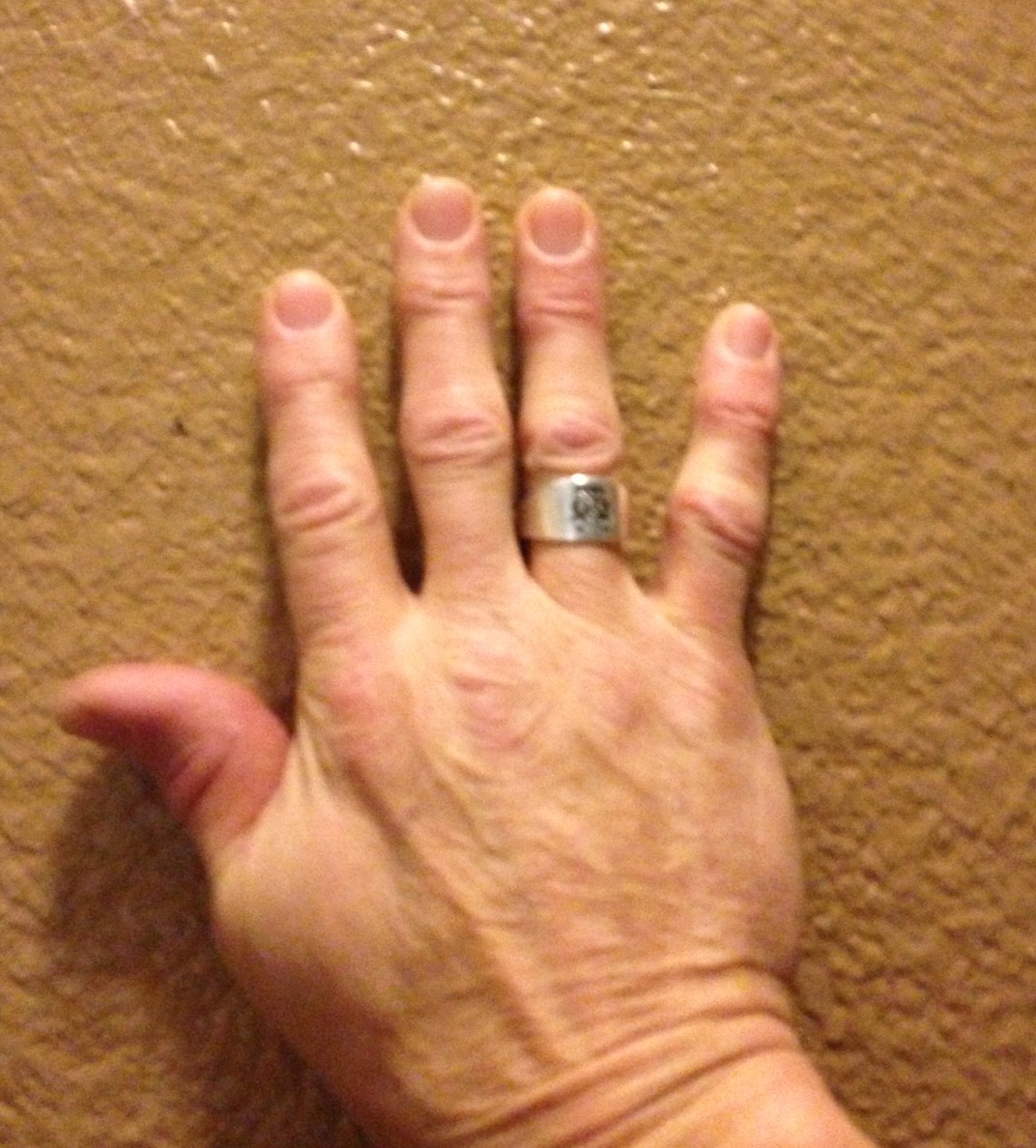
And rarely do we carry around for ready recollection a list of convincing arguments or evidences for what we ourselves know to be the truth of the matter. And it’s true also that we are not likely to be able to do that even with the following memory aids. But we should be prepared (1 Peter 3:15) to present some general truths for which we can later provide examples in evidence in a meaningful manner; and it’s as plain as the hand in front of our face.
 So let’s start with the pinkie. When you think of this digit, thing “P” for prophecy. The Bible has many examples of fulfilled prophecy. And none other than Moses gave us the measure of how easy it is to know true prophecy (Deuteronomy 18:22). How about some examples of those? Take Daniel chapter 8, which was written around 550 B.C and accurately predicted the rise of several empires to Belshazzar in interpretation of his dream. Validated as far as time goes by the historian Josephus, this prophecy predicted even the rise of Alexander the Great. For an expanded dissertation, please see this article at ApologeticsPress.org. Here’s more. Read about Ezekiel’s stunningly accurate prediction of the fate of the city of Tyre in this article. Here is an aerial photo of the site taken by the French military in 1934.
 This aerial view of Tyre vividly shows the land bridge that Alexander the Great created. Much silt and sand has accumulated over the years to widen the area of the original causeway.
Then there’s Isaiah’s prediction written almost two hundred years in advance of Cyrus’ conquest of Babylon (539 B.C.) – “The Prophecy of Cyrus.”
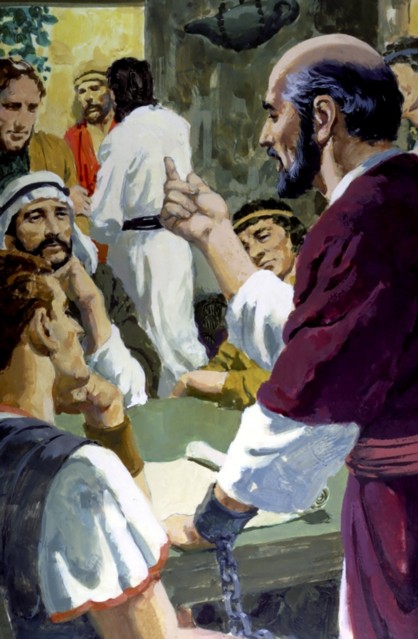
Paul was a prisoner in Rome, under house arrest, but he was free to preach the Gospel to many who came to listen (Acts 28:7-31).
 Next, we take the ring finger. This represents the unity of the Scriptures. Written over the course of thousands of years with diverse authorship, and in a variety of writing conditions such as battlefields, dungeons, prisons and caves, all showing pieces of the same puzzle and still when assembled together they all tell the same story of God’s plan for the salvation of mankind – none of which was fully even known by all of the authors. Kings, tax collectors, physicians, servants, shepherds, and warriors were all guided by the Spirit of the Lord to record His word in amazing unity. A substantial portion of the new Testament was even written by Saul of Tarsus, who before his conversion, was known to have hated the Lord Jesus so much at one time, that he was responsible for the persecution and cruel murders of many of his disciples. It is impossible for anyone to truly read and study this entire book (for it is one book, in the end) in honesty of heart and open-mindedness without realizing that this cannot be the work of mere men.
 Let’s not skip the big finger. The Bible has the answers to the important epistemological, moral, ethical, and scientific questions of our age and any age. No other religion and no other collection of writings can provide the answers to the big questions that have been on the minds of philosophers, educators, kings and yes, even clergy throughout the ages in the way that the Bible clearly reasons. Genesis provides the answers to the great questions of where the universe came from, how man fits into that universe, how things such as love beauty, laws of logic and other universals are possible.
What makes something right or wrong? Is it the mere acceptance of society concerning moral absolutes. If so, why should one society’s view of those morality or right and wrong over truly that of another – like say that of Nazi Germany? The Bible gives us the answers to these and other truths, such as uniformity of nature. We fully expect that scientific experiments can be repeated with accuracy because we know that certain physical things occur with expected results. But what gives us the reason to know and believe that this will continue to be the case? Our creator gives us the answers, as he has promised to “hold things together” (Colossians 1:17). And why do we recognize human dignity, have funerals, etc? Could it be because we recognize that man was indeed created in God’s image? To paraphrase the late Dr. Greg Bahnsen, without the Christian world view, whether you acknowledge it or not, you couldn’t make sense out of anything – you cannot provide the preconditions of intelligibility. What are laws of logic anyway, and how can an atheist account for them? They certainly are not just the way the human brain thinks because my gray matter is not the same as yours. And if one claims that they are conventions, then I should be able to claim my own conventions, and be just as logical.
 Next we have the index of the pointer finger that points the way to history, archaeology, and even scientific fore-knowledge (see this article for that information). Even scientists and archaeologists who do not believe the Bible is the word of God consult it when they want to know where to dig, and it proves itself historically time after time. Just type in “archaeology” in the search box on this page, and you will be rewarded with one example after another of this truth. If it is written in the Bible, and it is possible to validate or invalidate what is written, the bible has always been proven correct. The Bible is the only book that can look to historical evidence to support its unique theological claims. The New Testament documents are the best historical documents of the ancient world when approached using the standard cannons of historical research untainted by naturalistic presuppositions. Time and again even in recent decades, the Bible has been proven correct in such controversies as who Pilate actually was, whether he actually lived and what his title actually had been – and much more.
 Next, we move on to the thumb. In olden times, an emperor would give a thumb up or thumb down to spare or condemn a man. The Bible has the power to change lives no other medium, and no other way of life. Those life changes do not occur because of something we’ve done. God changes us in a way we never could change ourselves when we obey the Scriptures. This experience is universal, is the same everywhere in the world in which it is taught. It transcends all economic, ethnic, and even geographical boundaries.
Finally, we have the fist. The Bible is from God, who fights for us (the name of Israel actually translates “God fights”). He has protected His word for centuries. There are no “lost books” of the Bible. We have copies today that are older even than those we had 100 years ago, and there are no substantive differences in any of them. How does it compare with other historical manuscripts? The works of Plato, for example, written 427-347 B.C . The earliest copy we have today is about 900 A.D. Tacitus wrote around 100 A.D, and the earliest copy is about 1100 A.D. Only about 20 manuscripts exist. Homer’s “Iliad” was written about 900 B.C . The earliest copy from about 400 B.C. Number of manuscripts – 643. The New Testament was written 40-100 A.D. The earliest copy about 125 A.D. Number of manuscripts – 24,000. The Bible stands the test of time.
 No other book has been so thoroughly censored throughout the ages, yet it cannot be destroyed. Just as so-called “renowned” atheists of today disparage faith they cannot even comprehend, and make it their mission in life to destroy that faith in others, men throughout the ages have attempted to silence God’s word. Virtually all of the apostles were martyred for proclaiming the Lord Jesus crucified. From A.D. 303-311, the Roman emperor Diocletian, during the empire’s bloodiest persecution of Christians, ordered every Bible burned, thinking he could destroy Christianity by executing anyone who was apprehended in possession of a Bible. Just 25 years later, the Roman emperor Constantine ordered that 50 perfect copies of the Bible be made at government expense, and Christianity became the empire’s officially preferred religion. The French philosopher Voltaire, a skeptic who attempted to destroy the faith of many people boasted that within 100 years of his death, the Bible would disappear from the face of the earth. Voltaire died in 1728, but ironically, 50 years after his death, the Geneva Bible Society moved into his former house and used his printing presses to print thousands of Bibles. William Tyndale was executed by strangulation and burned at the stake for heresy for his crime of translating the Bible from Greek to English. Hundreds of years later, Joan Bridgman made the comment in the Contemporary Review that, “He (Tyndale) is the mainly unrecognized translator of the most influential book in the world. Although the Authorized King James Version is ostensibly the production of a learned committee of churchmen, it is mostly cribbed from Tyndale with some reworking of his translation.”
The Hammer and the Anvil
Last eve I passed beside a blacksmith’s door
And heard the anvil ring the vesper chime;
When looking in, I saw upon the floor,
Old hammers worn with beating years of time.
“How many anvils have you had,” said I,
“To wear and batter these hammers so?”
“Just one,” said he; then with a twinkling eye,
“The anvil wears the hammers out, you know.”
And so, I thought, the anvil of God’s Word,
For ages, skeptics blows have beat upon;
Yet, though the noise of falling blows was heard,
The anvil is unharmed – the hammers gone.
~ John Clifford
/Bob’s boy
___________________
image © V. Gilbert & Arlisle F. Beers
Please note: I did not design the reading plan that I am following in my blog. All of my comments in this blog, however, are solely my responsibility. When reading ANY commentary, you should ALWAYS refer first to the scripture, which is God’s unchanging and unfailing word. Reading schedules, as well as a link to the site where you can get the reading plan that I’m currently following for yourself can be found on the “Bible Reading Schedules” page of my website at http://graceofourlord.com. For questions and help, please see the “FAQ” and “Summaries” pages there.


 Bob's boy's Christianity blog