Matthew 3 – The Baptism of Jesus

Matthew chapter 3 begins with John the Baptist preaching in the Judean wilderness, telling everyone to “Repent, for the kingdom of heaven is at hand” – which Jesus Himself will proclaim as well.  John’s manner of dress in verse 4 is distinctly similar to that described of Elijah in 2 Kings 1:8, and that appearance, as well as the diet described, were common to the desert people, who would also be the poorer people of the land.  This new and increasingly well-known prophet was attracting much attention from the people, and the religious community (see John 1:19-38).  In verse 7, both Pharisees and Sadducees were coming out to watch his baptisms – no doubt with bad intentions toward him.

The Jordan River

The Jordan River (Photo credit: Wikipedia)

The word “Pharisee” means “separated one,” and they were the more popular of the Jewish sects of the times.  Many seemed very self-righteous, and imposed strict adherence to teachings and “rules” that were not commanded by God’s word.  The term “Sadducees” came from the sons of Zadok, who was the high priest during the days of David and Solomon (1 Kings 1:32-34).   They were known as aristocrats and political opportunists; and they had much political power. Baptism had been required of Gentiles converting to Judaism, but now John was preaching and performing baptism (immersing people in the river Jordan) for repentance – a term not only for remorse and confession, but also for “turning” one’s thinking, way of living, and even one’s mind around to different way.

As verse 3 confirms that John is the one prophesied in Isaiah 40:3,  he is preparing the way for Jesus to be revealed to Israel (John 1:31).  When Jesus comes to have John baptize Him, John is reluctant because he knows He needs no repentance.  But Jesus reminds him in verse 15 that it was God who had told John to start baptizing people in the first place, and how he would know that Jesus is the Son of God (John 1:31-34).  John gives first person account of that in those verses.

Read or listen to audio of ESV version of this selection from this link.

/Bob’s boy
___________________
some images © V. Gilbert & Arlisle F. Beers

Please note: I did not design the reading plan that I am following in my blog.  All of my comments in this blog, however, are solely my responsibility.  When reading ANY commentary, you should ALWAYS refer first to the scripture, which is God’s unchanging and unfailing word. Reading schedules, as well as a link to the site where you can get the reading plan that I’m currently following for yourself can be found on the “Bible Reading Schedules” page of my website at http://graceofourlord.com.  For questions and help, please see the “FAQ” and “Summaries” pages there.
Luke 2 – The Birth of Jesus Christ

Verses 1-20 deal with the miraculous birth of Jesus.   The circumstances of His birth, the lack of great wealth on the part of His parents, and even the people who this scripture places with Him all point to a King that was not just for the favored few.

The Roman emperor Caesar Augustus was born about 62 BC, and reigned from about 32 BC until his death in about 14 AD.  Joseph and Mary had gone to Bethlehem (the city of David, of whose lineage Joseph was descended) from Nazareth because of a decree by Caesar Augustus that all subjects of the Roman Empire must be registered for the purpose of taxation.    Of course, had there been no such decree, something else would have brought them there anyway because God’s prophets had already told us that the Messiah would be born in Bethlehem (see Micah 5:2).  Verse 7 says that Mary “gave birth to her firstborn son and wrapped him in swaddling cloths and laid him in a manger, because there was no place for them in the inn.”  Those were the signs that the angel of the Lord, who appeared to some shepherds, told them to look for when they went to see for themselves (verses 8-13).

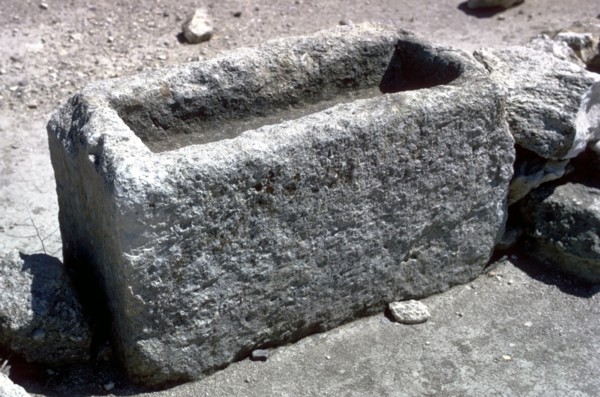
Stone manger from Bible times, perhaps similar to the one that cradled the baby Jesus in Bethlehem. The manger held food for animals.

At the end of eight days, he was circumcised (according to God’s commandment to Abraham in Genesis 17:12); and named Jesus – just as Mary had been told before He was conceived (Luke 1:31-32).  Verse 22 would be 33 days later in which they would have journeyed to Jerusalem (Leviticus 12:3-8) to make their sacrifice according to the Law given to Moses.  Joseph and Mary would not have the means to offer a lamb, but would obey the Law of the Lord.  We do not know anything else about the man Simeon in verses 25-35.  The scripture says that the Holy Spirit had revealed to him that he would see the Christ before he died, so he had obviously found favor with God.  As he held the savior in his arms, his words affirm that verse 10’s reference to “all people” means Jews and Gentiles alike as, in verse 32, he calls Jesus “a light for revelation to the Gentiles, and for glory to your people Israel.”  Verses 36-38 recount more of God’s revelations about Jesus to his humblest of servants.  The family then returned to Nazareth, where verse 40 tells us that Jesus grew in wisdom and “the favor of God was upon him.”

Naturally, as verse 41 says, his parents returned to Jerusalem every year to observe the Feast of the Passover.  On the occasion of verse 42, he was 12 years old.  This may be about 7 AD, as the best estimates (contrary to what many people might assume), are that He was born about 5 BC.   It seems more than a bit strange to us that Joseph and Mary did not notice he had remained behind in Jerusalem until they well on their way back to Nazareth (verses 43-44), but we must remember that such a journey during an important festival would have had them traveling with a large group of family and friends that trusted and cared for one another.  When they returned to Jerusalem to search for Him, they finally found Him in the Temple – and as verses 46-47 say, amazing the teachers there.  He demonstrates that He already knows He is the Son of God, as He says in verse 49 “Why were you looking for me? Did you not know that I must be in my Father’s house?”

Read or listen to audio of ESV version of this selection from this link.

/Bob’s boy
___________________
some images © V. Gilbert & Arlisle F. Beers

Please note: I did not design the reading plan that I am following in my blog.  All of my comments in this blog, however, are solely my responsibility.  When reading ANY commentary, you should ALWAYS refer first to the scripture, which is God’s unchanging and unfailing word. Reading schedules, as well as a link to the site where you can get the reading plan that I’m currently following for yourself can be found on the “Bible Reading Schedules” page of my website at http://graceofourlord.com.  For questions and help, please see the “FAQ” and “Summaries” pages there.

Luke 1 – The Birth of John the Baptist

Luke, who also wrote the Book Acts, addressed this book specifically to Theophilus, who was likely a government official (note the way that he refers to him in verse 3).   As it opens, it has been 400 years since Malachi prophesied.  John the Baptist’s father, Zechariah, was a priest.  In those days, the priests were separated in divisions, each of which served for a week – except during times of major feasts, such as Passover or the Feast of Tabernacles.    Zechariah was chosen by lot to serve in the Temple (verses 8-9).  Zechariah (as he and his wife Elizabeth were childless and advanced in years) had no doubt prayed often for a child.  An angel of the Lord appeared to him and told him they would have a son, and that his name would be John.  He was not to drink wine or strong drink, and would be filled with the Holy Spirit “even from his mother’s womb” (indicating he would then already be a human person), and would “make ready for the Lord” (verses 11-17).  Also, jumping ahead to (verses 41-44), upon Mary’s visit, Elizabeth’s baby leaped for joy in her womb.

Birth of St. John the Baptist, depicting Zecha...

Birth of St. John the Baptist, depicting Zechariah writing, “His name is John”. (Photo credit: Wikipedia)

Both as a rebuke for his unbelief, as well as the sign he asked for, the angel Gabriel told Zechariah that he would be unable speak until his son was born (verses 18-23), and  Elizabeth did conceive.  The “sixth month” in verse 26 refers to the sixth month of Elizabeth’s pregnancy.  At this time, the Angel Gabriel appeared to a virgin (Mary), who was pledged to be married to Joseph, who was of the house of David (verses 26-27).  The reference to Nazareth being a city of Galilee is confirmation that Luke’s intended audience was unfamiliar with the territory.  Mary is told that she would have a son and name him Jesus, that God would give him the throne of his father, David, and that “he will reign over the house of Jacob forever, and of his kingdom there will be no end” (verses 28-33). He also tells her of her relative, Elizabeth’s pregnancy.  Verses 46-55 are Mary’s praise to the Lord, and are known as Mary’s song.

When Elizabeth bore her child, the neighbors expected them to name him Zechariah after his father, but she insisted that he would be called John.  Not satisfied, they tried to get Zechariah to give them a sign (since he still could not speak).  He wrote on a tablet that “his name is John,” and immediately he could speak again – because then all that the angel of the Lord had said to him previously had come to pass.  Verses 65-66 indicate that the word of this miraculous birth and Zechariah’s change became famous very quickly.  Zechariah’s prophecy in verses 67-79 verify that the fulfillment of God’s promise to his people through Abraham – and the Messianic age – had indeed begun!

Side note: Excavations at Nazareth by archaeologists have located tombs, olive presses and other indications that it was a small agricultural community.  The most interesting discovery of the past few years is that of a first-century house there.  A very good article on this discovery can be found at this article at BiblePlaces.com.

Read or listen to audio of ESV version of this selection from this link.

/Bob’s boy
___________________
some images © V. Gilbert & Arlisle F. Beers

Please note: I did not design the reading plan that I am following in my blog.  All of my comments in this blog, however, are solely my responsibility.  When reading ANY commentary, you should ALWAYS refer first to the scripture, which is God’s unchanging and unfailing word. Reading schedules, as well as a link to the site where you can get the reading plan that I’m currently following for yourself can be found on the “Bible Reading Schedules” page of my website at http://graceofourlord.com.  For questions and help, please see the “FAQ” and “Summaries” pages there.
John 1 – The Word Became Flesh

The message of the gospel of John can be summed up in one statement – “Jesus is the son of God.”  His gospel is full of passages that illustrate that fact, but nowhere is it made clearer than in the language of chapter 1:1-4.  John leaves no doubt, as it begins with an echo of the opening of the Book of Genesis:

“In the beginning was the Word, and  the Word was with God, and the Word was God.
 He was in the beginning with God.
 All things were made through him, and without him was not any thing made that was made.
 In him was life, and the life was the light of men.”

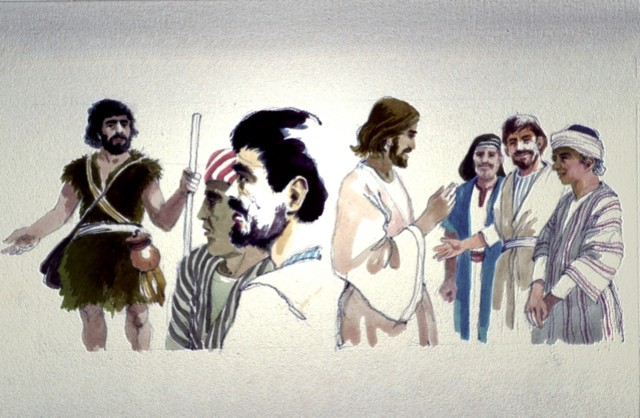
Andrew, Peter’s brother, heard John the Baptist speak. They became disciples of Jesus. Peter, along with James and John formed the inner circle of Jesus’ disciples.

This reference to Jesus as “the Word” has meaning throughout the Old Testament.  Two of many examples are seen as God brings things into existence by His very Word (Genesis 1:3), or accomplishes whatever His purpose may be by His Word, which He sends out (Isaiah 55:10-11).  This is used by John again in his 1st epistle (1 John 1:1-3), as he adds the fact that he and the other apostles had physical contact with this Word, the Lord Jesus Christ.  The Word is also referred to as living and active, for example in Hebrews 4:12.  Jesus confirms that He was with God in the beginning in John 17:5; and John specifically identifies the word in verses 14-17:

“And the Word became flesh and dwelt among us, and we have seen his glory, glory as of the only Son from the Father, full of grace and truth.
(John bore witness about him, and cried out, “This was he of whom I said, ‘He who comes after me ranks before me, because he was before me.’”)
For from his fullness we have all received, grace upon grace.
For the law was given through Moses; grace and truth came through Jesus Christ. “

John moves swiftly from this powerful and awesome account to the testimony of John the Baptist.  In verses 29-34, this John identifies Jesus as the “Lamb of God” – which they would not yet fully understand – and gives evidence of his own special revelation that he received from God, concerning His son.  In verses 19-23, John the Baptist,appearing before the priests and then the Pharisees, denied that he himself was the Christ, or Elijah.  “The Prophet” that they ask him about could be  a misunderstanding by them of the promise of a “new prophet like me” to lead them, which Moses spoke of in Deuteronomy 18:15-16.  He leaves no doubt in verse 23 though, that his baptism is to prepare the way for the Messiah, as he clearly states that he is the one referred to in Isaiah 40:3.

The chapter ends with Jesus calling the first of His disciples, some of which He undoubtedly already had a relationship with.  But Nathanael marvels that he knows him, and realizes that He truly is the Son of God (verses 48-49) because of it.  Jesus tells them that they will see much greater things to come. Verse 51 is a very clear reference to Jacob’s dream in Genesis 28:12.

Read or listen to audio of ESV version of this selection from this link.

/Bob’s boy
___________________
some images © V. Gilbert & Arlisle F. Beers

Please note: I did not design the reading plan that I am following in my blog.  All of my comments in this blog, however, are solely my responsibility.  When reading ANY commentary, you should ALWAYS refer first to the scripture, which is God’s unchanging and unfailing word. Reading schedules, as well as a link to the site where you can get the reading plan that I’m currently following for yourself can be found on the “Bible Reading Schedules” page of my website at http://graceofourlord.com.  For questions and help, please see the “FAQ” and “Summaries” pages there.

Beginning the New Testament \ Week 29 summary posted

Jesus’ earthly story begins in the town of Bethlehem in the Roman province of Judea.

Last week, we wrapped up our reading of the Old Testament in this year-long study of the Bible as a complete story.  This week, we begin our reading in the New Testament with John chapter 1.  Why start there instead of in Matthew?  Don’t worry, we will look at the life of Jesus in chronological order.  John 1 is God’s word about Jesus, as to who He really is.  Next in Luke 1, we will read the account of the birth of John the Baptist, and the promise of the birth of Jesus.  Then, we will pick up the story of Jesus and his ministry in Matthew, as we continue the story of God’s plan for our salvation.

Summing Up

Each weekend, I am now posting a small PDF of one week of chapter summaries (on the website’s “Summaries” page), current to the beginning of the previous week.  I have posted the summary for Week 29 (July Week 3) of the schedule I am following.  This short PDF document contains condensed comments about Ezra 1, 3, 6, Nehemiah 1, and Nehemiah 2, with hyperlinks to the ESV version of each chapter for listening or reading, and joins the summaries for other weeks already posted there.

/Bob’s boy
___________________
image © V. Gilbert & Arlisle F. Beers

Please note: I did not design the reading plan that I am following in my blog.  All of my comments in this blog, however, are solely my responsibility.  When reading ANY commentary, you should ALWAYS refer first to the scripture, which is God’s unchanging and unfailing word. Reading schedules, as well as a link to the site where you can get the reading plan that I’m currently following for yourself can be found on the “Bible Reading Schedules” page of my website at http://graceofourlord.com.  For questions and help, please see the “FAQ” and “Summaries” pages there.
Malachi 4 – The Great Day of the Lord

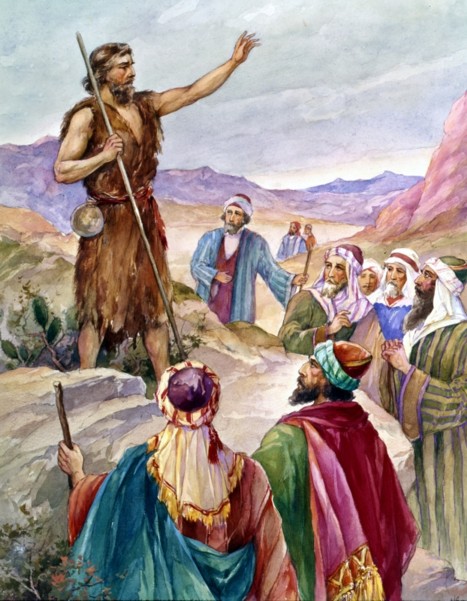
Malachi 4 continues the message begun in previous chapters of Malachi.  The people have returned from captivity, and the problem of idol worship that has plagued them ever since the time of their deliverance from Egypt in the Exodus appears now to be under control.  But they are spiritually bankrupt.  Even their priests are rebuked for offering sacrifices of diseased animals (Malachi 1:1-2:3).  The “day of the Lord” is coming – a theme repeated in the books of the prophets, which always refers to a time when God will take some sort of decisive action – as he did with the destruction and captivity previously.  But this time, the action will be glorious for the righteous (verse 2).  In verses 5-6, as previously stated in Malachi 3:1, He will send a prophet to prepare the way for the Messiah.  That prophet will be John the Baptist, and is confirmed by Jesus in Mark 9:11-13 and in Matthew 11:10-14.

Read or listen to audio of ESV version of this selection from this link.

/Bob’s boy
___________________
some images © V. Gilbert & Arlisle F. Beers

Please note: I did not design the reading plan that I am following in my blog.  All of my comments in this blog, however, are solely my responsibility.  When reading ANY commentary, you should ALWAYS refer first to the scripture, which is God’s unchanging and unfailing word. Reading schedules, as well as a link to the site where you can get the reading plan that I’m currently following for yourself can be found on the “Bible Reading Schedules” page of my website at http://graceofourlord.com.  For questions and help, please see the “FAQ” and “Summaries” pages there.

Nehemiah 13 – Nehemiah’s Final Reforms

When Nehemiah had asked the king for leave to go to Jerusalem, Artaxerxes had made him give a time when he would return to him.  In verse 6, we find that he had done so in the thirty-second year of the king’s reign – a journey that would take far more than a month to make, in each direction.  And he well may have been gone for several years.  When he came back to Jerusalem, he found that Tobiah the Ammonite had been given a chamber in the house of God (verse 4 and 7)!  Nehemiah angrily threw all of his possessions out, and had the chambers cleansed and restored (verses 8-9).

English: Building the Wall of Jerusalem; as in...

English: Building the Wall of Jerusalem; as in Nehemiah; illustration from Sunrays quarterly (Photo credit: Wikipedia)

He also found that the people had not been giving the Levites their portion as commanded (verses 10-13), and that the Sabbath was being profaned (verses 15-22).  Nehemiah promptly sets those things right, appointed treasurers over the storehouses, set guards at the city gates before the Sabbath to keep people from bringing loads of wares in, and warned those lodging outside the city in wait they he would “lay hands on them” if they continued to do so.  Nehemiah was fed up.  The Lord had restored their Temple and the Wall and they were out of captivity – now they were sinking deeply into sin again!  Then, in verses 23-28, we find that the people were again marrying the foreigners and idol-worshipers that had been forbidden in the Law.  In Ezra 9 and 10, we find Ezra confronting this problem (see Ezra 9:1-2).  Apparently, his measures had not been effective.  Notice that in Ezra 9:3, Ezra tore his garments and pulled out his hair when he found out about it.  In verse 25 of this chapter, Nehemiah, upon learning of it, confronted the guilty and beat them and pulled their hair out!

In verse 30-31, Nehemiah ends the book on a positive note, listing the reforms he had made when he returned.  He was merely reporting a better condition of the state of affairs, and asking God to remember him for the good he had done.  Nehemiah always gave the glory to the Lord  – especially for the rebuilding of the wall.

Read or listen to audio of ESV version of this selection from this link.

/Bob’s boy
___________________
some images © V. Gilbert & Arlisle F. Beers

Please note: I did not design the reading plan that I am following in my blog.  All of my comments in this blog, however, are solely my responsibility.  When reading ANY commentary, you should ALWAYS refer first to the scripture, which is God’s unchanging and unfailing word. Reading schedules, as well as a link to the site where you can get the reading plan that I’m currently following for yourself can be found on the “Bible Reading Schedules” page of my website at http://graceofourlord.com.  For questions and help, please see the “FAQ” and “Summaries” pages there.
Nehemiah 8 – Ezra Reads the Law

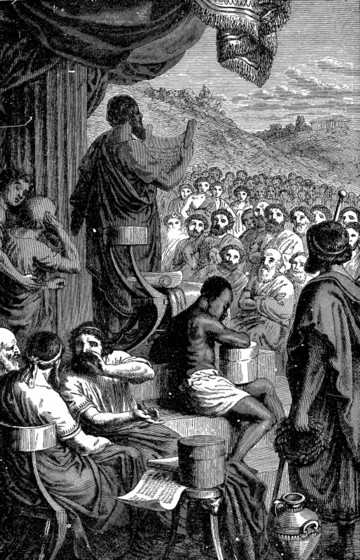
In Nehemiah chapter 8, Ezra the priest is summoned to read the Book of the Law of God at the Water Gate (possibly an entry into the Gihon Spring – the main water source outside the city wall), for which this passage has become known as the Watergate Revival.  It was read from early morning to mid-day, with the people gathered around in reverence; and the Levites went around explaining as needed (as was their job – see Deuteronomy 33:8-10), so that it was “clearly” understood (verses 7-8).   It was a very special and emotional occasion, and likely the first time it had been read – particularly in its entirety – to most of them.  In hearing the Law, the people would hear an account of the sins that had led to captivity.  And the completion of the wall, while striking fear in the hearts of others (Nehemiah 6:16), was an awesome event for them.  Ezra and Nehemiah, therefore,  tell the people not to weep, but to rejoice – as this day was holy to the Lord (verses 9-10).

As this was the seventh month, it was the perfect time to re-institute the Feast of Tabernacles – or “Feast of Booths” (Leviticus 23:34 and Leviticus 23:39-43), and so they gathered the commanded material and built themselves the booths (or temporary shelters) that they lived in for the entire time of the feast observance – and heard from the Law of God daily.

How blessed we are to have God’s word available to us so readily, and in so many forms!

Read or listen to audio of ESV version of this selection from this link.

/Bob’s boy
___________________
some images © V. Gilbert & Arlisle F. Beers

Please note: I did not design the reading plan that I am following in my blog.  All of my comments in this blog, however, are solely my responsibility.  When reading ANY commentary, you should ALWAYS refer first to the scripture, which is God’s unchanging and unfailing word. Reading schedules, as well as a link to the site where you can get the reading plan that I’m currently following for yourself can be found on the “Bible Reading Schedules” page of my website at http://graceofourlord.com.  For questions and help, please see the “FAQ” and “Summaries” pages there.
Nehemiah 6 – Conspiracy Against Nehemiah

Having had their plans to derail the rebuilding of the wall thwarted, Sanballat, Tobiah, and their allies conspire to ambush and kill Nehemiah.  Several attempts are made to lure him into their trap, but he would not fall for it.  In desperation Sanballat sends a messenger with a letter (and pretending to speak for the king), speaking of rumors of Nehemiah trying to usurp the king’s authority and claim kingship for himself.  The ruse is intended to lure him to speak to Sanballat personally – at the king’s insistence (verses 5-7).  Nehemiah knows that Sanballat is lying and says so in so many words – then just prays for more strength (verses 8-9).

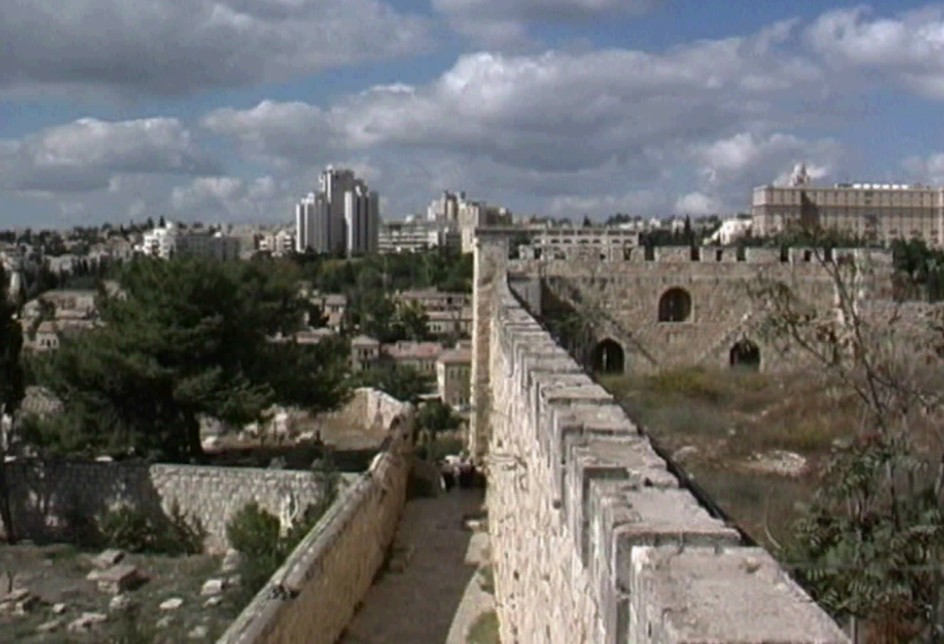
Jerusalem old city walls

We do not know much about Shemaiah, first mentioned in verse 10, or what the meaning is exactly of him being confined to his house – or what exactly had led  Nehemiah there.  It seems likely that he had been a priest.  But Nehemiah realized that he was not speaking from God, but rather was working for the enemy when he tried to get Nehemiah to go into the Temple (verses 10-13).  Nehemiah was not a priest, and so he knew that he was forbidden to go in (for just one example of scripture, refer to Numbers 16:39-40).  Nehemiah responds once again with prayer to God, asking for His justice in the matter (verse 14).

Only 52 days after it was started, the wall was finished (verse 15); and this amazing feat being accomplished in so short a time brought fear to the nations surrounding them, because they perceived that it only could have been accomplished with the help of God.  If God had helped them to do that, how else might He help them in gaining more power that could threaten them?  Verses 17-19 make clear that many of the nobles in Judah were guilty in this matter; and many sent letters to Tobiah and reported on Nehemiah to him.  So Tobiah now was sending letters to Nehemiah to intimidate him.

Read or listen to audio of ESV version of this selection from this link.

/Bob’s boy
___________________
some images © V. Gilbert & Arlisle F. Beers

Please note: I did not design the reading plan that I am following in my blog.  All of my comments in this blog, however, are solely my responsibility.  When reading ANY commentary, you should ALWAYS refer first to the scripture, which is God’s unchanging and unfailing word. Reading schedules, as well as a link to the site where you can get the reading plan that I’m currently following for yourself can be found on the “Bible Reading Schedules” page of my website at http://graceofourlord.com.  For questions and help, please see the “FAQ” and “Summaries” pages there.

Nehemiah 4 – Opposition to the Work

Sanballat and Tobiah were jeering and trying to make mockery of the rebuilding efforts (verses 1-3).  But Nehemiah just prayed, and left it to God to deal with them.  Verse 6 shows that great progress was being made on the wall, and verses 7-8 allow that the opposition was growing because of the progress.  Nehemiah led them in prayer, and they set a guard by night and day.  Verse 10 shows that the overwhelming size of the effort to rebuild the wall among this danger was discouraging some of the people, and their lives were being threatened (verse 11).  This prompted the people who lived nearby to try to get them to abandon the work and come home (verse 12).

Nehemiah rebuilding Jerusalem

Nehemiah rebuilding Jerusalem (Photo credit: Wikipedia)

But Nehemiah showed great leadership, standing firm and telling them not to be afraid, setting people by their own clans armed with swords and spears (verses 13-14).  The work continued with some men building with one hand while having the other on their weapons.  Then Nehemiah had half of the people working, and half of them standing guard over them (verses 21-23).  In verse 20, Nehemiah (aware of their vulnerability being stretched out along the wall) has them ready to sound a trumpet if attacks comes at some point, so everyone could rally to their defense at that location.  This was God’s work, and it would get done!

Read or listen to audio of ESV version of this selection from this link.

/Bob’s boy
___________________
some images © V. Gilbert & Arlisle F. Beers

Please note: I did not design the reading plan that I am following in my blog.  All of my comments in this blog, however, are solely my responsibility.  When reading ANY commentary, you should ALWAYS refer first to the scripture, which is God’s unchanging and unfailing word. Reading schedules, as well as a link to the site where you can get the reading plan that I’m currently following for yourself can be found on the “Bible Reading Schedules” page of my website at http://graceofourlord.com.  For questions and help, please see the “FAQ” and “Summaries” pages there.