
This chapter is a favorite for skeptics to cite as showing God to be ruthless, rather than the God of love that we know Him to be. And indeed, the idea of having an entire people obliterated is disturbing to many of us. Two things must be remembered by us as we read of such. First, God is our sovereign Lord and creator; and He decides what is best with His knowledge for which our own understanding is insufficient (Proverbs 3:5-7). Secondly, as with Jericho and other cases in the land of Canaan, these are not innocent people who had never been given an opportunity to repent. (Note that when Samuel Kills Agag in verse 33, his statement that Agag’s own sword has made women childless is literal). Ages of wicked savagery and the reality that survivors would corrupt others (Deuteronomy 7:1-5) demanded obeying this command of Lord. See post on “The Fall of Jericho.”
 This chapter shows us the character flaws of Saul. He was the military leader the people had wanted, but it was all about Saul – and never about the Lord; and though victorious, his leadership was often a great model for what a leader should not do. After God had led the people out of Egypt, Amelek attacked them the first time without provocation (Exodus 17:8); and when they were defeated, God told Moses in Exodus 17:14 “…that I will utterly blot out the memory of Amalek…” So Samuel gives Saul God’s instructions in verses 2-3 of this chapter not to spare even the oxen and other livestock. He is victorious, but he spares the Amelekite king Agag and the best of the livestock and brings them back.
When God tells Samuel in verse 10 of what Saul has done and of His rejection of Saul as king, Samuel is grieved and very angry with Saul. Worse, he finds out along the way that Saul has built a monument to himself (verse 12). When he arrives, he lets Saul have it with both barrels. Saul at first tries to blame the people (verses 15, 21), but Samuel is having none of it. Not only does he know better, but as he reminds Samuel, as king, he is supposed to be a leader. Saul’s final admission of sin is half-hearted, and as Samuel turns from him, Saul desperately grabs his robe and tears it. At this point, Samuel lets him know that his kingdom is being torn from him. But Saul seems to care more about what the people think, than what God thinks of him (verse 30).
It would be the last time Samuel will see Saul until he dies, and he grieved (verse 35).
Read or listen to audio of ESV version of this selection from this link.
/Robert
___________________
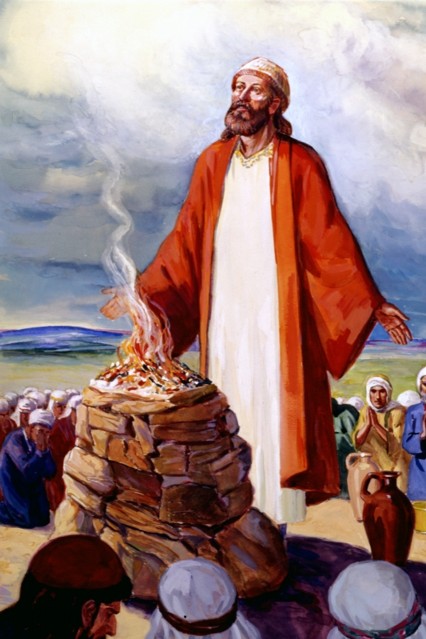
some images © V. Gilbert & Arlisle F. Beers
Please note: I did not design the reading plan that I am following in my blog. All of my comments in this blog, however, are solely my responsibility. When reading ANY commentary, you should ALWAYS refer first to the scripture, which is God’s unchanging and unfailing word. Reading schedules, as well as a link to the site where you can get the reading plan that I’m currently following for yourself can be found on the “Bible Reading Schedules” page of my website at http://graceofourlord.com. For questions and help, please see the “FAQ” and “Summaries” pages there.

 Bob's boy's Christianity blog