Whole Armor of God- Ephesians 5-6

In chapter 5 of Paul’s letter to the saints at Ephesus, he spends some time talking to them about the dangers of sexual immorality, warning them not to fall into the traps and temptations of such behavior. He also warns us all not to let anyone deceive us with empty words about such things. It is easy today to find one who represents himself as an evangelist, who will use his own rhetoric to placate those who wish to think of themselves as Christians, but do not want to give up the carnal pleasures that Paul refers to here.

Paul could not be any plainer about that than in this chapter, when he says that “everyone who is sexually immoral or impure, or who is covetous (that is, an idolater), has no inheritance in the kingdom of Christ and God.” Those “works of the flesh” are the very things that Christians must crucify from their lives (Galatians 5:24).
armor_230115Husbands are sometimes quick to run to Ephesians 5:22-24 to refer to the relationship between husband and wife. And Christians understand that very well. But all to often, it is overlooked that much more text was devoted to the sort of love a husband is supposed to have for his wife in verses 25-32. Being one flesh, a man must love his wife enough to die for her, as Jesus loved the church.

Paul closes the letter in chapter 6, admonishing children to obey their parents, and bondservants to obey their earthly masters. This sort of servitude, common in that era, has a place for another discussion that we may have in another blog. But for now, it is worth saying that whatever our station in life is, God expects us to do it with dignity and the sort of diligence and respect that does honor to our Lord Jesus.

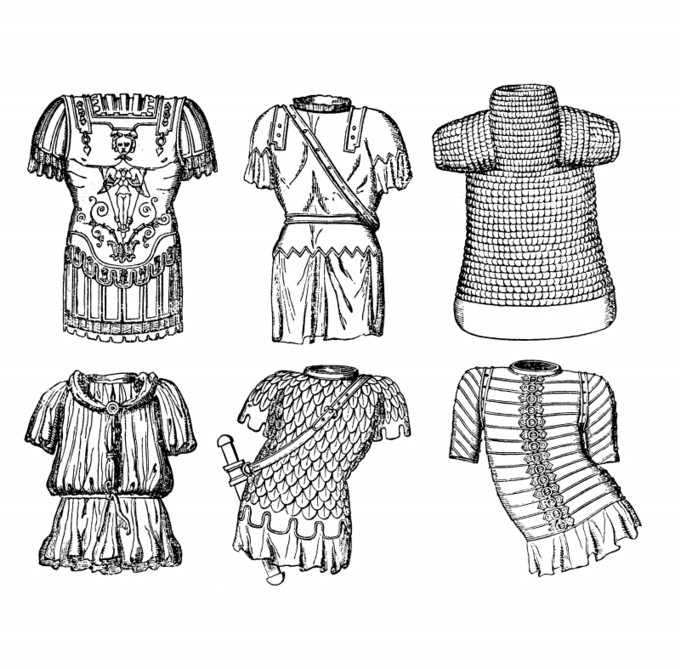
The “whole armor of God,” that Paul tells us we must put on in verses 10-20 lists many of the godly tools that we have to be able to live our lives with the ability to defeat the temptations that Satan throws our way as obstacles and snares to try to defeat us and turn us away from salvation. Truth and righteousness are listed first — and there are others. But most important are earnest prayer and supplication.

/Bob’s boy

Bible Reading Schedule for this month
Click links below to read or listen to audio of one of this week’s chapters in Ephesians and Philippians

Eph. 4, Eph. 5, Eph. 6, Phil. 1, Phil. 2

___________________

some images © V. Gilbert & Arlisle F. Beers

Please visit this site’s menu item “The Author’s Books” for info on the author’s books, website, and Facebook page.

All of my comments in this blog are solely my responsibility. When reading any commentary, you should always refer first to the scripture, which is God’s unchanging and unfailing word.




One Faith – Ephesians 4

In Ephesians chapter four, Paul “preaches” in his letter about unity in the body of Christ, saying there is only one body and one Spirit, one hope, one Lord, one faith, one baptism, one God and Father of all. In other words, as Christians we are all together in a unified effort of service to the Lord and in attempting to bring others with us to heaven.

When Jesus prepared to ascend into heaven, His disciples followed Him to the Mount of Olives (Matthew 28:16-20; Mark 16:15-20; Luke 24:44-53; Acts 1:9-12).

When Jesus prepared to ascend into heaven, His disciples followed Him to the Mount of Olives (Matthew 28:16-20; Mark 16:15-20; Luke 24:44-53; Acts 1:9-12).

Paul talks about Jesus ascending “far above all the heavens.” I am reminded of some astronauts decades ago. Some, upon seeing the earth, had their faith increased. Others were cynical about not seeing heaven. They would have done well to not “lean upon their own understanding.” The physical and temporal universe God created for us is not a part of His dwelling place. He said that He “gave the apostles, the prophets, the evangelists, the shepherds and teachers, to equip the saints for the work of ministry, for building up the body of Christ. And that is our job even today, since Peter said that we are “a royal priesthood” (1 Peter 2:9).

Although Peter is addressing Gentiles, he tells them (and us) that we must not “walk as the Gentiles do.” Those who have alienated themselves from God have done so out of ignorance and the hardness of their hearts. They have become callous, and given themselves up to sensuality and are “greedy to practice every kind of impurity.” He then lists many ways in verses 25-32 that we are to show kindness and purity to the world so that our behavior can give grace to the world.

/Bob’s boy

Bible Reading Schedule for this month
Click links below to read or listen to audio of one of this week’s chapters in Ephesians and Philippians

Eph. 4, Eph. 5, Eph. 6, Phil. 1, Phil. 2

___________________

some images © V. Gilbert & Arlisle F. Beers

Please visit this site’s menu item “The Author’s Books” for info on the author’s books, website, and Facebook page.

All of my comments in this blog are solely my responsibility. When reading any commentary, you should always refer first to the scripture, which is God’s unchanging and unfailing word.


The Dividing Wall – Ephesians 2-3

Paul continues his letter to the Christians at Ephesus in Ephesians chapter 2, telling them that, like all Christians, they have been saved by grace, which is a gift from God, and not by anything that they have done. In verses 11-22, he talks about how Gentiles had been “alienated from the commonwealth of Israel and strangers to the covenants of promise.” But now they have been brought near by the blood of Jesus Christ “who has made us both one and has broken down in his flesh the dividing wall of hostility by abolishing the law of commandments…”

Jerusalem, model city, Herod's Temple, court of the Gentiles.

Jerusalem, model city, Herod’s Temple, court of the Gentiles.

This “dividing wall of hostility,” figurative in one respect, alludes to an actual wall at the temple that separated the Court of the Gentiles from the inner courts. Of this, the historian Josephus wrote:

“Proceeding across this (the open court towards the second court of the temple, one found it surrounded by a stone balustrade, three cubits high and of exquisite workmanship; in this at regular intervals stood slabs giving warning, some in Greek, others in Latin characters, of the law of purification, to wit that no foreigner was permitted to enter the holy place, for so the second enclosure of the temple was called.” (cf. Jos. War 6, ii, 4)

In chapter 3, Paul calls himself a “prisoner for Christ Jesus,” reminding us of the fact that this was one of the letters that he wrote from prison. He speaks of the “Mystery of Christ,” and “the mystery hidden for ages in God.” And he tells them that the mystery is “that the Gentiles are fellow heirs, members of the same body, and partakers of the promise in Christ Jesus through the gospel.”

His prayer in the closing verses is for God to grant them “…strength to comprehend with all the saints what is the breadth and length and height and depth, and to know the love of Christ that surpasses knowledge, that you may be filled with all the fullness of God.”

The “love of Christ that surpasses knowledge” is not an empty metaphor. We may have an inkling of Christ’s love for us because of our knowledge of what He gave of Himself in sacrifice. But what kind of love must He have for us to be willing to endure such an ordeal so that even those who curse Him in this world can have hope?

Bible Reading Schedule for this month
Click here to read or listen to audio of this week’s chapters in Galatians and Ephesians

/Bob’s boy
___________________

some images © V. Gilbert & Arlisle F. Beers

Please visit this site’s menu item “The Author’s Books” for info on the author’s books, website, and Facebook page.

All of my comments in this blog are solely my responsibility. When reading any commentary, you should always refer first to the scripture, which is God’s unchanging and unfailing word.


The Riches of His Grace – Eph 1

Paul loves the church at Ephesus, and that fact is no more evident than in his letter to the Ephesians. In chapter one, he speaks to them of the saving grace of Jesus:

In him we have redemption through his blood, the forgiveness of our trespasses, according to the riches of his grace, which he lavished upon us, in all wisdom and insight making known to us the mystery of his will, according to his purpose, which he set forth in Christ as a plan for the fullness of time, to unite all things in him, things in heaven and things on earth.

John the Baptist baptized Jesus in the Jordan River because Jesus told him to do it -- Matthew 3: 13-17.

John the Baptist baptized Jesus in the Jordan River because Jesus told him to do it — Matthew 3: 13-17.

But it is verses 4-5 that cause much controversy and misunderstanding, when really the message is simple. The verses say:

…he chose us in him before the foundation of the world, that we should be holy and blameless before him. In love he predestined us for adoption as sons through Jesus Christ, according to the purpose of his will…

Some take this to mean that God chose certain specific people to be saved and certain specific people to be lost. Not only does that interpretation misrepresent these verses, it also misrepresents God’s will. If that interpretation is correct, then 1 Timothy 2:4 is a lie, and God cannot lie (Numbers 23:19, Titus 1:2). God would rather have everyone saved. Would He then decide, before they even lived, those that would be lost? Nonsense!

It simply meant that it was always God’s plan that all those Jew or Gentile who were crucified with Jesus in baptism would be adopted, according to the purpose of His will.


Bible Reading Schedule for this month
Click here to read or listen to audio of this week’s chapters in Galatians and Ephesians

/Bob’s boy
___________________

some images © V. Gilbert & Arlisle F. Beers

Please visit this site’s menu item “The Author’s Books” for info on the author’s books, website, and Facebook page.

All of my comments in this blog are solely my responsibility. When reading any commentary, you should always refer first to the scripture, which is God’s unchanging and unfailing word.


Walking With the Spirit – Galatians 5-6

As we reach the last two chapters of Paul’s letter to the Galatians, the subject matter in the first half of chapter five is circumcision because that is one of the tenants of the doctrine that they have been deceived about. He then moves in verses 16-25 to “walking with the Spirit.” The contrast he gives is with the works of the flesh because, as he says, they are in opposition to the Spirit. He names some of the works of the flesh:

…the works of the flesh are evident: sexual immorality, impurity, sensuality, idolatry, sorcery, enmity, strife, jealousy, fits of anger, rivalries, dissensions, divisions, envy, drunkenness, orgies, and things like these. I warn you, as I warned you before, that those who do such things will not inherit the kingdom of God.

Fruit of the SpiritIt is certainly not a comprehensive list, but entire sermons could be preached concerning each of those listed. The contrasting fruits of the Spirit are then given:

the fruit of the Spirit is love, joy, peace, patience, kindness, goodness, faithfulness, gentleness, self-control; against such things there is no law. And those who belong to Christ Jesus have crucified the flesh with its passions and desires.

Belonging to Christ, we have crucified the flesh with its passions and desires. But what does that mean, really? Are we not tempted by such passions? And in giving in to those passions, do we not belong to Christ? WE shall be tempted, and we shall sin. We know that to be true because the Bible tells us that no one is without sin. With all good intentions, I will not go through the rest of my life without sinning. But by putting on Christ in baptism, I have renounced that way of life, and I will strive each day to walk with the Spirit.

Those nine “fruits” of the Spirit are characteristics that we must put to work consciously, so that they will most certainly choke out the works of the flesh from our lives.

Paul close the letter in chapter 6 with a final word about the law and circumcision. But before he does, he gives them other important admonishment. “Bear one another’s burdens,” he said. It is one of many reminders the Bible gives that everyone who thinks they can serve God without “going to church.” should heed. It is not about you. It is not even about just your relationship with the Lord. We are commanded to encourage one another in fellowship with the Lord, and bear each other’s burdens. Those things do not happen in the right way from one’s own living room.

Bible Reading Schedule for this month
Click here to read or listen to audio of this week’s chapters in Galatians and Ephesians

/Bob’s boy
___________________

some images © V. Gilbert & Arlisle F. Beers

Please visit this site’s menu item “The Author’s Books” for info on the author’s books, website, and Facebook page.

All of my comments in this blog are solely my responsibility. When reading any commentary, you should always refer first to the scripture, which is God’s unchanging and unfailing word.


Abraham’s Offspring – Gal 3-4

Paul speaks harsh to the Galatians he addresses when chapter 3 begins, calling them foolish. They had received the Spirit and now they were questioning the gospel. Did they think they had received it by works of the law? Paul is still working on the doubts and fears that these false prophets had instilled in them that they were under the law. And if they were Gentiles, their only hope in that case would be to become Jews first.

bearing the crossPaul makes his best case in this chapter when he cites Genesis 12:7, where God made the promises to Abraham and his offspring. He did not say “offsprings,” as to mean many. Paul says that God was talking about Jesus as his offspring. He also tells them that God had told Abraham that in him, all nations would be blessed. It is this promise that means through Jesus Christ, we are all Abraham’s offspring. The law, he said, had come after the promises to Abraham, and could not nullify them:

For as many of you as were baptized into Christ have put on Christ. There is neither Jew nor Greek, there is neither slave nor free, there is no male and female, for you are all one in Christ Jesus.

And in chapter four, as he continues to confirm this, he addresses in verse 17 those false teachers who have endeared themselves to them. He tells them their true motives: “they make much of you, but for no good purpose. They want to shut you out, that you may make much of them.” They were not teaching them these things to bring them into the kingdom. They wanted to shut them out!

Bible Reading Schedule for this month
Click here to read or listen to audio of this week’s chapters in Mark and Galatians

/Bob’s boy
___________________

some images © V. Gilbert & Arlisle F. Beers

Please visit this site’s menu item “The Author’s Books” for info on the author’s books, website, and Facebook page.

All of my comments in this blog are solely my responsibility. When reading any commentary, you should always refer first to the scripture, which is God’s unchanging and unfailing word.


Only One Gospel – Galatians 1-2

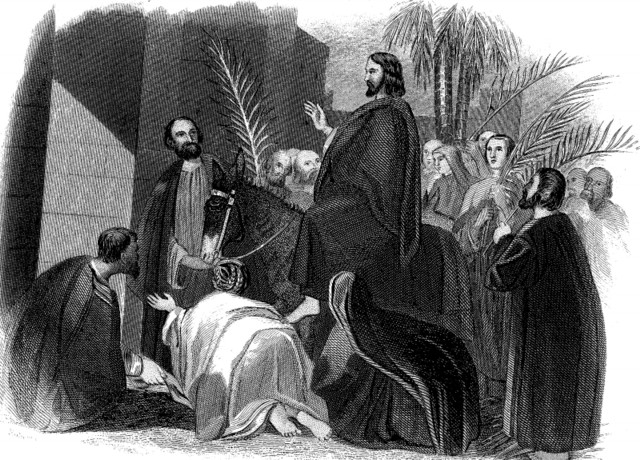
Paul addresses the Galatians in chapter one, beginning by establishing his authority as an apostle “not from men nor through man, but through Jesus Christ and God the Father.” We can infer, as has been the case elsewhere, that some had called his status as an apostle into question. It is clear from his writing that there were some that were teaching false doctrine, as he begins this chapter with a rebuke to them. He couldn’t have said it any plainer or stronger: “…even if we or an angel from heaven should preach to you a gospel contrary to the one we preached to you, let him be accursed.”

The ancient territory of Galatia, in central Asia Minor, surrounds modern Ankara, Turkey.

The ancient territory of Galatia, in central Asia Minor, surrounds modern Ankara, Turkey.

The words are just as relevant to us today. There are still false prophets. One need only surf the television channels for a short time to find one. There are those who preach health and wealth and almost anything that the gospel does not teach, sometimes throwing in a bit of the truth for good measure. We must guard against believing what we wish to be true preached by man and coming only from man.

In defending his apostleship, he begins a narrative of his conversion from a persecutor of the very church he now served — which he  continues in chapter 2. He even speaks of his confrontation with Peter in Galatians 2:11-14 over Peter “pulling back” from the Gentiles because he feared the circumcision party.

In verses 15-21, we learn that it is members of that party that must have been causing the strife in Galatia, which is, of course, the reason for his narrative. He wanted to reassure them of the gospel, and that they were not under the old law, as those teachers were trying to make them believe.  He tells them “through the law I died to the law, so that I might live to God. I have been crucified with Christ. It is no longer I who live, but Christ who lives in me…for if righteousness were through the law, then Christ died for no purpose.”

Bible Reading Schedule for this month
Click here to read or listen to audio of this week’s chapters in Mark and Galatians

/Bob’s boy
___________________

some images © V. Gilbert & Arlisle F. Beers

Please visit this site’s menu item “The Author’s Books” for info on the author’s books, website, and Facebook page.

All of my comments in this blog are solely my responsibility. When reading any commentary, you should always refer first to the scripture, which is God’s unchanging and unfailing word.


Of Prayer and Faith – Mark 11-15

Jesus entering Jerusalem, the Triumphal Entry.

Jesus entering Jerusalem, the Triumphal Entry.

This week, we read Mark 11-15 in our five day per week journey through the entire New Testament this year. Chapter 11 begins with mark’s account of Jesus’ triumphal entry into Jerusalem. he then cleanses the temple and further angers the Pharisees. There is also the account of the fig tree that he caused to wither. His statement that it would not bear fruit again is symbolic of His beloved Jerusalem. they had been given the stewardship of God’s word, along with His love and favor. But now their rejection of His Son, was too much.

The last account of the chapter is of another challenge by the chief priests, scribes, and the elders demanding to know by what authority He does the things that He has done. His answer is especially shrewd. He will only answer if they tell Him by what authority John the baptist did his baptisms – of heaven or of man. If they answered that it was of man, the people would become angry, for they knew John was a prophet. So they refused to answer.

The portion of the chapter that grabs your attention, however is when Jesus explained the lesson of the fig tree:

Have faith in God. Truly, I say to you, whoever says to this mountain, “Be taken up and thrown into the sea,” and does not doubt in his heart, but believes that what he says will come to pass, it will be done for him.  Therefore I tell you, whatever you ask in prayer, believe that you have received it, and it will be yours.

Grove of fig trees, a mature size.

Grove of fig trees, a mature size.

Moving a mountain in Jewish literature was a metaphor for doing that which seemed impossible (just as it would be for us). Jesus does not mean that God is our magic genie, to whom we only need to incant the proper words in prayer and get whatever we want. We must remember also that the Bible is a unified teaching, and that it has much else to say about prayers — such as in James 4:2-3: “…You do not have, because you do not ask. You ask and do not receive, because you ask wrongly, to spend it on your passions.”

So clearly, we are expected first of all to pray according to God’s will. But more importantly, we must examine why we should “move the mountain” in first place. Jesus said in Matthew 6: 33: “But seek first the kingdom of God and his righteousness, and all these things will be added to you.” So following His word, and trying hard to be the “light of the world” and “the salt” that He spoke of in Mark 9:50, must be our primary driving force in life. That’s is easy to say, but hard to really do.

At least as important, and possibly more so, is the lesson Jesus gave to the apostles in that same chapter, when they were arguing about which of them was the greatest. In Mark 9:35, He told them: “If anyone would be first, he must be last of all and servant of all.” Jesus taught that being righteous in His kingdom is not about one’s self. It is about how we can serve others in order to help carry them to heaven with us. And that, my friends, is the hardest part of all.

Knowing this then, when we pray for the mountains” that we wish to move, we must ask ourselves how, in doing so, we might be able to put others first, build someone up, and nurse them along life’s journey and into His kingdom. Jesus was the King they had waited for so long to come. But they missed the fact that He was to be the greatest servant — the “Suffering Servant” of Isaiah 53. By following his example, and becoming a servant to others, there is truly no mountain we cannot move from faith in our prayers.

Bible Reading Schedule for this month
Click here to read or listen to audio of this week’s chapters in Mark

/Bob’s boy
___________________

some images © V. Gilbert & Arlisle F. Beers

Please visit this site’s menu item “The Author’s Books” for info on the author’s books, website, and Facebook page.

All of my comments in this blog are solely my responsibility. When reading any commentary, you should always refer first to the scripture, which is God’s unchanging and unfailing word.


Be Not Ashamed – Mark 6-8

Continuing with our reading of Mark this week, we read in chapter 6 of Jesus being rejected in His home town and how Herod had John the baptist killed. He was afraid of him, but he had made an oath around witnesses to give Herodias’s daughter whatever she wished. To his dismay, she followed her mother’s wishes and asked for John’s head on a platter. Jesus then went on to feed the 5,000.

Saint John the Baptist and the Pharisees

Saint John the Baptist and the Pharisees (Photo credit: Wikipedia)

In chapter 7, the Pharisees confront Him because his disciples did not follow the washing rituals they prescribed as though they were God’s laws. Jesus exposed them for their many hypocrisies, such as how they manipulate words and deeds to shirk their duty to take care of their parents.

In chapter 8, He feeds the 4,000 with seven loaves of bread and a few small fish– ending up with more food than they started with in the first place. In Dalmanutha, the Pharisees confronted Him again and demanded a sign from heaven. Jesus, of course, gave them none; and he even said that no sign would be given to “this generation.” God’s people were given all the signs they needed.

It was after this that Jesus told His disciples to beware of the “leaven” of the Pharisees and of Herod. As they wondered about bread, jesus became impatient with them. They still did not understand, it seems. But in verse 29, Peter did make it clear that he knew that Jesus was the Christ.

He finishes the chapter with a sermon to the crowds; and verse 39 says:

For whoever is ashamed of me and of my words in this adulterous and sinful generation, of him will the Son of Man also be ashamed when he comes in the glory of his Father with the holy angels.

Those words are easy to read, and they are just as easy for us to nod our heads and say “that’s right.” But we must beware living in an increasingly pagan land, as we do. How easy is it to keep our mouths shut, when perhaps we should be speaking up for the Lord?


Bible Reading Schedule for this month
Click here to read or listen to audio of this week’s chapters in Mark

/Bob’s boy
___________________

some images © V. Gilbert & Arlisle F. Beers

Please visit this site’s menu item “The Author’s Books” for info on the author’s books, website, and Facebook page.

All of my comments in this blog are solely my responsibility. When reading any commentary, you should always refer first to the scripture, which is God’s unchanging and unfailing word.


Paul Arrives in Rome – Acts 28

Forum Romanum in Rome. Columns of the Temple o...

Forum Romanum in Rome. Columns of the Temple of Castor and Pollux are to the right and the remaining columns of the Temple of Vesta are to the left. (Photo credit: Wikipedia)

Luke picked up the account after the shipwreck, where they learned that the island they had safely reached is called Malta. He said that the natives were kind and welcoming, and even helped them with a fire. But a snake came out because of the heat, and fastened himself to Paul’s hand. The sight of the deadly creature hanging from his limb just after he had been rescued from a life-threatening shipwreck made them suppose that he must be a murderer, getting his just reward (Greek and Roman tales had long spoken of just such events – “The Argonautica”, for example). But God was certainly not going to let anything happen to him. When he neither died nor showed any ill effects from the bite, they then thought Paul himself to be a god.

Publius in verse 7, is described as a “chief man” – the Greek term for which is “protos,” of which term several inscriptions have been found. Several references to Publius and this chapter, along with photographs can be found in this article at BiblePlaces.com. Publius’ father was ill with fever and dysentery (the description of which ills fit those of an infection caused by goat’s milk called “Malta fever”). Paul healed him, as well as others of the island with diseases that were brought to him afterward (verses 8-9).

After three months, they again set sail in a ship from Alexandria that had been wintering there. Luke describes the ship as having a figurehead of the “twin gods” (Castor and Pollux, the mythological twin sons of Zeus and Leda, were seen as the protectors of seamen). They put in at Syracuse for three days, then ended up in Puteoli, where they stayed with brethren they had found for seven days, then to Rome. The brethren there heard, and came from as far away as “The Three Taverns” and the “Forum of Appius” (hence, the name, the Appian Way) (verses 12-16).

Paul spent considerable time preaching and trying to convince the Jews there of the good news of Jesus through the words of Moses and the prophets. Some believed, but others did not – the latter leaving disagreeably (verses 23-25). Paul quoted Isaiah 6:9-10 to them in verses 26-27; and then told them that now this news of the salvation of God will be brought to the Gentiles, for they will listen.

Verses 30-31 close out the book of Acts with the word that Paul remained there two full years, at his own expense, “teaching about the Lord Jesus Christ with all boldness and without hindrance.” No further word is given of Paul’s appearance before Caesar, or any confirmation of secular writings that suggest he fulfilled his desire to go and preach in Spain, nor of a second imprisonment before his martyrdom. As much as we would like to know of the rest of Paul’s story, the inspired word of God does not tell us because the book of Acts is not Paul’s biography, but the word “breathed out by God and profitable for teaching, for reproof, for correction, and for training in righteousness…” (2 Timothy 3:16).

So, one might wonder, if it was so important for Paul to appear before Caesar, why is there nearly a chapter and a half about the journey and shipwreck, and not a word about what was so important about that appearance? The answer is that first, God had some reason for Paul to go to stand before Caesar that fulfilled His purpose, but there have been countless events since creation important to Him that are not important for us to know about for teaching, for reproof, for correction, or for training in righteousness. But the journey and shipwreck teach a couple of important lessons. One is that when God wants something done, it gets done, period! Nothing will stop it from completion. The other is that God, as we have seen since Genesis, always keeps His promises. Paul was imprisoned, betrayed, the target of assassination, 2,000 miles away from his destination, shipwrecked, stranded on an island, and had a deadly snake bite him severely enough to have hung from his hand. Yet God wanted him to be in Rome, and had promised that he would get there safely. We can take comfort, knowing that His will is going to be done, and that He has promised salvation for His faithful.


Schedule for this week
Read or listen to audio of this week’s selection from Acts here
Read or listen to audio of this weeks selection from 2 Chronicles here

/Bob’s boy
___________________

some images © V. Gilbert & Arlisle F. Beers

Please visit this site’s menu item “The Author’s Books” for info on the author’s books, website, and Facebook page.

All of my comments in this blog are solely my responsibility. When reading any commentary, you should always refer first to the scripture, which is God’s unchanging and unfailing word.