Proverbs 21 – Refusing Justice

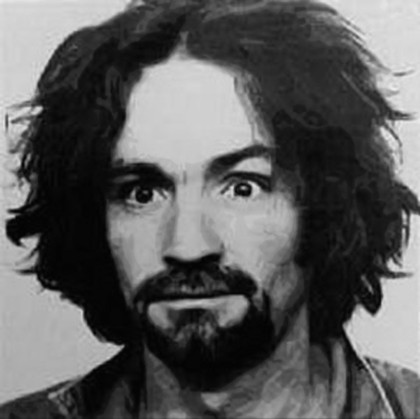
Charles Manson

Charles Manson

This chapter is laden with proverbs concerning righteousness, justice, and evil.  Consider verses 7 and 10:

The violence of the wicked will sweep them away,
because they refuse to do what is just.

The soul of the wicked desires evil;
his neighbor finds no mercy in his eyes.

That there are people in this world that are simply evil is demonstrated to us at various times in our lives, but it often takes by surprise nonetheless.  We want to believe in the inherent good of man for the most part, and are sometimes shocked at how easily some can do evil – from the fearless and brazen thief to the cold calculating killer, our faith in humanity sometimes gets shaken as we learn of someone who has behaved with depravity, sometimes for years on end.

Osama Bin Laden

Osama Bin Laden

The truth is that there are wicked people who do horrible things not because they just cannot help themselves, but instead they do so eagerly and without remorse.  They have no mercy on their fellow man because they are ruthless.  But such evil will not escape punishment forever.  Eventually, their evil and violence will destroy them.  God wants everyone to be saved (1 Timothy 2:4).  But not everyone will be.  And so, there is no shame for us in the truth of verse 15:

When justice is done, it is a joy to the righteous
but terror to evildoers.

Read or listen to audio of ESV version of this selection from this link.

/Bob’s boy
___________________
some images © V. Gilbert & Arlisle F. Beers

Please note: I did not design the reading plan that I am following in my blog.  All of my comments in this blog, however, are solely my responsibility.  When reading ANY commentary, you should ALWAYS refer first to the scripture, which is God’s unchanging and unfailing word. Reading schedules, as well as a link to the site where you can get the reading plan that I’m currently following for yourself can be found on the “Bible Reading Schedules” page of my website at http://graceofourlord.com.  For questions and help, please see the “FAQ” and “Summaries” pages there.

Psalms 46-47 – A Mighty Fortress

An early printing of Luther's hymn A Mighty Fo...

An early printing of Luther’s hymn A Mighty Fortress Is Our God (Ein feste Burg ist unser Gott) (Photo credit: Wikipedia)

Psalm 46 is famous for its first verse, which inspired Martin Luther’s hymn “A Mighty Fortress Is Our God.”  Spurgeon said of this: “There were times when Martin Luther was threatened with discouragement; but he would say, ‘Come, Philip, let us sing the 46th Psalm’; and they would sing it in Luther’s own version…This psalm is both historical and prophetic. It refers to things that happened in Israel; and it is a prophecy concerning the New Testament Church.”

In “The Tyndale Old Testament Commentary,” Old Testament scholar Frank Derek Kidner (Kidner, Derek “Psalms 1-72” Volume 1 ) outlined the psalm as being divided into three sections: 1) The Most High’s ascendancy over nature (verses 1-3); 2) His ascendancy over the attackers of His city (verses 4-7); and 3) His ascendancy over the whole warring world (verses 8-11).

From verse 10, we have another hymn, “Be Still and Know That I Am God,” which commands all to give glory and reverence to the almighty, who “will be exalted in the earth.”

Psalm 47 is another song of the “Sons of Korah,” celebrating God’s rule over all the earth.  It is supposed by some that this psalm has its roots in the transport of the Ark of the Covenant to Jerusalem, citing 2 Samuel 6:15.  Otheres see it as celebrating the deliverance of the people from Sennacherib in 701 B.C. (2 Kings 19:20-36).

Coffman says of verse 8: “This verse enables us to know the identity of God who went up (verse 5). He is the God who rules over the Gentiles (the `nations’) in his kingdom, and who during that time is `sitting upon his holy throne.’ The special application of this terminology to Jesus Christ is well known to every Christian, the same being a strong indication that Ps. 47:5 is indeed a prophecy of Christ’s ascension.”  Verse 9 (“The princes of the peoples gather as the people of the God of Abraham”) aligns with Paul’s reminder that we are all Abraham’s offspring (Galatians 3:28-29).

5 God has gone up with a shout,
the Lord with the sound of a trumpet.
8 God reigns over the nations;
God sits on his holy throne.

Read or listen to audio of ESV version of this selection from this link.

/Bob’s boy
___________________
some images © V. Gilbert & Arlisle F. Beers

Please note: I did not design the reading plan that I am following in my blog.  All of my comments in this blog, however, are solely my responsibility.  When reading ANY commentary, you should ALWAYS refer first to the scripture, which is God’s unchanging and unfailing word. Reading schedules, as well as a link to the site where you can get the reading plan that I’m currently following for yourself can be found on the “Bible Reading Schedules” page of my website at http://graceofourlord.com.  For questions and help, please see the “FAQ” and “Summaries” pages there.

Psalms 38 – O Lord, My Salvation!

From the rooftop of his palace, David looked down on Bath-sheba, lusting for her, the beginning of a long series of sins (2 Samuel 11:2-27).

From the rooftop of his palace, David looked down on Bath-sheba, lusting for her, the beginning of a long series of sins (2 Samuel 11:2-27).

This song of David is a lament psalm.  It is a lament of the type that is especially appropriate for prayer to God when one’s sins have resulted in one’s own suffering.  Not all suffering is due to sin, but when it is, we should recognize our culpability for the consequences that have come our way.  Some commentators believe this psalm describes some terrible disease that David contracted, but we agree with Coffman, who describes it as  “a figurative description of the terrible mental anguish, emotional despair, oppressive sense of guilt, and mortal fear of David that his sins would result in God’s rejection of him and the consequent triumph over him of his bitter enemies.”

It is a stark reminder to us that our sins do often have consequences; and some of those consequences can be a grievously hard burden to bear.  It is secondly a reminder that our God is a loving and forgiving God to whom we can turn for repentance.  But it is also a reminder that we can turn to Him in our times of sorrow and despair for comfort, and that he will hear our cry.

Read or listen to audio of ESV version of this selection from this link.

/Bob’s boy
___________________
some images © V. Gilbert & Arlisle F. Beers

Please note: I did not design the reading plan that I am following in my blog.  All of my comments in this blog, however, are solely my responsibility.  When reading ANY commentary, you should ALWAYS refer first to the scripture, which is God’s unchanging and unfailing word. Reading schedules, as well as a link to the site where you can get the reading plan that I’m currently following for yourself can be found on the “Bible Reading Schedules” page of my website at http://graceofourlord.com.  For questions and help, please see the “FAQ” and “Summaries” pages there.

Psalm 119:81-88; Psalm 45

kafToday’s stanza of Psalm 119 is brought to you by the eleventh letter of the Aleph-bet, “kaph” or “kaf.”  In the first three verses the psalmist’s endurance is running low and he prays for God’s help and strength in his persecution.  A wineskin is a “bottle” made of leather or some other skin for holding wine.  The analogy of the wineskin being dried up in smoke is in relation to his distress and sorrow.

Psalm 45 has in its superscript a musical direction to sing the psalm to the tune of a song called “Lilies.”  The king in this psalm clearly points to the Messiah, and his princess bride is His church.  Verse 2 begins with a description of Him that is also referred to in Isaiah 33:17, and Paul refers to the second part of the verse (“God has blessed you forever”) concerning Jesus in Romans 9:5.  Verses 6-7, referring to His throne lasting forever, are cited by the Hebrew writer in Hebrews 1:8-9.  In verse 10, “Forget also thine own people, and thy father’s house” is just what Jesus said to his disciples in Luke 14:26, 33.  Verses 13-15 refer to the end of days when the saints will join the Savior in heaven, and is prophesied also in Isaiah 35:10.

Read or listen to audio of ESV version of this selection from this link.

/Bob’s boy
___________________
some images © V. Gilbert & Arlisle F. Beers

Please note: I did not design the reading plan that I am following in my blog.  All of my comments in this blog, however, are solely my responsibility.  When reading ANY commentary, you should ALWAYS refer first to the scripture, which is God’s unchanging and unfailing word. Reading schedules, as well as a link to the site where you can get the reading plan that I’m currently following for yourself can be found on the “Bible Reading Schedules” page of my website at http://graceofourlord.com.  For questions and help, please see the “FAQ” and “Summaries” pages there.

Psalms 40 – My Help and My Deliverer

Rembrandt - Simeon and Anna Recognize the Lord...

Rembrandt – Simeon and Anna Recognize the Lord in Jesus – WGA19102 (Photo credit: Wikipedia)


There is some disagreement over whether this psalm is more about David praying for his own predicament, or about the Lord Jesus as Messiah.  It seems clear to this blogger that both are the case.  Consider the fact that verses 6-8 are quoted by the Hebrew writer in Hebrews 10:5-8.  The audience of the latter verses was considering abandoning its Jewish Christianity to return to traditional Judaism.  Coffman suggested that verse 3 points to the New Covenant of Jeremiah:31-35.  Verse 4 suggests a reference to worshiping false gods:


“Blessed is the man who makes
the Lord his trust,
who does not turn to the proud,
to those who go astray after a lie!”


Verses 16-17 reminds us of the loving care of a Creator and God who considers each and every one of us important enough to watch over and care for us, his children.


“As for me, I am poor and needy,
but the Lord takes thought for me.
You are my help and my deliverer;
do not delay, O my God!”


Read or listen to audio of ESV version of this selection from this link.


/Bob’s boy


___________________


some images © V. Gilbert & Arlisle F. Beers


Please note: I did not design the reading plan that I am following in my blog.  All of my comments in this blog, however, are solely my responsibility.  When reading ANY commentary, you should ALWAYS refer first to the scripture, which is God’s unchanging and unfailing word. Reading schedules, as well as a link to the site where you can get the reading plan that I’m currently following for yourself can be found on the “Bible Reading Schedules” page of my website at http://graceofourlord.com.  For questions and help, please see the “FAQ” and “Summaries” pages there.


Psalm 35 – Let Them Be Turned Back

Saul and David.

Saul and David. (Photo credit: Wikipedia)

This Psalm is one of several that are classified as imprecatory psalms – a categorization to which this blogger objects because some define the word “imprecate” as “to invoke evil upon.” What David is praying for in these psalms is nothing other than the righteous judgment of the Lord on the wicked people who wish to harm and even to kill him.  Some who object to, or make excuses for, these psalms remind us that Jesus told us to love our enemies and pray for those who persecute us.  He did indeed, but he did not also tell us to pray that they will be successful in their endeavors to do us harm.

C. S. Lewis noted that “the ferocious parts of the Psalms serve as a reminder that there is in the world such a thing as wickedness and that it (if not its perpetrators) is hateful to God” (Lewis, C. S. 1958. Reflections on the Psalms. New York, NY: Harcourt, Brace, and Co.).  Dr. George DeHoff wrote “…David is not here pleading for innocent people to be destroyed, but for wicked people to be punished for their evil deeds in order to bring them to repentance and ultimate salvation.”

It is supposed that this psalm was written at the time when King Saul and his men were pursuing David.   In verses 11-14, he speaks plainly of the evil treatment he has received at the hands of people to whom he had been good and kind.  DeHoff also declared that “these prayers may be prayed by any child of God today.”

“Let not those rejoice over me
who are wrongfully my foes,
and let not those wink the eye
who hate me without cause.”

Read or listen to audio of ESV version of this selection from this link.

/Bob’s boy
___________________
some images © V. Gilbert & Arlisle F. Beers

Please note: I did not design the reading plan that I am following in my blog.  All of my comments in this blog, however, are solely my responsibility.  When reading ANY commentary, you should ALWAYS refer first to the scripture, which is God’s unchanging and unfailing word. Reading schedules, as well as a link to the site where you can get the reading plan that I’m currently following for yourself can be found on the “Bible Reading Schedules” page of my website at http://graceofourlord.com.  For questions and help, please see the “FAQ” and “Summaries” pages there.

Proverbs 19 – A Man’s Folly

The first of the verses of this chapter of Proverbs that caught our eye as real wisdom is verse 3:

When a man’s folly brings his way to ruin,
his heart rages against the Lord

Don’t misunderstand this post.  As the Book of Job eloquently points out, man’s troubles are not always brought about by his own actions.  But most of us have known someone – maybe you even know someone now – who fits the description of this verse.  The person I am speaking of has either done something foolish, or lived a life of sin – or often, both of these.  Now their deeds have caught up with them in their life, and the consequences they are having to live with are great.  Perhaps it has resulted in trouble with the law, their marriage, financial devastation.  Maybe their health is bad due to a life of fast living and sinful self-indulgence.

jailBut instead of recognizing that most of what has come to pass in their life is self-inflicted, they instead rail against the Lord.  I have known people in this position who loudly proclaim that no just God would allow such things to happen to them, and they shake their fists at the heavens.  How tragic and ironic that we are inclined to blame our Creator for such trials in our lives, when He is precisely the one we need at those times – not to mention the fact that such trials will not have the opportunity to have their effect of building our strength and character as James advised (James 1:2-4) in that frame of mind.  It is a lose/lose situation.

We begin to overcome our own folly only after we come to recognize it for what it is, resolve to change, give ourselves over to serve the Lord, and allow Him to strengthen us day by day.

Read or listen to audio of ESV version of this selection from this link.

/Bob’s boy
___________________
some images © V. Gilbert & Arlisle F. Beers

Please note: I did not design the reading plan that I am following in my blog.  All of my comments in this blog, however, are solely my responsibility.  When reading ANY commentary, you should ALWAYS refer first to the scripture, which is God’s unchanging and unfailing word. Reading schedules, as well as a link to the site where you can get the reading plan that I’m currently following for yourself can be found on the “Bible Reading Schedules” page of my website at http://graceofourlord.com.  For questions and help, please see the “FAQ” and “Summaries” pages there.

Psalms 31 – Hunted

David hid in one of the many caves near Adullam, a city 13 miles southwest of Bethlehem (1 Samuel 22: 1-12). David was in this area when three of his mighty men risked their lives to get him a drink of water from Bethlehem (2 Samuel 23: 13-17).

David hid in one of the many caves near Adullam, a city 13 miles southwest of Bethlehem (1 Samuel 22: 1-12). David was in this area when three of his mighty men risked their lives to get him a drink of water from Bethlehem (2 Samuel 23: 13-17).

How long did Saul hunt David?  One estimate is about four years – from 1012 – 1008 BC.  Long enough that several of the psalms he wrote were obviously from that time period.  And it shows in the construction of those psalms.  Imagine being continually on the run, living often in caves, and knowing that any day, your pursuers could catch up to you, and end it all.

Verse 5 contains a line that was quoted by Jesus on the cross (Luke 23:46) as He died:  “Then Jesus, calling out with a loud voice, said, ‘Father, into your hands I commit my spirit!’ And having said this he breathed his last.”  The psalm goes from despair into the assurance of God’s grace twice – first in verses 1-8, and again in 9-24.  Many of the verses adapt easily to the plight of any righteous person who has ever suffered:

Be gracious to me, O Lord, for I am in distress;
my eye is wasted from grief;
my soul and my body also
For my life is spent with sorrow,
and my years with sighing;
my strength fails because of my iniquity,
and my bones waste away.

The last two verses contain the advice from a man who spent all those years running, hundreds of days of fear, dread, despair and anguish.  He encourages us to take heart and have patience – wait on the Lord!

Love the Lord, all you his saints!
The Lord preserves the faithful
but abundantly repays the one who acts in pride.
Be strong, and let your heart take courage,
all you who wait for the Lord

Read or listen to audio of ESV version of this selection from this link.

/Bob’s boy
___________________
some images © V. Gilbert & Arlisle F. Beers

Please note: I did not design the reading plan that I am following in my blog.  All of my comments in this blog, however, are solely my responsibility.  When reading ANY commentary, you should ALWAYS refer first to the scripture, which is God’s unchanging and unfailing word. Reading schedules, as well as a link to the site where you can get the reading plan that I’m currently following for yourself can be found on the “Bible Reading Schedules” page of my website at http://graceofourlord.com.  For questions and help, please see the “FAQ” and “Summaries” pages there.

Proverbs 18 – Restore My Soul

Proverbs 18:14 speaks truly:

A man’s spirit will endure sickness,
but a crushed spirit who can bear?

Have you ever felt totally defeated?  Have you ever thought that if only there were someone to whom you could wave a white flag, you would be perfectly willing to surrender?  When the spirit is crushed, the whole of life can feel like it is too much to bear.  So what do you do?

depressionLearning to “surrender all” to Jesus is not easy.  It goes against everything we have been trained to do all of our lives.  We are taught to pull ourselves up “by our bootstraps.”  We’re trained to find solutions to problems, and then to implement them.  Do not misunderstand me, God does not want us to sit around and just expect that He is going to fix all of our problems for us.  Quite the contrary.  But we must learn that there is a limit to our abilities.  There are always going to be things that are beyond our control.  How about a plan?

1.  Talk to God each and every day.  Find your quiet place and your quiet time.  Perhaps you can take a walk by yourself – just you and the Lord.  Ask Him for His wisdom in knowing what you can and must do, and for His help in getting those things done.

2.  Spend time each day in God’s word.  God speaks to us through His word.  You will not find each and every time you read that there is that one magical verse that will give you insight and clarity of thought.  But by training yourself to let Him speak to you, you will receive the grace of His knowledge over time.  He has promised that He will not withhold from us the wisdom that we need.

3. This is the hardest one (for me), but the most important.  Realize that there is a point at which you have done all that you can do.  You have sought His wisdom.  You have talked with Him and bared your soul concerning your burdens.  And just as importantly, you trust Him to take care of the rest.  You trust that whatever happens next, God will not forsake you.  He will carry His sheep like the good shepherd He is, and with His help, – come what may, you can bear it.

Three scriptures, a song and a prayer for the weary soul

Psalm 55:22“Cast your burden upon the LORD and He will sustain you”

1 Peter 5:6-7 – Humble yourselves, therefore, under the mighty hand of God so that at the proper time he may exalt you, casting all your anxieties on him, because he cares for you

Philippians 4:4-7 – Rejoice in the Lord always; again I will say, rejoice. Let your reasonableness be known to everyone. The Lord is at hand; do not be anxious about anything, but in everything by prayer and supplication with thanksgiving let your requests be made known to God. And the peace of God, which surpasses all understanding, will guard your hearts and your minds in Christ Jesus.

The song – a special prayer to the Lord

Restore My Soul

Restore my spirit, Lord, I need restored.
My heart is weary, please help me, dear Lord.
I stand in need of more strength from Your Word,
Renew my love, rebuild my faith,
O restore my soul.

Revive the fire, Lord, deep in my soul.
Stir my desire to work in Your fold.
Light in my heart, dear God, my zeal grown cold.
Renew my love, rebuild my faith,
O restore my soul.

Renew my courage, Lord, it needs restored.
My cup is empty, refill it, dear Lord.
Replace all doubt and fear with faith so bold.
Renew my love, rebuild my faith,
O restore my soul.

Read or listen to audio of ESV version of this selection from this link.

/Bob’s boy
___________________
some images © V. Gilbert & Arlisle F. Beers

Please note: I did not design the reading plan that I am following in my blog.  All of my comments in this blog, however, are solely my responsibility.  When reading ANY commentary, you should ALWAYS refer first to the scripture, which is God’s unchanging and unfailing word. Reading schedules, as well as a link to the site where you can get the reading plan that I’m currently following for yourself can be found on the “Bible Reading Schedules” page of my website at http://graceofourlord.com.  For questions and help, please see the “FAQ” and “Summaries” pages there.

Understanding the Cross of Christ (Part 1)

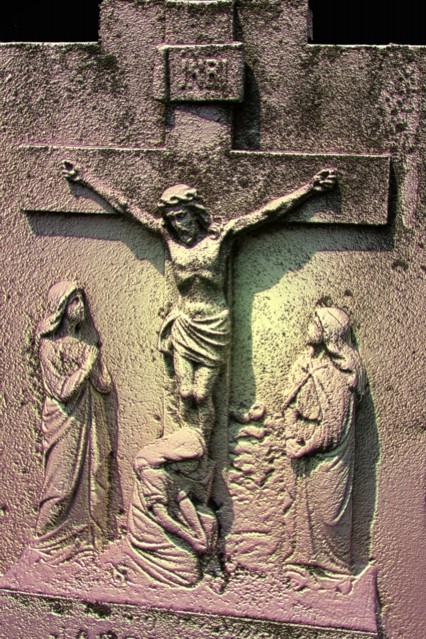
cross-004Recently, a young person asked me why God sent His only son to die – why was it necessary? Not a real unusual question for someone learning about Christianity to ask. And as someone who was “raised in the church,” it seemed so basic to our Christianity that I remember thinking that it should be a relatively easy question for me to answer. But to my surprise, I found that the spontaneous explanation I was able to come up with in an admittedly brief time seemed wholly inadequate to me – and I vowed to prepare myself to do a better job. What question could be more important for us as Christians to answer? So, as I begin to study and prepare for that “better answer,” I am beginning this series on “Understanding the Cross,” which will be featured on selected Sundays for the next few weeks.

To be sure, the first thing that popped into my head (“to save us from our sins”) was absolutely the correct answer. But it was also one that my young student in his own limited study of God’s word, already knew. After all, the words are in practically every prayer he has ever heard. But standing by itself, it really isn’t much of an answer, is it?

Admittedly, a real study of this question could be made into countless individual lessons, articles, and discussions. It is, after all, what the entire Bible from the Genesis to Revelation is all about, right? So let’s begin in part one of this series, with a brief outline and some more questions; and see if we can provide a meaningful answer to my young friend’s question that is not too difficult to call up to memory when needed. Let’s start by separating the questions into four categories:

What is the problem with sin?

  • What is sin, and how does it affect us?
  • Why does sin matter so much to God?
  • What is its importance to us?

What is God’s response to sin?

  • What are the consequences to us?
  • How was sin dealt with in the Old Testament?
  • Why does God demand a price to be paid for our sin?

How does Jesus fit into God’s plan?

  • Where did Jesus come from?
  • Was He all that everyone expected the Messiah to be?
  • What did his death on the cross accomplish?

What must we do to be saved?

  • What \ Who is a sinner?
  • What can a sinner do to earn salvation?
  • What is the importance of baptism?

Be watching for part 2 of this series, where we will examine the first category of questions above: “What is the problem with sin?”

/Bob’s boy
___________________
image © V. Gilbert & Arlisle F. Beers

Please note: I did not design the reading plan that I am following in my blog.  All of my comments in this blog, however, are solely my responsibility.  When reading ANY commentary, you should ALWAYS refer first to the scripture, which is God’s unchanging and unfailing word. Reading schedules, as well as a link to the site where you can get the reading plan that I’m currently following for yourself can be found on the “Bible Reading Schedules” page of my website at http://graceofourlord.com.  For questions and help, please see the “FAQ” and “Summaries” pages there.