1 Samuel 15 – The Lord Rejects Saul

This chapter is a favorite for skeptics to cite as showing God to be ruthless, rather than the God of love that we know Him to be.  And indeed, the idea of having an entire people obliterated is disturbing to many of us.  Two things must be remembered by us as we read of such.  First, God is our sovereign Lord and creator; and He decides what is best with His knowledge for which our own understanding is insufficient (Proverbs 3:5-7).  Secondly, as with Jericho  and other cases in the land of Canaan, these are not innocent people who had never been given an opportunity to repent.  (Note that when Samuel Kills Agag in verse 33, his statement that Agag’s own sword has made women childless is literal). Ages of wicked savagery and the reality that survivors would corrupt others (Deuteronomy 7:1-5) demanded obeying this command of Lord. See post on “The Fall of Jericho.”

This chapter shows us the character flaws of Saul.  He was the military leader the people had wanted, but it was all about Saul – and never about the Lord; and though victorious, his leadership was often a great model for what a leader should not do.  After God had led the people out of Egypt, Amelek attacked them the first time without provocation (Exodus 17:8); and when they were defeated, God told Moses in Exodus 17:14 “…that I will utterly blot out the memory of Amalek…”  So Samuel gives Saul God’s instructions in verses 2-3 of this chapter not to spare even the oxen and other livestock.  He is victorious, but he spares the Amelekite king Agag and the best of the livestock and brings them back.

When God tells Samuel in verse 10 of what Saul has done and of His rejection of Saul as king, Samuel is grieved and very angry with Saul.  Worse, he finds out along the way that Saul has built a monument to himself (verse 12).  When he arrives, he lets Saul have it with both barrels.  Saul at first tries to blame the people (verses 15, 21), but Samuel is having none of it.  Not only does he know better, but as he reminds Samuel, as king, he is supposed to be a leader.  Saul’s final admission of sin is half-hearted, and as Samuel turns from him, Saul desperately grabs his robe and tears it.  At this point, Samuel lets him know that his kingdom is being torn from him.  But Saul seems to care more about what the people think, than what God thinks of him (verse 30).

It would be the last time Samuel will see Saul until he dies, and he grieved (verse 35).

Read or listen to audio of ESV version of this selection from this link.

/Robert
___________________
some images © V. Gilbert & Arlisle F. Beers

Please note: I did not design the reading plan that I am following in my blog.  All of my comments in this blog, however, are solely my responsibility.  When reading ANY commentary, you should ALWAYS refer first to the scripture, which is God’s unchanging and unfailing word. Reading schedules, as well as a link to the site where you can get the reading plan that I’m currently following for yourself can be found on the “Bible Reading Schedules” page of my website at http://graceofourlord.com.  For questions and help, please see the “FAQ” and “Summaries” pages there.

Finishing 1 Samuel \ Week 18 Summary Posted

David and Goliath ( )

David and Goliath ( ) (Photo credit: Wikipedia)

This week we will zoom through the rest of 1 Samuel, seeing the big contrast between Saul and David as both leaders, and as servants of the Lord.  As we watch Saul come unhinged throughout the week, we will get a closer look at the famous chapter about David and Goliath on Wednesday.

Summing Up

Each weekend, I am now posting a small PDF of one week of chapter summaries (on the website’s “Summaries” page), current to the beginning of the previous week.  I have posted the summary for Week 18 (April Week 5) of the schedule I am following.  This short PDF document contains condensed comments about 1 Samuel 1, 2, 3, 4 and 5-6, with hyperlinks to the ESV version of each chapter for listening or reading, and joins the summaries for other weeks already posted there.

/Robert
___________________
image © V. Gilbert & Arlisle F. Beers

Please note: I did not design the reading plan that I am following in my blog.  All of my comments in this blog, however, are solely my responsibility.  When reading ANY commentary, you should ALWAYS refer first to the scripture, which is God’s unchanging and unfailing word. Reading schedules, as well as a link to the site where you can get the reading plan that I’m currently following for yourself can be found on the “Bible Reading Schedules” page of my website at http://graceofourlord.com.  For questions and help, please see the “FAQ” and “Summaries” pages there.
1 Samuel 13 – Saul’s Unlawful Sacrifice

The translation of verse one is different in many versions because the Hebrew in that text is difficult.  Paul tells us in Acts 13:21, that Saul reigned for 40 years.  All we know other than that is that Samuel is old enough here to have a son (Jonathan) commanding (victoriously) a battle.

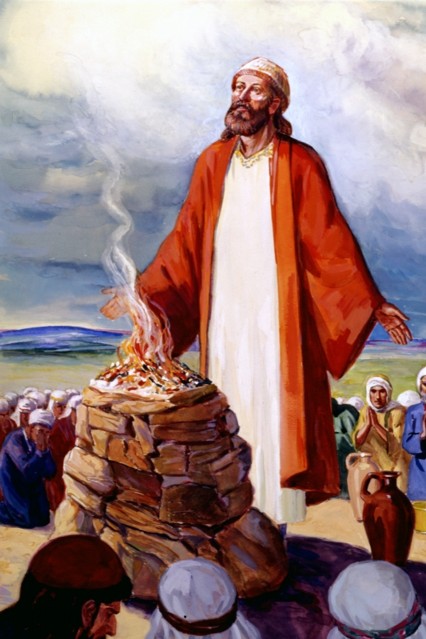
This chapter illustrates Saul in verses 1-4 as once again being the military leader that the people wanted in a king. God gave them what they asked for.  Now we begin to see that he is not the king they need, as he disobeys the Lord’s instructions given to him by His prophet, Samuel.  That is what is unlawful about Saul’s sacrifice, and Saul demonstrates that he knows that when he starts his excuses in verse 11.  But it is more than that – it is a matter of the heart.  Saul is never portrayed as a Godly man; and even his offering here was not intended for the Lord – verse 12 seems very much like “rubbing a magic lamp” for his own selfish ambitions.

Samuel gives him notice in verse 14 that “the Lord has sought out a man after his own heart.”  Not once do hear of any remorse (or concern for that matter) on Saul’s part.

Read or listen to audio of ESV version of this selection from this link.

/Robert
___________________
some images © V. Gilbert & Arlisle F. Beers

Please note: I did not design the reading plan that I am following in my blog.  All of my comments in this blog, however, are solely my responsibility.  When reading ANY commentary, you should ALWAYS refer first to the scripture, which is God’s unchanging and unfailing word. Reading schedules, as well as a link to the site where you can get the reading plan that I’m currently following for yourself can be found on the “Bible Reading Schedules” page of my website at http://graceofourlord.com.  For questions and help, please see the “FAQ” and “Summaries” pages there.
1 Samuel 12- Samuel’s Farewell Address

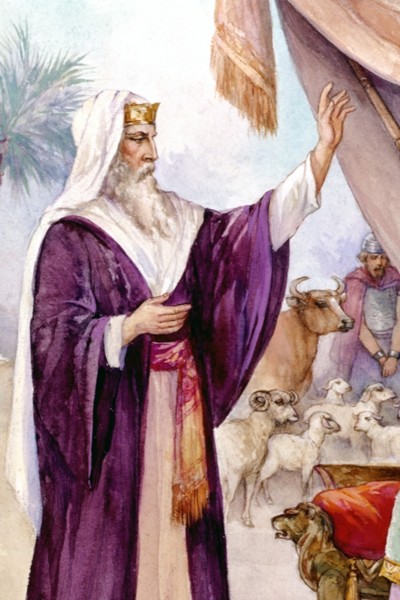
This is not Samuel’s last public address, but it does sound very much like Joshua’s farewell address, especially Joshua 23:1-13. Samuel reminds them of all that God has done for them, and reminds and rebukes them for their lack of loyalty to the Lord.  The unseasonable storm of verses 17-18 are not punishment for wanting a king, rather a sign of the Lord’s displeasure at their lack of faith, trust and loyalty to Him.

Nevertheless, Samuel warns that all will be well with them and their king as long as they “do not turn aside from following the Lord.”   Here, “king” refers to present and future, as verse 25’s warning of them and their king being swept away is prophetic of their fate.  The “empty things” of verse 21 refers to idols and idol worship.

Read or listen to audio of ESV version of this selection from this link.

/Robert
___________________
some images © V. Gilbert & Arlisle F. Beers

Please note: I did not design the reading plan that I am following in my blog.  All of my comments in this blog, however, are solely my responsibility.  When reading ANY commentary, you should ALWAYS refer first to the scripture, which is God’s unchanging and unfailing word. Reading schedules, as well as a link to the site where you can get the reading plan that I’m currently following for yourself can be found on the “Bible Reading Schedules” page of my website at http://graceofourlord.com.  For questions and help, please see the “FAQ” and “Summaries” pages there.

1 Samuel 10-11 – Saul Anointed King

In a private ceremony, Samuel anoints Saul as king, then tells him of several signs that will prove to him that God has made king (ch. 10 verses 2-7).  The term “another heart” simply refers to the Spirit of God rushing upon him and enabling him to become more like who the Lord needs him to be at the time.  A timid Saul (ch. 10 verses 21-22) is then presented to the people.

The threat from Nahash the Ammonite in 11:2 makes a lot more sense when you learn that one of the Dead Sea scrolls (4QSam) contains an account of that Ammonite king gouging out the eyes of the Gadites and Reubenites on Transjordan – and 7,000 men fleeing to Jabesh-Gilead.  When he granted the request for their delay in decision (verse 3), he did not believe they would be getting any help.  We find Saul behind the plow (not exactly being treated like a king yet) in verse 5.

When told of the threat, the Spirit of the Lord rushes upon Saul, and he does what God had intended for him, hastily putting together an army an defeating the Ammonites.  In 11:12-15, we have Saul at last acting like a leader.  Better still, he credits God with the victory.  How different might things have been if only he had remained that sort of man in the coming chapters?

Read or listen to audio of ESV version of this selection from this link.

/Robert
___________________
some images © V. Gilbert & Arlisle F. Beers

Please note: I did not design the reading plan that I am following in my blog.  All of my comments in this blog, however, are solely my responsibility.  When reading ANY commentary, you should ALWAYS refer first to the scripture, which is God’s unchanging and unfailing word. Reading schedules, as well as a link to the site where you can get the reading plan that I’m currently following for yourself can be found on the “Bible Reading Schedules” page of my website at http://graceofourlord.com.  For questions and help, please see the “FAQ” and “Summaries” pages there.

1 Samuel 9 – Saul Chosen to Be King

From the tribe of Benjamin, Saul comes with a servant looking for his father’s lost donkeys.  With no luck in finding them, his servant tells him of a seer, known to be a man of God (a prophet), and  happens to have bit of silver to bring him ( a gift was customary).

God had already told Samuel that the young man was coming in verse 16, and again tells him that he has arrived in verse 17, and that he is the one that will rescue them from the Philistines.  Saul is just the sort of man that the people are looking for – very handsome, and very tall (verse 2).  In verses 20 and 23, Samuel has already demonstrated to Saul that he has special knowledge from God, so that what he is about to tell him will be believed.  The leg presented to Saul to eat in verse 24 would be known to Saul to normally be the priest’s portion (Exodus 29:27).

Read or listen to audio of ESV version of this selection from this link.

/Robert
___________________
some images © V. Gilbert & Arlisle F. Beers

Please note: I did not design the reading plan that I am following in my blog.  All of my comments in this blog, however, are solely my responsibility.  When reading ANY commentary, you should ALWAYS refer first to the scripture, which is God’s unchanging and unfailing word. Reading schedules, as well as a link to the site where you can get the reading plan that I’m currently following for yourself can be found on the “Bible Reading Schedules” page of my website at http://graceofourlord.com.  For questions and help, please see the “FAQ” and “Summaries” pages there.

1 Samuel 4 – Philistines Capture the Ark

So far in the book of Samuel, we have read of little mention of real worship – other than some sacrificial offerings.  Indeed chapter 3:1 says “the word of the Lord was rare in those days.” And Eli’s consultation with the Lord is especially and conspicuously absent in this chapter, as the Israelites go to do battle with the Philistines.  They are soundly defeated in verse 2, and the elders seem to decide on their own that the Ark should be brought to the battle to put the Lord with them, treating it – and God – like little more than a talisman.  Hophni and Phinehas, Eli’s sons are right there with it when the Israelites were defeated even worse this time.  And now, the Ark has been captured!  Containing the tablets of the Ten Commandments, this loss of the sign of the Lord’s covenant with Israel is devastating!

One of the men of the tribe of Benjamin from the field of battle runs and gives the news to Eli, who is more distressed at the loss of the Ark than the death of his sons – and he dies on the spot (verse 18)!  The verse states that he had judged Israel for 40 years.  Samuel the prophet would be the final judge.  Eli’s daughter-in-law, too, is more distressed at the loss of the Ark; and she goes into labor.  She dies giving birth and names her son Ichabod – which means “Where is the glory?” Because the glory has left Israel.  It would seem to the people that the Lord himself has left them!

Read or listen to audio of ESV version of this selection from this link.

/Robert
___________________
some images © V. Gilbert & Arlisle F. Beers

Please note: I did not design the reading plan that I am following in my blog.  All of my comments in this blog, however, are solely my responsibility.  When reading ANY commentary, you should ALWAYS refer first to the scripture, which is God’s unchanging and unfailing word. Reading schedules, as well as a link to the site where you can get the reading plan that I’m currently following for yourself can be found on the “Bible Reading Schedules” page of my website at http://graceofourlord.com.  For questions and help, please see the “FAQ” and “Summaries” pages there.

Starting Samuel \ April Week 3 Summary Posted

Painting of Samuel learning from Eli

Painting of Samuel learning from Eli (Photo credit: Wikipedia)

Having finished our scheduled reading of Judges and of Ruth, tomorrow we begin the book of Samuel.  Painting of Samuel learning from Eli from Wikipedia.

Summing Up

Each weekend, I am now posting a small PDF of one week of chapter summaries (on the website’s “Summaries” page), current to the beginning of the previous week.  I have posted the summary for Week 16 (April Week 3) of the schedule I am following.  This short PDF document contains condensed comments about Judges 3, 4, 6, 7, and 13, with hyperlinks to the ESV version of each chapter for listening or reading, and joins the summaries for other weeks already posted there.

/Robert
___________________
image © V. Gilbert & Arlisle F. Beers

Please note: I did not design the reading plan that I am following in my blog.  All of my comments in this blog, however, are solely my responsibility.  When reading ANY commentary, you should ALWAYS refer first to the scripture, which is God’s unchanging and unfailing word. Reading schedules, as well as a link to the site where you can get the reading plan that I’m currently following for yourself can be found on the “Bible Reading Schedules” page of my website at http://graceofourlord.com.  For questions and help, please see the “FAQ” and “Summaries” pages there.