1 Corinthians 15 – The Resurrection of the Dead

In chapter 15, Paul now moves to the subject of the Resurrection of the dead; and he has much to say to them on the subject, making this the longest chapter of all his epistles.  There were some at Corinth saying that there is no resurrection of the dead. Despite the nature of some of the problems Paul has had to address with them, this was probably the most troubling, since it is among the most basic facts of the gospel.  We do not know the source of these false teachings.  It is plausible that it was Sadducee influence among the brethren, but it just as likely came from the philosophic influence from those of Greek origin.  It seems somewhat hard to imagine this lapse of faith accompanying a continued practice of their Christianity – and so soon after they had been converted, as well as blessed with spiritual gifts!
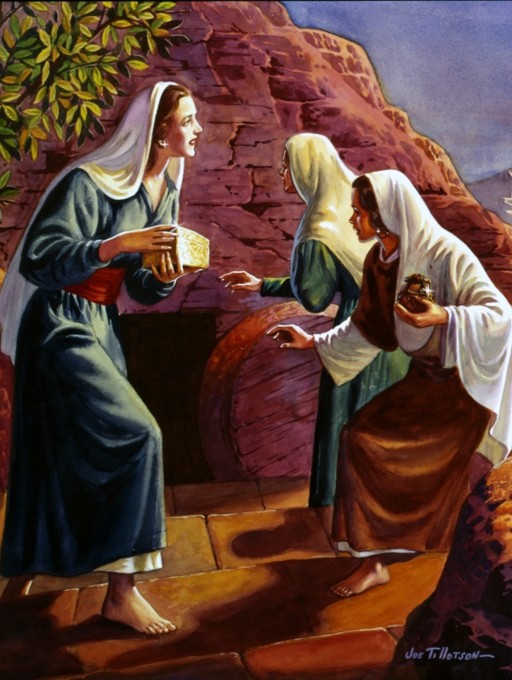
After His resurrection, Jesus appeared many times to His disciples.

In any case, Paul points out that denial of resurrection would necessarily include that of Jesus; and if Jesus was not raised, their entire faith is futile (verses 16-17).  Paul most aptly states the obvious in verse 19 – “If in Christ we have hope in this life only, we are of all people most to be pitied.”  He then recounts the eyewitness accounts by the apostles of Jesus death and his appearances to them after he was raised.  Then he makes the point that they (the apostles) were all threatened and constantly in danger of losing their lives for continuing to boldly bear that witness to others.  It was absurd to suggest that they would continually risk their lives for an outright lie!

Verse 29 seems to be a very difficult passage, and is interpreted by some as indicating Paul’s approval of people being baptized (by proxy) for the dead.  Whether or not this verse is actually talking about such baptisms is disputed by many.  Parsing the Greek for the words translated “for the dead” in this verse has led many to different theories, but we can reach the proper conclusion easily by taking these and other scriptures into account for what Paul and the other apostles taught about baptism.  Advocating the baptism of living people in place of those who have died would run contrary to the importance of the active profession of faith and of repentance that the Scriptures require (Acts 2:38, John 3:18), as well as the conscious act of putting on Christ that Paul speaks of in relation to baptism in Galatians 3:27.

So then in verse 35, Paul turns to the question of what sort of body the risen will have if we are truly to be raised from the dead.  He uses the seed as an illustration of this, as they are well familiar with the fact that the seeds that are buried and decompose become reborn into something more magnificent – that God gives it a body just as he has chosen.  Paul reveals that the resurrection body will be incorruptible, glorious, powerful and spiritual, and that even those who are living will be transformed at the same time when Christ comes again (verse 51 – “We shall not all sleep, but we shall all be changed…”). 

The Lord, who has created all things, is certainly able to accomplish this promise to have the mortal and perishable body put on immortality (verses 53-54).  Just as we bear the image of the first Adam while we are here, we will bear the heavenly image of the last Adam (Jesus), who became a life-giving spirit (verses 45-49).  Paul refers to Hosea 13:14 in verse 55 then, as verse 26 promised, says in verse 57 “thanks be to God, who gives us the victory through our Lord Jesus Christ.”  What comfort!

Read or listen to audio of ESV version of this selection from this link.

/Bob’s boy
___________________
some images © V. Gilbert & Arlisle F. Beers

Please note: I did not design the reading plan that I am following in my blog.  All of my comments in this blog, however, are solely my responsibility.  When reading ANY commentary, you should ALWAYS refer first to the scripture, which is God’s unchanging and unfailing word. Reading schedules, as well as a link to the site where you can get the reading plan that I’m currently following for yourself can be found on the “Bible Reading Schedules” page of my website at http://graceofourlord.com.  For questions and help, please see the “FAQ” and “Summaries” pages there.

1 Corinthians 13 – The Way of Love

The words of this chapter about love are famous, and are often used, appropriately enough, in wedding ceremonies (including that of this blogger).  While they certainly do apply to love in the context of a husband and wife, Paul is speaking more about the love that Christians should have for each other, and for the Lord.   In chapter 12, Paul wrote to the Corinthians in part concerning the envy among them that arose from jealousy of some for the spiritual gifts that others had been given.  These feeling were contributing to the divisions that had developed among them.

46 is the earliest (nearly) complete manuscrip...

46 is the earliest (nearly) complete manuscript of the Epistles written by Paul in the new testament. (Photo credit: Wikipedia)

He is making the point to them that brotherly love will endure, but spiritual gifts will pass away (verse 8).  Some of the churches throughout the land had letters written to them or circulated from churches in other location.  But nobody in the Apostolic age had the completed New Testament.  So these spiritual gifts not only served the purpose of building faith, but of giving them part of the knowledge of God’s truth they needed.

When Paul says in verse 9 “For we know in part and we prophesy in part, but when the perfect comes, the partial will pass away,”  he refers to the fact that these gifts will no longer be needed when the recorded word of the Lord is complete.  The partial knowledge of the word, that these gifts provide, will no longer be required (note the words “all the truth” in John 16:13).  This makes their envy meaningless; and that is why Paul is cultivating their love for one another.  When he says in verse 11 “When I was a child, I spoke like a child, I thought like a child, I reasoned like a child. When I became a man, I gave up childish ways,” he means that the maturity of knowledge due to its availability will be the driving force that will allow these gifts to cease.

Paul puts faith and hope together with love in verse 13, for they go together with it – and love is eternal.

Read or listen to audio of ESV version of this selection from this link.

/Bob’s boy
___________________
some images © V. Gilbert & Arlisle F. Beers

Please note: I did not design the reading plan that I am following in my blog.  All of my comments in this blog, however, are solely my responsibility.  When reading ANY commentary, you should ALWAYS refer first to the scripture, which is God’s unchanging and unfailing word. Reading schedules, as well as a link to the site where you can get the reading plan that I’m currently following for yourself can be found on the “Bible Reading Schedules” page of my website at http://graceofourlord.com.  For questions and help, please see the “FAQ” and “Summaries” pages there.
1 Corinthians 11 – The Lord’s Supper

The first 16 verses of this chapter are notoriously difficult; and many honest and well-intentioned people have interpreted parts of them differently.  Unfortunately, they have also been misused and, most ironically (especially in light of verses 16 and 17), that has caused contention and division at times.    One thing that is not in question in these 16 verses is the fact that God intended men to be the leader of their families (verse 3, Genesis 3:16-17, Ephesians 5:22).  But what about the head covering?  What about hair length?

Lenski, in his commentary, translated the use of the covered head reference in verse 4 as “having something down from his head,” with no indication from the Corinthian letter of what that “something” was.  An effective argument can be made for the entirety of the references to covering as referring to hair.  But there are women even today who cannot, in good conscience, attend worship services without a hat on their head.  In that case, it is good that they go ahead and wear one for that reason.   It is pointed out also by many that in this pagan society at Corinth, the priestesses of Aphrodite and prostitutes were distinguished many times by cropped hair, and even shaved heads.  A very good point can be made that the main thing to take away from these 16 verses is that Christians must not set about the business of offending the sensibilities of the society in which live, nor give the appearance of being “of the world.”

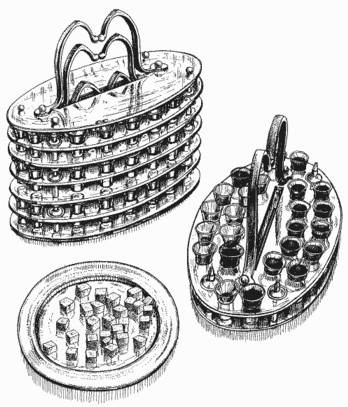
It can be argued that the earlier verses about traditions are given far more importance than Paul intended.  Paul speaks of a very important tradition in verses 17-33 – one that was instituted by the Lord Himself – the Lord’s Supper.  Incredibly, they had turned the observance of the Lord’s Supper into a meal, with some even becoming drunk.  Just as bad, the wealthy would bring enough food to be gluttons, and leave the poor hungry.  This was not fellowship, and it was not “in remembrance” of the Lord; and by doing this, one was eating and drinking “judgment on himself.”  Paul admonishes them not only to observe the Lord’s Supper properly, but with reverence, with each one “examining” himself while doing so.

It is difficult for many of us to realize at times the complete turn-around that many of these Corinthians had made, or the struggles that they continued to have in doing so.   The society they lived in, and had participated in fully, was pagan; and idol-worship, drunkenness and revelry, as well as promiscuity, were a way of life.  It was certainly not any easier for them to be holy than it is for us today.

Read or listen to audio of ESV version of this selection from this link.

/Bob’s boy
___________________
some images © V. Gilbert & Arlisle F. Beers

Please note: I did not design the reading plan that I am following in my blog.  All of my comments in this blog, however, are solely my responsibility.  When reading ANY commentary, you should ALWAYS refer first to the scripture, which is God’s unchanging and unfailing word. Reading schedules, as well as a link to the site where you can get the reading plan that I’m currently following for yourself can be found on the “Bible Reading Schedules” page of my website at http://graceofourlord.com.  For questions and help, please see the “FAQ” and “Summaries” pages there.

Week 43 summary posted

Cenchrea, Greece. Eastern harbor of Corinth

Before continuing to wind up the book of Acts, we continue this week with the Corinthian letters.  We’ll be in 2 Corinthians in the latter part of the week.  Paul’s love for the brethren at all of the churches he spent time with is obvious when we read his inspired letters.  The Corinthian letters are special, though, as that love comes through in his concern for their souls.  The apostle had to address all manner of issues with the brothers and sisters at Corinth – from envy and division to sexual immorality, and much more.  These two letters are without question a large part of the “meat and potatoes” of Christian worship and living.  Among the many subjects he covers in this week’s reading are the Lord’s Supper, and the Resurrection of the dead.

Summing Up

Each weekend, I am now posting a small PDF of one week of chapter summaries (on the website’s “Summaries” page), current to the beginning of the previous week.  I have posted the summary for Week 43 (October Week 4) of the schedule I am following.  This short PDF document contains condensed comments about Acts 17, 18, 1 Thessalonians 1, 1 Thess 4, and 1 Thess 5, with hyperlinks to the ESV version of each chapter for listening or reading, and joins the summaries for other weeks already posted there.

/Bob’s boy
___________________
image © V. Gilbert & Arlisle F. Beers

Please note: I did not design the reading plan that I am following in my blog.  All of my comments in this blog, however, are solely my responsibility.  When reading ANY commentary, you should ALWAYS refer first to the scripture, which is God’s unchanging and unfailing word. Reading schedules, as well as a link to the site where you can get the reading plan that I’m currently following for yourself can be found on the “Bible Reading Schedules” page of my website at http://graceofourlord.com.  For questions and help, please see the “FAQ” and “Summaries” pages there.
1 Corinthians 10 – Do All to the Glory of God

Though most of the Corinthians were Gentiles, Paul refers to the Israelites led by Moses as “our fathers”,  because all Christians share the same spiritual ancestry (Galatians 3:7-8, 29).  The word “for” in the first sentence connects this chapter to the points that Paul has been speaking to in chapters 8-9 that, among other things, declare that Christians must be willing to “give up” things that they may even see as their own “rights,” if that behavior is detrimental or a stumbling block to others.  Concerning verse 7, McGarvey says “The ‘playing’ which Paul refers to (quoted from Exodus 32:3-6, 19, 25) was familiar to the Corinthians, who had indulged in such licentious sportfulness in the worship of Bacchus and Venus…Eating at the feast of idols was the very privilege for which the Corinthians were contending.”

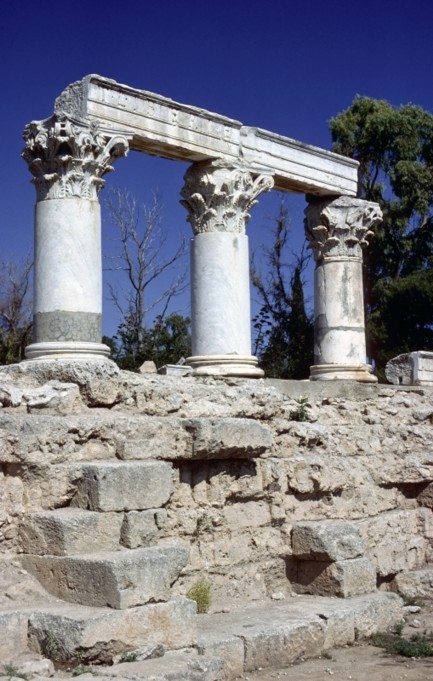
Corinth temple

The wrongness of that behavior should be obvious to them, but even eating at the idol temples, as many would, could present a temptation to fall into the old ways of idolatry and sexual immorality.  Therefore, Paul says in verse 12 “…let anyone who thinks that he stands take heed lest he fall.”  But he continues in verse 13 by saying that “God is faithful, and he will not let you be tempted beyond your ability, but with the temptation he will also provide the way of escape, that you may be able to endure it.”   These words should be a comfort to the faithful.  No matter what temptation we are presented with, God will always provide a way out – but we have to choose to take it!

Finally, in verses 23-33, Paul deals with the issue of eating food that had been sacrificed to idols.  Much of the meat that was sold in the markets could have come from such a source.  Paul makes it clear that idols are nothing in reality, and that eating such would not be a sin by itself.  But if it was a matter of conscience, that was different; and the conscience referred to might be that of a brother in Christ.  For if someone else believed it was wrong to eat such food, the Christian should not do it in their presence or in a view that would offend or jeopardize the salvation of someone else.  Our own liberty does not include damaging the sensibilities or faith of another.

Read or listen to audio of ESV version of this selection from this link.

/Bob’s boy
___________________
some images © V. Gilbert & Arlisle F. Beers

Please note: I did not design the reading plan that I am following in my blog.  All of my comments in this blog, however, are solely my responsibility.  When reading ANY commentary, you should ALWAYS refer first to the scripture, which is God’s unchanging and unfailing word. Reading schedules, as well as a link to the site where you can get the reading plan that I’m currently following for yourself can be found on the “Bible Reading Schedules” page of my website at http://graceofourlord.com.  For questions and help, please see the “FAQ” and “Summaries” pages there.
1 Corinthians 5 – Sexual Immorality Defiles the Church

In chapter 5, Paul begins addressing the reports of sexual immorality among the church members at Corinth.  Paul tells them in verse 1 that word has reached him of one among them who is engaged in incest with what is presumably his step-mother (Paul would simply have said “his mother” if that were the case).  They were in the midst of, and converted to Christianity from, a pagan society that tolerated – even celebrated sexual immorality and idolatry. Yet Paul states that immorality of this nature is “not tolerated even among pagans” (both Greek and Roman cultures condemned incest).

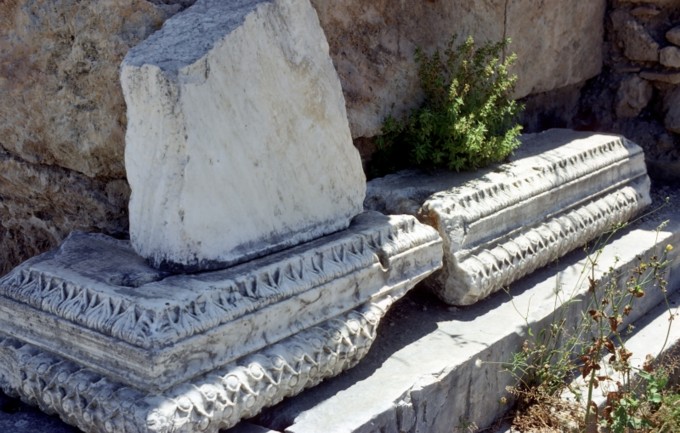
Corinth Tribune where Gallio defended Paul (Acts 18:12-16)

Paul finds it amazing that the church there has problems with people full of pride (verse 2), and that many are boasting (verse 6) about their gifts and their capable teachers, while they tolerate and say nothing about one of their own being involved in such scandalous immorality!  Verse 5 simply means that instead of acting as if everything is normal with such a man in their midst, they must distance themselves from him in the proper manner.  The key phrase is  “so that his spirit may be saved.”  By not correcting him and behaving as if he is doing no wrong, the church there is neglecting his very soul (not to mention the fact that the public nature of his sin is known to others outside the congregation, thus harming the church).

Finally, Paul is making the point in verses 9-13 that when he tells them that they must not associate with sexually immoral people, he does not mean those of the world.  He is talking about brothers in Christ that are “guilty of sexual immorality or greed, or is an idolater, reviler, drunkard, or swindler.”  It is not for them to judge outsiders, for if they do not associate with sinners that have not come to Christ, how can they teach the lost?

Read or listen to audio of ESV version of this selection from this link.

/Bob’s boy
___________________
some images © V. Gilbert & Arlisle F. Beers

Please note: I did not design the reading plan that I am following in my blog.  All of my comments in this blog, however, are solely my responsibility.  When reading ANY commentary, you should ALWAYS refer first to the scripture, which is God’s unchanging and unfailing word. Reading schedules, as well as a link to the site where you can get the reading plan that I’m currently following for yourself can be found on the “Bible Reading Schedules” page of my website at http://graceofourlord.com.  For questions and help, please see the “FAQ” and “Summaries” pages there.

1 Corinthians 1 – Christ the Wisdom and Power of God

Corinth – Temple of Apollo

As he did in his letters to the Romans, Colossians, Galatians and Ephesians, Paul opens the letter in his greeting with the declaration of his apostleship being given by the will of God – not by his own assertion.  As with the Galatians, it appears that some false teachers had called his apostleship into question at Corinth (1 Corinthians 9:1, 2 Cor 11:4-5, 2 Cor 12:11-13).  he reminds them that they are sanctified (set apart) from the world in Christ Jesus, as are all Christians.  He recognizes their God-given talents, and emphasizes the spiritual gifts that they had been blessed with by God by being “called into the fellowship of his Son, Jesus Christ our Lord” (verses 4-9).

So the problems at Corinth were not caused by ignorance of the word of God, or by a lack of intelligence.  We will see that their problems, as is often the case today, stem from such age-old problems as envy, pride, jealousy, and lust.  Some people have taken verse 17 to be stating that baptism is not necessary.  But if that were the case, why would he have baptized anyone (as he gives some of the many examples of doing so in the preceding verses)!  Paul himself makes clear the importance of baptism in other scripture, such as Romans 6:3-5, Ephesians 2:5-6, and Ephesians 4:4-6, as did Jesus in the Great Commission (Matthew 28:19). Verses 10-17 is addressing the divisions that had been reported to Paul (we do not know who Chloe was, but probably was one of their members).  Barclay said in his commentary that the word he uses to describe them “…is the word for rents in a garment.  The Corinthian Church is in danger of becoming as unsightly as a torn garment.”

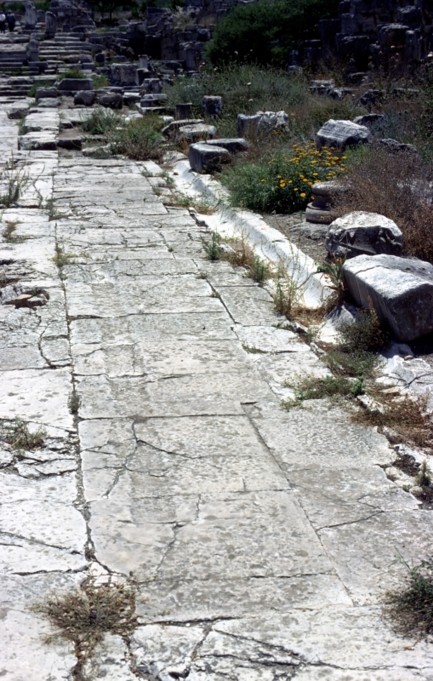
Corinth – Lechaion Road

In verses 18-31, Paul ironically speaks quite eloquently, as he decries the foolishness of pride.  He declares the folly of men who think themselves wise, and speech that is eloquent but empty.  There was no shortage of philosophers in their Greco-Roman society nor, therefore, those who were “wise in their own eyes.”  He points out that not many of the saints at Corinth had been powerful, or of noble birth, or wise by worldly standards.  But God, through the crucifixion of Jesus Christ, had given even those who were considered foolish, weak, lowly or despised the blessing over the “wise” or “strong” or “powerful,” who choose not to believe – so that no human being has the right to boast about anything other than Christ Jesus.  Verse 19 is quoted from Isaiah 29:14.  Verse 20’s rhetorical question is a timeless illustration of the impudence of human confidence in their superior intelligence – “Has not God made foolish the wisdom of the world?”

Read or listen to audio of ESV version of this selection from this link.

/Bob’s boy
___________________
some images © V. Gilbert & Arlisle F. Beers

Please note: I did not design the reading plan that I am following in my blog.  All of my comments in this blog, however, are solely my responsibility.  When reading ANY commentary, you should ALWAYS refer first to the scripture, which is God’s unchanging and unfailing word. Reading schedules, as well as a link to the site where you can get the reading plan that I’m currently following for yourself can be found on the “Bible Reading Schedules” page of my website at http://graceofourlord.com.  For questions and help, please see the “FAQ” and “Summaries” pages there.
Acts 20 – Paul Speaks to the Ephesian Elders

A riot in Ephesus sent Paul to Troas, then through Macedonia to the region of Achaia. In Achaia he went to Corinth to deal with problems there. Paul had planned to sail from Corinth straight to Antioch in Syria, but a plot against his life was discovered. So he retraced his steps through Macedonia.

After the riot in Ephesus had passed, Paul said his farewells and went to Macedonia, then to Greece where he spent three months until a plot against him by the Jews was discovered.  So he headed back to Macedonia accompanied by others, including Timothy, Aristarchus and Gaius (two victims of the riot from Acts 19:29), all of whom were sent on to Troas.  It is in verse 5 that Luke again begins speaking in the first person plural, indicating he accompanied Paul as they sailed from Philippi to meet the others at Troas.  The seaport of Troas was located at near the site of the ancient city of Troy, and was rebuilt by Alexander the Great’s successors and renamed Alexandria Troas.

It is there that Paul broke bread with them on the first day of the week and, preaching to midnight, a young man named Eutychus fell asleep and fell from a third-story window.  But Paul took him in his arms, and in verse 12 “they took the youth away alive, and were not a little comforted.”  Indeed, excitement over this resurrection would no doubt have contributed to their staying up until daybreak (verse 11).  Then, Luke says that he and the others set sail for Assos, while Paul went by land and met them there.  From there, they sailed to To Chios, Samos and Miletus, as Luke says that Paul had decided not to stop at Ephesus because he wanted to get to Jerusalem by Pentecost.

But while at Miletus, Paul called the elders at Ephesus to come to him, a journey of perhaps 30 miles or so.  Verses 18-37 end with a tearful goodbye, as he tells them that he knows he will never see their faces again.  He tells them that he is going to Jerusalem and that he does not know what will happen to him “except that the Holy Spirit testifies to me in every city that imprisonment and afflictions await me.”  He recounts his faithfulness to preaching and teaching the word in the three years that he had spent with them, declaring that he was “innocent of the blood of all.”

Ruins at Miletus, Turkey. Paul visited here during his Third Missionary Journey, Acts 20:15-17.

These very emotional parting words have an important point besides the obvious.  In his letter to the Thessalonians, Paul had stressed the importance of the local church members having respect for those who had been appointed as elders of their congregation (1 Thessalonians 5:12-13).  Here in Acts 20, he is making it clear to these elders – and to all elders of the church everywhere – that they have the responsibility to shepherd the flock among them.  Fierce wolves, he says,  will come in “not sparing the flock,” and that “from among your own selves will arise men speaking twisted things, to draw away the disciples after them.”  The elders of the local church everywhere have an awesome responsibility, and must always be on guard for the souls of those in their midst.  It was true then, as it is now.

In the middle of all this, Paul quotes to these elders one of Jesus’ most famous sayings in verse 35 “It is more blessed to give than to receive.”  The words are actually not found in any of the gospels.  But it is good to remember the words that John wrote in John 21:25.  Jesus did and said so much more in His time on earth than what was written in the gospels.  It is appropriate that some words the Lord used in His teachings are reported to us by Paul – who wrote so much of the Bible!

Side Note:  This article at Ferrell’s Travel Blog has good info on, and a shot of the ruins at, Miletus.

Read or listen to audio of ESV version of this selection from this link.

/Bob’s boy
___________________
some images © V. Gilbert & Arlisle F. Beers

Please note: I did not design the reading plan that I am following in my blog.  All of my comments in this blog, however, are solely my responsibility.  When reading ANY commentary, you should ALWAYS refer first to the scripture, which is God’s unchanging and unfailing word. Reading schedules, as well as a link to the site where you can get the reading plan that I’m currently following for yourself can be found on the “Bible Reading Schedules” page of my website at http://graceofourlord.com.  For questions and help, please see the “FAQ” and “Summaries” pages there.

Acts 19 – A Riot at Ephesus

from Ephesus

Priscilla and Aquilla’s encounter with Apollos in Acts 18:24-28 would certainly appear to be providential, as the man knew the scriptures concerning the Christ well, taught many, and spoke eloquently.  But it would seem that all of the good news of Jesus had not yet reached him, so the two set him on the right course.  Now becoming a powerful worker for the Lord, Apollos had gone to Corinth.  Paul came to Ephesus and found some disciples that had likely been taught by Apollos previously.  They, like Apollos, only knew of the baptism of John.  After being baptized, Paul layed his hands on them and they received the Holy Spirit.

Paul taught in the synagogue there for three months (verse 8), but some were not persuaded and some unbelievers began “speaking evil of the Way before the congregation.”  “The Way” was a name used for Christianity during those times, as by Luke several times in Acts (Acts 19:9,23;22:4;24:14,22) and in secular history as well (such as written by Josephus, for example).

So Paul removed himself and took the disciples with him, teaching “in the hall of Tyrannus” daily (verse 9).  This continued for two years (verse 10), and the following Scriptures speak of the great miracles God worked there through Paul in verses 11-17, including an account in 13-16 of the sons of the Jewish high priest, Sceva, being overpowered by an evil spirit they tried to cast out themselves.   Note the key in verse 13 where they said “I adjure you by the Jesus whom Paul proclaims.”  This was not only a lack of authority, but of faith – and it ends badly for them.  But the miracles the Lord had worked had a mighty effect on the people listening to the word that Paul and the disciples were preaching.

from Ephesus

Paul stayed for a while but sent Timothy and Erastus to Macedonia, resolving to go there as well as Achaia, where Apollos had gone (Acts 18:27), as well as Rome (verse 21).  But then things turned ugly in Ephesus.  A silversmith named Demetrius made silver shrines to the Greek “goddess” Artemis (her Roman counterpart in mythology was “Diana”).  Paul’s preaching against idols was costing Demetrius money. He gathered similar tradesmen and merchants, and provoked a riot.

Mob violence and confusion ruled, as the disturbance grew large enough that most involved didn’t even know what it was about.  They dragged Paul’s companions, Gaius and Aristarchus, into the theater.  Paul wanted to go in, but the disciples (and some Asiarchs – high-ranking officials of the Roman province) prevented him.  It was the Ephesian town clerk that finally was able to disperse the crowds, pointing out that they were in danger of being charged with rioting by Roman authorities.

Side note: A picture of the ruins at Ephesus is in this article at Ferrell’s Travel Blog; and several great pictures, including what is left of the temple of Artemis, as well as the theater involved in the riot are in this article at BiblePlaces.com.

Read or listen to audio of ESV version of this selection from this link.

/Bob’s boy
___________________
some images © V. Gilbert & Arlisle F. Beers

Please note: I did not design the reading plan that I am following in my blog.  All of my comments in this blog, however, are solely my responsibility.  When reading ANY commentary, you should ALWAYS refer first to the scripture, which is God’s unchanging and unfailing word. Reading schedules, as well as a link to the site where you can get the reading plan that I’m currently following for yourself can be found on the “Bible Reading Schedules” page of my website at http://graceofourlord.com.  For questions and help, please see the “FAQ” and “Summaries” pages there.

Week 42 summary posted

Ephesus, in modern Turkey, is the best-preserved classical city on the Mediterranean, and one of the best places in the world to get the feeling for what life was like for early Christians in Roman times

Continuing in the book of Acts this week, we start chapter 19 tomorrow with Paul in Ephesus, where he has some thoughts for the elders of that church, as well as the other members.  It is during this time that he writes the first letter to the church at Corinth, as he has concerns about them.  We will spend a few days reading chapters from that letter as well.  This Scripture, as always, has application in our lives as well.

Summing Up

Each weekend, I am now posting a small PDF of one week of chapter summaries (on the website’s “Summaries” page), current to the beginning of the previous week.  I have posted the summary for Week 42 (October Week 3) of the schedule I am following.  This short PDF document contains condensed comments about Acts 14, 15, Galatians 1, Galatians 2, and Acts 16, with hyperlinks to the ESV version of each chapter for listening or reading, and joins the summaries for other weeks already posted there.

/Bob’s boy
___________________
image © V. Gilbert & Arlisle F. Beers

Please note: I did not design the reading plan that I am following in my blog.  All of my comments in this blog, however, are solely my responsibility.  When reading ANY commentary, you should ALWAYS refer first to the scripture, which is God’s unchanging and unfailing word. Reading schedules, as well as a link to the site where you can get the reading plan that I’m currently following for yourself can be found on the “Bible Reading Schedules” page of my website at http://graceofourlord.com.  For questions and help, please see the “FAQ” and “Summaries” pages there.