Psalm 148 – Hallelujah, Praise Jehovah!

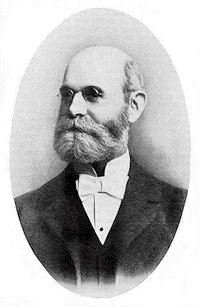
William J. Kirkpatrick

William J. Kirkpatrick

Another of the “Hallelujah Psalms,” Psalm 148 is certainly one of the most familiar to people in song. The ever-popular hymn “Hallelujah, Praise Jehovah!” by William J. Kirkpatrick is practically taken word for word from this psalm; and it is a personal favorite of this blogger.

The psalm calls on all of God’s creatures to praise Him, but it goes further – declaring that all of His creation should sing His praises as well.  Parts of this psalm bring to mind the Triumphal Entry of Jesus into Jerusalem (Luke 19:28-44). When the Pharisees suggested that Jesus should silence His disciples who were shouting praises to Him, he answered in verse 40 “I tell you, if these were silent, the very stones would cry out.”

Praise the Lord!
Praise the Lord from the heavens;
praise him in the heights!

Praise him, all his angels;
praise him, all his hosts!

Praise him, sun and moon,
praise him, all you shining stars!

Praise him, you highest heavens,
and you waters above the heavens!
Let them praise the name of the Lord!
For he commanded and they were created.

Read or listen to audio of ESV version of this selection from this link.

/Bob’s boy
___________________
some images © V. Gilbert & Arlisle F. Beers

Please note: I did not design the reading plan that I am following in my blog.  All of my comments in this blog, however, are solely my responsibility.  When reading ANY commentary, you should ALWAYS refer first to the scripture, which is God’s unchanging and unfailing word. Reading schedules, as well as a link to the site where you can get the reading plan that I’m currently following for yourself can be found on the “Bible Reading Schedules” page of my website at http://graceofourlord.com.  

Amos, Shepherd of Tekoa (Minor Prophets Part 3)

Historical marker outside Hazor.

Historical marker outside Hazor.

We continue to stress the fact that the minor prophets are called such because of the short books of the Bible that they represent, not their importance. The Book of Amos is a great illustration of that. Though not the shortest book of the Old Testament, it only consists of nine chapters, and with the exception of chapter 5, none of them contain more than 17 verses (chapter 5 has a whopping 27). But we could take many more pages to comment on this book than would suit the purpose of this series (that purpose being to present a general overview of each of the books of the minor prophets).

The best place to begin is in the very first verse of the book, which tells us that Amos was one of the shepherds of Tekoa. Situated about 20 kilometers south of Jerusalem, Tekoa was referred to in 2 Samuel 14 as the place that the wise woman came from – the one that Joab used to deceive David, convincing him to let Absalom come home.  The same verse tells us that Amos made these prophecies during the days of Uzziah, king of Judah and Jeraboam, the son of Joash, king of Israel during the two years before “the earthquake.”

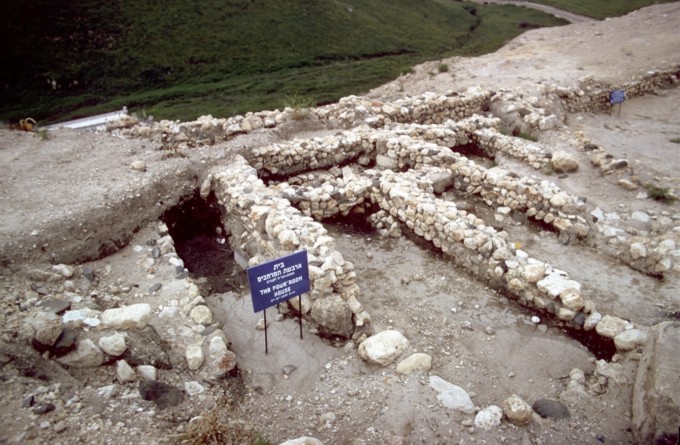
Before we get to the matter of the earthquake, let us address the date of the reigns of these two kings. Estimates of the reigns of these two kings range from about 800 B.C down to Uzziah’s death in about 739 B.C., leaving us with about a 60 year period when the prophecies could have occurred. Then there is the matter of this earthquake. The one mentioned is obviously one that was great in magnitude, as it was eventful enough to be used as a time reference here, and it is mentioned also in Zechariah 14:5. Excavations around Hazor in 1955 revealed evidence of an earthquake in the 8th century B.C. (some estimates are at 750 B.C. with a possible variance of 30 years). More than 50 years later, earthquake damage was still being discovered. More information can be found in this article at ICR.ORG and this article at the Jewish Virtual Library.

Hazor, house foundation

Hazor, house foundation

The book addresses the people of the northern kingdom, Through verse 5 of chapter 2, the judgment of the Lord against Israel’s enemies  (which the people expected) is prophesied. But what they did not expect, and had not counted on, was the judgment that would come to them for their injustice to the poor, and their pretense of worship to the Lord while they were actually doing nothing of the sort (the sarcasm in Amos 4:1-5 underscores this point). The Lord’s patience with them has come to an end (Amos 8:1-2). But He speaks in chapter 9 of a time when restoration will occur (note Amos 9:11, which is cited in Acts 15:16).

During this time, the northern kingdom was experiencing much prosperity, which they translated as a sign that God was pleased with them, and was blessing them. Amos’s message to them was exactly the opposite. A great deal of their wealth had been accumulated by their oppression of the poor. And their worship was more like an attempt at manipulating events in much of the same way that pagans worshiped their “gods.” Amos’s message was most unwelcome because it made the prediction that the “day of the Lord,” that they were expecting to usher in their further rise to power, would actually bring the end of their kingdom.

/Bob’s boy
___________________
image © V. Gilbert & Arlisle F. Beers

Please note: I did not design the reading plan that I am following in my blog.  All of my comments in this blog, however, are solely my responsibility.  When reading ANY commentary, you should ALWAYS refer first to the scripture, which is God’s unchanging and unfailing word. Reading schedules, as well as a link to the site where you can get the reading plan that I’m currently following for yourself can be found on the “Bible Reading Schedules” page of my website at http://graceofourlord.com.  


Psalm 145 – I Will Extol You

Hebrew letter "nun"

Hebrew letter “nun”

Psalm 145 is the last of the psalms of David in Book 5, and is followed by the “Hallelujah Psalms” (Psalms 146-150). It is an acrostic, but like a couple of other acrostics, there is a letter missing – at least in some manuscripts – the letter “nun.” But both the Septuagint and the Dead Sea Scrolls supply the line with the missing letter (the second part of verse 13 – “the Lord is faithful in all his words and kind in all his works.”, and it flows perfectly, suggesting evidence of an earlier manuscript that matches.

It is a song of praise, and in its acrostic style, it uses a variety of words for communicating the idea of praise (extol, comment, pour forth, etc.), as well as the timeless continuity of this praise and of God’s grace, love, and mercy (forever and ever, everlasting, throughout all generations, etc. The theme of praising God for His righteousness and faithfulness continues throughout the acrostic. It points out that God is in control of even the most minute details of the world – down to even the various supplies of food He makes available to all His creatures.

Read or listen to audio of ESV version of this selection from this link.

/Bob’s boy
___________________
some images © V. Gilbert & Arlisle F. Beers

Please note: I did not design the reading plan that I am following in my blog.  All of my comments in this blog, however, are solely my responsibility.  When reading ANY commentary, you should ALWAYS refer first to the scripture, which is God’s unchanging and unfailing word. Reading schedules, as well as a link to the site where you can get the reading plan that I’m currently following for yourself can be found on the “Bible Reading Schedules” page of my website at http://graceofourlord.com.  

Job 36 – On God’s Behalf

rain_003While there is some truth to some of what Elihu says in this chapter, he is using it in the context of condemning Job and ascribing Job’s suffering to God’s punishment – just like the first three of Job’s friends. Presumptuously, he begins by stating that he is speaking on God’s behalf (verse 2), as if God needed someone to defend Him. But his words are meant to wound Job and disparage his integrity; and God would have no part of such. Worse still, Elihu claims to be “perfect in knowledge” (verse 4) concerning God, His will, and how he deals with the righteous and the wicked. This arrogance is certainly not unnoticed by God, as we will see.

Elihu speaks correctly about God’s might, and even shows some knowledge of the scientific processes for rain, evaporation, and storms. But Satan moves him to use this knowledge to give the false impression that his knowledge in the matter of Job’s guilt, and God’s actions toward him are equally correct – which they certainly are not. This tactic of using the truth to lay down false authority for a lie is timeless, and certainly still used by Satan today.

Read or listen to audio of ESV version of this selection from this link.

/Bob’s boy
___________________
some images © V. Gilbert & Arlisle F. Beers

Please note: I did not design the reading plan that I am following in my blog.  All of my comments in this blog, however, are solely my responsibility.  When reading ANY commentary, you should ALWAYS refer first to the scripture, which is God’s unchanging and unfailing word. Reading schedules, as well as a link to the site where you can get the reading plan that I’m currently following for yourself can be found on the “Bible Reading Schedules” page of my website at http://graceofourlord.com.  For questions and help, please see the “FAQ” and “Summaries” pages there.

Psalm 141 – My Eyes Are Toward You

English: Michal Watching David from a Window, ...

English: Michal Watching David from a Window, as in 2 Samuel 6:16: “And it was so, as the ark of the Lord came into the city of David, that Michal the daughter of Saul looked out at the window, and saw king David leaping and dancing before the Lord; and she despised him in her heart.”; watercolor circa 1896–1902 by James Tissot (Photo credit: Wikipedia)


This lament, according to the superscription, is a psalm of David. And it does have the “flavor” of one of David’s psalms. There is no clue given as to the occasion of the writing. It could be during his flight from Saul or from the Absalom rebellion. It is likely the former, as this period was a long one in David’s life, and would provide the most opportunities for writing such laments.


Unlike imprecatory psalms, David is not praying for God to strike down his enemies. Nor is he praying for God to give him might against them. Instead, he is asking for the strength to withstand what his enemies would do to him, and to restrain his lips against speaking evil of them (verses 3-5).


He tells the Lord that he will continue praying against their evil deeds, asks God to be his defense and his refuge, and prays that his enemies will be the cause of their own demise (verse 10), rather than having him fall victim to them. What a great model of prayer from one who is so persecuted!


Read or listen to audio of ESV version of this selection from this link.


/Bob’s boy


___________________


some images © V. Gilbert & Arlisle F. Beers


Please note: I did not design the reading plan that I am following in my blog.  All of my comments in this blog, however, are solely my responsibility.  When reading ANY commentary, you should ALWAYS refer first to the scripture, which is God’s unchanging and unfailing word. Reading schedules, as well as a link to the site where you can get the reading plan that I’m currently following for yourself can be found on the “Bible Reading Schedules” page of my website at http://graceofourlord.com.  


Proverbs 24:1-18 – Eat Honey!

Honey in honeycombs

Honey in honeycombs (Photo credit: Wikipedia)

Chapter 24 concludes the “thirty sayings” portion of the Book of Proverbs that was begun in chapter 22 (see this previous post for more information). Verse 13 is one that is natural for the reader to just skip over:

My son, eat honey, for it is good,
and the drippings of the honeycomb are sweet to your taste

When one is reading through verse after verse of some of the greatest wisdom, a verse stating that honey is sweet does not really register as being terribly wise. The lesson is in verse 14, which expounds on that thought:

Know that wisdom is such to your soul;
if you find it, there will be a future,
and your hope will not be cut off.

Wisdom is to the soul like honey is to the taste. The key is to find it; and what the writer has been telling us over and over again throughout this entire book is that the beginning of all knowledge is the fear of the Lord. The greatest source of wisdom is in God’s word. It is there that we find both our hope and our future, but the keywords are “if you find it.” Like finding the honeycomb, we must search the scriptures to find that wisdom. The writer is telling us to read our Bible – regularly!

Read or listen to audio of ESV version of this selection from this link.

/Bob’s boy
___________________
some images © V. Gilbert & Arlisle F. Beers

Please note: I did not design the reading plan that I am following in my blog.  All of my comments in this blog, however, are solely my responsibility.  When reading ANY commentary, you should ALWAYS refer first to the scripture, which is God’s unchanging and unfailing word. Reading schedules, as well as a link to the site where you can get the reading plan that I’m currently following for yourself can be found on the “Bible Reading Schedules” page of my website at http://graceofourlord.com.  For questions and help, please see the “FAQ” and “Summaries” pages there.

Psalm 146 – The Lord Lifts Up!

benedictionConsidered by some as a part of the Hallel (Psalms 113-118), the last five psalms of the book (Psalms 146-150) are often called the “Hallelujah Psalms.” Each one of them starts and ends with the sentence “Praise the Lord!” The message of this song is simple. It tells the us not to put our trust in those in positions of political or ruling authority, but to put all of our trust in the Lord.

The psalm is obviously a song sung by the entire congregation; and it emphasizes the everlasting authority of God as the Creator of heaven and earth, and the giver of life. It also praises God for His love and care for the righteous, the oppressed, the hungry, and all of those who depend on Him. It declares that He is a just God, who will take care of the wicked in His own way and in His time (verse 9).

Read or listen to audio of ESV version of this selection from this link.

/Bob’s boy
___________________
some images © V. Gilbert & Arlisle F. Beers

Please note: I did not design the reading plan that I am following in my blog.  All of my comments in this blog, however, are solely my responsibility.  When reading ANY commentary, you should ALWAYS refer first to the scripture, which is God’s unchanging and unfailing word. Reading schedules, as well as a link to the site where you can get the reading plan that I’m currently following for yourself can be found on the “Bible Reading Schedules” page of my website at http://graceofourlord.com.  

Minor Prophets Part 2 – Joel

Prophet Joel, Russian icon from first quarter ...

Prophet Joel, Russian icon from first quarter of 18th cen. (Photo credit: Wikipedia)

We should mention that, just as the Books of Isaiah, Jeremiah, Lamentations, Ezekiel and Daniel are referred to as the “major prophets” because of their length – not as an indication of importance, the same is true of the so-called “minor prophets.” The Book of Joel, for example, is only three chapters. But do not be misled, Joel is a powerful and important book of prophecy.

There is no definitive evidence from the text as to when the book was written. Guess-timates vary greatly, and there is little agreement between scholars. Just as many can be found to date the book after the Babylonian captivity as before. This blogger believes it to have been written before the captivity. Many Hebrew scholars believe Joel  prophesied under Manasseh, which would place him in most likely the late 7th century B.C. (Manasseh began his reign as co-regent with his father, Hezekiah, in about 696 B.C., and his reign ended with his death in about 642 B.C.). This was just over 20 years after the Assyrians conquered the Northern Kingdom and deported most of its population.

Verse one of chapter one tells us that Joel (whose name means “Yahweh is God”) was the son of Pethuel (whose name means “mouth of God”). We do not know much else about him. Certainly, Joel’s message is to the Southern Kingdom, and his references to Jerusalem and knowledge of the priests and the temple suggest that he may himself have been from Jerusalem. The obvious theme of the book is “the day of the Lord.” The phrase is repeated over and over throughout the book.

English: The Captivity of Judah, as in 2 Chron...

English: The Captivity of Judah, as in 2 Chronicles 36:11-21, illustration from a Bible card published by the Providence Lithograph Company (Photo credit: Wikipedia)

The setting of the book is a time of great spiritual indifference, but also of great devastation from a locust invasion that has laid the land to waste, and has affected every aspect of their lives. But Joel’s message is that the coming “day of the Lord” will make this look like nothing! The only way to avoid the coming judgment, he tells them, is to truly repent.

As we have noted is the case with this phrase in other passages in the scriptures, “the day of the Lord” simply refers to a time when God will take some sort of decisive action. It does not always, as many make the mistake of assuming, refer to the final day of judgment. In the case of this book, it appears to refer to the judgment of Judah to come (at the hands of the Babylonians), as well as to the judgment that will come to Israel in A.D. 70. Peter, on the day of Pentecost in Acts 2:16-21, refers to Joel 2:28-32, as he preaches about the pouring out of the Holy Spirit, the prophesying, and other signs of the new age of Christians. The first part of this in Joel begins:

“And it shall come to pass afterward,
that I will pour out my Spirit on all flesh;
your sons and your daughters shall prophesy,
your old men shall dream dreams,
and your young men shall see visions.
Even on the male and female servants
in those days I will pour out my Spirit.”

Destruction of Jerusalem under the Babylonian ...

Destruction of Jerusalem under the Babylonian rule. Illustration from the Nuremberg Chronicle (Photo credit: Wikipedia)

The second part of the passage, also referred to by Peter, is the same as some of the warning Jesus gave of the signs for Christians to look for when they should leave Jerusalem before its A.D. 70 destruction (Matthew 24:29-30).  Indeed, we will no doubt deal more in depth with this subject in another blog, as we discuss some of the secular evidence of the signs Jesus gave in the preceding verses of Matthew 24, which resulted in many Christians becoming the “survivors” that Joel speaks of in the second part of the passage:

“And I will show wonders in the heavens and on the earth, blood and fire and columns of smoke. The sun shall be turned to darkness, and the moon to blood, before the great and awesome day of the Lord comes. And it shall come to pass that everyone who calls on the name of the Lord shall be saved. For in Mount Zion and in Jerusalem there shall be those who escape, as the Lord has said, and among the survivors shall be those whom the Lord calls.”

/Bob’s boy
___________________
image © V. Gilbert & Arlisle F. Beers

Please note: I did not design the reading plan that I am following in my blog.  All of my comments in this blog, however, are solely my responsibility.  When reading ANY commentary, you should ALWAYS refer first to the scripture, which is God’s unchanging and unfailing word. Reading schedules, as well as a link to the site where you can get the reading plan that I’m currently following for yourself can be found on the “Bible Reading Schedules” page of my website at http://graceofourlord.com.  

Psalm 139 – I Am Fearfully and Wonderfully Made

lake and mountain02This psalm is ascribed to David in the superscription, and its writing style does not contradict that in the least. It is regarded by some as one of the greatest passages in the Old Testament, and it is not hard to understand why when one reads it. Edward J. Young wrote an entire book on these 24 verses (“The Way Everlasting: A Study in Psalm 139”, The Banner of Truth Trust, Edinburgh, Great Britain, November 1, 1997). Most commentators recognize 4 sections to the psalm, consisting of 6 verses each. The first section deals with God’s omniscience. Verse one begins “O Lord, you have searched me and known me!” Verses 7-12 are concerned with his omnipresence. Verse 7 asks “Where shall I go from your Spirit? Or where shall I flee from your presence?”

The third section (verses 13-18) praises God for His omnipotence. Verse 14 is one of the more famous verses: “I praise you, for I am fearfully and wonderfully made.” Put those last four words in a search engine, and you will have hours of reading available; and we cannot do the verse justice here. Suffice to say that “fearfully made” is intended with the same sort of respect and awe that we are to have of the Lord (as in “fear of the Lord”), and the meaning of “wonderfully made” is quite obvious to those who study the intricacies of the human body all the way down to the cell level.

The final section (verse 19-24) is one of supplication for God. It pleads for the Lord to deal with the wicked and with those who speak against him. It is also a plea for God to examine the psalmist’s heart, leading him away from any sin and “in the way everlasting.”

The psalm points out in a most elegant way how much God knows, while acknowledging how little we really know about that very fact. He knows all about us, and He knew us before we were even born, as God told the prophet in Jeremiah 1:4-5. Even His very thoughts are too vast and wonderful for us to comprehend (verses 17-18).

Altogether, these 24 verses speak volumes about the nature and power of our Creator and His care for us, and make an excellent source of thoughts for our prayers to Him.

Read or listen to audio of ESV version of this selection from this link.

/Bob’s boy
___________________
some images © V. Gilbert & Arlisle F. Beers

Please note: I did not design the reading plan that I am following in my blog.  All of my comments in this blog, however, are solely my responsibility.  When reading ANY commentary, you should ALWAYS refer first to the scripture, which is God’s unchanging and unfailing word. Reading schedules, as well as a link to the site where you can get the reading plan that I’m currently following for yourself can be found on the “Bible Reading Schedules” page of my website at http://graceofourlord.com.  

Job 35 – Words Without Knowledge

Elihu continues his diatribe, as he condemns Job further for presuming to be right before God. But Elihu is himself way off track in this chapter. Consider verses 6-8:

If you have sinned, what do you accomplish against him?
And if your transgressions are multiplied, what do you do to him?
If you are righteous, what do you give to him?
Or what does he receive from your hand?

crucifixion01According to Elihu, man is so insignificant to God that it is of no consequence to Him either way whether we do good or evil. It is only to our own detriment if we do the latter. This goes against everything that God’s word teaches, and indeed, sin hurts God so very much that He gave His only son to save man from his own iniquity.

Elihu further shows his ignorance of the Lord in verses 12-13 by saying that God does not answer the prayers of men because of their pride, and suggests that He does not even regard the prayers of some as more than empty pleas. He forgets that sometimes “no” is an answer, as well as “I have something else planned.” James 4:3 gives one reason for not receiving the answer one wants to a prayer at times – selfish motives.

As Elihu accuses Job in verse 16, his own are the “words without knowledge.”

Read or listen to audio of ESV version of this selection from this link.

/Bob’s boy
___________________
some images © V. Gilbert & Arlisle F. Beers

Please note: I did not design the reading plan that I am following in my blog.  All of my comments in this blog, however, are solely my responsibility.  When reading ANY commentary, you should ALWAYS refer first to the scripture, which is God’s unchanging and unfailing word. Reading schedules, as well as a link to the site where you can get the reading plan that I’m currently following for yourself can be found on the “Bible Reading Schedules” page of my website at http://graceofourlord.com.  For questions and help, please see the “FAQ” and “Summaries” pages there.